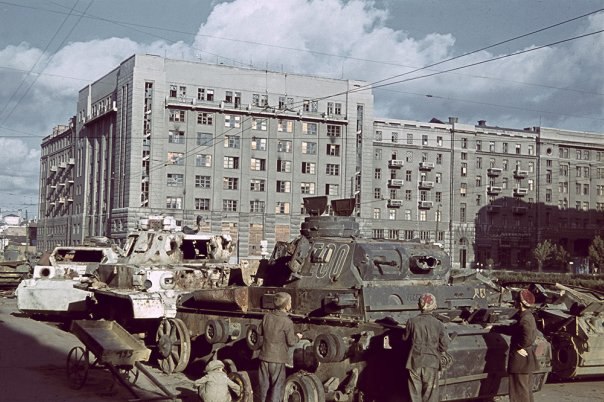
您知道吗,实际上在为哈尔科夫进行的四场战役中,以及在该城两次被占领期间,苏联和德国损失的兵力人数远远超过了第二次世界大战历史上其他任何战役或地区——甚至包括斯大林格勒战役。事实上,1941年5月1日时,这座城市的人口还为90.1万人呢。8 张照片
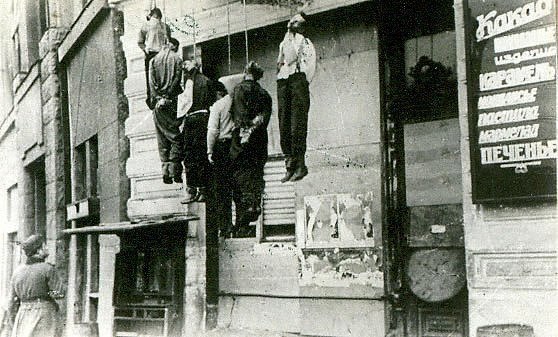
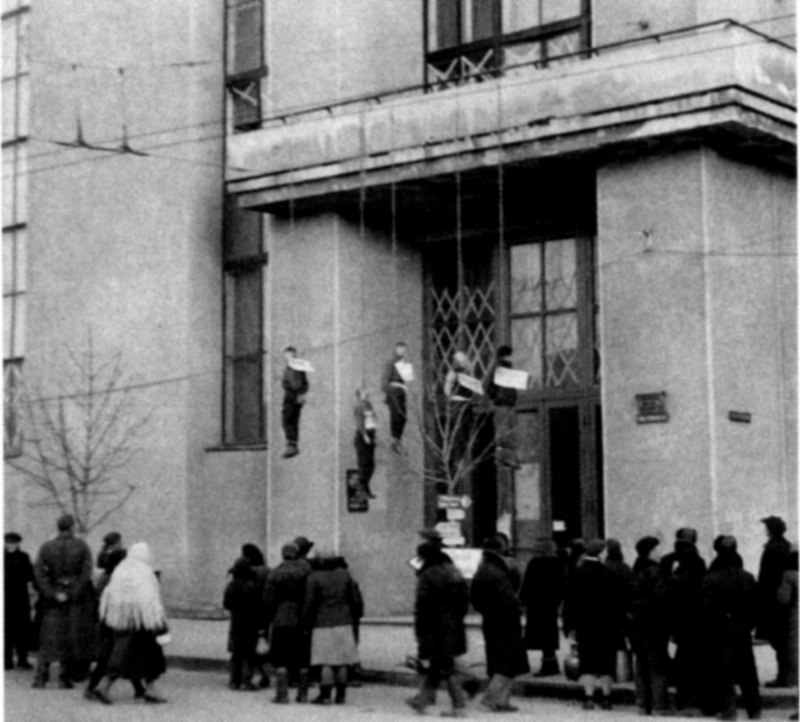
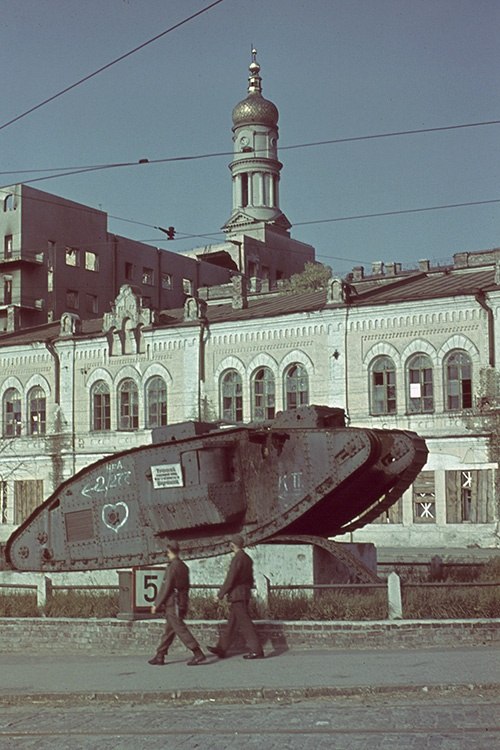
At that time, few people knew that during the four battles for Kharkiv and during its two periods of occupation by Germany, both the Soviet Union and Germany lost more lives than in any other battle throughout the entire history of World War II, including the Battle of Stalingrad. On May 1, 1941, the population of the city was 901,000 people; by September 1941, before the occupation, it had increased to 1,500,000 people, including those who had been evacuated. After its liberation in August 1943, the population dropped back to 180,000-190,000 people.
Local residents claim that Kharkiv was never awarded the title of Hero City because Stalin considered it a disgrace for the Red Army to fail to liberate the city even after four attempts – in January and February 1942, again in May 1942, then in February 1943, and finally in August 1943. Let’s take a look at these events in more detail and conduct some discussions.
**Battles for Kharkiv (1941, 1942, 1943)**
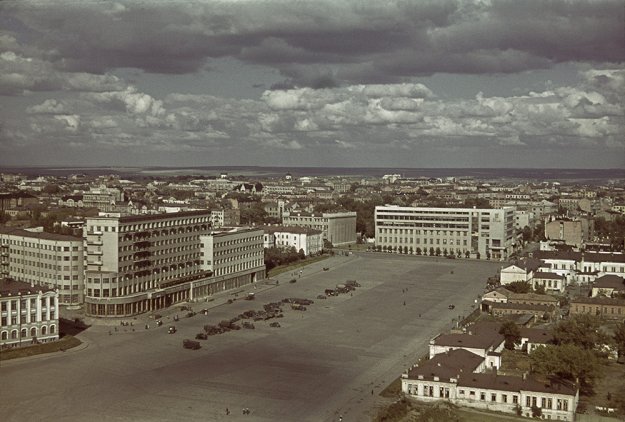
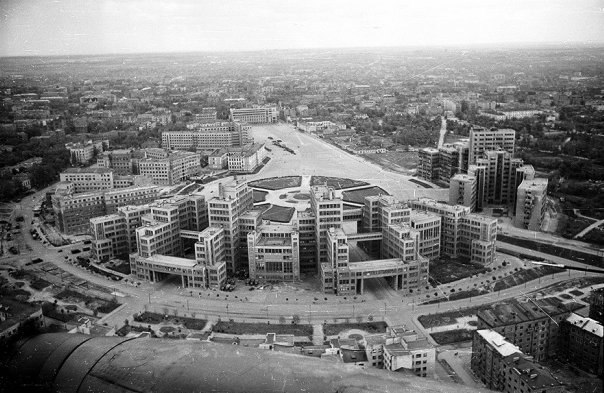
By the time World War II broke out in 1941, Kharkiv was already the fourth-largest city in the Soviet Union, after Moscow, Leningrad, and Kiev. It was an important industrial center, producing tanks, locomotives, and tractors, as well as serving as a vital transportation and administrative hub. Until 1934, it had even been the capital of Soviet Ukraine.
During the Great Patriotic War, there were four major battles for Kharkiv: in October 1941, May 1942, February to March 1943, and August 1943.
**October 1941**
By October 15, 1941, German forces of the 55th Army Corps had advanced approximately 50 kilometers toward Kharkiv, overcoming the defenses of the Soviet 38th Army. That evening, the command of the Soviet South-West Front received orders from the Supreme High Command to begin retreating on October 17 toward the Oskol River, located about 150 kilometers east of Kharkov.
In accordance with these orders, the 38th Army was tasked with holding its positions for approximately 30 to 40 kilometers west of Kharkiv until October 23, in order to facilitate the evacuation of industrial facilities and destroy or mine any military targets within the city.
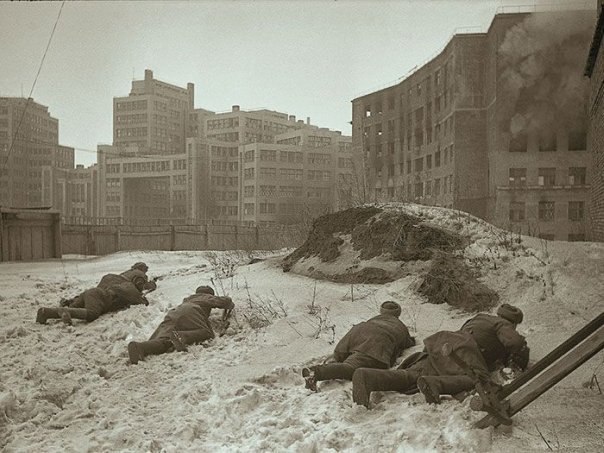
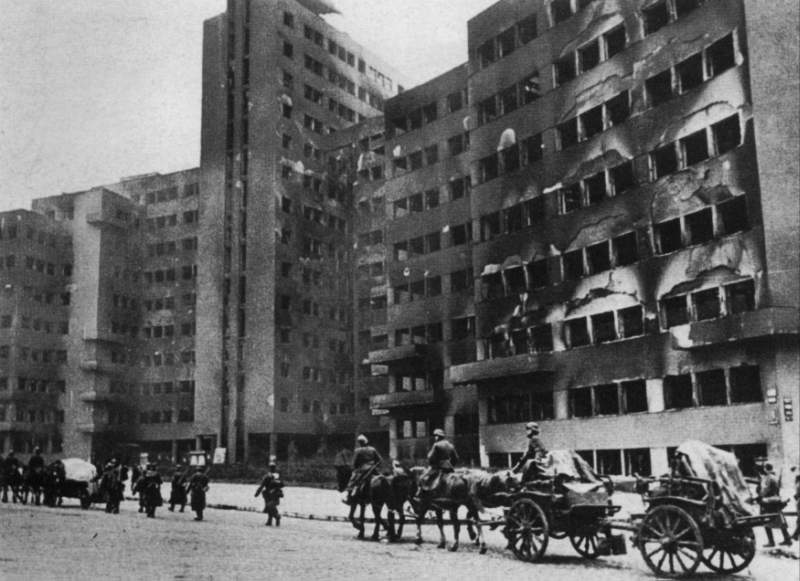
However, on October 20, German forces of the 55th Army Corps had already reached the outskirts of Kharkov. By October 23, they began besieging the city. Opposing them were the Soviet 216th Infantry Division, the 57th Infantry Brigade of the NKVD, a militia regiment, and a tank battalion (comprising 47 tanks), totaling approximately 20,000 soldiers, along with 120 artillery pieces and mortars, under the command of Major General Marshalkov. After two days of intense street fighting, by the end of October 24, Kharkiv fell into German hands.
**May 1942**
On March 22, 1942, the command of the South-West Front proposed to the Supreme High Command to launch a massive offensive operation (involving the Bryansk, South-West, and Southern Fronts, reinforced by reserve forces from the Supreme High Command) against the German forces on the southern wing of the Soviet-German front, with the aim of defeating those troops and advancing Soviet forces toward the line Gomel-Kiev-Cherkassy-Perovomaisk-Nikolaev, thereby advancing approximately 500 kilometers along a front that was roughly 900 kilometers wide.
However, on March 29, the Supreme High Command rejected this bold initiative and instructed Marshal Timoshenko to develop a plan solely for defeating the German forces surrounding Kharkiv and liberating the city, with the possibility of further advancing toward Dnepropetrovsk.
According to the plan developed by Lieutenant General Bagramyan and approved by Marshal Timoshenko by April 10, 1942, Soviet forces of the South-West Front were to launch two coordinated attacks against the German forces surrounding Kharkiv: from the northeast, using the 21st, 28th, and 38th Armies; and from the southeast, via the northern flank of the Barvenkov Peninsula, using the 6th Army and the army group commanded by General Bobkin.
Under this plan, Soviet forces were expected to break through the German defenses within the first week and encircle and eliminate the German forces in the Kharkiv area by the end of the second week. After that, they were scheduled to continue their advance in order to capture Dnepropetrovsk.
At the beginning of this operation, Soviet forces numbered approximately 400,000 people, including 27 infantry divisions, 20 tank brigades, 9 cavalry divisions, and 3 motorized infantry brigades.
In the area where the operations took place, the German forces consisted of approximately 250,000 people, divided among the 8th, 17th, 29th, and 51st Army Corps, totaling 13 infantry divisions and 2 tank divisions.
On May 12, 1942, Soviet forces launched their offensive against Kharkiv. After three days of intense fighting, they managed to advance approximately 20 to 25 kilometers toward the city. By the end of May 14, German forces had halted their advance and began counterattacking.
On the morning of May 17, German forces of the army group “von Kleist” (comprising 3 army corps, including 1 Romanian corps, totaling approximately 200,000 soldiers) launched an attack against the southern flank of the Barvenkov Peninsula, which was defended by the Soviet 9th and 57th Armies (a total of 13 infantry divisions, 4 tank brigades, and 3 cavalry divisions, approximately 170,000 soldiers).
During the day of May 17, German forces pushed the Soviet 9th Army back approximately 20 kilometers. The Soviet 57th Army managed to hold its positions, despite facing the attack of a Romanian corps.
On May 18, German forces drove the Soviet 9th Army back another 20 to 25 kilometers and occupied Barvenkovo, approaching Izyum closely.
On May 19, the German advances on the southern flank of the Barvenkov Peninsula created a threat of surrounding the Soviet forces stationed there—the 6th, 9th, 57th Armies, and the army group commanded by General Bobkin. Marshal Timoshenko ordered a cessation of the offensive against Kharkiv and focused the troops on resisting the German attacks. The Soviet 21st, 28th, and 38th Armies retreated to their positions before the beginning of the offensive on May 12.
On May 22, German forces completely cut off the Barvenkov Peninsula. The Soviet 6th and 57th Armies, as well as the army group commanded by General Kostenko (formerly under Bobkin), found themselves surrounded. In total, they consisted of 16 infantry divisions, 12 tank brigades, 2 motorized infantry brigades, and 6 cavalry divisions, approximately 150,000 soldiers. They were encircled by 10 German divisions (including 2 tank and 1 motorized division), 4 Romanian divisions, and 1 Hungarian division.
In the following days, German forces continued to tighten their encirclement, destroying or capturing Soviet units. On May 28, Commissar Gurov, the chief of staff of the 6th Army, Major General Bayunya, and remnants of the 6th Army managed to break through and retreat eastward. However, on that same day, Deputy Commander-in-Chief of the South-West Front, Lieutenant General Kostenko, Commander of the 6th Army, Lieutenant General Gorodnyansky, Commander of the 57th Army, Lieutenant General Podlas, and Major General Bobkin were all killed in action. Many other Soviet officers and soldiers also lost their lives, and the Barvenkov Peninsula was completely eliminated as a Soviet stronghold.
In total, during this operation, the Red Army suffered 170,000 casualties in dead and missing, and another 106,000 were wounded. According to General Colonel Krivosheyev, the Soviet losses also included 143,000 rifles, 9,000 automatic weapons, 3,600 machine guns, 552 tanks, 1,564 artillery pieces, 3,278 mortars, and 57,600 horses.
As a result of this operation's failure, Lieutenant General Bagramyan, the chief of staff of the South-West Front, was punished by Stalin for being demoted to the position of chief of staff of the 28th Army.
**February to March 1943**
On January 21, 1943, General Vasilevsky, the Chief of Staff of the General Staff, and General Kolikov, the commander of the Voronezh Front, presented Stalin, the Supreme Commander-in-Chief, with a plan for the operation to liberate Kharkiv. On January 23, Stalin approved this plan, naming it the “Operation Star.”
On February 2, 1943, the forces of the Voronezh Front launched their attack. From the east, the 3rd Tank Army advanced toward Kharkiv, consisting of 2 tank corps, 5 infantry divisions, 2 tank brigades, and 2 cavalry divisions; from the northeast, the 69th Army and the 40th Army (including 1 tank corps, 6 infantry divisions, and 3 tank brigades, advancing through Belgorod) also launched attacks. To the north, the 38th Army advanced toward Oboyan, while the 60th Army moved toward Kursk.
The overall objective of this operation was to capture Kursk, Belgorod, and Kharkiv and to advance the Voronezh Front approximately 150 kilometers within 15 to 20 days. After that, the forces were scheduled to continue their advance toward Poltava.
The Soviet forces participating in this attack numbered approximately 200,000 people. Opposing them were the German 2nd Army (with 7 German infantry divisions against the Soviet 38th and 60th Armies) and the German army group “Lanz” (with 4 German infantry divisions against the Soviet 3rd Tank Army, 69th Army, and 40th Army).
The Soviet forces advancing on Kharkiv included several large formations. On February 8, the forces of the Voronezh Front captured Kursk, and on February 9, the 40th Army took control of Belgorod. However, on February 5, the German tank corps “SS Reich” stopped the advance of the Soviet 3rd Tank Army approximately 50 kilometers east of Kharkov. This division had been transferred from France, and shortly after that, the SS tank corps “SS Adolf Hitler” also arrived in the Kharkiv area.
On February 15, the Soviet 3rd Tank Army, together with the 40th and 69th Armies (a total of 8 tank brigades and 13 infantry divisions), launched a simultaneous assault on Kharkov from three different directions. Facing them were two German SS divisions, “SS Reich” and “SS Adolf Hitler.” On February 16, these two German divisions withdrew from Kharkiv, allowing the Soviet forces to successfully liberate the city.
By March 1, the forces of the Voronezh Front had advanced approximately 150 to 250 kilometers within 27 days of fighting.
On March 4, German forces launched a counterattack against Kharkov from the south. The German tank corps (with 3 divisions) and the 48th Tank Corps (including 2 tank and 1 motorized division) clashed with the Soviet 3rd Tank Army and the 5th Guards Tank Army. On March 7, the Soviet forces began retreating toward Kharkov.
On March 10, German forces approached the northern and southern outskirts of Kharkiv, and on March 12, street fighting erupted in the city. By March 14, the entire city of Kharkiv and the Soviet 3rd Tank Army were completely surrounded. On March 15, some units of the 3rd Tank Army managed to break through the encirclement, but by then, Kharkov had fallen into German hands.
At the same time, German forces also launched attacks against Kursk and Belgorod. Belgorod was captured by the Germans on March 18, while Kursk managed to hold its position. From March 4 to 25, the forces of the Voronezh Front retreated approximately 100 to 150 kilometers, creating what came to be known as the Kursk Bulge. In July 1943, a massive battle took place in this area.
As a result of the battles for Kharkiv, General Kolikov, the commander of the Voronezh Front, was removed from his position on March 22 and appointed head of the Personnel Department of the Ministry of Defense.
**August 1943**
On August 3, 1943, Soviet forces of the Voronezh and Steppe Fronts launched their attack against Kharkiv (the “Rumyantsev Operation”). The Soviet forces included 8 tank corps, 3 mechanized corps, 5 independent tank brigades, and 50 infantry divisions, totaling approximately 980,000 people, 2,400 tanks and self-propelled artillery vehicles, and 12,000 artillery pieces and mortars. Opposing them were the German 4th Tank Army and 14 infantry divisions (with a total of up to 300,000 people, approximately 600 tanks and self-propelled artillery vehicles, and 3,000 artillery pieces).
On August 5, Soviet forces captured Belgorod. On August 11, the Soviet 53rd, 69th, 7th Guards Armies, and the 57th Army approached Kharkiv from the north and east, coming within 10 to 15 kilometers of the city. On the same day, three German SS tank divisions (“SS Reich,” “SS Totenkopf,” and “SS Viking”) were urgently transferred from another front and launched an attack against the Soviet 1st Tank Army and the 5th Guards Tank Army. These divisions were ordered to cut off Kharkov from the south by the end of August 12. However, the three German tank divisions managed to hold back the two Soviet tank armies for a period of 6 days. As a result, Soviet forces were unable to capture Merepa until September 5. This battle is considered one of the most intense tank battles of World War II, on par with the battles near Prokhorovka in July 1943 and Tyrgu-Frumos in May 1944.
By August 18, Soviet forces had reached the outskirts of Kharkiv. On the afternoon of August 22, German forces began withdrawing from the city. On August 23, Kharkov was completely liberated by Soviet forces—the 10 infantry divisions and 1 tank brigade of the 69th, 7th Guards Armies, and the 53rd Army.
During the Belgorod-Kharkiv Operation (from August 3 to 23, 1943), Soviet forces suffered 71,600 casualties in dead and missing, and another 184,000 were wounded. They also lost 1,864 tanks and self-propelled artillery vehicles. By the end of this operation, Soviet forces had advanced approximately 80 to 100 kilometers.
#Kharkov #Kharkiv #1stolica_history
为您的项目寻找最佳专业人士
维修、建设和装修专家随时准备帮助您