Church-tomb of Sapegov, Bilche-Zolotoe
Articles
Let’s get to know Ukraine!

Church-tomb of Sapegov, Bilche-Zolotoe

The church-tomb is located on the territory of the former manor of the Sapieha family, which is in the village with the unusual name Bilche-Zolotoe, founded in the distant 9th century on the river Seret. The church was built in 1839. During the possession of this territory by representatives of the Polish clan of Sapeg, the structure acquired the form of a chapel-burial vault (1898). In the underground vaults of the structure were found burials of the members of the genus Ganere, which were later reburied in a rural cemetery.

The church-burial-vault is located on the territory of the former manor of the Sapieha family, which is in the village with the unusual name Bilche-Zolotoe, founded in the distant 9th century on the river Seret.

The church was built in 1839. During the possession of this territory by representatives of the Polish clan of Sapeg, the structure acquired the form of a chapel-burial vault(1898).  In the underground vaults of the structure were found the burials of members of the genus Ganere, which were later reburied in a rural cemetery.

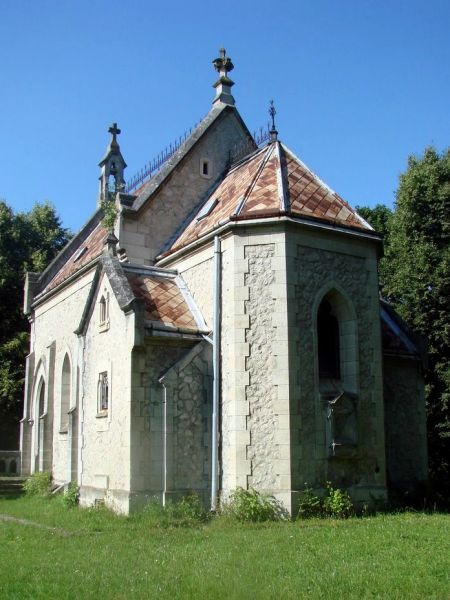
The tomb is a small compact building, endowed with elements of neo-Gothic architecture. The facade of the landmark is decorated with sculpture, large narrow windows, arches, stairs and a balcony from a number of figured columns. On one of the walls of the church there are two arms: an armed rider and an arrow with two lines crossing it ("Fox"). The latter is the patrimonial emblem of the genus of the magnates of Capegr. The building is buried in the greenery of the surrounding park trees. In this form the church has survived to the present day.
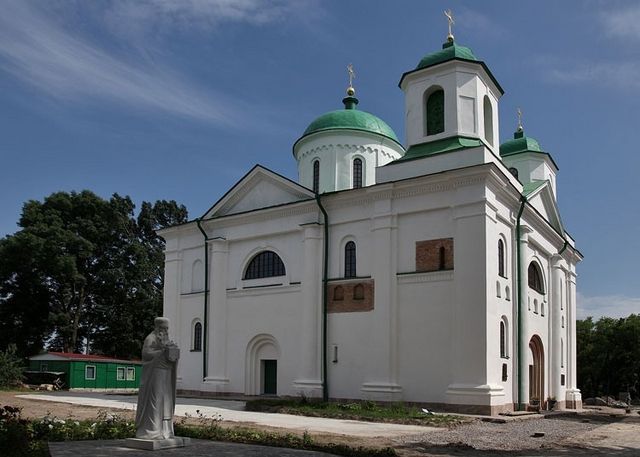
Костел-усыпальница Сапегов, Бильче-Золотое

The chapel-graveyard is located on the premises of the former Sapeg family estate in the village of Bilche-Zolotoye, which was established in the 9th century on the Seret River.

The church was built in 1839. During the period when this land was owned by the Polish Sapeg family, it took on the form of a chapel-graveyard (in 1898). Burials of Sapeg family members were found in the underground vaults, but these remains were later reburied in the local village cemetery.

The burial ground is a small, compact building featuring elements of Neogotic architecture. Its facade is decorated with sculptures, large narrow windows, arches, a staircase, and a balcony with ornate balustrades. On one of the walls, there are two coats of arms: a armed knight and a shield with a cross on it (the Sapeg family crest). The church is nestled amidst the green trees of the surrounding park. It has been preserved in its original state until today.

\"Chapel-Graveyard

Recommended articles

Find the Best Professionals for Your Project

Expert repair, construction, and renovation specialists ready to help you right now