Bushan Castle, Bush
The Busch Castle is located on the cape formed by the rivers Busancha and Murafa. This beautiful ancient castle was erected in the distant 16th century. The initiator of its construction was the Polish hetman Jan Zamoysky.
History of the Castle of Busan
In those days, its area was almost half a hectare. The building was rectangular in shape and included 6 towers. Each of them contained a separate cellar for storage of powder stocks. Among themselves, all the towers were connected together with the help of secret underground tunnels. Approaches to the castle from all four sides were well guarded by a very deep moat and the highest shaft. The fortress was constantly raided by Tatars.
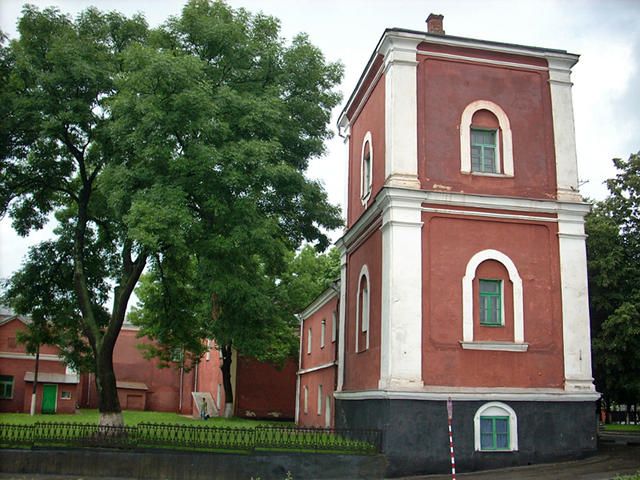
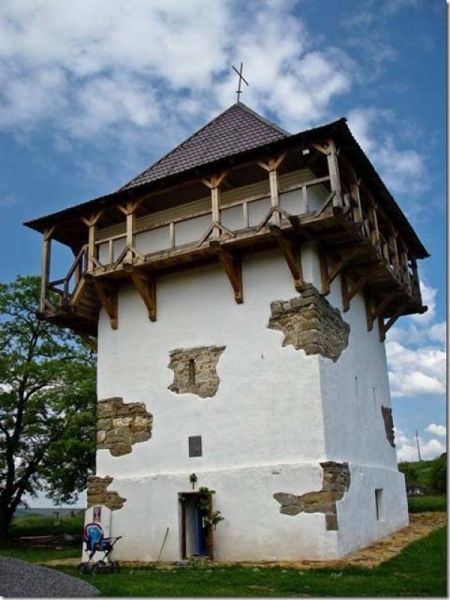
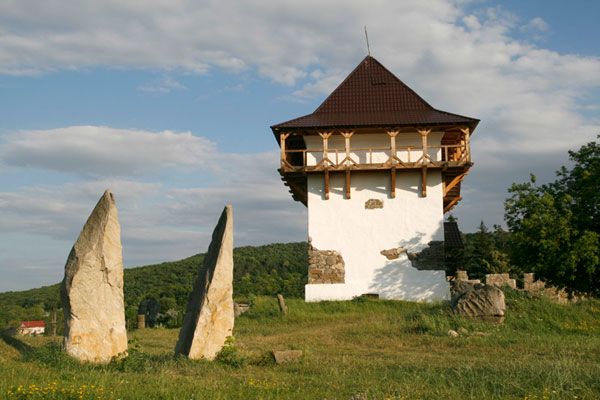
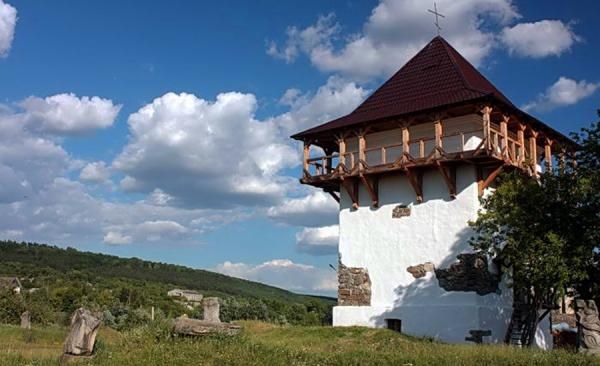
Since 1648, the building of the fortress was used as a refuge for local Cossacks, but in 1654 it was again conquered by Polish troops. In this region there is a legend that when the Poles broke into the city, his defense was ruled by the widow of one of the centurions. She managed to set fire to powder supplies and blow up the fortress with the enemy. As a result, only one tower remained from the castle, which in 1756 was converted into a bell tower for the Mikhailovsky church. During the Soviet era, the church was destroyed.
The Busan Castle today
Until now, from the legendary castle remained only the ruins of the fortress, cellars and several underground passages. On the upper tier of the surviving tower there is a museum of village defense, and on the site of the former settlement there are burials of Cossacks.
This whole complex is a historical and cultural reserve of national importance. It was founded in 2000. Archaeological excavations in this area continue even now.
Nearest sightseeings near the Busch castle
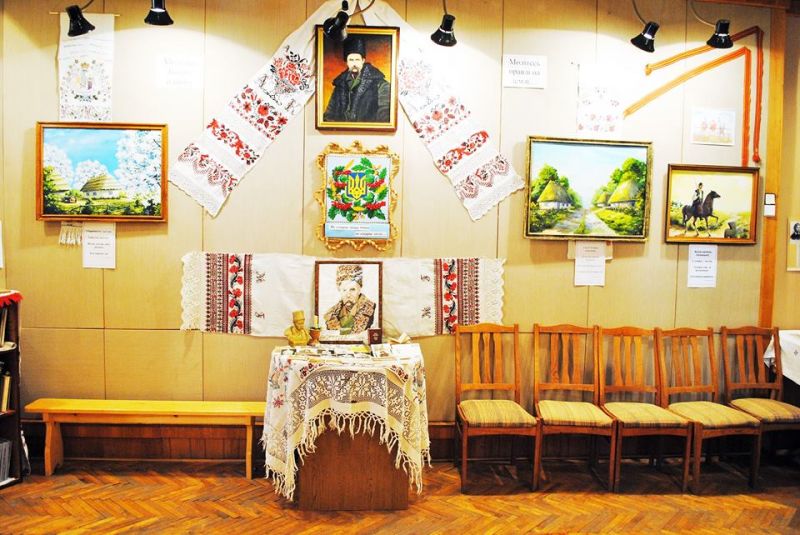
Near the Busch Castle there are other, no less significant, attractions. Among them there is the Rock Temple, which is considered pre-Christian and has unique rock paintings. According to various historical data, these drawings date back to 2 or 12 centuries. The rock temple is a unique find of its kind, which has no analogues in the whole world. Nearby there is a museum of ethnography, discoveries in 2004. It is located in an old hut, which is more than 100 years old. In the museum you can see objects of everyday life, dishes, icons, clothes, towels and other details relating to the history of this region. You can also see Gaydamak Jar. He is in the woods among beautiful and unusual rocks in form. The Gaydamak rock has a cave where, according to legend, once fought insurgents were hiding. Well, no less interesting is the Cossack cemetery, which is located not far from the Busch castle. There are graves in the 17th and 19th centuries. Unusual and unique are the Cossack crosses, executed in different forms.
Find the Best Professionals for Your Project
Expert repair, construction, and renovation specialists ready to help you right now