The Republic of Palau is a homonymous archipelago consisting of 250 islands with different terrain. The lion's share of the islands & ndash; coral islands surrounded by water. The archipelago is located west of the Caroline Islands.
Palau is a country of countless islands

For a long time, Palau was under the US protectorate. In 1994, the state gained complete independence.

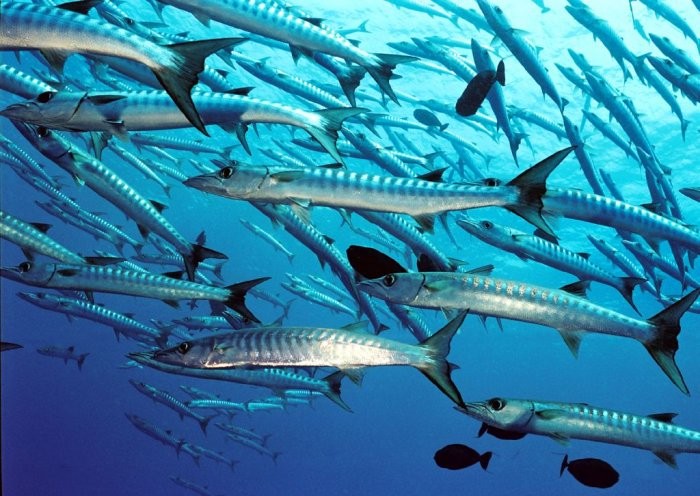
The nature of the archipelago is unique and, according to scientists, its shores are home to about one and a half hundred endangered species of sharks. The first mention of Palau dates back to the mid-16th century. The nature of the aphipelag is so unique that it was given the title of underwater miracle of the world.


In the east of one of the largest islands of Eil-Malk, there is Lake Medusa, which literally teems with thousands of harmless jellyfish. There are only two species in the lake: & ndash; gold and moon. In connection with the absence of predators in the lake, the total number of jellyfish in the lake area of 0.074 square kilometers, exceeds two million. This is the only lake on the island where diving is allowed.

By the way, for fans of extreme diving, it offers immersion in the lake with unique species of crocodiles, as well as in lagoons with sharks.


The Republic of Palau consists of 16 states. The total population barely exceeds 20 thousand people. The main modes of transport are water and air transportation. Palau International Airport is located in the state of Arirai, on Babeltap Island, near the village of Melekeok. From here, regular flights to South Korea, Japan, Taiwan and the island of Guam, as well as the Philippines. The length of the roads on the island does not exceed a total of 80 kilometers.


One of the main attractions of Palau are the rocky islands. It is a group of rocky islands, drowning in greenery and with white sandy beaches. Most of them & ndash; uninhabited.


The islands are famous not only for their beaches, but also for the incredibly transparent lagoons, as well as for the umbrella form of the islands themselves. The rocky part of the coast is covered with young corals, the total number of which exceeds seven hundred. Palau deservedly can be considered a real paradise for relaxation. After all, the fluctuation of seasonal temperatures does not exceed a few degrees, with a stable temperature of at least +28 degrees Celsius.


According to the results of the archaeological excavations conducted here, the first representatives of mankind lived here in the 10th century BC