Armenian Cathedral
Articles
Let’s get to know Ukraine!

Armenian Cathedral

In the second half of the 13th century, in the historical center of Lviv was the quarter where Armenians lived. In those days a powerful Armenian diaspora was formed in Lviv. The center of the spiritual and cultural life of Armenians was the Armenian Cathedral, built on the project of the architect Doring. It is believed that the Armenian masters took part in the construction of the cathedral, since there is a similarity with the cathedrals in Armenia.

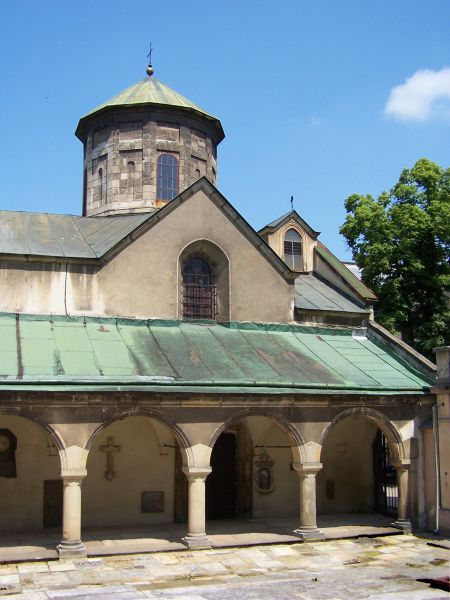
Throughout its existence, the church has been updated many times, reconstructed, so in the ensemble of the Armenian Cathedral you can see different architectural styles: the Armenian-Oriental 14th century, the Renaissance, the Baroque of the 17th century, the eastern - the beginning of the 20th century.

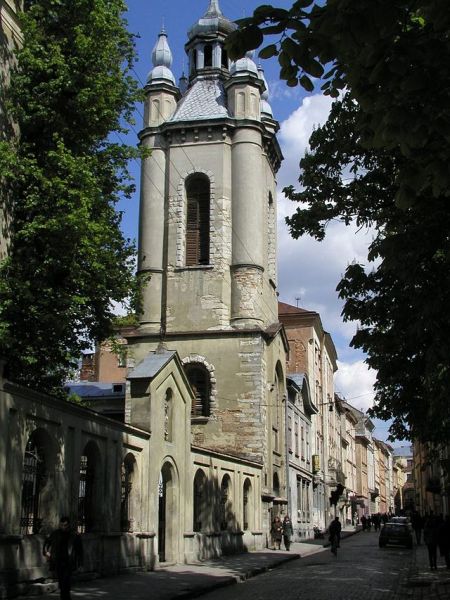
A beautiful tower-bell tower, which is located in front of the entrance to the courtyard of the cathedral, produces unforgettable impressions for everyone. It was built by the famous architect Peter Krasovsky in 1571. Admirable views of tourists are also attracted by the famous wooden chapel of the 18th century, decorated with amazing carvings. Here is the altar with the image of Christ on Calvary. This historical monument belongs to UNESCO heritage.

The courtyard of the cathedral is evenly tiled, some of which are built into the walls. An ancient Armenian cemetery has been preserved here - the tombstones were transferred from other Armenian churches. In the eastern courtyard you will see the column of St. Christopher in 1726, which impresses with refinement and real mastery of execution. Nearby is the former palace of Armenian archbishops of the 17th century.

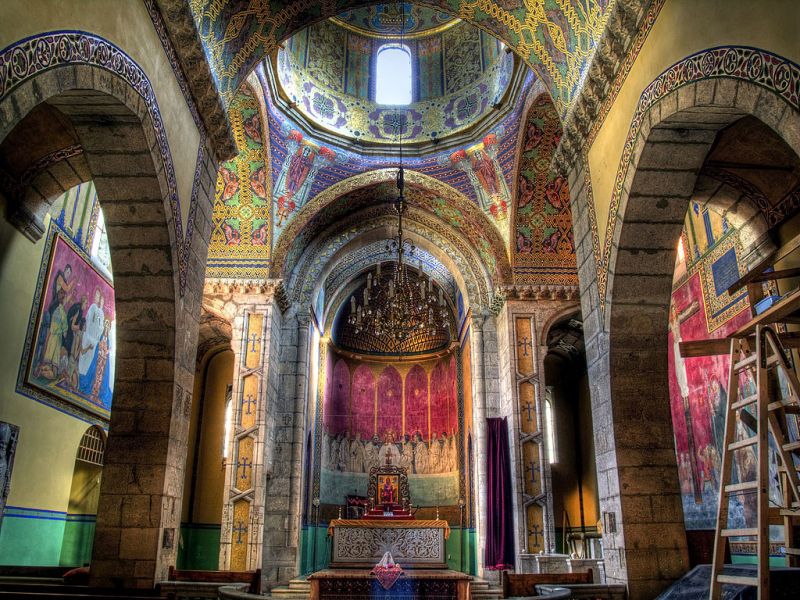
The real beauty awaits you in the middle of the Armenian Cathedral! There is such feeling, as if you fall into an amazing fairy-tale world. The temple has several stained glass windows, which, passing the sunlight, form a charming glow. The walls are decorated with a mosaic of multi-colored pebbles and smalt.

In the interior of the cathedral, Armenian motifs are traced. Particularly valuable are the frescoes depicting the Last Supper and the "Crucifixion" fresco by Polish artist Jan Henrik Rosen. Famous frescoes can be seen in the main part of the cathedral. An interesting plot of the fresco "Vision of Catherine Emmerich." The feet of the angels depicted do not touch the ground. The artist emphasized his supernatural essence with the help of a painted flame. Also worth paying attention to the fresco "Burial of the Holy Odeon". It is believed that the Odeon marked the beginning of the celebration of the Day of All Saints. Fresco symbolizes time itself. Artist Jan Henry Rosen mystically depicted the funeral of the Odeon against the background of the Last Judgment and the starry sky. Three figures of monks bear the tomb of a saint. These are three allegories, they represent the past, the present and the future. The last monk that carries the body of the Odeon is depicted in a hood and symbolizes the past, which can not be returned. The look of another monk is addressed to the viewer. This is the present. And the most mysterious is the figure of the monk, pictured first. His head is obediently tilted, his eyes are closed. He personifies the future of the person, which must be accepted. Monks accompany the souls of the dead, in their hands they hold candles.

In the cathedral you can see many other mysterious frescos. Visit the Armenian Cathedral and touch the history where every stone, every decorative detail, every image breathes old past, which was created by the Armenian society, artists and architects.
Армянский кафедральный собор

Армянский кафедральный собор

Армянский кафедральный собор

Throughout its existence, the church has been renovated and reconstructed on many occasions, which is why the architecture of the Armenian Cathedral incorporates various styles: the Armenian-Oriental style of the 14th century, Renaissance elements, Baroque features from the 17th century, and an Eastern-inspired design from the early 20th century.

The magnificent bell tower located in front of the cathedral entrance leaves a lasting impression on everyone who sees it. It was built in 1571 by the renowned architect Peter Krasovsky. Tourists are also drawn to the famous wooden chapel from the 18th century, adorned with exquisite carvings. Inside, you can find an altar depicting Christ on the Golgotha. This historic monument is listed on the UNESCO World Heritage List.

The courtyard of the cathedral is paved with tiles, some of which are even embedded in the walls. Here, an ancient Armenian cemetery is preserved; the tombstones were transferred from other Armenian churches. In the eastern part of the courtyard, you will see the Column of Saint Christopher from 1726, which is admired for its elegance and masterful craftsmanship. Not far away lies the former residence of Armenian archbishops from the 17th century.

But the true beauty awaits you inside the Armenian Cathedral itself! It feels like stepping into a magical fairy-tale world. The church features several stained-glass windows that create a mesmerizing glow when illuminated by sunlight. The walls are also decorated with mosaics made from colorful stones and glazes.

The interior design of the cathedral incorporates many Armenian motifs. Of particular value are the frescoes depicting the Last Supper and the Crucifixion, created by the Polish artist Jan Henryk Rosen. These famous frescoes can be seen in the main part of the cathedral. The fresco “The Vision of Catherine of Emmerich” is also noteworthy; in it, the feet of the depicted angels do not touch the ground, emphasizing their otherworldly nature through the flames painted by the artist. Another interesting fresco is “The Burial of Saint Odeon,” as it is believed that Odeon was the originator of the celebration of All Saints’ Day. This fresco symbolizes time, and Jan Henryk Rosen mystically depicted Odeon’s funeral against a backdrop of scenes from the Last Judgment and the starry sky. Three monks carry the saint’s coffin; these three figures represent the past, present, and future. The last monk, wearing a hood, symbolizes the past that can no longer be changed. The gaze of another monk is directed toward the viewer, representing the present. The most enigmatic figure is the first one depicted: with its head bowed and eyes closed, it symbolizes the future that must be accepted. The monks are accompanied by the souls of the deceased, who hold candles in their hands.

Within the cathedral, you will find many other mysterious frescoes. Visit the Armenian Cathedral and experience a history where every stone, decorative detail, and painting breathes of a distant past created by Armenian society, artists, and architects.

Armenian Cathedral

Armenian Cathedral

Armenian Cathedral

Recommended articles

Find the Best Professionals for Your Project

Expert repair, construction, and renovation specialists ready to help you right now