What is Big Ben, what Westminster Abbey and Tower Bridge look like, many know, but the secrets that conceal these sights are not known to everyone. Why the main clock tower of the capital almost collapsed and because of which the tallest skyscraper in London, the Shard received such a name - read in the material
10 little-known facts about the main attractions of London
1. Big Ben could fall in the 90's
During the construction of the Westminster metro station (for the metro subway read our Metro London material: how to figure out the world's oldest subway system), a serious problem arose before the engineers: to build a platform so as not to catch Big Ben. After all, the tower was only 34 meters from the place where the work was being done, and the foundation of the 100-meter Big Ben was only 3 meters below the ground. If the tower bent 12 centimeters, it could collapse completely to the ground. Therefore, throughout the entire construction of the station, experts controlled the slope of the tower and 22 times strengthened the soil with chalk, which helped reduce the Big Ben's inclination to 3.5 centimeters.

Photos: getyourguide.com
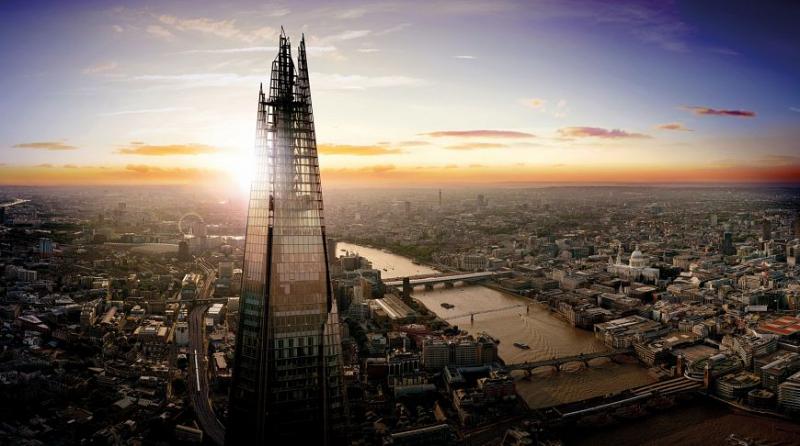
2. Skyscraper Cucumber should be twice as high as
After the building at 30 St Mary Ax was damaged by the terrorist attack in 1992, it was planned to build a skyscraper twice as much as what we know today as the Cucumber. However, the construction height of 360 meters was not destined to appear because of the protests of residents who said that the skyscraper would spoil the panorama of the city and prevent the flight of aircraft from Heathrow and London City. Then the height of the building was limited to 180 meters.

Photo: huftonandcrow.com
3. Buckingham Palace was bombed twice during the London Blitz
During the bombing of London, German fighters first attacked the capital's East End, where the industrial and transport resources of the city were located, followed by the West End, including Buckingham Palace. King George VI and Queen Elizabeth in solidarity with the inhabitants of the city were in the palace, and, according to many historians, were in real danger. As a result, the bombing rallied the inhabitants of the city and the royal family and played into the hands of the entire British monarchy.

Photo: huffingtonpost.com
4. The Tate Modern Gallery has an unexpected design relative
Everyone knows that the gallery of modern art Tate Modern is one of the most famous in the world, but very few people know that the architect Giles Gilbert Scott was also the author of the design of the famous red phone booths.
Photos: unfold1.wordpress.com
5. The Tower Bridge galleries were not always open
One of the symbols of London, Tower Bridge, was not always open to pedestrians on the second floor. Galleries were very popular among pickpockets, and they had to close. In 1910, the top floor of the bridge was reopened, and today it is used as a museum and an observation deck.

Photo: digitalresult.com
6. The splat is called "
The newest and tallest skyscraper in London - The Shard - got its name not only because it looks like a splinter. Members of the organization The English heritage, which opposed the construction of the building, was once told that it would become a splinter of glass that would pierce the heart of historic London. However, in the end, the construction was not only built, but also called Oskolkom.

Photo: the-shard.com
7. There is one secret place at Kings Cross Station
And it's not about the platform 9 & frac34 ;. Few people know, but under the King Cross the Flit River flows, which several centuries ago was on the surface, but in the XIX century it went underground. There are many such underground sources in London, the city is literally built on rivers that flow through sewer pipes.

Photo: en.wikipedia.org
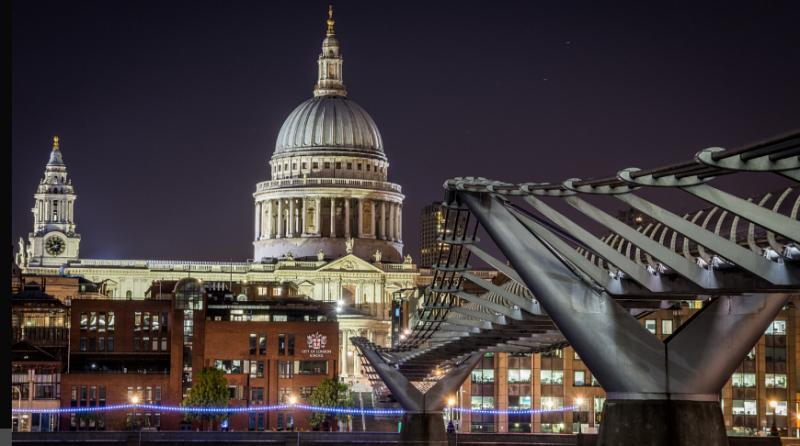
8. Dome of St. Paul's Cathedral - an optical illusion
The dome of the most famous temple in London is impressive in size. But if you find yourself in the cathedral, you will realize that outside it looks much larger than inside. The architect Christopher Rehn used the optical illusion during the construction of the structure, due to which he received the nickname impudent genius.

Photo: hdwallpaperbackgrounds.net
9. The Westminster Palace has its riddles
In the southern half of the palace is the hall of the House of Commons, where on the right side are representatives of the ruling party, and on the left - the opposition. Rows are separated by red lines, the distance between which is equal to the length of two swords. The person who crosses this line is considered an attacker on the opponent.

Photos: flickr.com by Les Butcher
10. Westminster Abbey - the most famous burial place of the famous British
Of course, we all know that many representatives of the British monarchy were buried in the abbey: from King Sabert in 616 and Edward the Confessor in 1066. But also there are many other famous personalities, including Charles Darwin, Charles Dickens, Isaac Newton, Samuel Johnson and many others. In the upper part of the abbey is the tomb of Queen Elizabeth I, and next to her is the grave of her rival - Queen Mary Tudor, known as Bloody Mary, which makes their rivalry eternal.
Photo: britainfromabove.org.uk
Based on Thrillist materials.