
We are all people, we are afraid of something from time to time. Our fears are temporary and situational, but are chronic — up to phobias. In some cases, they are particularly active — usually when we get out of our comfort zone. One such situation is — such a seemingly pleasant business, like air travel
TOP 5 fears of the air traveler and how to deal with them
To some extent, flight — it is always stressful. To minimize it, let's analyze the most common fears of travelers and tell you about the methods of neutralizing them. So ...
Fear # 1: Being late for a flight and/or losing a docking
One of the most common fears even for experienced travelers, not to mention newcomers. With delays in large and unfamiliar cities it is better to be safe on all possible fronts: to work out the route in advance, to calculate the time taking into account traffic jams (in the era of smart mobile applications this is not a problem), to think about alternative ways for force majeure and to leave with a margin. With a lot of stock! It's better to wait at the airport (where time flies very quickly) — in cafes, duty-free stores or reading a tape & Facebook; & raquo; at the gate, — than to be nervous in a traffic jam and count the minutes left before the registration closes. As for the loss of connections, here you can not secure yourself, unfortunately. Unless, if waiting time for a transfer at the airport is almost half a day — but this is not a guarantee, the cases are different. Minimizing damage from lost connections will be facilitated by a single (& laquo; through) ticket purchased from one airline. Even if in the end it involves the flight of flights of several partner firms, the seller of his carrier is responsible for bringing you to the final destination. If one of the flights is delayed and the other you do not have time, the airline will in any case send you free for the next flight. In case of long waiting times, you will also be provided with a hotel and a shuttle service. But if you join the flights manually, buying tickets from different companies, the responsibility for being late lies only on you. Most likely, in this case you will have to buy a new ticket. Want to sleep peacefully — Do not put puzzles on your own: losing one part can be too expensive. In all senses!
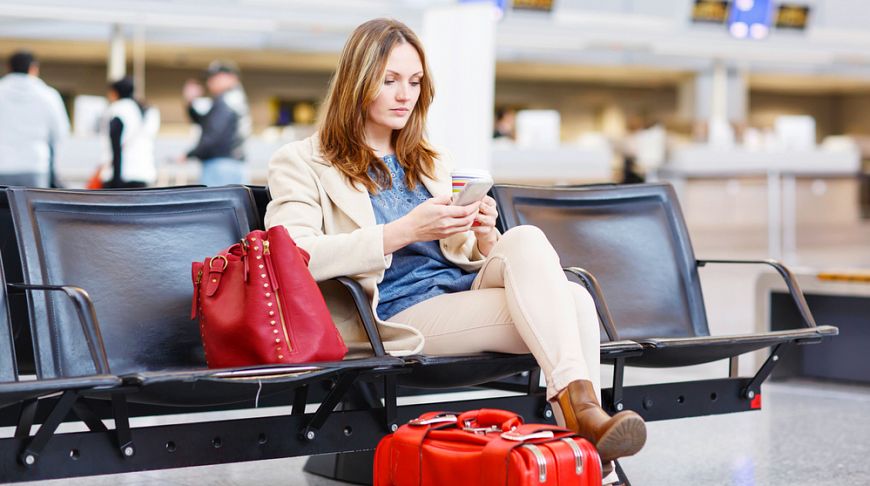
Photo: Shutterstock
Fear # 2: Lose money for an air ticket because of a refusal to visa
Unfortunately, the visa-free regime with the EU so far only serves as a favorite topic of election promises and congratulatory congratulations from the country's leadership. For visas, in all likelihood, we will have to walk another couple of years, and the requirements for the package of documents were and remain very severe. For example, many embassies require round-trip tickets as a confirmation of the purity of your intentions when visiting their beautiful country. And few people care about the fact that most travelers buy a ticket at the lowest rate at which — alas — or there is no possibility to return or change the date of departure, or the cost of this service is quite comparable to the price of the ticket itself. It is worth noting that, formally, airlines are not responsible for a visa that is not received and you should not have anything in this situation: refused a visa — your problems. What to do in this situation? Be sure to read the company's policy on this issue before buying a ticket. The national carrier of UIA, for example, in such a situation meets the passengers and returns the cost of the ticket, if you contact him three days before the flight with documents confirming the refusal of the visa. This is the company's official position. Just keep in mind that the ticket must be in the country whose embassy you refused. This is a mandatory requirement!
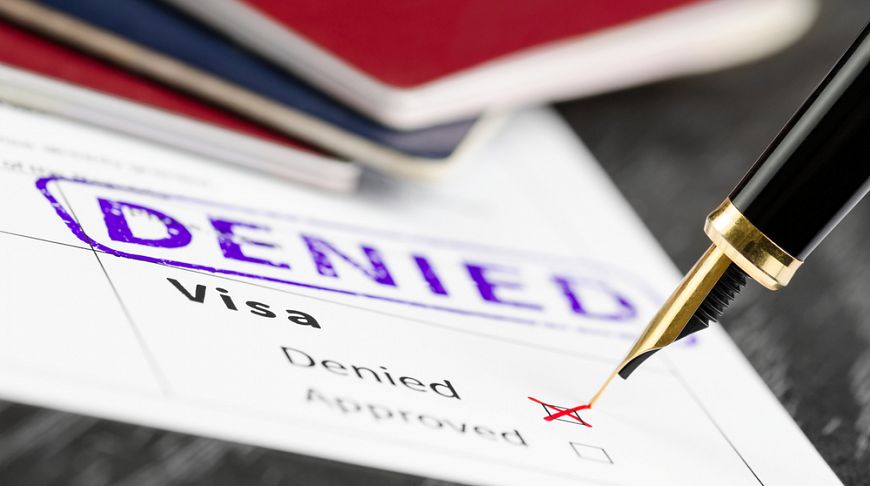
Photo: Shutterstock
Fear # 3: Lose the baggage
Theoretically, the probability of loss of baggage is quite low. If you take the statistics of the past year, with an annual turnover of passengers of about 3.5 billion problems with luggage emerged in 24 million people — those. less than 0.7%. To get into such a small group, the chance is kind of small, but in practice it still happens. Each of us, flying, in the arsenal of such a story certainly will be found. In an amicable way, nothing particularly terrible here is not — according to the same statistics, 97% of losses are in the first week of searches. Formally, this can be considered a delay. To make it really not a loss, before the trip you need to do minimal preparatory work. First, remove the baggage labels with the barcodes from previous trips — they can confuse the scanning system that distributes luggage. Do not forget to hang a luggage tag with your contact information on the suitcase, as well as identification signs that will help distinguish it from similar counterparts. Bright tape or keychain will not confuse the suitcase with the rest — Other passengers of the flight will not take it (at least, by mistake). If the suitcase to you still did not leave, go to the stand Lost & amp; Found, which is located in the baggage claim area. Provide a baggage ticket (it is glued to the boarding plane), write a statement, describe the contents of the suitcase — on the basis of this, an act is drawn up. Do this before you exit the control zone! In UIA explainthat if the suitcase is not found, then within 7 to 21 days, you need to contact the airline with a claim (the act of loss and baggage certificate are attached). After 21 days, the baggage is considered lost, and you are compensated.

Photo: Shutterstock
Fear # 4: Lose the ticket
& laquo; Tickets, money, documents & raquo; — we all repeat this mantra invariably, sitting down on the path before the journey. It has come to us since the times when the physical ticket was an important travel document, the loss of which was equivalent to the cancellation of the trip itself. It would seem that today everyone already knows that tickets from the sacred list are in most cases excluded. But it only seems so — believe me, many still throw cold sweat, if they do not find the desired piece of paper in the kit for travel. Sometimes there is reason to worry, but more often — no. Let's figure it out! There are two situations and two fundamentally different approaches. First — classical air transportation. In this case, it does not matter whether you have an electronic ticket or a paper ticket — Your data has been entered into the system, and everything that is required at the front desk — this is a passport with valid visas (if they are needed). Printout of the ticket is not required. You can have it for your own peace, but if it's not there — nothing terrible.
Electronic ticket — In general a piece convenient. Buying it on the site, you save time and money (no fee for registration). If you buy it on the airline carrier page, the savings in most cases will be even more — UIA, for example, guarantees a better pricefor tickets purchased on the official website. The second and directly opposite case with paper tickets — this is the flights of low-cost airlines. There are possible options: be prepared that without a printed ticket or boarding pass you can not do — all other cases will be considered an additional service and charged separately (very inhumane, as well as all extra-services of loukosterov). So be afraid or not depends not so much on you and the ticket as on your carrier.
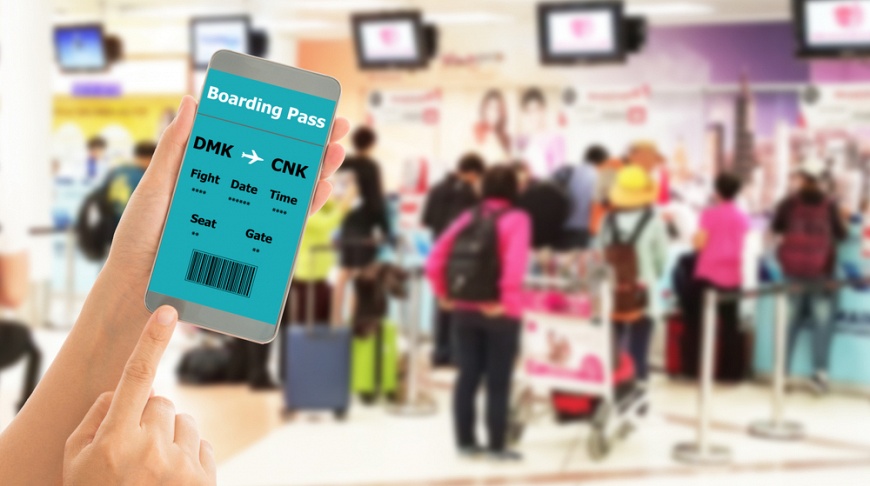
Photo: Shutterstock
Fear # 5: Turbulence
& laquo; The commander turned on the scoreboard & laquo; Fasten belts & raquo; — we enter the turbulence zone & raquo ;. Stewardesses suspend the service, passengers fold tables and fall into two categories — those who serenely go deep into a book or film (lucky ones!), and those who pale and begin to pray — sometimes out loud. There is a third category — Those who are generally afraid of flying, and not least because of the notorious turbulence. How justified are such fears? Turbulence — This is an airy chaos caused by winds, thunderstorms, reactive aircraft tracks, the proximity of mountains and a number of other factors. This is very common and in most cases harmless (albeit discomforting) phenomenon, the approach of which pilots are almost always aware of. Yes, it is possible to get injured as a result of turbulence, but, firstly, it happens extremely rarely (no more than 60 passengers per year from the 3.5 billion already mentioned), and secondly, two-thirds of the victims — it's stewards and not strapped air travelers. But most importantly — from turbulence, planes do not fall! Just take it for granted and relax. However, the belt at the command of the captain still should be buttoned — then, apart from unpleasant sensations, turbulence is certainly not in danger.

Photo: Shutterstock