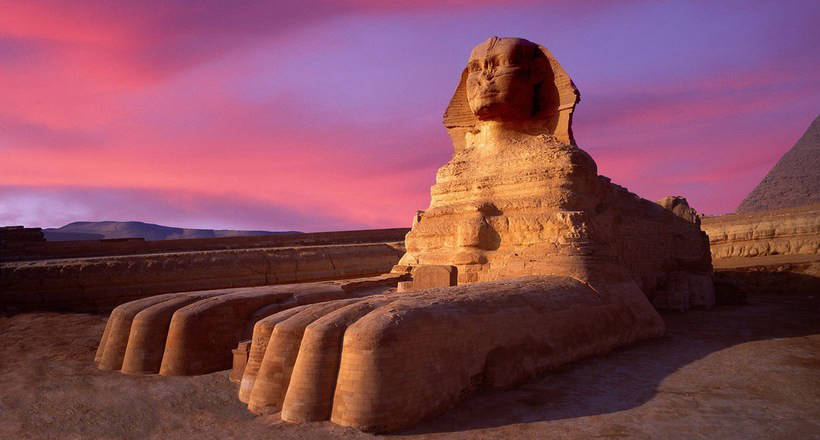
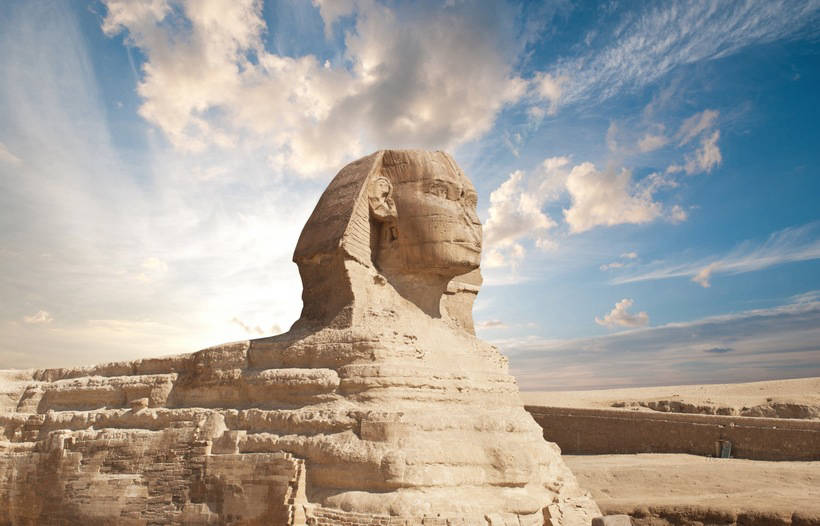
The architecture of Ancient Egypt has long been covered with legends. Not an exception and the Great Sphinx, standing on the banks of the Nile in Giza. It is not known who, when and for what it was built, but, undoubtedly, this historical property. We gathered the most interesting facts about this giant sculpture that can hardly be found in history textbooks.
Interesting facts about the Sphinx, which are not in history textbooks
The oldest statue on Earth

Despite the fact that there is no exact date for building a sphinx, it is still considered the oldest sculpture in history. According to some information, it was erected in the XXVI century BC. under Pharaoh Hefrene (he also built one of the pyramids of Giza). And many scholars find the resemblance of the face of the statue to the face of Khafre. However, already in the 1950s this theory was questioned: the fact is that the base of the Sphinx was eroded, as if the sculpture had been in the water for a long time. And this level of precipitation was fixed even earlier — at the turn of the IV-III millennium BC
Sphinx — the largest statue in the world
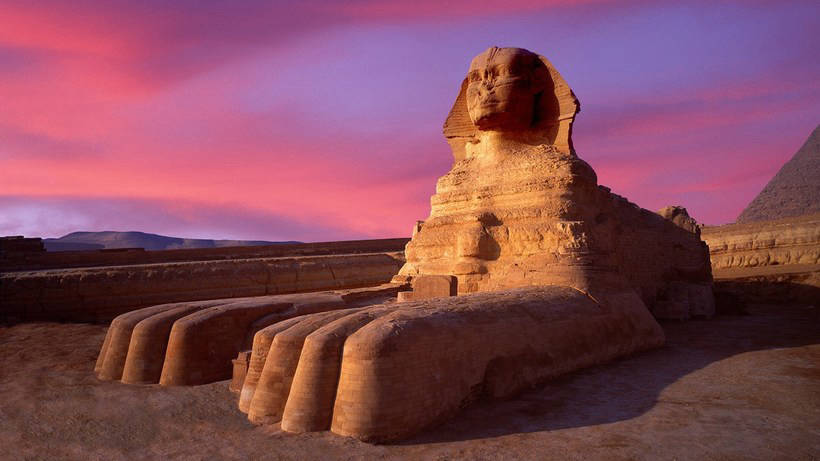
The length of the Great Sphinx — 72 meters, and height — 20 meters. Today it is considered the largest statue in the world. It is amazing how in ancient times it was possible to build such a giant sculpture that stood for many centuries.
Sphinx for many centuries hid the sands

The Sphinx, partially hidden by sand, 1871
The Egyptian desert is merciless: for a long time she kept the Sphinx under the sand. All causes strong winds, so that the sculpture was buried in the sand to the very shoulders. The first time to unearth the statue was tried at Thutmose IV in the 14th century BC. The chest of the Sphinx was cleared only by the Italians in 1817, and completely the statue appeared from the sand less than a century ago — in 1925.
Sphinx several times deprived of body parts
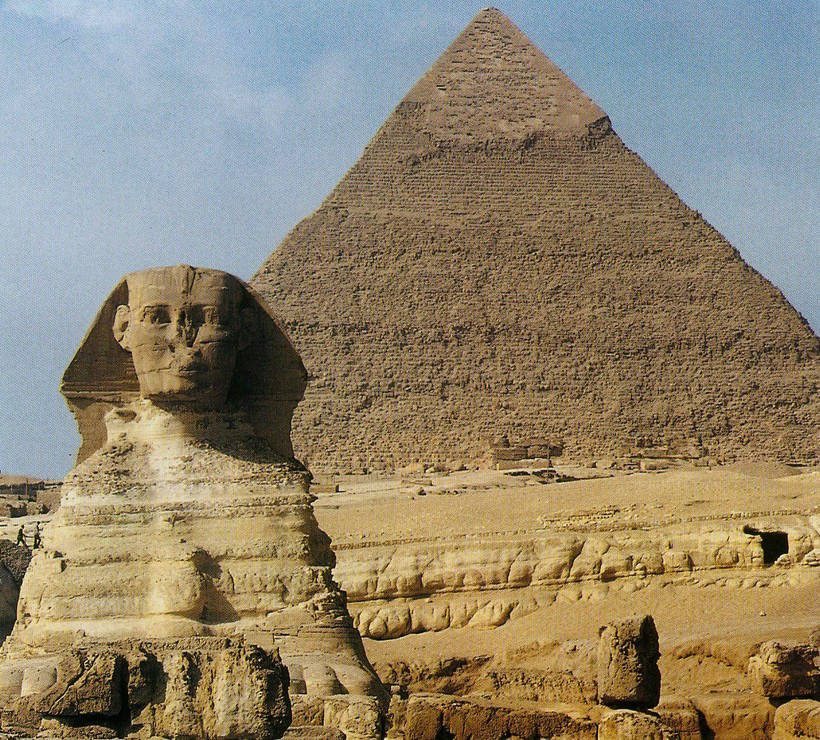
The most famous missing part of the Sphinx — this is the nose. In addition, during the restoration in the 1920s, the statue lost the crown. It was restored only in the next decade from soft limestone. And in 1988, the statue fell off a shoulder part weighing approximately 320 kilograms.
About the missing nose
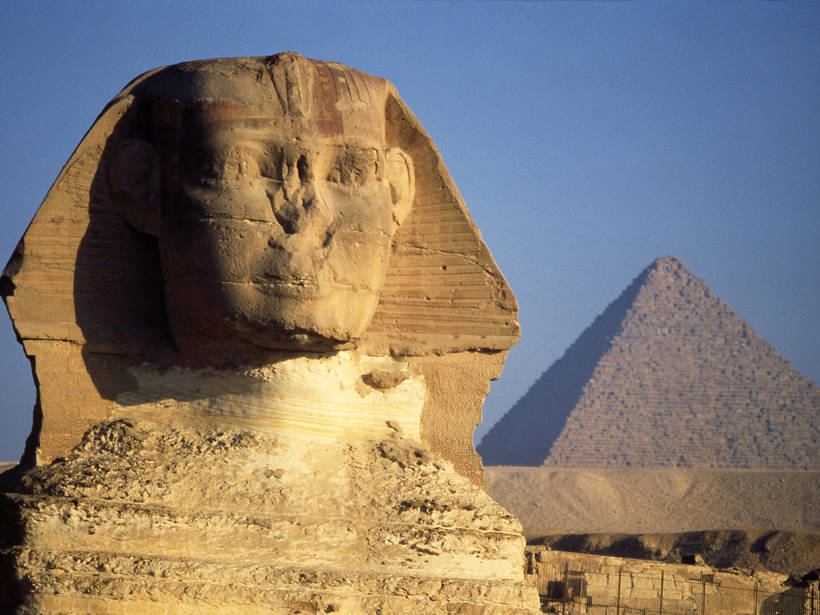
Well, once it came to the nose & hellip; The most common legend: Napoleon Bonaparte during the military actions ordered to repel the statue of the nose. However, later it turned out that the drawings, made about half a century before the battle of Napoleon, also depict the Sphinx without a nose. So this mystery has not yet been solved. But many scientists are inclined to believe that the centuries-old winds are to blame.
Sphinx once had a beard
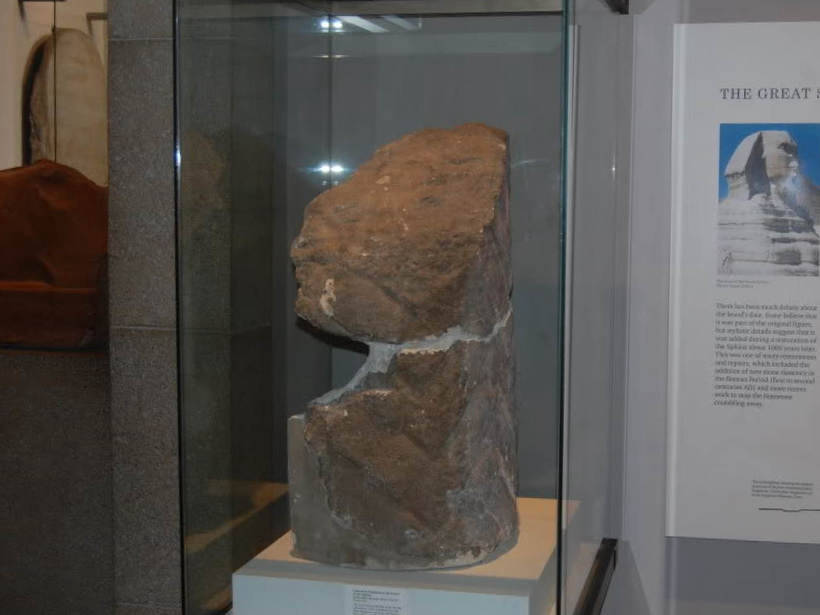
Fragment of the Sphinx beard in the museum
Yes, at one time the Sphinx was bearded & hellip; Because of the strong erosion, the researchers removed it, fragments of the beard are kept in the museum in Cairo and in the British Museum. True, some believe that the beard was added later when the statue tried to restore Thutmose IV.
The Sphinx was colored
It's hard to believe, but so far The face of the statue is visible remnants of red paint, and on the body — blue and yellow. For many centuries the paint has simply worn off.
The construction of the Sphinx was never completed
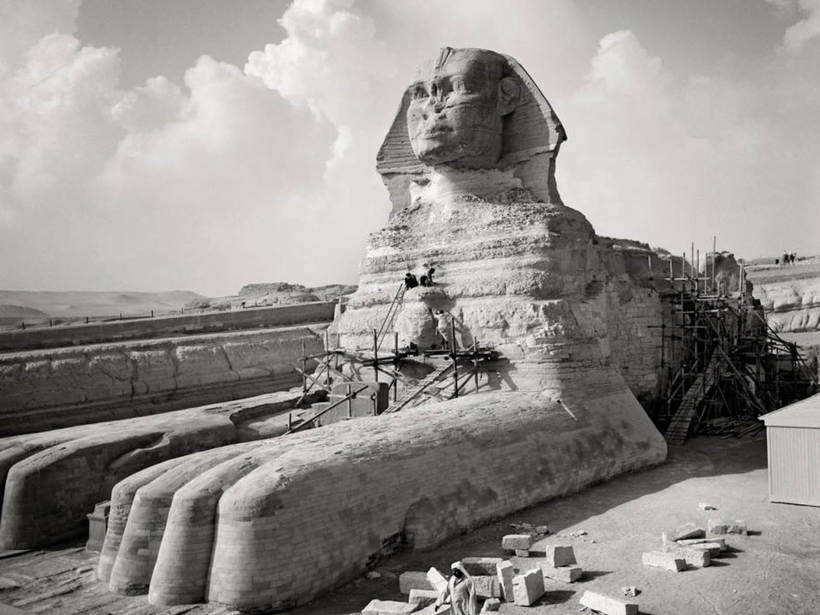
And this theory has the right to exist: stone blocks and tools were discovered near the Sphinx. So the construction of the statue was suspended for unknown reasons.
The Sphinx builders had good food
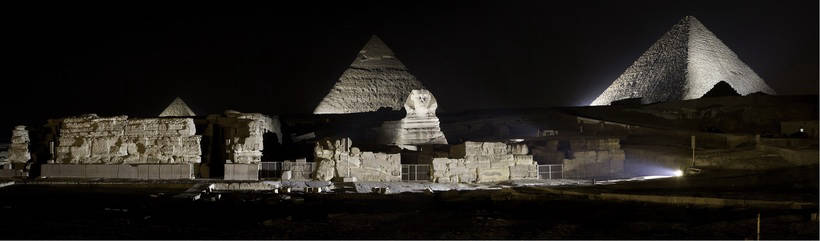
A common theory is that the Sphinx was built by slaves. Their work was tense and passed in harsh conditions. However, one American archaeologist discovered during excavations that the builders were perfectly and regularly fed, including lamb and beef.
There are still a lot of theories around the Sphinx

The Great Sphinx and the pyramids of Giza are surrounded by many theories. Thus, archaeologist Mark Lehner believed that all these facilities were built for the processing of solar energy. Another version, owned by Graham Hancock, tells of the correlation of the pyramids, the Sphinx and the Nile with the stars in the constellation of Orion.
The Sphinx — African American?
The Sphinx's Mystery
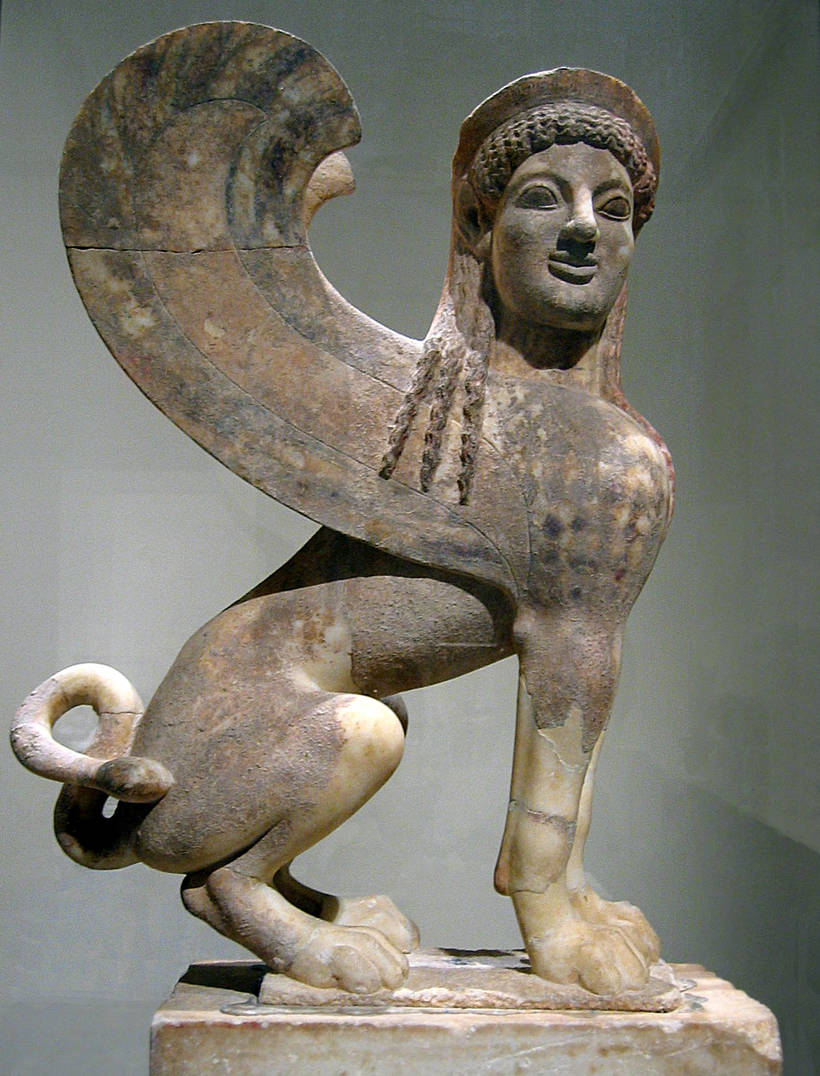
Not only in ancient Egypt were the sphinxes, but also in ancient Greece. Most likely, the Greeks borrowed the image of the Sphinx from the Egyptians. True, the Greek Sphinx looked different: a creature with a lion's body, wings and a woman's head. And yet it was a bloodthirsty creature: it was sitting at the gate to the city of Thebes and making guesses for the travelers entering the city. Those who could not guess them, the Sphinx killed. Hence the expression "sphinx riddle", so it has nothing to do with the Great Sphinx, although often it is the Egyptian sculpture that illustrates the "riddle".