Imagine that you are conveniently located in the seat of an airplane and enjoy the flight, dreaming of an approaching vacation on the seashore or about a meeting with loved ones. And in order to make you comfortable and comfortable, just like on the ground, airliners have special systems responsible for air quality in the cabin.
Whence in the cabin of the plane, flying at an altitude of 10,000 meters, oxygen is taken
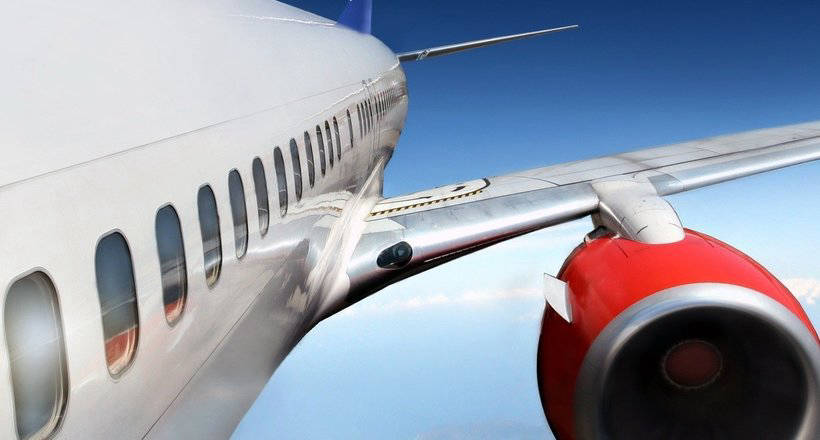
Passenger aircraft fly at an altitude of 9 to 12 thousand meters. It all depends on the model, since each of them has its own "ideal" height, where the liner consumes a minimum amount of fuel and experiences little resistance. After the plane took off and gained altitude, it appears in the atmospheric air, the parameters of which are very different from those at the surface. The air that is in the cabin is enough for about 15-20 minutes of flight, and further in it the oxygen content falls and it becomes impossible to breathe. But in order to add fresh air to the salon, you can not just open the hatch for airing. The fact is that the oxygen content at such an altitude decreases to 7-8%, while at the bottom this figure is 21%. And the atmospheric pressure behind the side (the second no less important figure of air) is reduced to 170-250 mm. gt; instead of the usual 740-760 mm. gt; Art.
But with increasing altitude, even with a constant percentage of air components, the partial pressure of oxygen drops, which leads to a general decrease in the oxygen level in the blood of man, and any other living being. Therefore, it is not enough simply to enrich the atmospheric air with oxygen, it is necessary to bring pressure back to normal.
To ensure a comfortable environment, a special air conditioning system operates in all airliners. The system picks up air that is overboard and compresses it with the help of compressors. Due to this, the oxygen density in it rises to acceptable values. Simultaneously, the temperature parameters are equalized to a comfortable level.
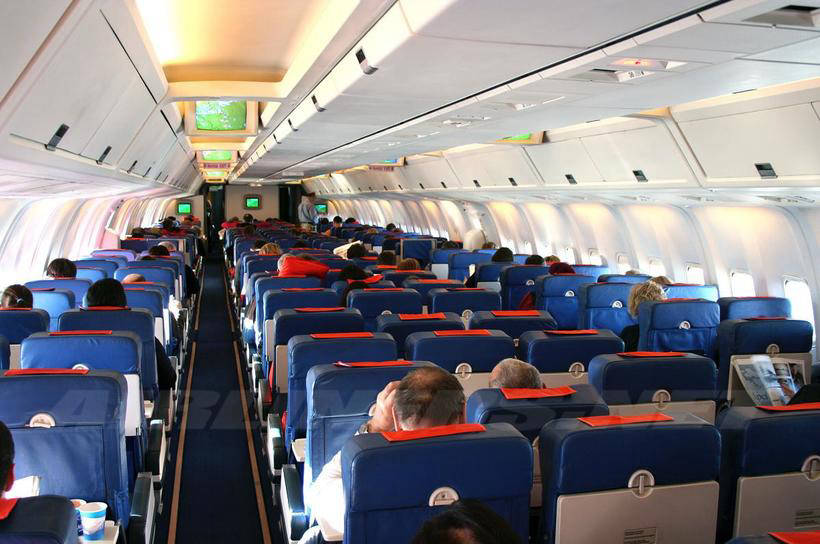
As for the pressure, the airliner maintains a lower pressure than what corresponds to the level of the airport. As a rule, this is 600-650 mm. gt; which corresponds to an altitude of 1300-1800 meters above sea level. It is believed that this is the lower limit of a comfortable atmospheric air pressure for a person.
But the air-conditioning system has one significant drawback: the air entering the interior is too dry. Sparse in the atmosphere, it contains less moisture, and when delivered to the salon is dried additionally. This is done so that in the air conditioning ducts it does not intend to have ice, which can lead to its blockage. Therefore, some passengers experience constant thirst during the flight, and also complain of dryness in the eyes and throat.