The purest bodies of water on Earth (15 photos)
On the contrary, other places have long been centers of tourist activity, yet they manage to maintain their unique ecological characteristics. The planet’s purest water bodies are incredibly beautiful and certainly deserve the attention of even the most discerning travelers.
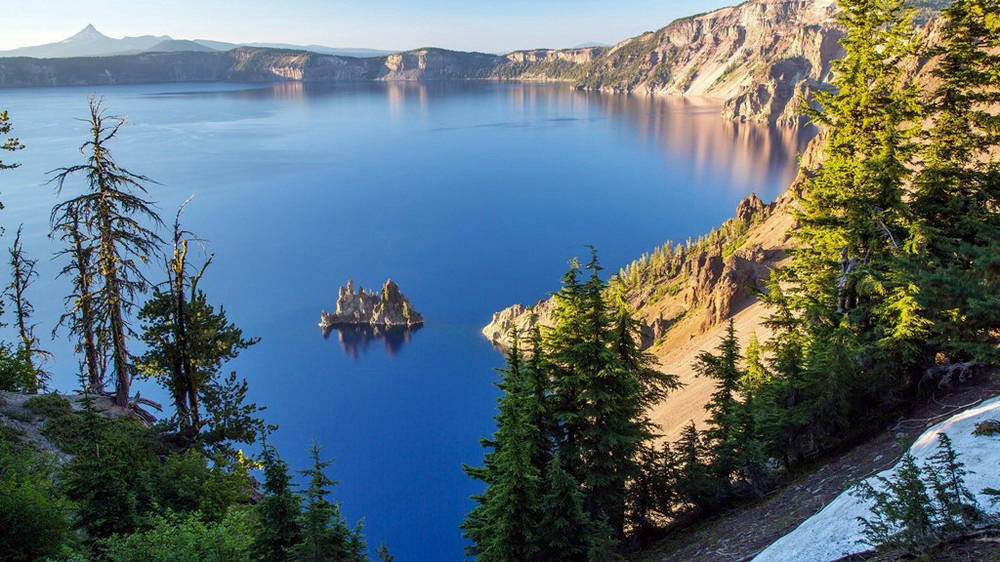
In the United States, within the state of Oregon, there lies an incredibly beautiful lake called Crater Lake. It formed in a crater left by an extinct volcano. This lake is famous throughout the world for its uniquely clear blue water, which is considered one of the purest in the world. Scientists believe that it formed over 7,500 years ago, and its average depth is approximately 350 meters. The lake is also quite large, with a length of around 9.6 kilometers and a width of about 8 kilometers.
This lake is one of the deepest in not only the United States but also throughout North America. A few years ago, a national park was established around this unique lake, and today various interesting tours are offered there. The main attraction for visitors is the chance to ascend to the crater of the extinct volcano, as it is the only way to truly see this beautiful lake with one’s own eyes. In recent years, this incredible natural reserve has attracted approximately 400,000 tourists from around the world every year.
The crystal-clear water of this lake attracts not only curious travelers but also environmentalists and researchers. A few years ago, a group of scientists conducted an interesting experiment here. Initially, there were no fish in Lake Crater; therefore, environmentalists decided to introduce some species of trout and salmon. Their experiment was a complete success, and today the lake is inhabited by fish. Visitors are even allowed to fish here, provided they use artificial bait.
Lake Zyuratkul, Russia
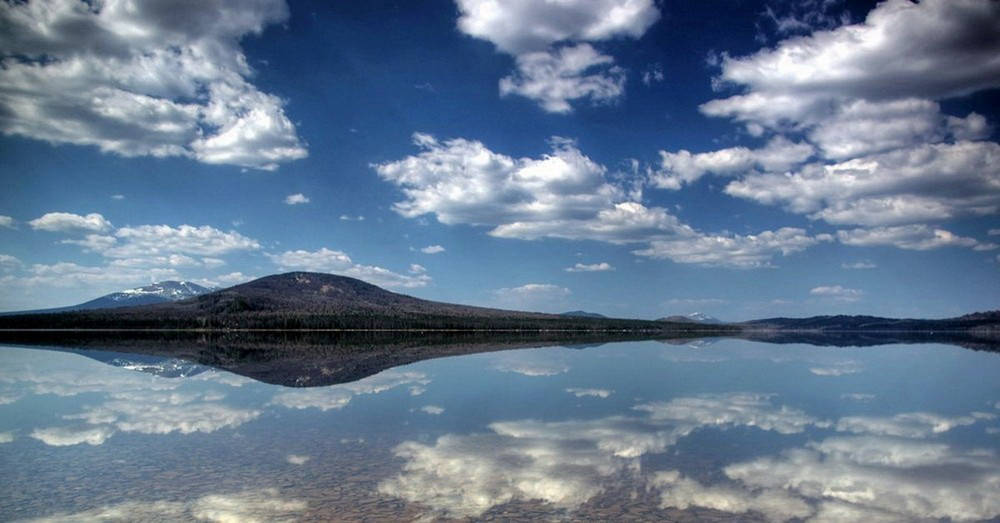
In Russia, nestled among the Ural Mountains, lies the incredible lake Zuyratkul. Situated at an altitude of 724 meters above sea level, it is the highest-altitude lake in the Ural range. The maximum depth of this lake is relatively small, at around 12 meters, while its surface area covers 13.5 square kilometers. Today, this remarkable lake is considered one of the purest in the world, despite its water not being transparent at all. It has a murky, tea-colored hue, which is due to the many streams that flow into it originating from marshes.
The area surrounding the lake is famous not only for its natural beauty but also for its historical sites. During scientific investigations, several important archaeological locations were discovered here; ancient tools belonging to primitive peoples were unearthed, and a giant geoglyph was found. For centuries, the lake Zuyratkul has been a sacred site for the local residents, associated with many interesting legends and beliefs.
For hundreds of years, Old Believers have conducted their rituals in the forests surrounding the lake. Even today, walking through these woods, one can encounter unusual wooden monuments. The Zuyratkul National Park provides excellent conditions for recreation. It has several well-equipped camping areas, so in the warmer months, travelers can spend several days in these picturesque places. Hundreds of different tours are organized here, offering the opportunity to see both the most significant natural landmarks and the unique historical areas.
Pickaninny Pools, Australia
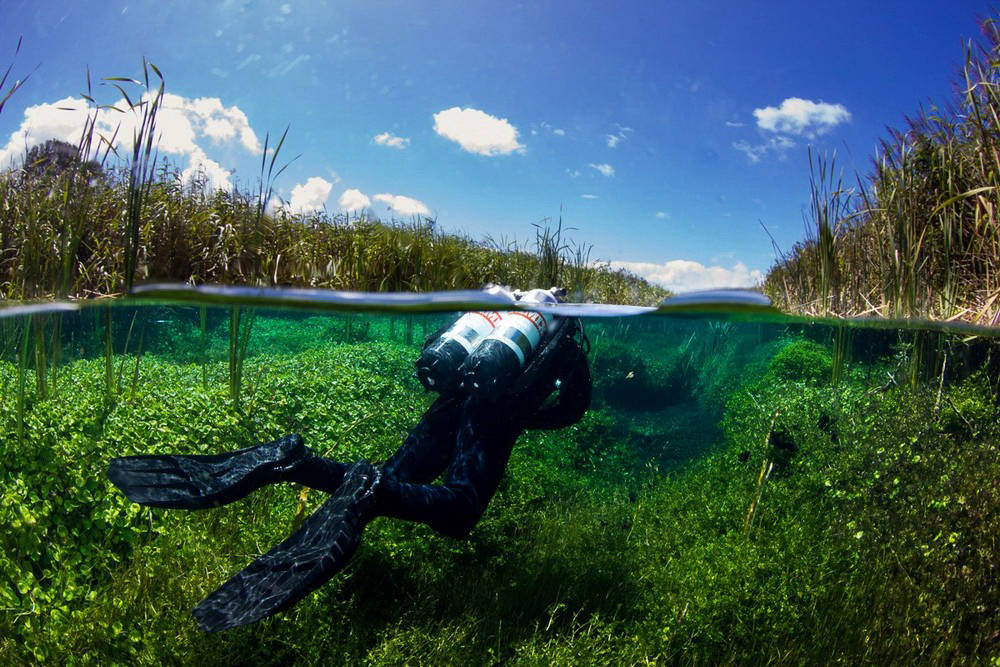
In Australia, within the Pikkannini National Park, there is a series of ponds with the same name that have recently become a favorite spot for divers. The system consists of three ponds, all of which are characterized by their crystal-clear water. However, each pond has its own unique features. The “First Pond” is the smallest, with a depth of only 10 meters. The “Chasm Pond” is much deeper, having a maximum depth of 100 meters; the water in this pond is also crystal clear, and visibility can reach up to 40 meters.
The most unusual and interesting of the three ponds is the “Cathedral Pond,” which has a depth of 35 meters. This pond is formed within a limestone cave and is particularly popular among divers. The entire pond system is located in a unique marshy area that is not only famous for its water bodies but also for its distinctive vegetation and wildlife. Several rare bird species inhabit this marshy region, making it an attraction not only for ornithologists but also for tourists.
Within the Pikkannini National Park, there are numerous walking trails for tourists, as well as several excellent viewing points from which to admire the beautiful ponds and their surrounding landscapes. The park was established in 1969 and covers an area of approximately 8.6 square kilometers. Since the ponds were opened to snorkeling and diving enthusiasts a few years ago, ecologists have been particularly attentive to maintaining their cleanliness. Those who wish to swim in these pristine ponds must follow certain procedures.
Masuyuko Lake, Japan
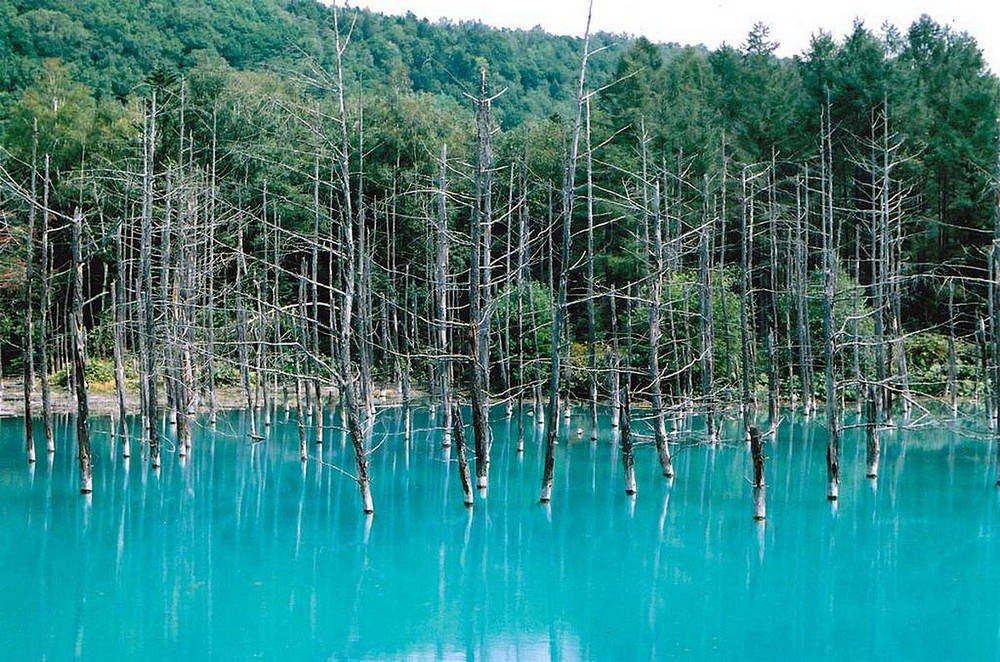
In Japan, on the island of Hokkaido, there is another crystal-clear lake – Masuyuko. It is located within the Akan Nature Reserve, and on all sides it is surrounded by incredibly beautiful mountain ranges covered with dense vegetation. This crystal-clear lake formed in the caldera of an active volcano, and its water has a deep blue color due to its unique mineral composition. Every day, hundreds of tourists visit this beautiful lake as part of organized tours of the national reserve. During their walks in the mountainous areas, visitors have the opportunity to see many rare plants, animals, and birds. The best time to explore these stunning places is during the summer months. However, the reserve also has its charms in winter. Within the national park, there is another crater lake – Kusssaro, which has its own unique features. Several hot springs flow into this lake, preventing certain areas from freezing even in winter. This characteristic attracts many warm-blooded birds, and swans always spend the winter here. The main feature of Lake Masuyuko is that no rivers flow into it, and none flow out either. Researchers believe that this very characteristic is what allows the lake to maintain its crystal-clear purity for hundreds of years. It is also worth mentioning that within the reserve, there are several interesting small villages where visitors can learn about the local way of life and purchase various souvenirs.
Lake Bowman, USA
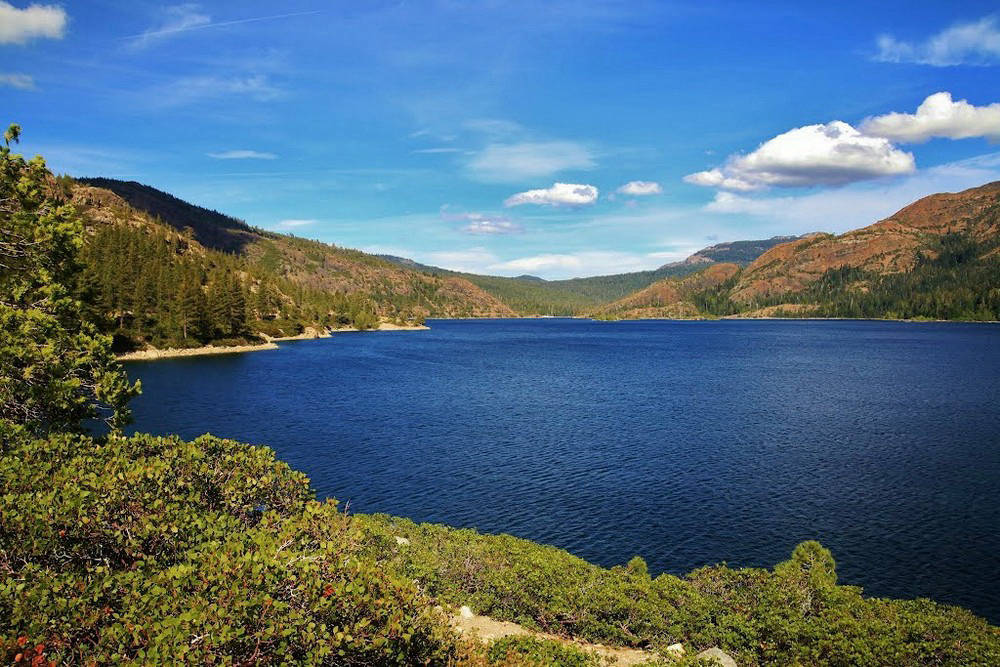
In the northern part of Pakistan, within the Deosai National Park, lies the incredibly beautiful Lake Shewar. It has gained popularity among tourists precisely because of its crystal-clear waters, which have remained some of the purest on Earth for hundreds of years. The maximum depth of this lake is 40 meters, its length reaches 2.3 kilometers, and its width is 1.8 kilometers. It is located in a very remote mountainous area, at an altitude of 4,142 meters above sea level.
For travelers, both car and hiking tours are organized within this nature reserve. It takes only a few hours to reach the remote mountainous area by jeep, while a hiking trip usually takes at least two days. Nature lovers will find it best to explore the reserve on foot; there are several designated areas where it is possible to set up camp.
The best time to visit this beautiful lake and explore the reserve is from early June to late September. During this period, the plateaus surrounding the lake are covered with carpets of bright flowers. One of the main inhabitants of these picturesque areas are butterflies—there are dozens of different species here. By November, the beautiful valley and lake are hidden under a thick layer of snow, which does not melt until May. Hiking tours in the reserve are not conducted during the cold season.
Lake Peyto, Canada
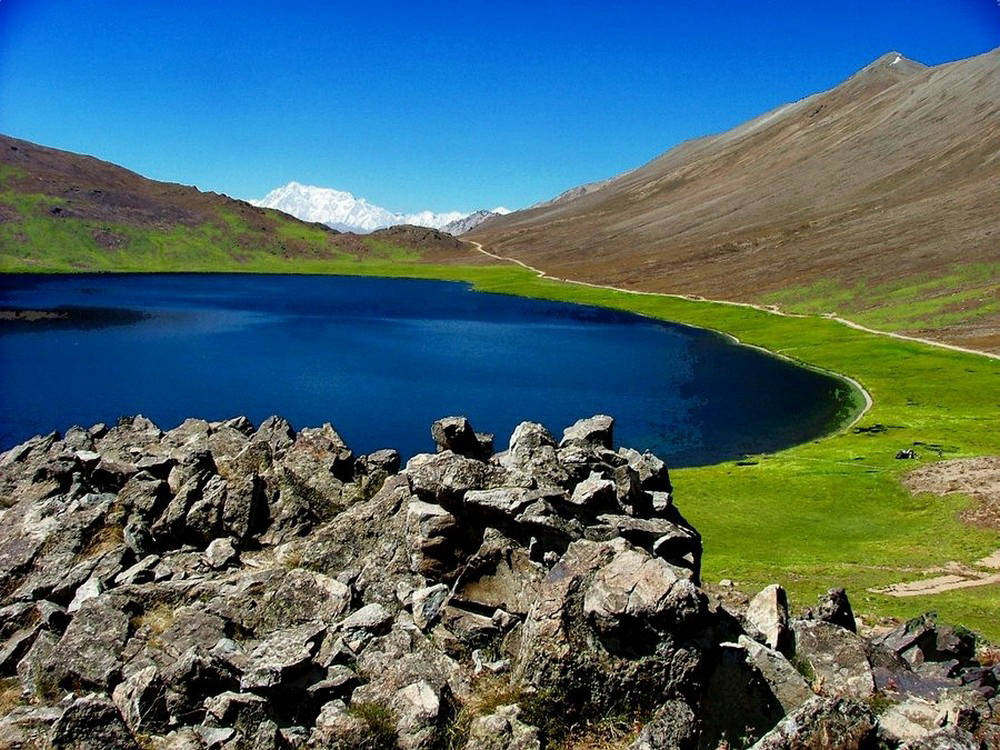
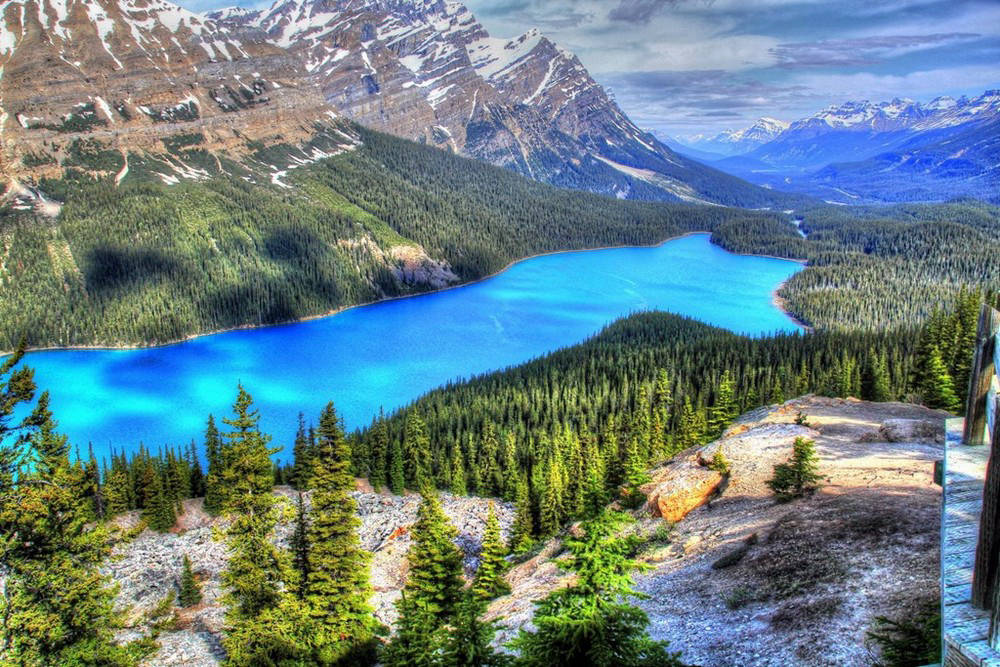
In Canada, one of the purest lakes can be found within Banff National Park—here lies the world-famous Lake Peyto. This lake is located in an incredibly beautiful foothill area, covering an area of approximately 5.3 square kilometers. It is 2.8 kilometers long and has an average width of just 800 meters. The lake was first discovered by the explorer Bill Peyto, and it was named in his honor.
- One of the main features of this lake is its unusual shape – viewed from an altitude of a bird’s flight, it resembles a huge wolf’s head.
- The water in the lake has a deep blue-green color that is very striking.
- Every year, the lake is replenished with water from nearby glaciers, and mountain streams carry tiny mineral particles that give the water its unique color.
- Several comfortable resorts have been established on the lake’s shore for tourists to enjoy.
- Anglers especially appreciate this location, as it is home to various species of fish, including rainbow trout, salmon, and perch.Those who wish to fish here must obtain a license in advance.
- Visitors can also enjoy various outdoor activities, such as hiking in the surrounding forests.
- Many rare animals and birds can be found in this area, and during summer, rare flowers bloom in the region.
Lake Baikal is of tectonic origin; its water is considered one of the purest in the world, and it is home to many valuable species of fish. One of its main characteristics is its high oxygen content, while the amount of minerals in it is very low. Lake Baikal is also one of the coldest lakes in the world—even in the summer months, the water temperature never rises above +8 degrees Celsius.
One of the main unresolved questions regarding Lake Baikal is its origin. According to scientists, its formation was triggered by tectonic activity, and the lake is at least 25 million years old. The inhabitants of Lake Baikal are of great interest to researchers; there are more than 2,600 species living here, and over half of these aquatic organisms are endemic, meaning they can be found nowhere else in the world. One of the most serious environmental problems facing Lake Baikal is the pollution caused by industrial waste flowing into it from numerous rivers.
Lake Moraine, Canada
In Canada, there is the famous Moraine Lake, located within Banff National Park. This lake is extremely small—its area is only 500 square meters, and its maximum depth is 14 meters. Nevertheless, in terms of beauty, it is hard to find anything comparable to it. The discoverer of this unique natural wonder was the researcher Walter Wilcockx. When he first found it, he spent half an hour admiring it in silence. Later, in his notes, the scientist described those half hours as the happiest of his life.
This lake is located in a very remote mountainous area, which is why for a long time no one knew of its existence. The water in the lake, which fills it year after year as glaciers melt, has a deep sapphire hue. Against the backdrop of the surrounding mountain ranges, the lake looks simply fantastical. The best time to visit the lake is in June, when the melting of glaciers reaches its peak and the lake expands to its maximum size.
Travelers can only visit Lake Moraine from May to September; the mountain road is closed for safety reasons during the rest of the year. It is easy to reach the lake by car, with Calgary being the nearest major town. In recent years, organized tours have been offered to this location, with buses operating along the tourist route. About a half-hour drive from the lake lies a small mountain village, which is also worth visiting as part of the tour.
Lake Jenny, USA
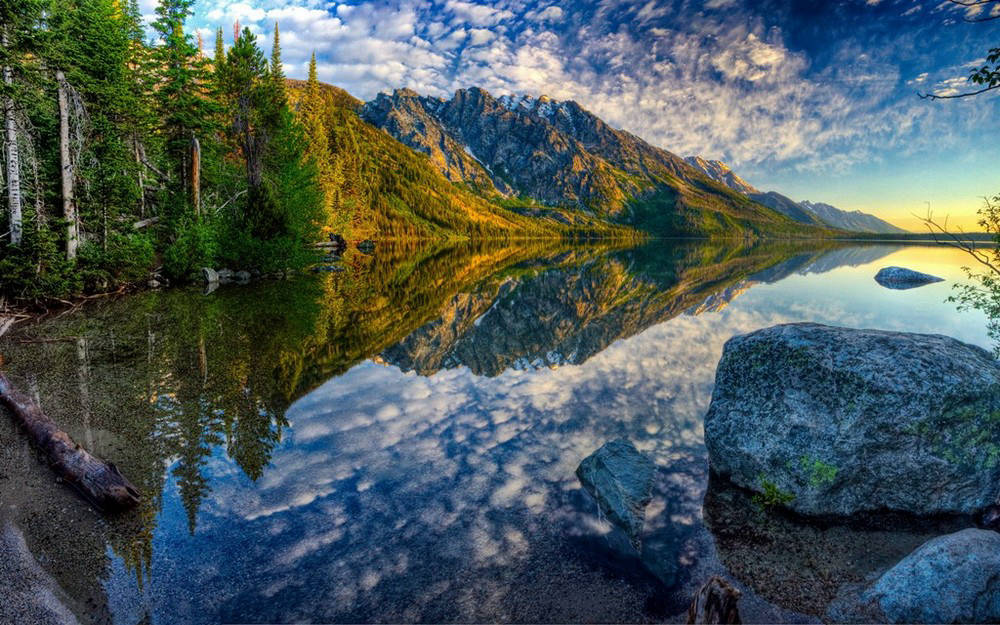
In the northwestern part of Wyoming lies Lake Jenny, which is now part of Grand Teton National Park. Like many other lakes in this region, it was formed by glaciers and is located at an altitude of over 2,000 meters. Researchers estimate that the lake formed around 12,000 years ago; it has a maximum depth of 129 meters and covers an area of approximately 482 square kilometers. Despite being one of the purest lakes in the world, motorized boating is allowed on it, and both researchers and tourists make frequent use of this facility.
The main trail winding along the lake shore is called the Jenny Lake Trail, and tours are offered here during both day and night. Nearby lies the stunning Cascade Canyon, which is also a major attraction in this area. The name of the lake has an interesting story behind it. In 1872, one of the first large-scale expeditions worked on this lake, led by the Englishman Richard Lee. This beautiful lake was later named after his wife, Jenny.
Another appealing feature of this body of water is the diverse range of fish species present here. Several years ago, fishing was allowed in this area. The most sought-after catch for fishermen is the trout, and obtaining a special license is required to fish here. Visitors are only permitted to explore these areas with guided tours, as the nearby forests contain many predatory animals, including bears. Just like many years ago, today the national park continues to attract hunters, as well as climbers who enjoy coming here to relax.
Lake Pukaki, New Zealand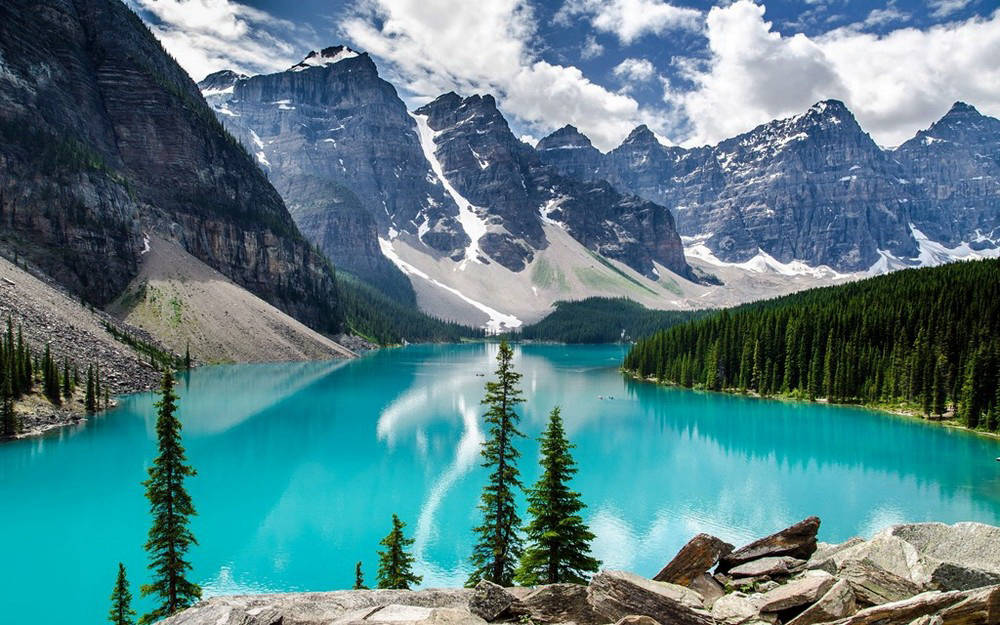
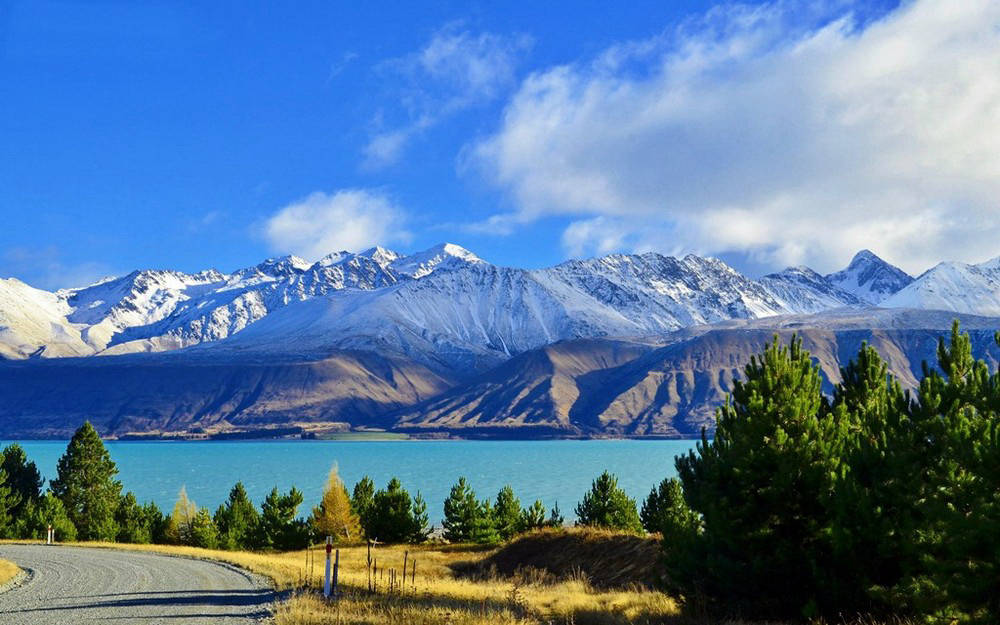
New Zealand also has many other wonderful lakes that are worth visiting for tourists. One of them is Lake Pukaki, located on the South Island. This glacier-fed lake became famous throughout the world due to its deep blue color of the water, which is also incredibly clean. The lake covers an area of 178.7 square kilometers and is situated at an altitude of over 500 meters above sea level. This stunningly beautiful lake stretches for 15 kilometers in length and is approximately 8 kilometers wide.
Several years ago, Lake Pukaki became part of a large hydroelectric power system. Experts ensured that such use of the body of water would in no way affect its ecological parameters. For the local residents, the establishment of this hydroelectric facility was a real breakthrough—it was thanks to this lake that they finally gained access to stable electricity.
Not many people know that the lake, which was originally a glacial lake, was initially quite small, with a maximum depth of no more than 25 meters. When construction of the hydroelectric station began in the 1940s, the lake’s volume was significantly increased. Initially, there was a small island in the center of the lake; however, as the water level rose, this island was submerged. The water in a glacial lake is always very cold, so not many people dare to swim in its crystal-clear, azure waters—even in the height of summer, the temperature rarely exceeds +7 degrees Celsius. Many beautiful legends are associated with this lake among the local residents; it was named after one of these mythical warriors.
Lake Tahoe, USA
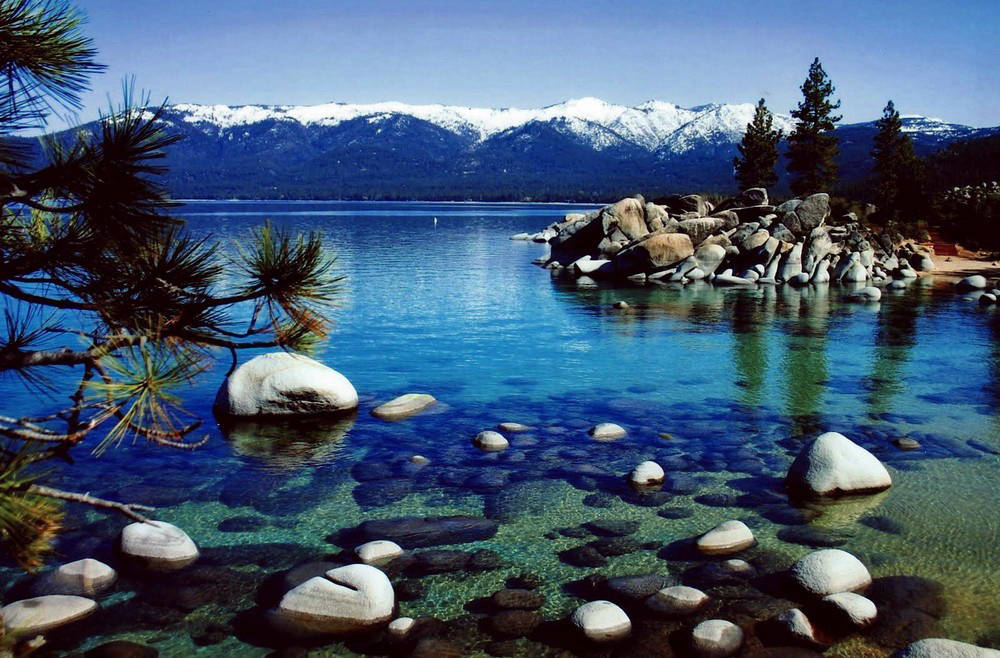
In California lies the stunning freshwater lake Tahoe, located in the picturesque Sierra Nevada foothills. This lake is well-known among tourists, as several popular ski resorts are situated in its vicinity. Lake Tahoe ranks second among the deepest lakes in the United States; its average depth is 305 meters, and its surface area covers approximately 495 square kilometers. Among the most beautiful lakes in the world, Tahoe is also one of the most easily accessible, as major highways surround it on all sides.
A lake formed at a geological fault in the Earth’s crust approximately 3 million years ago. Today, not only the lake itself, with its fantastical azure waters, but also the surrounding coniferous forests attract immense interest. Here, one can find many rare species of pines and spruces, as well as unusual varieties of shrubs and grasses. The lake was discovered relatively recently, in 1844, by Lieutenant John Frimont.
He was exploring these mountainous areas in search of a river when he stumbled upon this incredibly beautiful lake. Within a few years, scientists from all over the world began studying it. Tourism began to flourish after 1960, when the Winter Olympics were held in one of the local resorts. Since then, excellent tourist infrastructure has been developed; today, comfortable hotels can be found near the lake, and there are numerous ski slopes of varying difficulty levels. Even hikers will find this place fascinating, as exciting excursions are organized near the lake throughout the year.
Blue Lake, New Zealand
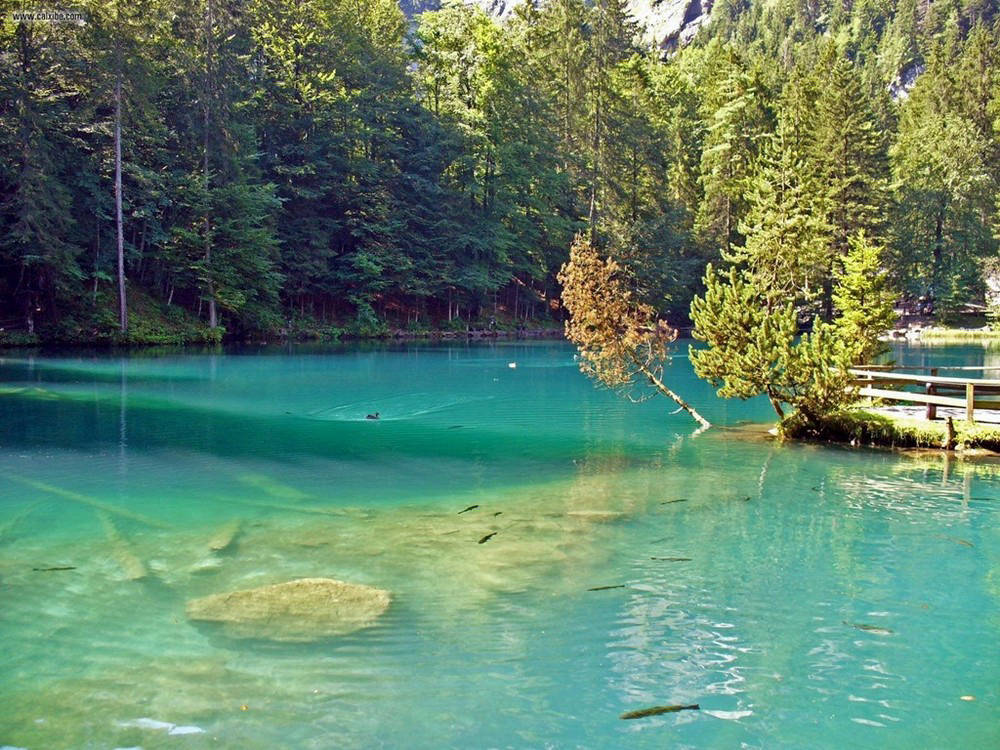
One of the purest and most unusual lakes on Earth, with the complex Maori name Rotomairewhenua, is located in New Zealand. Its name translates to “Blue Lake.” This tiny freshwater lake is part of a larger system of lakes within the Nelson National Park. It wasn’t until 2011 that ecologists began conducting in-depth studies of this body of water and discovered that its waters are exceptionally clean.
Its visibility can reach up to 80 meters. Year after year, the lake is fed by water from nearby glaciers. As it flows down from the mountain peaks, it passes through numerous natural rocks that act as a natural filter. Thanks in large part to its purity, the water in the lake has an incredible hue, which changes throughout the day from deep blue to light purple.
One of the first experts to show interest in this lake was the hydrologist Rob Mirrilles. After admiring the crystal-clear water, travelers should definitely consider taking a walk through the forests and mountain ranges surrounding the lake. There are no tourist facilities near the lake, so it is very rare to see tourists there. The main visitors to these beautiful areas are researchers and ecologists who, not long ago, determined through extensive studies that the water in Blue Lake has properties and quality comparable to those of distilled water.
Petermann River, Greenland
Some rivers also possess astonishing water clarity. A great example is the Petermann River in Greenland, which is often referred to informally as the Blue River by many travelers. The river originates in a glacier of the same name; during the summer, the melting ice forms numerous small streams, which eventually merge into one river, whose water has a vivid blue color.
An incredibly beautiful and pure river poses a tremendous threat to the world’s ecology. In recent years, the Petermann Glacier has been melting at a rate four times faster than before, which is contributing significantly to the rise in sea levels around the globe. According to researchers’ predictions, the glacier will continue to melt even more rapidly in the coming years, potentially leading to severe ecological disasters. For now, however, this crystal-clear river is of great interest to scientists, who can use it to study the composition of water that has been frozen for millions of years.
It is extremely difficult for ordinary travelers to reach this remote corner of the world, with its extremely harsh climate. Such expeditions can only be undertaken as part of organized scientific missions. Currently, environmentalists are taking every possible measure to minimize the amount of meltwater from the glacier that flows into the oceans. In the next few years, the glacier could lose as much as 100 square kilometers of ice—an amount of water sufficient to supply a large metropolis for 10 years.
Weddell Sea, Antarctica
Off the coast of Western Antarctica lies the stunning Weddell Sea, which is also one of the purest bodies of water on Earth. It was named after James Weddell, who explored these regions in 1832. The sea covers an area of 2,900,000 square kilometers, and its maximum depth reaches 6,800 meters. In addition to its breathtakingly clear, sky-blue waters, the Weddell Sea is also characterized by an enormous amount of ice that floats in it throughout the year.
This magnificent, pristine sea has become home to thousands of aquatic creatures—huge populations of whales, seals, and fish inhabit these waters, and penguins are also common residents. Today, the Weddell Sea is considered the cleanest sea in the world. The last major study of its waters took place in 1986, and the average visibility was measured at 79 meters, which is comparable to that of distilled water.
Not all research teams are willing to venture into this sea, let alone ordinary tourists. Drifting ice poses a great threat to ships. The North Sea is associated with many natural and physical phenomena; despite its temperatures sometimes dropping to -25 degrees Celsius, the water in this sea never freezes. The Weddell Sea is the coldest and purest sea on Earth. To see it with one’s own eyes, travelers must join one of the research expeditions, but such trips to this harsh environment are extremely rare.