The city of Yaremche is relatively young: in 1788 it was known as a settlement that belonged to with. Dory. The first written mention is found in the Iosifovskaya census. At that time, only 8 families lived at the time.
History of Yaremche
The founding of Yaremche itself took place with the construction of the Delyatyn-Voronenko railway in 1895, and its name, according to legend of the old-timers, occurs on behalf of the first settler on the farm - Yarema Godovanets. The villages of Yamna and Dora, which now enter the city limits, are known from the end of the 16th to the beginning of the 17th century. The first inhabitants of these villages were peasants who fled from the oppression of the feudal lords to the mountainous regions of the Carpathians. The nobility was not easy to find fugitive serfs - they were protected by hard-to-reach mountains covered with dense forests. The history of the villages of Dora and Yamna is closely connected with the anti-feudal movement of the peasantry in Galicia, with oprichkas. The liberation war of the Ukrainian people of 1648-1654 had a great influence on this struggle. The envoys of Bogdan Khmelnitsky called on the Hutsuls to fight the oppressors. One of them, Yarema Konchevsky, seized by a nobleman, admitted at the trial that he had visited the Carpathians and Yamna and met people everywhere who were waiting for the arrival of the Cossack army. In the years 1738-1745. in this locality actedthe legendary Olexa Dovbush. He maintained close ties with the peasants of Dora and Yamna, where his sister and his family lived. From Yamna, Dovbush's faithful twin brother Pavel Orphenyuk was born, one of the closest associates came out of the village of Dory, and later Vasiliy Baiurak, the successor of his business.
Under the conditions of the Polish szlachta domination and after the capture of Eastern Galicia by Austria, the life of the working people of the villages of Dory and Yamna was extremely difficult. The best lands belonged to the gentry, the rural rich and the church. In the years that preceded the separation of Yaremcha into an independent administrative unit, the peasants of these villages owned only 124 hectares of arable land, with small scraps scattered on the slopes. This land could not feed a tenth of the population. In the forests and pastures attributed to the state domain, the peasants were forbidden to graze cattle. The rural poor had no land or livestock at all.
In the second half of the XVIII - early XIX century. the peasants of Dora, Yamna, the Yaremche farm performed many duties, worked corvée, handed over a considerable amount of hay, livestock products, spun wool on the manor estate. In addition, Ch. And other taxes were paid in cash for a total of 516 florins of 35 kreuzers. The main place in the economy was occupied by cattle breeding. It determined, to a large extent, the economic position of the population, its way of life. From spring to late autumn, peasants grazed cattle and sheep in the Polonin. In cheese dumplings from sheep milk were made cheese. They used it on their own farm, but most of them were forced to trade together with other products in the market in Dilyatin and Kolomyi for bread, salt and oil. Part of the population worked on forestry developments. The working day of the logger lasted 12-16 hours, and he earned only 1-1.5 crowns. The peasants' veins were in the wooden houses, they wore homemade clothes made of hemp and sheep's wool. From sheep'sleather made sheepskin coats, sleeveless jackets, sardacks, bedspreads.
The Austro-Hungarian government did not care at all about the education and culture of the peasants. At that time Yaremche did not have a single cultural and educational institution, the entire population remained illiterate. Only in 1875 in with. Dora opened a school with one teacher.
At the turn of the XIX-XX centuries. the settlement of Yaremche developed as a dacha type settlement. Wonderful nature: mountains covered with forests, a waterfall, curative air attracted the attention of various businessmen and merchants. They began to build here villas and boarding houses. In summer Yaremche became a place of recreation and entertainment for the bourgeoisie of Vienna, Warsaw, Krakow, Lviv and other cities. On the basis of the governmental decision of September 28, 1910, the Yaremche farm was transformed into an independent administrative unit - the commune under the same name. Within a year the population grew to 1000 people. Even more built villas, boarding houses, opened restaurants, cafes, hotels. Over time, the resort Yaremche was defined as a climatic, for the treatment of patients with tuberculosis, but above all it was a commercial enterprise. To be on treatment here were able to exceptionally rich people.
After the outbreak of the First World War, this area of the Carpathians became the scene of fierce fighting. In 1914, pursuing the Austro-Hungarian troops, the Russian army entered the Carpathian passes and on October 22 seized Yaremche. The local population sympathized with the Russian soldiers, provided them with all-round assistance, for which many people after the retreat of the Russian troops were shot by the Austrians. During the war, Yaremche several times passed from hand to hand, the village experienced great destruction. In 1919, it was captured by Polish troops. The resort in Yaremche attracted the attention of the Polish bourgeoisie, as a place of rest and a source of profits. There were new villas and boarding houses with romantic names: Paradise, Sea Eye, Pier, Rose, Varshavianka, etc. They belonged to the capitalists Shtrum, Ganus, Makarevich. The resort of Yaremche had 2 hotels, 44 boarding houses, 3 sanatoriums, 56 villas and 53 Hutsul houses intended for holidaymakers.
The owners of boarding houses and villas received large incomes. For renting one room in a boarding house or a villa it was necessary to pay 60-80 zł per month. Medical services in boarding houses were paid and carried out mainly by doctors who came from Warsaw, Krakow, Lviv, Stanislav, and created seasonal medical and diagnostic rooms. The summer holiday season in villas and boarding houses lasted from May 15 to October 15, and the winter season from December 15 to March 15. In winter, vacationers engaged in skiing and tobogganing. Yaremche had a springboard, courses of skiing worked. The wealthy who came to rest, lived in luxury, spent their time in restaurants and cafes, billiards and ballrooms. In the resort of Yaremche (along with Dora and Yamna) rested in 1937 more than 10 thousand people.
The local population in Yaremche, Dora and Yamna was in the early 30s of the XX century. 4492 people, incl. 4060 Ukrainians-Hutsuls. The toiling peasantry suffered hardship, illiteracy, disease, obscurantism of the Uniate Church. The poor land lacked land. 743 Hutsul farms Yaremche (with the villages of Dora and Yamna) had only 222 hectares of arable land. In the village of Yamna, almost half of the peasants were landless. Due to low yields of agricultural products was not enough. The livestock industry developed somewhat better, for it natural resources were the fodder base.
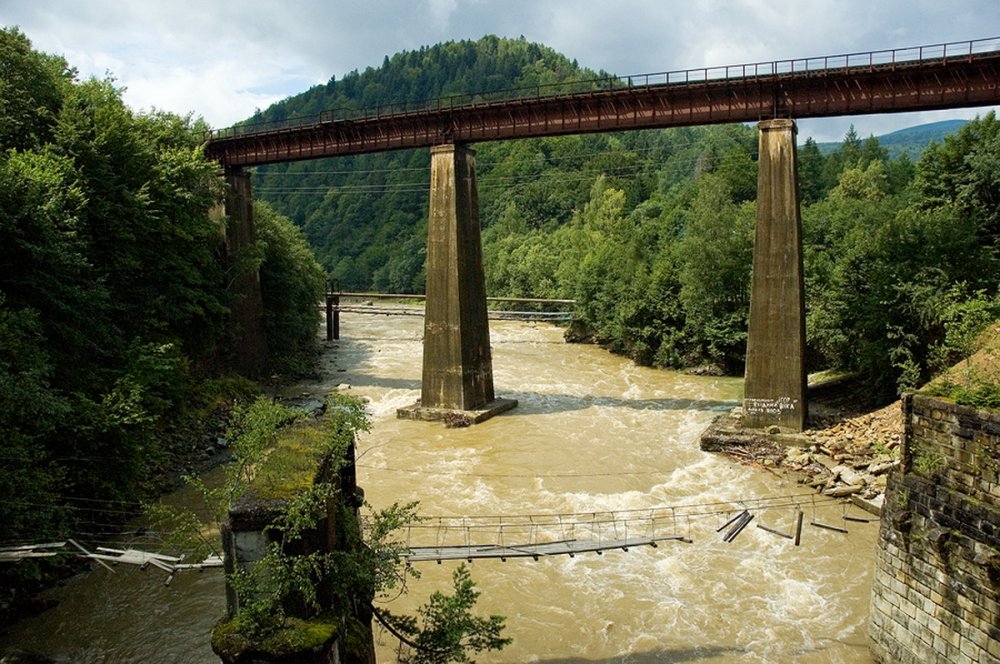
The vast majority of landless and landless peasants worked in Yaremche Forestry. The working day lasted 8-12 hours a day, and on average the daily fee of men was 1.8-2.2 PLN, women -1.4-1.7 PLN, adolescents 1-1.4 PLN. In the winter, the daily wages of men, women and children were very meager. The workers repeatedly rebelled to fight, demanding to increase wages, to reduce the working day. Active participation in the strike, which took place on October 27, 1921 at the sawmill Klein, took the workers of Dora. Part of the population, in particular women, worked in villas and boarding houses, serving tourists. But this work was seasonal, and therefore a significant amount of the population suffered from unemployment. Poverty and hunger drove the Hutsuls in search of a better life abroad.
The Polish bourgeoisie treated the local population scornfully, kept it in ignorance and darkness. Although there were several schools, they taught them in Polish, and native Ukrainian speech was taught as an object. In 1925 in the open in with. Yamna Primary School was only one teacher. There were also Dorianska Primary and Yaremcheansk one-class Polish schools. In 1932 in Poland, the reform of education was carried out, as a result of which schools in the Dora and Yaremche schools were created in the second degree, in Yamna, an elementary school. A significant part of the population did not know the letter, none of the peasants even had a secondary education.
The population was very poorly provided with medical aid. Until 1939, on the whole of the outskirts, which included the city communes of Delyatyn, the rural communes Yaremche, Lanchin, and White Oslavy, there was only a county doctor who lived in Deliatin. Consequently, in fact, there was no medical assistance. Before World War II, a private physician practiced in Yaremche, which had its own hydropathic clinic, and one private pharmacy operated here. For the treatment had to pay - a visit to the doctor cost 5 zł. Mortality among the population, especially among children, was very high. Various diseases spread, in particular: pulmonary tuberculosis, venereal diseases, typhoid, dysentery.
The bourgeois authorities did not at all engage in the construction and improvement of Yaremche. In one of the complaints of the Yaremche district council to the Stanislavsky provincial government there was talk about the fact that Yaremche is extremely neglected: there is not enough electricity, there are no sidewalks, sewers, etc.
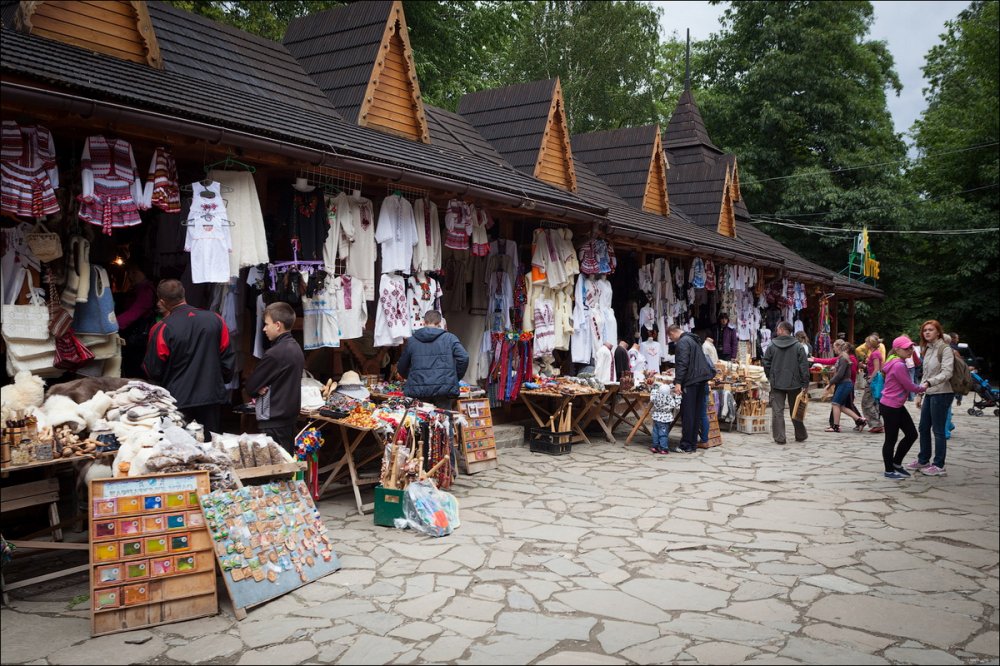
Bread and salt were met by the population of Dora, Yamna and Yaremche in the Red Army in September 1939. The working people began to build a new life. They actively participated in the elections to the People's Assembly of Western Ukraine and joyfully welcomed their decision. In the conditions of high political activity, the bodies of Soviet power were elected. The first Yaremche village council was headed by the former member of the CPCU IO Turchynyak. In January 1940 Yaremche became the center of the district. At that time there were already 52 Communists. District committees of the Communist Party and the Komsomol were elected. Party and Komsomol organizations were set up at enterprises and institutions. 210 representatives of the district, incl. 40 yaremans, studied at inter-district courses, 126 yaremans improved their qualification without interruption of production. Until May 26, 1940, 45 persons were nominated for executive positions.
Socialist reconstruction of the national economy began with the nationalization of the basic means of production. The state owned land, forests, as well as enterprises, trade establishments, resorts. The nationalized houses were transferred to the workers' apartments, and some of them housed Soviet institutions and organizations: the hospital, schools, clubs, libraries, banks, sanatoriums, rest homes, boarding houses, pioneer camps, and resort management. Cultural and educational work has been developed. The doors of the house of culture and two rural clubs and libraries opened wide for the working people. At the desks sat and adults. In October 1939 a secondary school was opened in Yaremche. Teaching was conducted in the native language.
The population received free medical care, hospitals and outpatient clinics were opened. Rest in the sanatorium workers, peasants and intellectuals. In the summer of 1940, two regional pioneer camps were established in Yaremche.
June 30, 1941 the city was occupied by fascist invaders. From the first days of the new order the fascists began to exterminate the population, first of all - the party-Komsomol and the Soviet asset. Of Yaremche forcibly exported to forced labor in Germany 145 people. The cruel robbery of the population by the occupants led to the fact that in 1942 a famine broke out in Yaremche, from which 50 people died. One of the largest cargo, which fell on the shoulders of workers, was a compulsory natural tax. Almost all the crops, livestock, milk of the peasants were obliged to be handed over to the invaders, and those who evaded were mercilessly punished.
Workers did not recognize the regime introduced by executioners: sabotaged the activities of the fascist authorities, hid bread, cattle. They helped the guerrillas-kolpakovtsam: they shared with them bread, clothing, they gave guides, looked after the wounded. The partisans with the old shepherd from the Vabryanka DK Godovanets and others, who showed them the way in the mountains and forests, were leading them only by the famous paths. Fascist invaders executed D. K. Godovanets.
During the Carpathian raid the Kolpakovites had to wage exhausting battles with the fascists on the outskirts of Yaremche. To close all the exits from the Carpathians to the partisans, the German command concentrated here 6 regiments, 5 special battalions and other military units, separate battalions of the SS-Galicia division, tank and aviation units. From the Hungarian side along the border, two Hungarian divisions were put up against the Kolpakovites. In Yaremche there is the 26th Mountain Infantry Regiment, which arrived in the Carpathians from Norway. The guerrilla unit, which numbered about 1,500 fighters at that time, found itself clamped among the mountains between the border with Hungary and the people by the points of Yaremche and Zelenaya. The enemy bombarded the partisans, subjected them to artillery fire. Despite very difficult conditions, the partisans successfully repulsed the attacks of large enemy forces. They 11 times tried to break through the ring of a hostile environment, inflicted tangible losses to the fascists. During the first two days of August 1943, the partisansYou fought with the enemy near Yaremche, and then carried out a brilliant operation to defeat the enemy in the Deliatin.
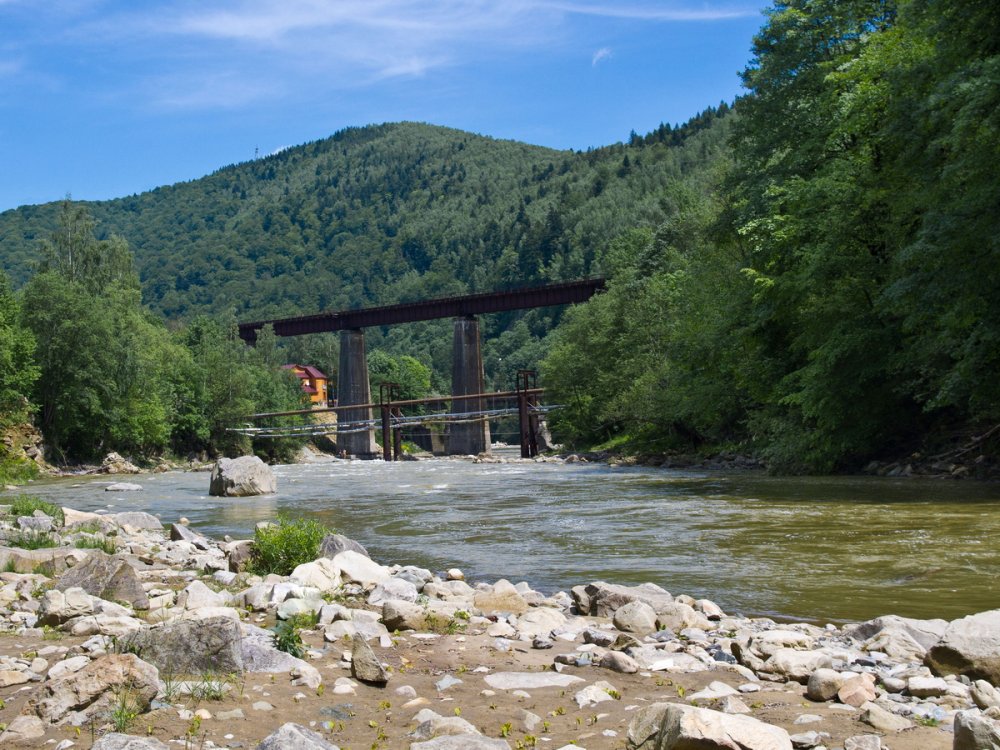
In spring and summer in 1944, in the territory of the Yaremche district, Soviet troops fought the fascist invaders. The German-Hungarian command hoped to delay the offensive of Soviet troops in the mountains. The Fascists built a deep defense in Yaremche and the surrounding mountains. But the 8th Yampolskaya Infantry Division of the Red Army under the command of Major-General AS Smirnov began to move up the valley of the Prut River. July 26 Yaremche was released. Fascists clung to every inch of the Carpathian land, fighting in this area lasted about a month and a half.
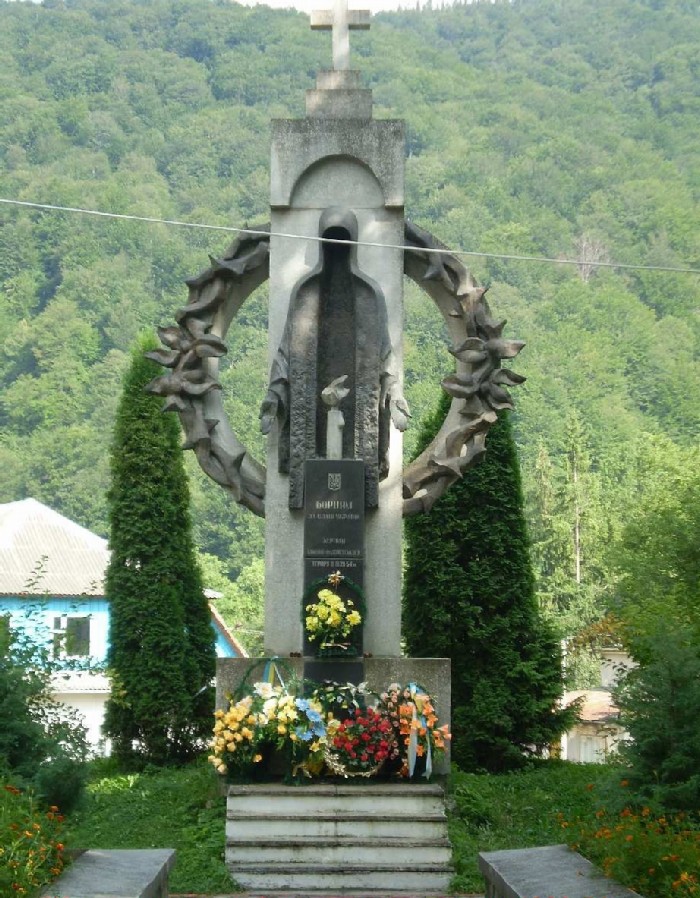
In the battles of Yaremche, 565 soldiers and officers of the Red Army were killed. They are buried in the center of the city among evergreen spirits, white birches and mighty beeches in a common grave, together with the remains of 80 partisan-Kolpakovites. Eternal sleep sleep here Commissioner of the partisan connection Hero of the Soviet Union, Major-General S.V. Rudnev, his son RS Rudnev and many other glorious sons of the Motherland.
After the war, the working people had to solve complex problems. During the German-fascist occupation and the retreat of the enemy, Yaremche experienced great destruction. Bridges on the Prut were destroyed, many houses were burned, spa facilities and a railway station were destroyed. In a difficult situation, agriculture also found itself. The state of livestock production testified to the destructive effect of the war: in 197 farms Yaremche had 11 horses, 76 farms did not have cows.
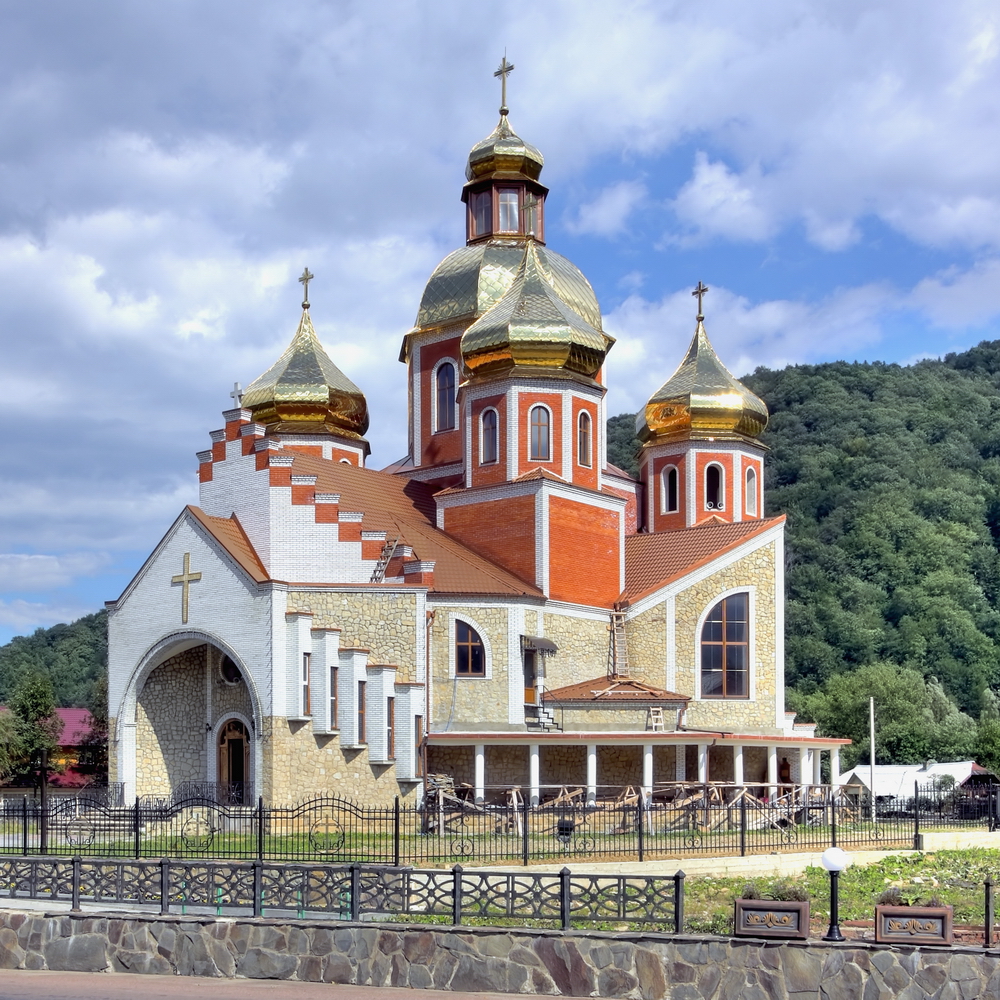
The restoration of the destroyed Yaremche was carried out in several directions. Many efforts required the renewal of the Yaremchean resort zone, but already in 1947-1948. sanatoriums and a rest home opened. The resort management has been transferred 62 households in Yaremche. Soviet power helped the peasants with draft power, seed material, and a rewind. Already before November 1, 1945 in Yaremche 1500 square meters were built. m of housing. The house of culture and library resumed its work, and an evening school for rural youth was opened at Yaremche secondary school.
Yaremche has changed beyond recognition for the post-war years. The time when it developed unilaterally went into oblivion, its natural resources served prosperous masters from Poland and Austria-Hungary. Today Yaremche is a resort town, a center of tourism, known far beyond our country. Further development of Yaremche is manifested in the heyday of resort business, tourism, cultural institutions of the city.