Hania: The Venetian Harbour and the Skridlof Leather Workers' Street in Crete
History and Context
Haniya is the second-largest city in Crete and was once the island’s capital. Its old town is a mix of Venetian, Ottoman, and Cretan architecture, where every alley exudes the scent of fresh leather, grilled octopus, and jasmine.
The Venetians conquered Crete in 1205 and turned Haniya (then known as La Canea) into a fortified trading port. The harbor we see today was built between 1320 and 1356. It was the Venetians who constructed the massive walls, the arsenals for ship repairs, and the famous lighthouse at the entrance to the bay. In 1645, the Ottomans arrived and added mosques and baths—this blend of styles makes Haniya unique among all Greek cities.
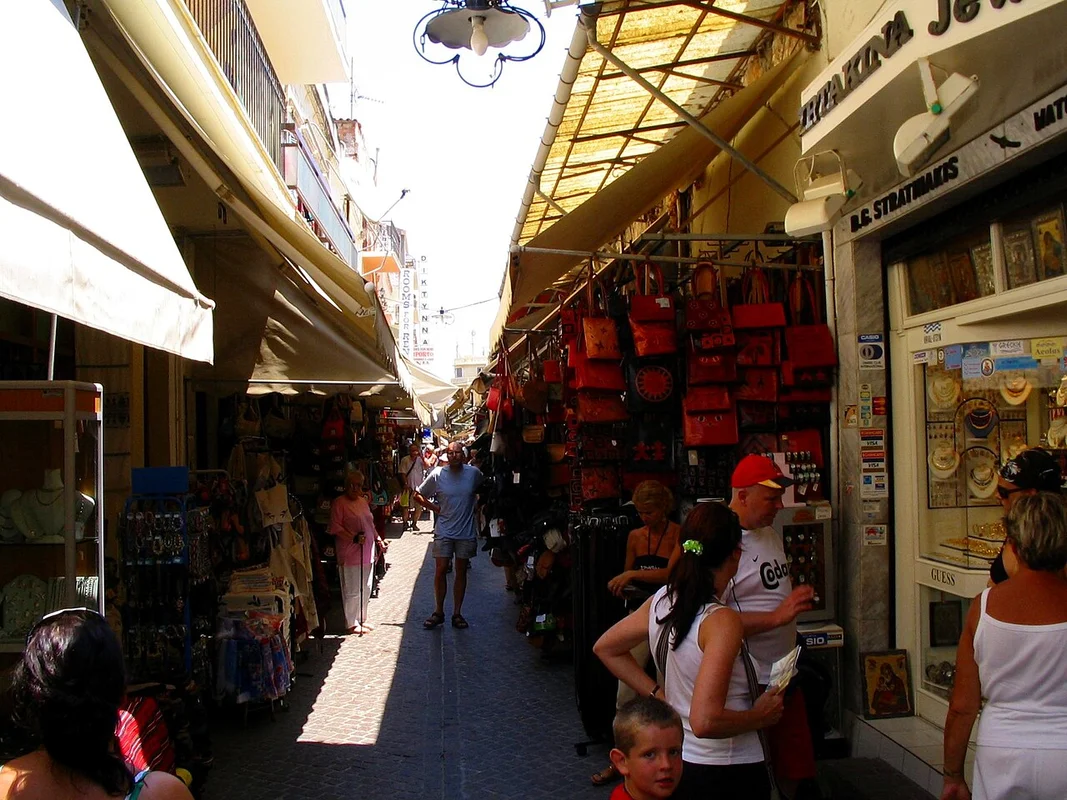
Skridlof Street, also known as “Leather Street,” has existed since at least Venetian times. For generations, leatherworkers have lived here, crafting sandals, belts, bags, and knife sheaths. In the 2020s, the street remains vibrant—though some shops have been replaced by souvenir stores, true craftsmen are still working on their crafts right at the doorsteps.
How to Get There
Haniya is located 145 km west of Iráklio, Crete’s main airport.
From Iráklio Airport (HER):
- KTEL bus is the most popular option. Services depart from Iráklio Bus Station A every 30–60 minutes, from 05:30 to 22:30. The travel time is approximately 2 hours and 30 minutes. The ticket costs 15.10 EUR one way. You can purchase it on the e-ktel.com website or at the ticket counter.
- Transfer/taxi: Costs start from 160 EUR per vehicle; the journey takes 2 hours via the E75 highway.
- Renting a car: Prices range from 25–35 EUR per day during the high season. Parking in Khánia can be challenging; consider using the municipal parking lot near the stadium (1854 Parking) for 3–5 EUR per day.
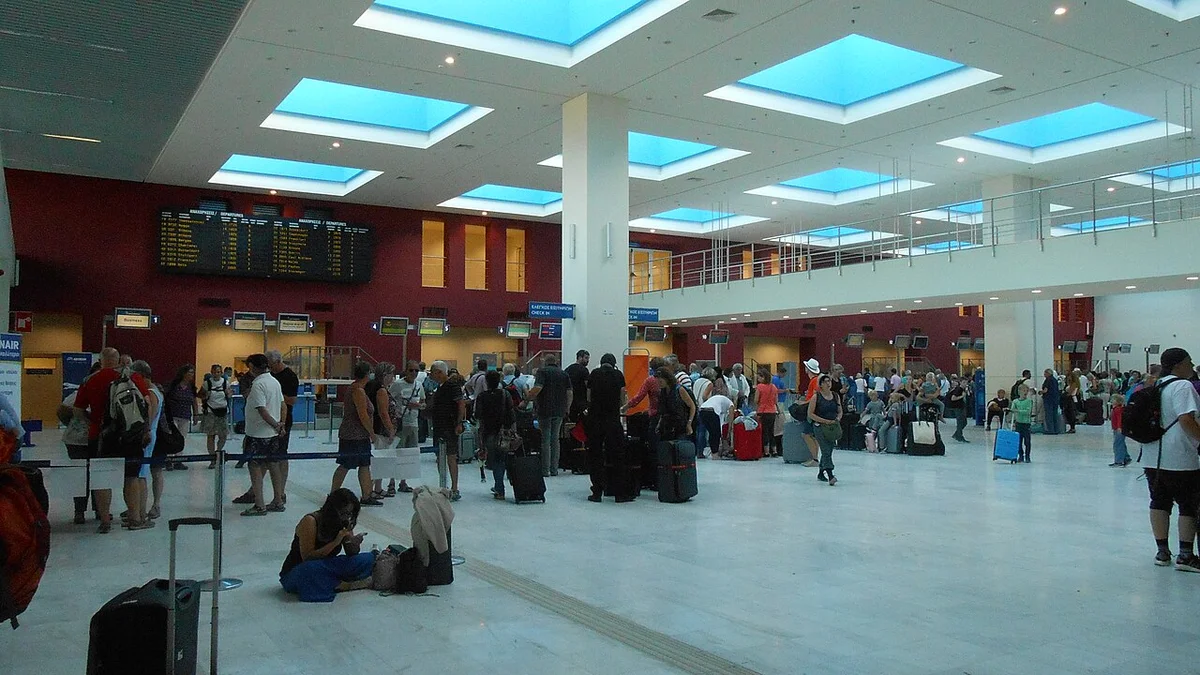
From Khánia Airport (CHQ): The airport is located on the Akrotíri peninsula, 14 km from the city center. You can take the city bus No. 2 (ticket price: 2.50 EUR, travel time: 25 minutes) or take a taxi for 25–30 EUR.
From Souda Port: Ferries from Piraeus (Athens) arrive in Souda, 7 km from Khánia. The bus from the port costs 2.50 EUR, while a taxi costs around 15 EUR. Ferries operated by ANEK Lines/Blue Star cost from 38 EUR (for deck seats) to 90 EUR (for cabins); the journey takes 9 hours.
What to See
The Venetian Harbour
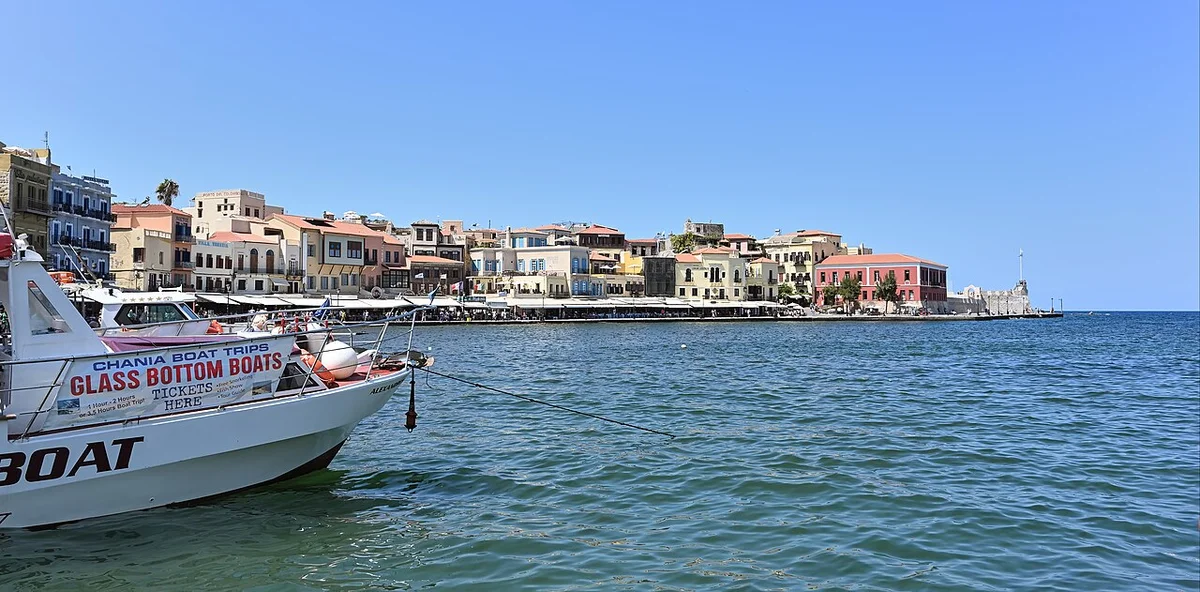
The heart of Haniá is a horseshoe-shaped bay surrounded by brightly colored houses. {GOOGLE=35.5185,24.0178} A walk along the waterfront from the eastern pier to the lighthouse takes about 20 minutes. In the evening, when the lights reflect on the water, it becomes one of the most picturesque spots in all of Greece. Admission is free, and it is open 24 hours a day.
The Egyptian Lighthouse
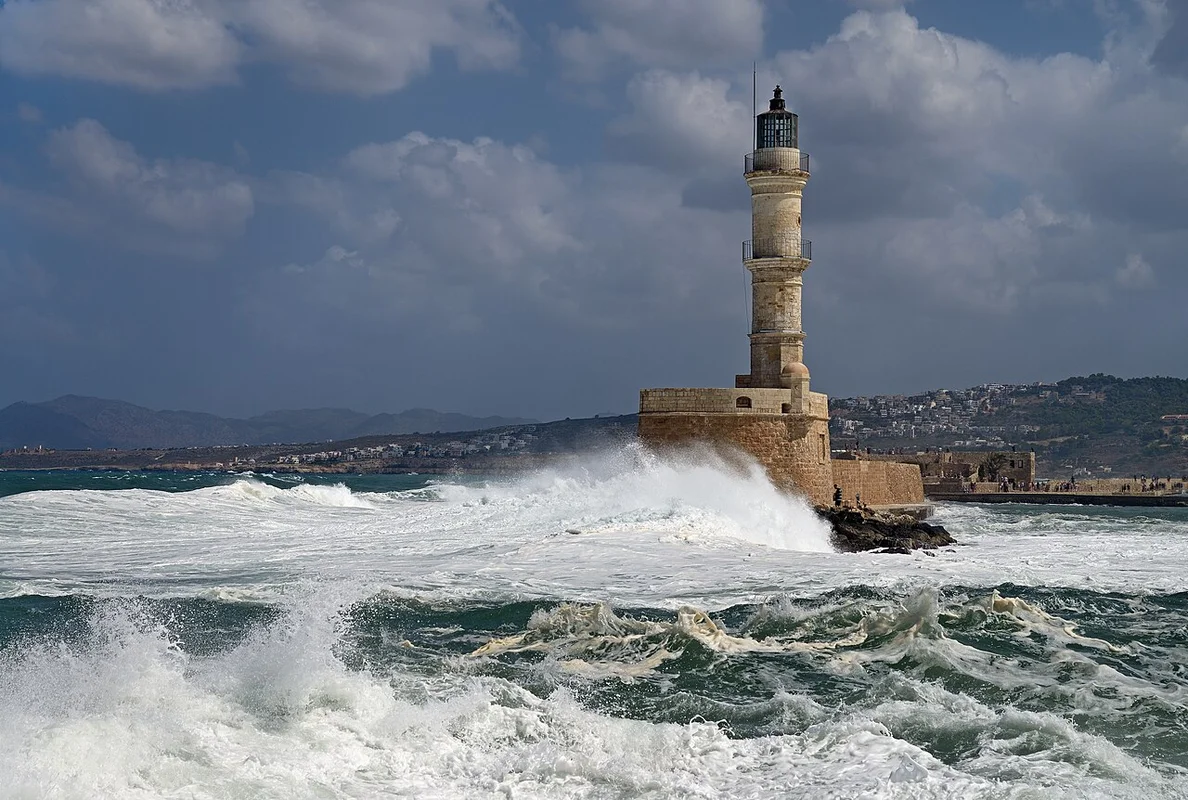
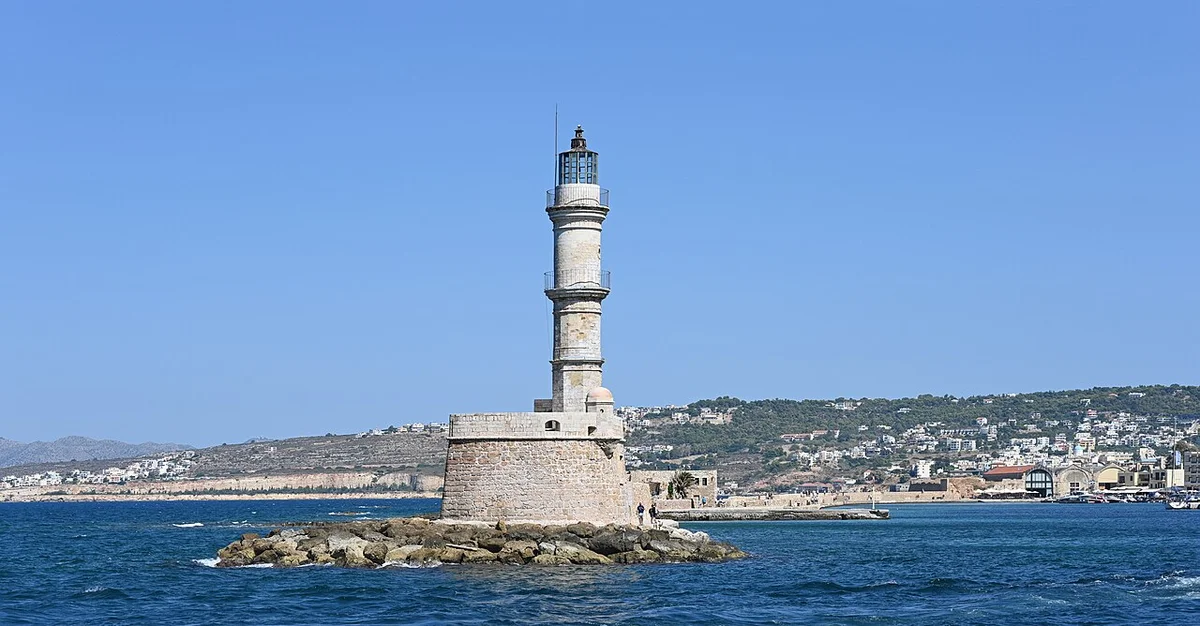
Located at the edge of the breakwater, this lighthouse is a symbol of Haniá. {GOOGLE=35.5210,24.0148} Built by the Venetians in the 16th century, it was renovated by the Egyptians in the 1830s to its current minaret-like appearance. Walking along the stone pier to the lighthouse is free, but make sure to wear shoes with non-slip soles—the stones can be wet from the spray. The best time to visit is an hour before sunset.
Venetian Arsenals (Neoria)
Seven dockyards that date back to the 16th–17th centuries, where the Venetians repaired their warships. {GOOGLE=35.5179,24.0155} Today, exhibitions and cultural events are held in the eastern arsenals; admission usually costs 3–5 EUR. Two of the arsenals near the lighthouse are open for free viewing.
Küçük Hasan Mosque
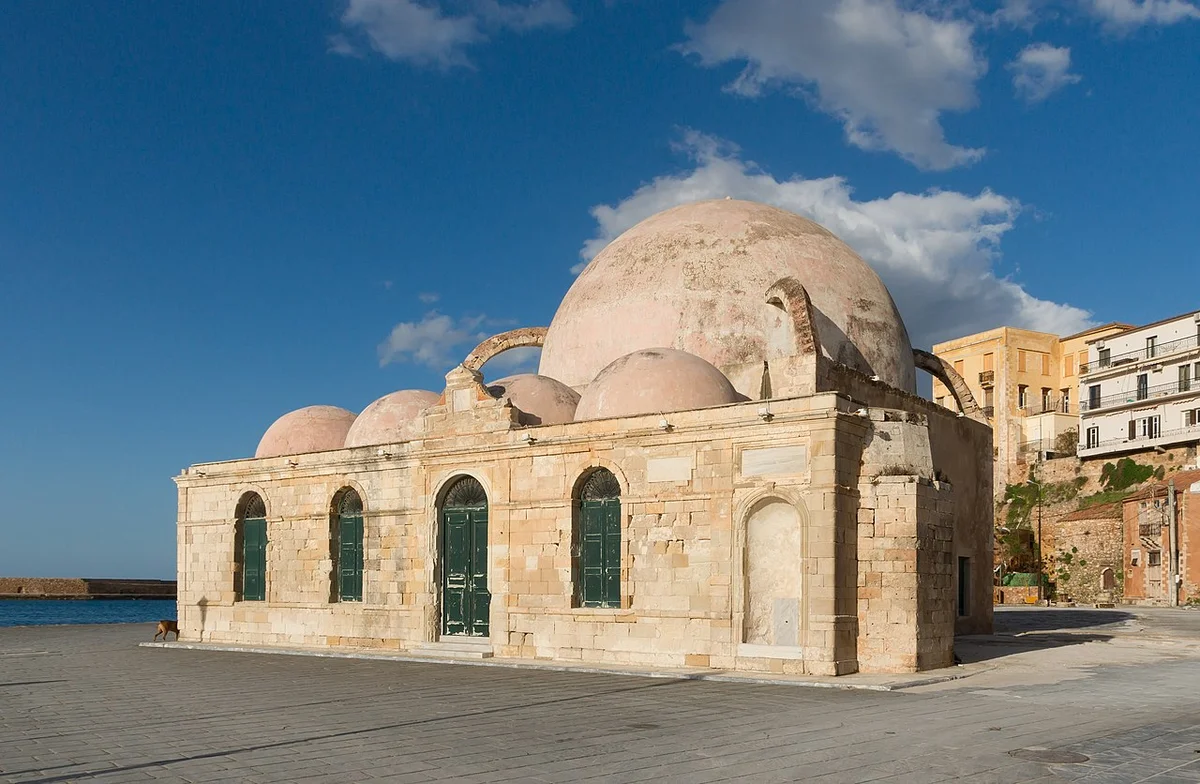
This pink-domed building right on the waterfront is the first mosque built by the Ottomans in Crete (1645). ⟪3⟪ It is now used as an exhibition space. Admission is free, or 2–3 EUR during events. It is usually open from 09:00 to 21:00 during the season.
Skridlof Street (Leather Market)
A narrow alley just 150 meters long, parallel to Halidon Street, is filled with shops. ⟪4⟞ Here you can buy handmade leather sandals for 20 EUR, belts for 10 EUR, and bags for 30 EUR. Negotiating is both possible and encouraged— discounts of 10–20% are common, especially when buying multiple items. Shops are open from 09:00 to 22:00 during the high season (May–October) and until 18:00–19:00 in winter.
The Covered Market (Agora)
A building in the shape of a cross, built in 1913 and inspired by the markets of Marseille. {GOOGLE=35.5152,24.0190} Inside, there are about 70 stalls offering Cretan cheeses (some starting from 14 EUR/kg), olive oil, honey, herbs, and rakı (Cretan brandy). It is open Monday to Saturday from 08:00 to 14:00, and also on Tuesdays, Thursdays, and Fridays from 17:00 to 20:00. Sundays are off.
Crete Maritime Museum
Located in a restored Venetian arsenal at the entrance to the harbor. {GOOGLE=35.5189,24.0149} The exhibition covers maritime history from the Minoan era to World War II (the Battle of Crete in 1941). Admission fee is 4 EUR for adults, 2 EUR for students, and free for children under 6 years old. Hours: Monday to Saturday from 09:00 to 17:00, and all day from 10:00 to 17:00 (up to 18:00 during the high season).
Practical Information
Best Time to Visit: The ideal times are May to June and September to October. Temperatures range from 22 to 28°C, and there are significantly fewer tourists than in July and August, when temperatures can reach 35°C and the streets are packed with people. Early spring (April) is also a good time—many workshops on Skridlof Street are already open, and accommodation prices are 30–40% lower than during the peak season.
Daily Budget in Haniá:
- Breakfast (bougaza + coffee) – 4–6 EUR
- Lunch (salad + meat/fish dish + drink) – 12–18 EUR
- Museum admission – 4–8 EUR
- Souvenirs on Skridlof Street – starting from 20 EUR
- Dinner with wine by the harbor – 20–35 EUR
Accommodation:
Guesthouses in the old town cost around 50 EUR per night in May and 80 EUR in August. Boutique hotels with views of the harbor range from 120 to 200 EUR. Book at least 2–3 months in advance for the summer season.Language: In the tourist area, everyone speaks English. Menus are available in English almost everywhere. Learn to say “efharistó” (thank you) – it will open many doors for you.Tips for Visitors
What to Bring:
- Comfortable shoes with non-slip soles – the streets in the old town are uneven and slippery after rain.
- Sunscreen and a hat; there is almost no shade along the waterfront.
- Cash: Many shops in Skridlof do not accept cards (or offer discounts for cash). ATMs can be found on Halidon Street.
What to Avoid:
- Do not eat at restaurants located directly along the harbor entrance – prices are 30–50% higher, and the quality is average at best.
- Do not drive into the old town; the streets are only 1.5 meters wide, and parking is virtually non-existent.
- Avoid buying “leather” products priced below 10 EUR per pair of sandals – they are likely made of synthetic material from China. Genuine leather has a distinct smell and costs at least 20 EUR.
- Tamam (Zambeliou Street 49) – Formerly a Turkish bath, now the best restaurant serving Cretan cuisine in the old town. Lamb with herbs: 14 EUR; Cretan salad: 8 EUR. {GOOGLE=35.5176,24.0165}
- Bougatsa Iordanis (Apokoronou Street 24) – Famous bougata (layered pastry with cream) for 3.50 EUR. Queues start in the morning but move quickly. {GOOGLE=35.5145,24.0196}
- To Maridaki (Daskalogianni Street 31) – Fresh fish at prices lower than those along the waterfront. Fried sardines: 8 EUR; squid: 10 EUR. {GOOGLE=35.5159,24.0170}
Where to Eat Nearby:
Photo tip: The best views of the harbor are in the early morning (07:00–08:00), when fishermen are repairing their nets and there are still no tourists around. Another great time is at sunset from the western pier, when the lighthouse lights up in orange.
Find the Best Professionals for Your Project
Expert repair, construction, and renovation specialists ready to help you right now
Recommended articles
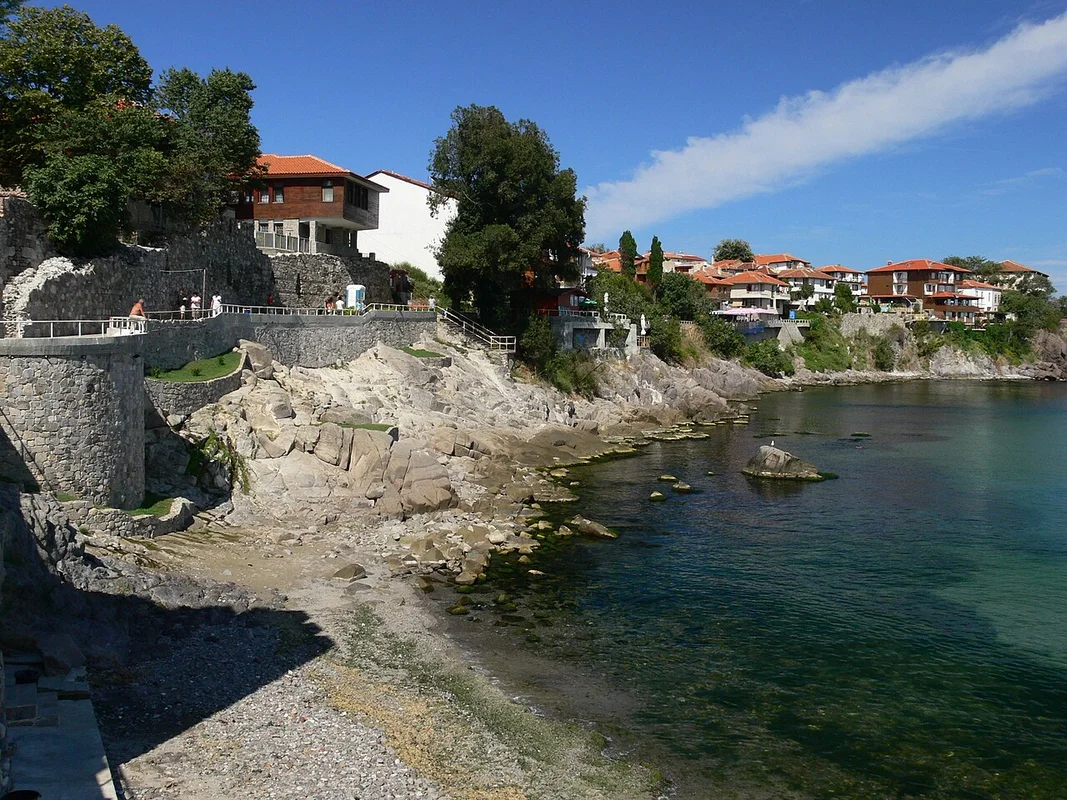
Sozopol: Tiles Roofs and the Island of Saint Ivan
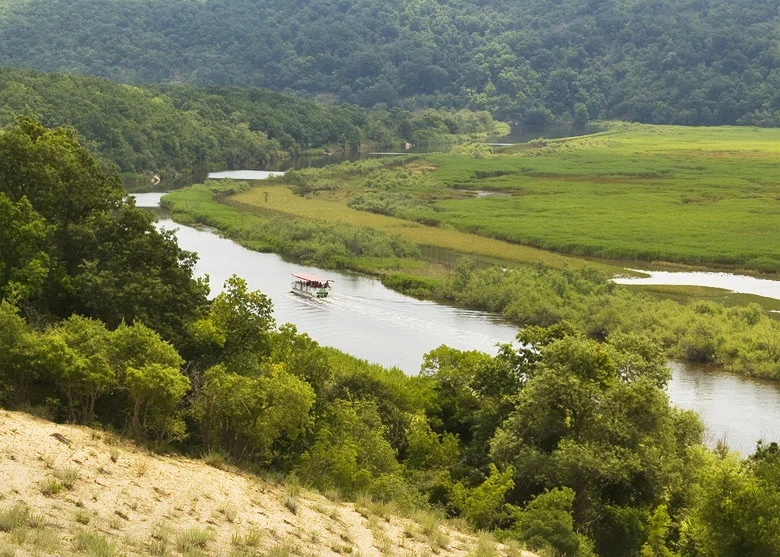
Ropotamo: riverine lagoons, sand dunes, and a nature reserve by the sea near Primorsko
Thracian Tombs in Bulgaria: Alexandrovо, Kazanlыk, and the Secret Crypts Surrounding Sviilengrad
Rila: A trek around seven lakes, including a night stay in a mountain cabin.
More articles:
- Sozopol: Tiles Roofs and the Island of Saint Ivan
- Ropotamo: riverine lagoons, sand dunes, and a nature reserve by the sea near Primorsko
- Thracian Tombs in Bulgaria: Alexandrovо, Kazanlыk, and the Secret Crypts Surrounding Sviilengrad
- Rila: A trek around seven lakes, including a night stay in a mountain cabin.
 Bulgarian thermal resorts: Velingrad, Hisarya, and Sandanski – hot springs and spa facilities in the Balkans
 Kutna Hora: The Silver City and the Horrible Bone House – A Complete Guide for 2025
 Prague during the Soviet era: Žižkov, Stalin’s bunker, and its industrial heritage
 Maslenica in Český Krumlov: Baroque, Carnival, and Traditional Czech Sleds