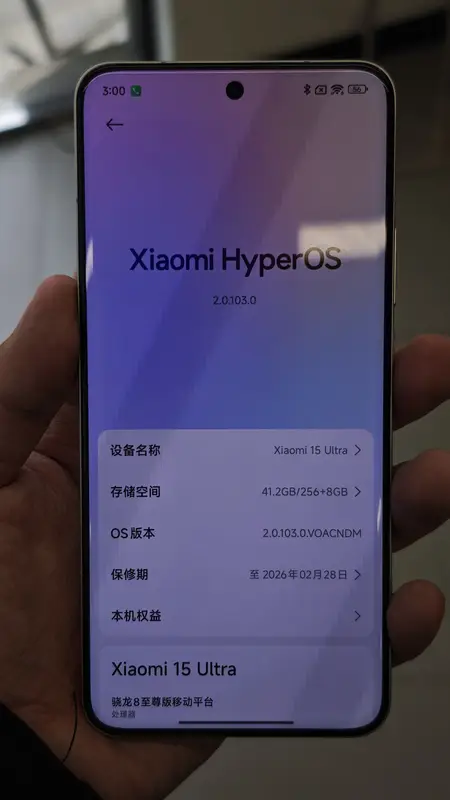
Xiaomi 15 Pro vs OnePlus 13: Flagship smartphones without excessive pricing in 2026
What I Like: Real Strengths
In practice, both smartphones work perfectly with any modern games and apps—the Snapdragon 8 Elite handles the load without any lag. In “Genshin Impact,” both devices maintain 120 FPS at maximum settings without any frame drops.
Xiaomi 15 Pro outperforms in terms of charging speed: its 120W wired charging allows it to go from 0% to 100% in just 15 minutes. This is extremely useful at the airport or before an important meeting. Additionally, its lower heat generation means the device doesn’t get overheated, even under heavy use.
OnePlus 13 impresses with its high brightness: its 4500-nit peak brightness is about 50% higher than that of the Xiaomi model. This results in better contrast in bright sunlight and makes text easier to read. Its 20-megapixel front camera also offers higher-quality selfies compared to the competitor’s 12-megapixel one. The IP69 certification indicates that it is protected against strong water jets, which goes beyond the standard IP68.
- Both devices weigh less than 220 grams—making them more comfortable to hold than the Samsung S25 Ultra (232 grams).
- Both use 120Hz AMOLED displays with no compromise on quality.
- Their 6000+ mAh batteries provide around 1.5 days of continuous use.
In terms of software, the Xiaomi 15 Pro runs MIUI 16 based on Android 15, while the OnePlus 13 uses OxygenOS 15 also based on Android 15. MIUI offers more customization options, but OxygenOS is considered cleaner and faster—though these are subjective preferences.
Weaknesses and Limitations
The Xiaomi 15 Pro isn’t ideal for wireless charging: although its 80W speed sounds fast, it actually takes 35–40 minutes to fully charge a 6100-mAh battery due to overheat protection measures. The OnePlus 13’s 50W wireless charging takes slightly longer (50 minutes), but this isn’t a major issue for overnight charging.
The OnePlus 13 also struggles in cold environments: at temperatures below 5°C, its battery capacity drops by 15%, while the Xiaomi model only loses 8%. This can be a downside if you frequently travel in cold regions.
Both devices use proprietary charging ports: Xiaomi uses its own, while OnePlus uses another. Both have USB-C, but fast charging is only possible with official adapters. Losing the adapter means you’ll need to buy a genuine one for around €30-40.
- Xiaomi 15 Pro: Its IP68 certification is inferior to IP69 (8 MPa vs. 14 MPa water pressure resistance).
- OnePlus 13: The camera has only been upgraded by a factor of 3x, not the expected 5x.
- Both devices are not available in some countries (depending on the region).
Security: Both models feature third-generation in-screen fingerprint scanners with identical recognition speeds (0.3 seconds). Face Unlock is also available, but it only works when wearing a mask on your face for extra security.
Who Should Buy Which Device?
Choose the Xiaomi 15 Pro if: you need the fastest charging speed, you frequently use zoom photography (3.2x zoom is more useful than 3x in video production), or you prefer a highly customizable MIUI interface. At €799 for the base version, it offers the best value on the market in 2026.
Choose the OnePlus 13 if: you often take selfies (20 MP front camera), work in bright sunlight (4500-nit screen brightness is a real advantage), prefer the clean and intuitive OxygenOS interface, or value the premium feel of its ceramic back. At €749 for the 12/256 GB version, you save €50, which you can spend on a case and other accessories.
Professional Opinion: In 90% of cases, the choice between these two devices depends on your priorities. If fast charging and zoom are crucial for you, go with Xiaomi; if screen quality and software cleanliness matter more, choose OnePlus. Both models offer excellent value for money. Alternatively, you could buy the base version of the OnePlus 13 for €749, save €50, and still be very satisfied with your purchase. In 2025, at this price range, you would have to settle for significantly less in terms of performance.
Comparison with competitors: The Samsung Galaxy S25 Pro costs €1099 (₢00 euros more expensive despite similar specifications), the Apple iPhone 17 Pro costs €1199 (its ecosystem is more expensive). The Google Pixel 10 Pro is in the same price range ($849), but its AI functions currently perform worse than what marketers promised.
Warranty: Both models come with a 2-year warranty in the EU if purchased officially. Both manufacturers also cover battery replacement after 500 charge cycles. Screen repairs cost approximately the same for both—€150–200.
Final ratings: The Xiaomi 15 Pro gets 8.7/10 for speed and price, while the OnePlus 13 earns 8.5/10 for its screen and design. The difference is minimal. If you’re having trouble deciding, just choose the model that costs less in your region and enjoy it for 3 years without any regrets.