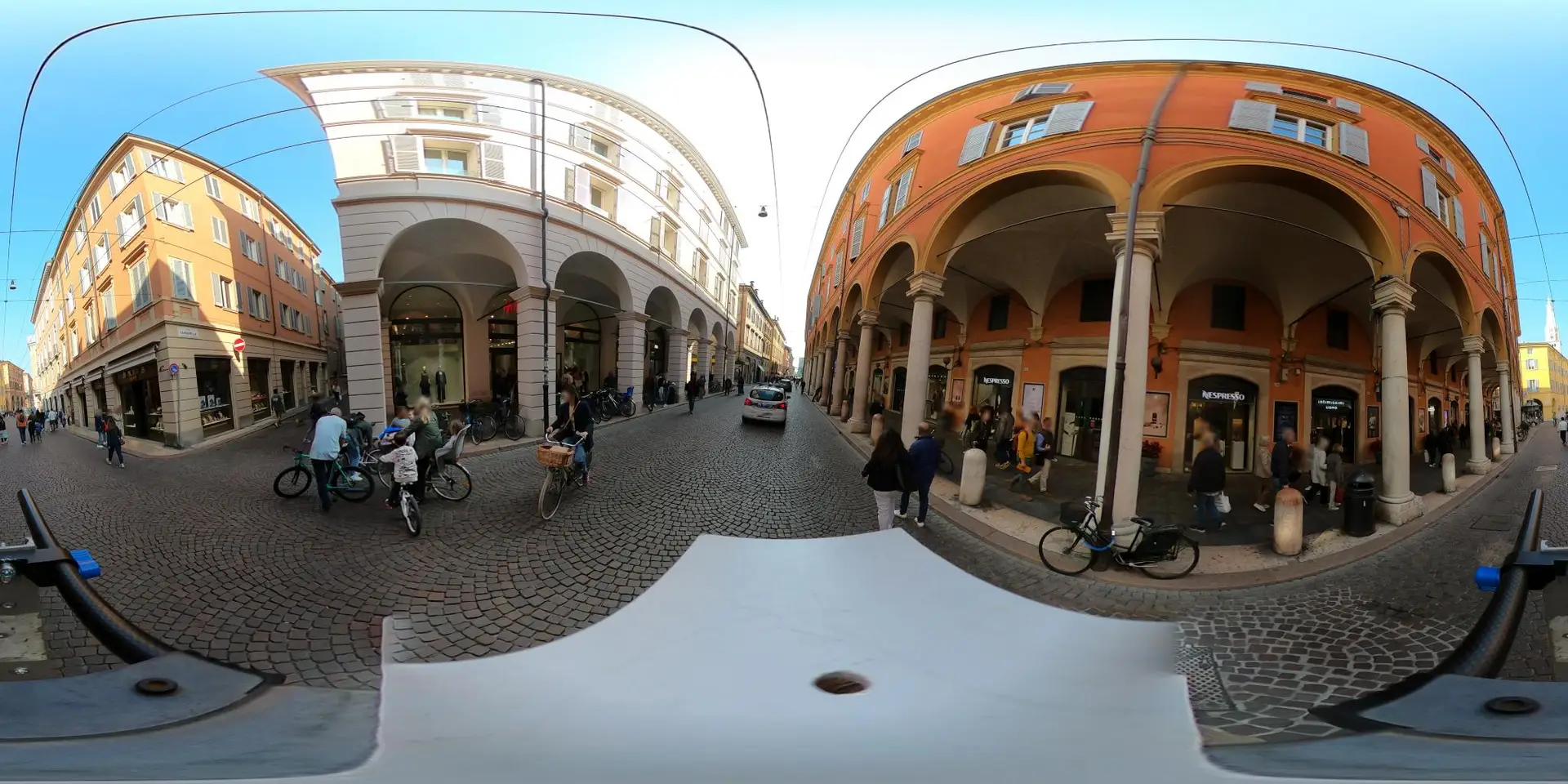
Modena and balsamic vinegar: a tour of bodegas and Emilia’s villas.
Modena is more than just a city with a beautiful center and cathedral. It is the capital of balsamic vinegar, and if you visit here without stopping by at least three shops that produce this nectar, you are missing the essence. This legendary “black gold” matures in the cellars and attics of private homes, not in industrial facilities. In 2025, a tour of traditional production methods and villas in Emilia is a way to understand not just the city, but also the region’s philosophy of life.
What is Modena balsamic vinegar and why is it counterfeited in 50 countries?

Let’s start with the basics: Modena balsamic vinegar (Aceto Balsamico Tradizionale di Modena) is not just a cooking ingredient; it’s an investment. A bottle of genuine 25-year-old vinegar costs €80–120, while one aged for 100 years ranges from €300 to €500. For this price, you’re not paying for the liquid itself but for the time and collaboration of generations of vinegar makers.
The process is simple but requires patience: the must (grape juice) is boiled, cooled, and poured into a cascade of wooden barrels (7–12 in number). Each year, the vinegar is transferred from one barrel to another, losing volume but gaining complexity in flavor. After 12 years—minimum time for “traditional” status—the liquid becomes dark, thick, and layered. After 25 years, it is almost syrupy.
Fake versions (which account for 90% of cheap vinegar on the market) use acetic acid, sugar, and caramel. They taste similar but fail the DOOR (Designation of Origin) certification test.
Some surprising facts:
- The earliest document regarding Modena balsamic vinegar dates back to 1598—a letter from the Duchess’s court about a gift of a barrel of vinegar for treating colds.
Bottega No. 1: Acetaia Giusti—a living museum open since 1747

The first thing to do in Modena is visit Acetaia Giusti
Upon entry, you’re given a tasting cup (a set available for three ages: 5 years, 12 years, and 25 years). A guide takes you through three floors of wooden barrels, explaining why different rooms have varying temperatures and humidity. On the attic are the oldest barrels, where the vinegar turns almost into a black syrup.
The ticket price is €10 for the tour including tasting. Hours of operation: Monday to Sunday, 9:00–17:30 (no holidays). It’s possible to buy vinegar directly at the shop—prices are higher than at the market, but you know it’s authentic.
The main highlight: ask to see the cellar where the “heirloom” vinegars are stored—barrels that parents give to their children at birth. By the time the child turns 25, the vinegar is ready. Justi has been keeping such barrels for families for 80 years.
Asetalia Valsamiso Museum: where they’ll show you a microscope and the vinegar formula
If Giusti is a boutique, then the Museo del Vinsamiso
The most interesting section is an interactive table with samples of water from various sources in Modena. The museum demonstrates how water quality affects the microflora in barrels. Without proper water, vinegar cannot be produced.
The second floor is dedicated to history. It displays letters from Duchess Barbara d’Este (1575), in which she requests vinegar for health reasons. Rare 17th-century barrels made of sandalwood and cherry wood are also on display—they are no longer used (too expensive), but their impact on vinegar flavor has been proven over centuries.
Price: €8 per admission ticket. Hours: Tue–Sun 10:00–17:00, Monday is closed. The tour lasts 1.5 hours. Audio guides are available in English.
Bottega No. 2: Tre Medaglie — a family-owned business without tourist discounts
If Giusti represents the “tourist” level (everything polished, guide speaks English), then Tre Medaglie
The owner, Luigi Machioni, produces vinegar for sale but is reluctant to give tours. Reservations must be made a week in advance by phone (+39 059 209 311). He does not offer a “three-age” tasting — only two samples he deems worthy are provided. The rest is not part of his business.
But that’s exactly the charm. Luigi explains which bottlers fake vinegar (by adding caraway and vinegar essence), which ones violate the rules (by storing vinegar in plastic instead of wood), and why DOR inspects so strictly. He opens barrels that his father once sealed. It smells like a 17th-century Catholic monastery.
Price: free, but you’re almost expected to buy a bottle of vinegar (€25–40). It’s not a hidden tax—it’s respect for the time he’ll spend explaining things.
Emilia’s Villas and Wineries: a Tour of the Surroundings

After exploring the city, head to the villas. The area around Modena and neighboring Reggio Emilia is dotted with 16th–18th century palazzos that house vinegar distilleries and cellars filled with vinegar.
Villa Fregiozzo
Palazzo d’Alanna
How to get there: 20–30 km by car from Modena’s center; by public transport, take SETA buses to Casalecchio (bus No. 23, travel time: 45 minutes). We recommend renting a car (€50–70 per day; Eurorsar and Nertz are available in the city center).
Where to Buy Vinegar Without Overpaying: Three Price Levels

In Modena’s market (Riazzza Mazzini, daily 7:00–13:00, except Sundays), vinegar is sold three times cheaper than in tourist shops. However, the risk of buying a counterfeit is higher. Here’s how to tell the difference:
Level 1 — tourist vinegar (€5–10 for 250 ml): This is not a fake, but it’s also not true “traditional balsamic.” It’s commercial vinegar with DOP status, but it’s young (aged 5–8 years). The label reads “Aceto Valsesino di Modena IGP” (a protected origin designation, but not “traditional”). It’s suitable for salads, meat, and pancetta.
Level 2 — museum-grade samples (€40–80 for 100 ml): These are vinegars aged 12–25 years with DOP labeling and a stamp from the producers’ cooperative. It’s best to buy them directly from boutiques (Giusti, Tre Medaglie, Fregliosi). The label includes the year of production, batch number, and a stamp from the province.
Level 3 — investment versions (€150–500 for 100 ml): These are vinegars over 40 years old, often from private collections. They’re sold at auctions or through specialized dealers (like Acetia Giusti). They’re too expensive for home use, but make a good souvenir.
Tip: At Bologna airport’s duty-free shop (the region’s main hub, 40 km from Modena), 30% vinegar is cheaper than in city stores. However, the selection is smaller.
One-day itinerary: seeing it all
9:00–11:30 — Asetaia Giusti for a tasting and tour. The taxi ride from the center costs €8.
12:00–13:00 — Lunch at a trattoria near Giusti. Ask for risotto all’aceto balsamico, Emilian tortellini, and local wine.
14:00–15:30 — Balsamic Museum. It’s a 10-minute walk from Giusti.
16:00–17:30 — Visit the Three Medaglie (reserve in advance by arranging a time).
18:00–19:00 — Shop at the Riazza Mazini market before it closes (usually closed at 1:00 p.m., but open until 2:00 p.m. from October to March).
On weekends (Saturday), the market is open from 7:00 a.m. to 1:00 p.m.; it’s closed on Sundays.
If you have time, head to nearby towns with villas (Reggio Emilia is 30 km away). The total driving time between these places is 2–3 hours.
Practical tips: how to get there, when to arrive, and budget
Transport from Bologna: Modena is 40 km from Bologna Airport (BLQ). The Trenitalia train takes 30 minutes and costs €5–8 one way. The FlixBus bus takes 1 hour at a cost of €3–5. By car, it’s 45 minutes via the A1/A22 highways.
In the city: Public transportation (buses and trams operated by SETA) costs €2 per ride, with a daily pass costing €6. Taxis start at €3.50 and cost €1.80 per km thereafter. Bicycles can be rented for tourists at €20 per day; the city is small, so the center is reachable on foot in 20 minutes.
Best time to visit: spring (April–May) and autumn (September–October). It is hot and humid in summer (July–August), and it rains in winter (November–March). The Balsamic Vinegar Festival usually takes place in September (check dates at the tourist office, www.vіsіtmоdеnа.іt).
Daily budget:
• Boutiques and museums: €30–50 (two entries + tasting)
• Food (breakfast, lunch, dinner): €40–60
• Transportation: €15–25 (taxis between boutiques, parking)
• Buying vinegar: €30–100 (depending on age)
Total: €115–235 per tourist per day.
Where to stay: a 3-star guesthouse in the center (€70–100 per night), hostel (€25–40). Hotels near the train station are cheaper than those in the center of Piazza del Duomo.
Less known: what most tourists miss
Tourists often come to Modena for half a day, visiting the Duomo, buying vinegar from souvenir shops, and then leaving. They miss the most important things:
First: the pan-European DOOR museum (on product origin). Next to the Valsamiso Museum is a documentation center that explains the history of certification and the fight against counterfeits. It’s free, open Monday to Friday from 10:00–13:00.
Second: a tasting workshop. Several boutiques offer personalized tasting courses (€80 for 3 hours), where you learn to distinguish between different ages of vinegar by sight alone. It’s like being a wine sommelier, but for vinegar.
Third: a night visit. A few boutiques allow tourists to enter at night (21:00–23:00) for an atmospheric experience. The lighting is only from candles, the scent is stronger, and the temperature in the cellars is cooler. It costs €25–40, but it gives a completely different experience.
Fourth: medicinal vinegar. Older Modenese people drink one tablespoon of 50-year-old vinegar daily as a panacea. This isn’t scientifically backed, but it’s a tradition in the region. Buying a liter of such vinegar costs €400–600, but it’s considered an investment in family health according to local belief.
Three recipes using model vinegar for home use
Panna cotta with balsamico: Beat 500 ml of cream with 100 g of sugar, add gelatin (3 sheets), pour into molds, and chill for 4 hours. Before serving, drizzle 1 teaspoon of 12-year-old vinegar on top. The acidity contrasts with the richness.
Strawberries with vinegar (fragole al balsamico): Cut strawberries, sprinkle with brown sugar, and drizzle 1–2 teaspoons of 8-year-old vinegar over them. Let sit for 20 minutes. Serve with vanilla ice cream.
Parmesan and Vinegar Risotto: Prepare classic risotto using Arborio rice, broth, white wine, butter, and parmesan. At the end, add 1 tablespoon of 25-year-old vinegar, stir well, and serve hot.