Harlem: Frans Hals Museum, canals and cycling tour through tulip fields
Harlem is not just a city for a one-day trip from Amsterdam (though that’s possible too). It’s a place where Dutch life seems more genuine. There are no crowds with selfie sticks here, only real canals with 17th-century red brick houses reflected in the water. The Frans Hals Museum is housed in a building that was once an old people’s home — and it is this context that makes each painting even more powerful. Outside the city, just a few minutes by bike, lie fields where millions of tulips bloom in spring, and autumn here is not gloomy but golden.
Frans Hals Museum: Portraits in an Old People’s Home

Frans Hals (1582–1666) was an artist who depicted people as if he could see through them. The museum is indeed situated in a historic building: it was once an asylum where Hals himself received support from the city in his later years. Today, over 200 of his paintings hang in the rooms where the elderly once lived.
The main treasure is a series of group portraits of the asylum’s administrators. When you look at them, it seems as though the people will soon get up from their chairs and start talking. Energy, liveliness, realism—these are all things Hals captured in the 17th century, when most artists depicted static poses.
Practical information: admission fee is 12.50 EUR for adults, 6 EUR for students, and free for children under 18. Hours of operation: Tuesday to Sunday from 11:00 to 17:00, closed on Mondays. Address: Great Nileland 62
Pro tip: if you visit after 3:00 PM, most of the tourist crowds have left. Photography is allowed, but flash is prohibited.
Harlem Center: canals, market, and Grote Markt square
It’s a 15-minute walk from the museum to the city center — Grote Markt square. This is less of a tourist attraction and more of a local gathering place where people buy flowers, coffee, and eat snacks. There’s a St. Bavo’s Church from the 15th century here, with an organ on which the young Bach once played.
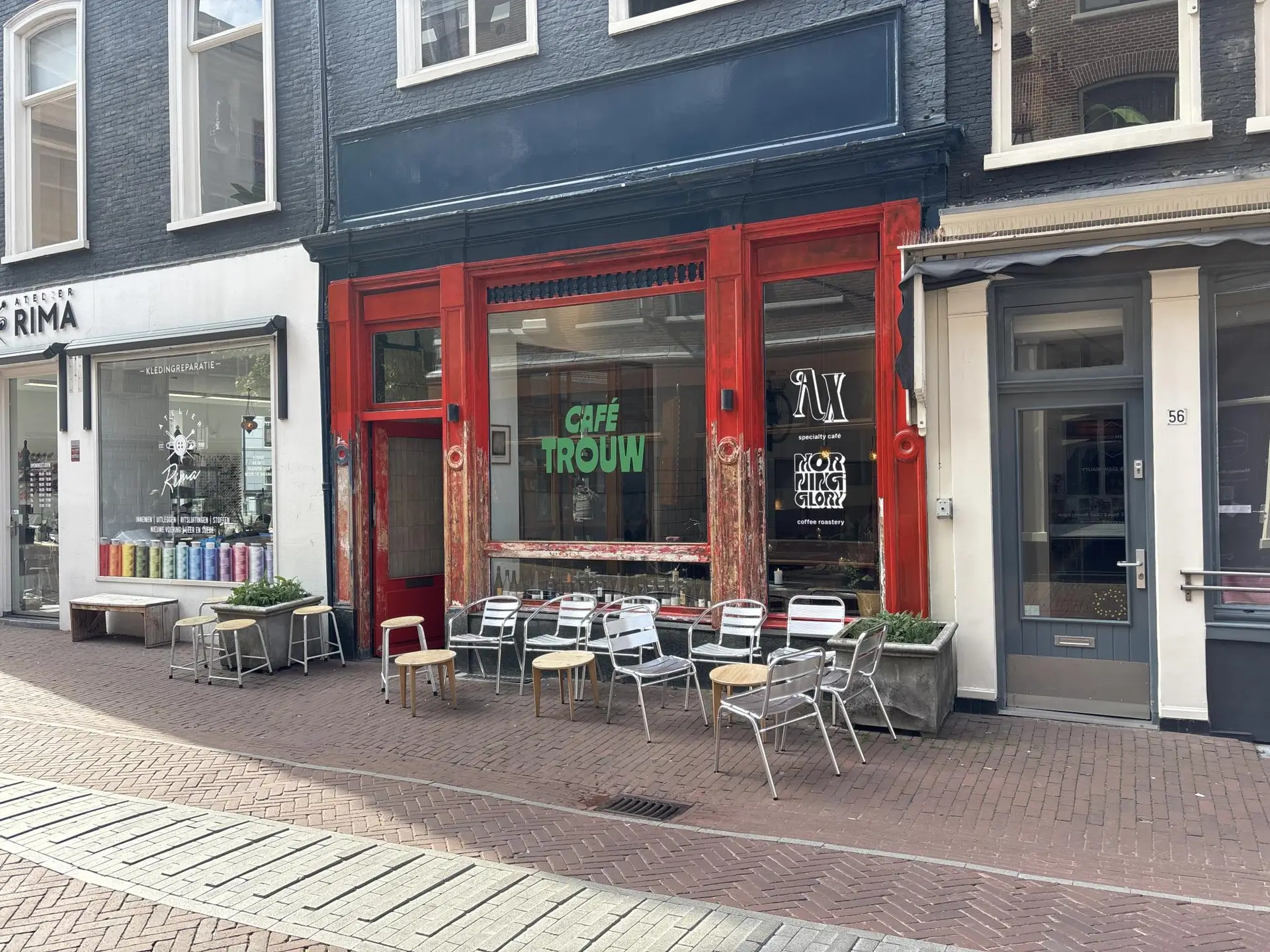
Haarlem’s canals are not a copy of Amsterdam’s but have their own unique architecture. The water is calmer, the houses are tighter together, and the atmosphere is more intimate. Tour boats operate on the canals (15 EUR for 1 hour), but it’s better to simply walk along the shore and stop by one of the cafes. Prices here are lower than in Amsterdam: beer costs 3.50 EUR, and a cappuccino costs 2.80 EUR.
The Bloemmarkt flower market is located nearby (Vlomeenmarkt) — it’s not a tourist attraction but a real market with cut flowers, tulip bulbs (you can buy live flower bulbs for 5–15 EUR per pack), and plants. It’s open only during the season (March–May, partially in summer). Admission is free.
Bike tour through tulip fields: the Bulbassum route
This is the region’s main attraction, one that even experienced travelers miss. In spring (March–May, peak in April), fields surrounding Haarlem bloom with millions of tulips. Not in one place, but across various farms spread over kilometers around.
You can rent a bike at the central station in Haarlem (Haarlem station
Route No. 1 (30 km, 3 hours): Haarlem → Lisse → Bulbassum (Vulbassium — a huge tulip greenhouse museum, entrance fee 15 EUR, open from April to May). This is not just a cycling trip but a route through colorful fields. In spring, the roads are crowded with cyclists — this is normal.
Route No. 2 (14 km one way, easy): Haarlem → Nieuzen aan de Zaan → the village of Zaanse Schans (which has an open-air windmill museum, entrance fee 12 EUR).
Remember: in spring, there are many cyclists on the roads, and local traffic can be aggressive toward them. You need to ride carefully. If you’re not confident in your skills, consider a guided tour: local guides offer 4-hour cycling tours for 45–60 EUR including a guide.
Historic Haarlem: Architecture and Nightlife

Outside the tourist routes lie neighborhoods where life goes at its own pace. Jаnsstrааt is lined with bars and restaurants offering mixed menus ranging from Dutch herring for 2.50 EUR to Italian pasta for 12 EUR. Haarlem was historically a port city, and this history remains evident in its culture to this day.
At night, the city transforms. Bars stay open until 3:00–4:00 a.m., and young people flock here from Amsterdam because it’s cheaper and more fun. Dе Wаtеrtuіn, Саfé dе Jаgеr, Вrоwn Саfé Вrоuwеrs — these are the places where locals hang out, not tourists.
The key point: Haarlem is quiet in summer and bustling in spring. If you go in July–August, expect a calm atmosphere; museums are open, but crowds are minimal. If you go in spring (March–May), book a hotel in advance — a double room in the center costs 80–150 EUR per night.
Things to know before you go
- Tulip mania: 9 million tulips grow in the North Holland region. The peak blooming period lasts only 2–3 weeks in April, so if you miss this time, your trip loses its meaning.
- Frans Hals Museum — the only place in the world that houses over 200 works by this artist. No other place has such a concentration of his works. It holds the world record for the most comprehensive collection of a single 17th-century master.
- Bicycles aren’t an option but the top mode of transportation. In Harlem, there are 35,000 bicycles for 160,000 residents. If you walk, you’re an anomaly.
- Fresh herring is a culinary symbol of Harlem. It’s eaten raw for 2–3 EUR. Find a stall in the central square, and they’ll put the sliced herring right into your mouth. It’s a local ritual.
- The Orange Business Festival (Flower Parade Vlamingen) takes place once a year (at the end of April): 20 huge platforms decorated with flowers parade through the city. It’s not a tourist attraction but true Dutch madness. No tickets are needed—just wait on the street.
How much money to bring and how to get there

The daily budget for two people (without accommodation) is: museum 25 EUR, bike rental 10 EUR, food (lunch + dinner + coffee) 40–50 EUR, local transportation 8 EUR, and miscellaneous expenses 30 EUR. In total: 113–153 EUR for two people. This is quite affordable by European standards in 2025.
How to get there: From Amsterdam, there is a direct NS (Nedерlаndsе Sрооrwеgеn) train from Central Station to Haarlem: 4.50 EUR round-trip, 15 minutes travel time, running every 10–20 minutes. This is the most convenient route. There is also a direct train from Amsterdam Schiphol Airport to Haarlem (35 minutes, 12 EUR).
Where to stay: Budget options include hostels like Sosomama or LinkNORD (25–35 EUR per bed in a shared room). Mid-range options are hotels such as Allmark Collection Haarlem (100–140 EUR per room). Luxury options include De Gooyer (150+ EUR, with views of the canals).
When to go: April is the peak month for tulips and tourists. May still has blooming tulips with slightly fewer crowds. June–September offers urban life and museums in a more relaxed atmosphere. Winter (November–February) sees the city slow down, with half of the cafes closed, but it has a charming atmosphere.


