The Škoda Museum in Mladá Boleslav: how the stronghold of the Czech automotive industry became a tourist attraction.
At the edge of Mlada Boleslav stands a building that looks like a time capsule. Through the museum’s huge panoramic windows, one can see the very factory where it all began—back in 1895, brothers Václav and Václav Klementy assembled their first motorcycles. Upon entering, visitors step into a world where every car is not just metal, but a whole story of Czech engineering prowess, which, with its perseverance and creativity, even competed with German manufacturers.
Why Mlada Boleslav is Škoda’s Capital
The history of Škoda is inseparably linked to this city, and it is not a marketing tactic by the museum. When the Clement brothers started production in 1895, they began right here—with bicycles. By 1898, the first motorcycle was created, and in 1905, they assembled the first car under the Laurin-Clement brand. The name “Škoda” came later, in 1925, when the factory joined a Czech machinery company.
The city of Mladá Boleslav was chosen not by chance: it had workers, the necessary skills, and good logistics. And for over 130 years, Škoda has remained here, evolving from a modest enterprise into an international conglomerate. The factory in Mladá Boleslav is now one of the largest in Europe, producing not only cars but also critical components for the entire Volkswagen group.
Fun fact: In 1925, Škoda built its first car under the Škoda brand — the Model 110, which could reach speeds of 90 km/h. Today, Škoda Enyaq electric vehicles achieve twice that speed, but the fundamental principles of engineering design remain unchanged.
Škoda Car Museum: A Journey Through a Century

The Škoda Museum
The exhibition is organized chronologically and visually: the first galleries tell the story of the Klement brothers and the era of bicycles and motorcycles. Authentic pieces from the 1890s are on display here, including one of the earliest motorcycles—a thin, primitive machine by 21st-century standards but revolutionary for its time.
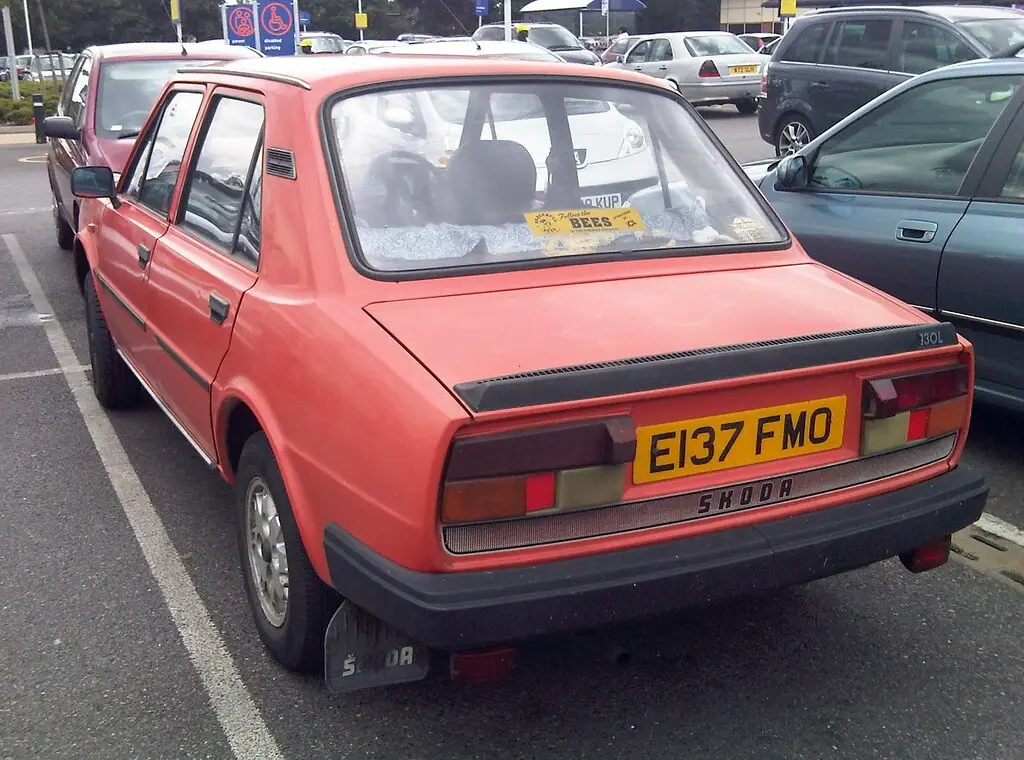
The central part of the exhibition is dedicated to Škoda’s “golden age” — the 1920s to 1960s. You will see legendary models such as the Škoda 430 (1930s), which was renowned for its reliability and affordability. Original spare parts, tools, documents, and advertisements from that era are displayed on the exhibits. A large section is devoted to the socialist period (1945–1989), when Škoda produced the famous Octavia and Felicia — vehicles that dominated European roads despite political barriers.
What few people know is that during the Cold War, Škoda was literally the only Czech automobile brand exported to the West. Despite Soviet influence and a planned economy, Škoda engineers created cars that were exported to Finland, Sweden, Austria, and even Great Britain. This was a rare and valuable source of foreign currency for Czechoslovakia.
The final section of the museum is dedicated to modernity and the future. It features the latest models, including the Enuoq and Citigo-e IV electric vehicles. Interactive screens help visitors understand the differences between engines and learn about hybridization and electrification technologies. Particularly impressive is the section focused on production innovations — how the Mlada Boleslav factory adapted to global requirements for sustainability and safety.
Fun fact: The Škoda Ostavia Gen 1 (1959-1971) was one of the first European cars with an engine located at the rear of the chassis and independent suspension. It was an engineering feat that European experts recognized only later — Czech ingenuity surpassed established standards by many years.
Škoda’s Factory: A Tour of Production

If a museum is the soul of history, then a factory is its living heart. The Skoda Museum offers special factory tours that last about two hours. The cost of such a tour is 490 crowns (approximately 20 EUR) per person, and they are held on Tuesdays, Thursdays, and Saturdays at 2:00 PM. The tours are conducted in English (less frequently in Czech), and reservations must be made in advance through the museum’s website or by phone at +420 326 831 130.
During the tour, you visit the workshops where car bodies are assembled, engines are installed, and electronics are fitted. Helmets, vests, and ear protection — complete protective gear for visitors entering this industrial holy land. The noise, sparks from welding machines, and rhythm of conveyor belts — this is far from a museum; it’s real Europe, operating 24/7, 365 days a year.
Tour guides (usually Skoda employees) explain modern production standards: how robots work alongside humans, how quality is controlled, and what innovations have been introduced. They also detail the logistics of this massive system — hundreds of suppliers, thousands of workers, millions of components that must come together as one cohesive whole.
Fun fact: The factory in Mlada Boleslav produces around 400,000 cars per year, including not only Škoda vehicles but also models from Volkswagen and Audi. It is one of Europe’s largest exporters, with nearly 90% of the cars manufactured here sent overseas.
Mlada Boleslav Technology Park: The Future of the Automotive Industry

Next to the museum and factory, modern buildings of the Škoda Technology Park have emerged in recent years. It is not a tourist attraction in the traditional sense, but for those interested in innovation and technology, it is a valuable discovery. The park houses Škoda’s research centers, offices, and laboratories where engineers develop batteries, autonomous driving systems, and future safety technologies.
The technology park also features a demo center where customers and journalists can test new models, use driving simulators, and learn about various technologies. Public access is limited, but special group tours are sometimes organized—check Škoda’s website or the information center in Mladá Boleslav for details.
Where to eat: cuisine around the factory

After visiting the museum and taking a tour, you’ll want to enjoy a delicious meal, and Mladá Boleslav won’t disappoint. In the city center, within walking distance of the museum (about 1.5 km), is the Czech beer hall U Fléku
If you prefer a more modern approach, there’s Sklеру restaurant on the city’s main square
For those who enjoy vegetarian food, I recommend the small café Sаlаd Ваr, hidden in an alley near the main street — it serves fresh salads, soups, and vegan options, with an average bill of 180-250 crowns (7-10 EUR).
What few people know is that Mladá Boleslav has mini-breweries right in residential areas, where local enthusiasts brew craft beer using traditional Czech recipes. If you talk to locals at a pub, they’ll gladly tell you where to find such a brewery and how to get there — it’s a true tourist secret.
Practical information: how to plan your day
How to get there: Mladá Boleslav is located about 40 km north of Prague. You can reach it by train (the journey to Mladá Boleslav takes around 40-50 minutes) or by bus (about an hour). Mladá Boleslav Railway Station
Best time to visit: spring (April-May) and early autumn (September-October) — the weather is pleasant, and the museum is not too crowded. In summer (July-August), there is a large influx of tourists, but there are also more opportunities to join a tour. The museum is open in winter, but factory tours are held less frequently.
Duration needed: at least 3-4 hours for the museum itself, 2 hours for the factory tour (if booked). In total, it takes a full day. If you plan to explore the city and have dinner as well, it’s better to allocate 7-8 hours.
Admission fees (2024-2025): museum — 320 crowns (13 EUR) for adults, 160 crowns (6.50 EUR) for children; factory tour — an additional 490 crowns (20 EUR); parking is free on museum grounds.
Languages: information in the museum is available in Czech, English, and German. Factory tours are mainly in English, sometimes in German — check at the time of booking.
Fun fact: Mlada Boleslav is recognized as one of Europe’s most advanced industrial cities. This status has been acknowledged by the European Commission, which supports its efforts to shift focus toward green technologies and electric vehicles. By 2030, 50% of Škoda’s production is expected to be electric vehicles, and the main factory is already being restructured for this purpose.
What else to see in the city

If there’s time left, there are other attractions in Mladá Boleslav. The Mladá Boleslav Castle
The Mladá Boleslav Park
For car enthusiasts, there is also an antique shop selling Škoda car parts and merchandise right next to the museum — small but featuring rare items. The prices for vintage parts and original components range from 500 crowns to several thousand, depending on their rarity.