Ribe Maritime Museum and fjords: the Vikings’ route through Danish waters.
In Ribe, tourists often miss the main point — thinking it’s just a cute medieval town with colorful facades and ancient cobblestone streets. But beneath this sweetly picturesque image lies one of Scandinavia’s oldest and surprisingly harsh histories. The town was founded in the 8th century right on the shore of a fjord, and the first things that came to the Vikings’ minds when they saw such a place were shipyards, ships, and plunder. Then suddenly everything changed; the town became a commercial hub, and wealth flowed not through bloodshed but through money.
Ribe Maritime Museum: Where the Memory of the Vikings Is Preserved

The museum is located in a building right on the waterfront
The main treasure is the remains of a merchant ship discovered during excavations in the 1970s. The ship was deliberately sunk to protect the fjord from storms (Vikings used old ships as breakwaters). Its interior planks show traces of axes, signs of repairs, and evidence of the lives of the people who worked on it. The museum is open from Tuesday to Sunday from 10:00 to 17:00 (from April to October), and from 11:00 to 16:00 in the remaining months. The admission fee is 80 Danish kroner for adults (approximately 11 EUR); children under 18 are free to enter.
The exhibition spans three floors. On the first floor, there are models of ships from various eras, from the Viking era to the 19th century. The second floor focuses on trade, showing that Ribe once traded not only with Sweden and Norway but also with the lands of present-day Russia and Baghdad (yes, Baghdad—there are Arabic coins in the display cases). On the third floor, artifacts found on the seabed are on display: anchors, ballast, ceramics, and jewelry. A guided tour in English costs 150 kronor (20 EUR) per group.
Ribe Fjord: A Water Route Through History

The fjord begins right behind the museum and stretches 40 kilometers to the open sea. It is not like the fjords in Norway—narrow, deep, with glacial walls. Ribe Fjord is gentler, greener, with gentle slopes and sandy beaches. Yet it truly captures the atmosphere of ancient trade routes: along the shores stand old docks, ruins of fortresses, and farms where merchants once lived.
The simplest way to explore the fjord is to rent a kayak or canoe. The rental shop is located right in the center of Ribe, next to the Dаgmаrhuus hotel. A three-hour trip up the fjord costs around 150 EUR per kayak with a guide; without a guide, it can be rented for 40-50 EUR per day. The best time to go is from May to September, when water levels are stable and winds are predictable.
If kayaking isn’t for you, there are boat tours available. Rіbе Наrbоur Тоurs offers three-hour cruises twice a day (11:00 and 14:00), with tickets costing 120 EUR per adult. The route goes up the fjord to the village of Ammсgор, where there used to be a Viking shipyard and now an open-air museum featuring reconstructions of homes and farmsteads. You stay in Ammсgор for an hour before returning downstream to Rіbe. Incidentally, local captains enjoy showing where Norman warships crashed against underwater rocks during storms—evidence that the fjord was not a resort but a harsh working environment.
The Charm of Rіbe: Beyond the Museum Exhibits

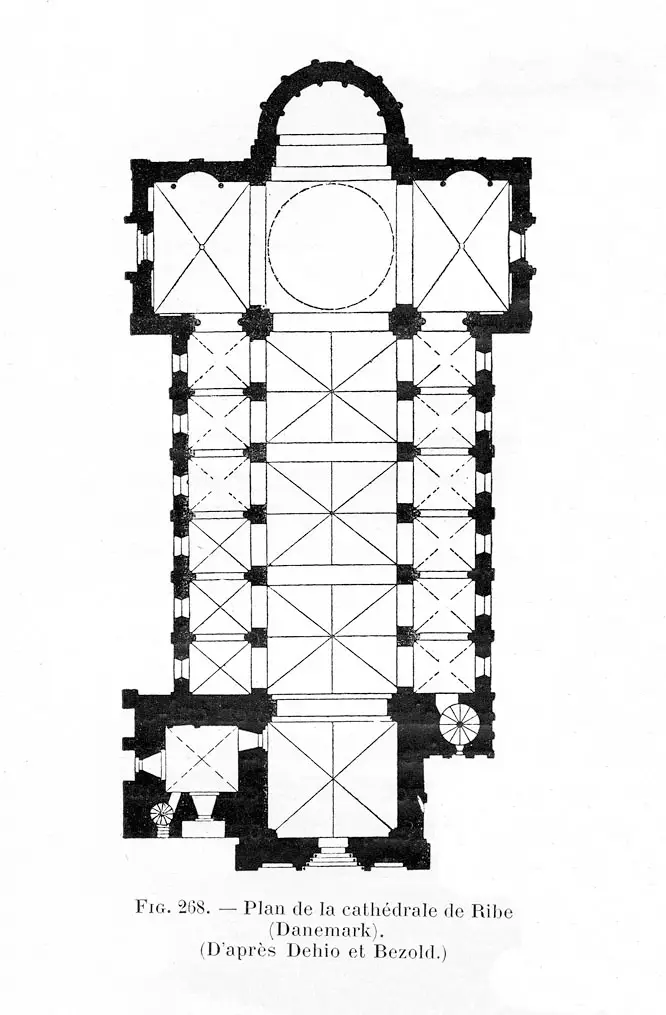
The town is small—only 8,000 people—but it’s full of details that tell the story of medieval life. The main street, Ovredammen, retains its layout from the 13th century. On it stands Ribe Domkirke Cathedral
On Torvet Square, vendors sell local cheeses, sausages, and canned fish on weekends. The prices are exorbitant — a kilogram of smoked eel costs 35-40 EUR — but it’s worth it: the recipes have remained unchanged for 300 years. If you’re hungry, head to Restaurant Skkrорrеn on Grоnnеgаdе Street, where they serve traditional Danish dishes: smoked eel with potatoes, homemade bread, and local beer. The meal costs 25-35 EUR, and the atmosphere makes you feel like a merchant from Lübeck who stopped in for lunch before setting sail.
Be sure to visit the Dübbelskansen tidal gates
Logistics: How to get there and when to go

Ribe is located 35 kilometers south of Esbjerg, Denmark’s largest port city. To get there from Copenhagen, take a train: the direct IS service takes 5 hours and costs 25-35 EUR per way (peak prices occur during summer weekends, when it can rise to 50 EUR). From Copenhagen to Esbjerg, then take a local train or Arriva bus (No. 57) to Ribe, which takes 30 minutes and costs 20 kroner (2.7 EUR).
The drive from Copenhagen is 270 kilometers, taking 3 hours via route E45. Parking in Ribe center is paid at 60 kroner per hour (8 EUR), but the parking lot becomes free after 5 p.m. It’s better to park on the outskirts of the town and walk in — the center is very compact.
You can stay right in Ribe. Hostels: Rііbеr Васkрасkеrs, a double room for 400 kroner (55 EUR), breakfast not included. Tagе оg Nаt guesthouse: a double room for 600 kroner (80 EUR), with a buffet breakfast available. Dаgmаr hotel with fjord views: a standard room starting at 800 kroner (110 EUR). It’s best to book one or two weeks in advance, especially if you plan to dine during June or August.
The best seasons are May and September. It’s hot in July (23-25 degrees) with many tourists, especially families with children. The fjord is then crowded with kayaks, and the atmosphere becomes a bit ruined. In May, the water is quite cold (13-15 degrees), but the vegetation has just begun to grow, and there are few people. September offers the perfect balance: mild temperatures (18-20 degrees), seasonal fruits, and half as many tourists.
Things to Know Before You Go

- In 1250, Ribe was Scandinavia’s second-largest port after Copenhagen — up to 15 ships could be built simultaneously in its shipyards. The shipyards are gone now, but remnants of wooden pilings can be seen on the bottom of the fjord during low tide.
- The Maritime Museum houses a discovery that changed the history of the Vikings: in 1974, an ancient coin from Baghdad, dating back to the 10th century, was found during excavations. This proved that traders from Ribe actually reached the Middle East — facts, not rumors.
- The tides in the fjord reach 1.5 meters. If you plan to go kayaking, ask the rental shop which time is better: it’s easier to move upstream during high tide, and faster to return downstream during low tide, though dangerous whirlpools may occur.
- The museum has a Viking skeleton found during excavations in the surrounding area. There are marks of a battle axe on the bones — the Viking died in combat. The remains are about 1,200 years old.
Fjord itineraries: from one day to a week
If you only have one day in Ribe: visit the museum in the morning (2-3 hours), have lunch at a local café, and take a three-hour boat tour up the fjord. In the evening, take a walk along the Ovredammen and enjoy dinner with a view of the water.
If you have two days: follow the schedule for the first day, and on the second day, rent a kayak for the whole day and paddle 15-20 kilometers up the fjord. There are several picnic areas with grills on the shore. Locals sell canned fish and bread near the ferry—perfect to take with you.
If it’s a week-long trip: you connect Ribe with the neighboring town of Mandal (in Norway, 150 km by sea) via a long coastal route. This is a serious expedition that requires sailing experience or the funds to rent a ship with a captain (around 2000 EUR per person per week). But it’s a true Viking adventure — staying overnight in port towns, meeting local sailors, and experiencing what trade was like in the 11th century.