Altamira Caves and the caves of Cantabria: an itinerary of rock art.
When you first see the handprint of an ancient human on stone, dated to 30,000 years before our era, it feels somewhat unreal. This is not a copy, nor a museum replica — it’s direct contact with the moment when the artist placed their hand on the wall and blew paint through a bone tube. Altamira is located in the Lascaux settlement (Cantabria province), and it’s a must-visit place for anyone who wants to understand where human creativity originates. But there are dozens of other caves around it — some accessible to tourists, others protected as scientific sites. We’ll tell you where to go, what to see, and how to plan an ideal itinerary for prehistoric art in northern Spain.
Altamira: the premier shrine of Paleolithic art

Altamira Cave was discovered in 1868, but it truly caused a sensation in 1902 when scientists confirmed the authenticity of the rock paintings. Before that, fraud was suspected—it seemed impossible that Stone Age people could create such perfect artworks. Today, it is a UNESCO World Heritage site.
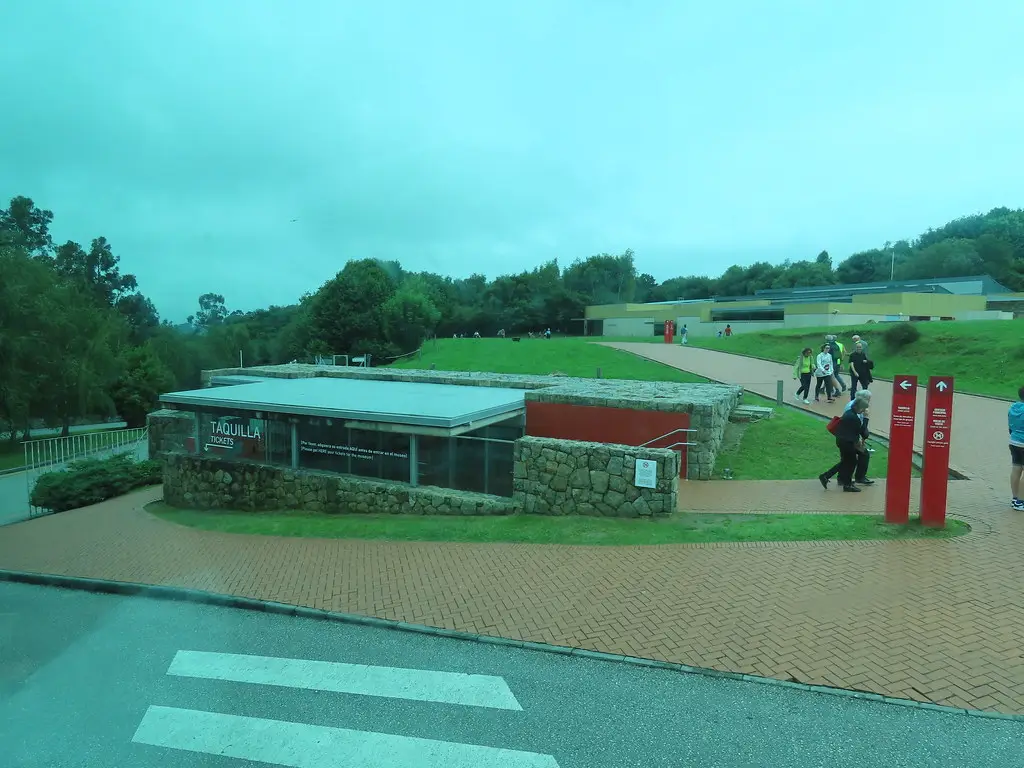
The actual cave cannot be visited — it was closed to tourists in 2002 due to the risk of damage to the frescoes from moisture, carbon dioxide, and microorganisms brought in by people. Instead, a museum and a 100% accurate replica of the cave were built nearby. This isn’t as disappointing as it might seem: the reproduction is so precise that even paleontologists can’t immediately distinguish between the original cave areas and the replica. The entrance to the Altamira Museum
The main chamber — known as the “Queen’s Hall” — is covered in hundreds of images. Bison figures dominate (there are about 20 of them), painted with ochre, charcoal, and animal blood. The artists utilized the natural contours of the cave to give the figures depth. Several paint spots date back to 36,500 BCE — indicating that humans used this cave as a sanctuary for at least 20,000 years. The museum tour lasts about 1.5 hours, including time spent in the cave replica and the exhibition halls with artifacts.
Montespan and El Castillo Cave Systems: A Journey Through Time

If you want to descend into an authentic cave and see the original paintings, head to the El Castillo caves
The El Castillo Cave contains around 150 paintings dating from 39,000 to 13,000 years ago. It features handprints (considered to be the signatures of ancient artists), animal silhouettes drawn with charcoal, and geometric symbols. The path through the cave is approximately 500 meters long. Tours operate from June to September on Tuesdays to Sundays from 9:30 to 16:30, and during other times only on Tuesdays to Fridays from 10:30 to 14:00 and on Saturdays to Sundays from 9:30 to 16:30. The ticket price is 5.50 EUR for adults; the tour lasts 45 minutes and is conducted in Spanish (an English-speaking guide can be booked for an additional 2 EUR).
Adjacent is the Montespan Cave
Las Chimeneas and Las Maravillas Caves: At the Edge of the Explored World

The less well-known but equally impressive Las Chimenéas
The tour is limited to 25 people at a time to protect the paintings. The ticket price is 7 EUR for adults, and the tour lasts 50 minutes. Schedule: from April to October, Tuesday to Sunday from 10:00-14:00 and 15:00-18:00; otherwise, only Sunday to Friday from 10:00-14:00.
The Las Maravillas caves
Three Days in Cantabria: A Practical Itinerary

Start Day 1 in Santillana del Mar: visit the Altamira Museum (2-3 hours), then have lunch in the town at one of the traditional restaurants (cider, Cantabrian cheese, octopus tentacles). In the evening, return to Laste or stay in Puente Viesgo, which is the center of the Cantabrian caves.
Devote Day 2 to Puente Viesgo: a visit to El Castillo (1.5 hours), lunch, followed by Montespan (1.5 hours). It’s a physically demanding day, but you’ll see the original paintings in their natural setting. In the evening, enjoy dinner in the town, with the local cheese Léche de Sabra as a specialty (a goat cheese produced here for 500 years).
Day 3: travel to Las Chimeneas or Las Maravillas (choose one, as the distance is 30-40 km), then return to Laste. If time permits, visit the Prehistoric Art Museum in Santo Martín de la Arena
Things to know before you go
- The caves in Cantabria require advance booking 2-3 weeks in advance during the summer (June-September) due to limited group sizes. Call the museums directly or book through the Cantabria Regional Tourism Board’s website.
- The age of the paintings in Altamira Cave was determined using radiocarbon dating and confirmed by several independent laboratories. The oldest handprints date back 36,500 years, meaning Altamira was known to humans even before the Last Glacial Maximum.
- The climate inside the caves is cold (8-10°C year-round) and humid. Bring a light sweater and comfortable shoes with textured soles, as the floors are often wet.
- La Estela has a population of about 150 people — it is a village, not a city. The nearest full-service amenities (hotels, restaurants, shops) are found in Santillana del Mar (10 km) or Puente Viesgo (25 km).
- This is the northernmost site of prehistoric art in Western Europe, on par in significance with Australia’s Uluru caves and France’s Lascaux caves. In terms of the number of dated paintings, Cantabria has no equivalents anywhere in the world.
How to Get There and Where to Stay

The nearest airport is Bilbao (Bilbao Airport, 100 km), from where it takes about 2 hours to get to Laste by rental car (via AR-68 and N-634 roads). Public transportation is limited — there is a bus service from Bilbao operated by ALSA to Santillana del Mar (2-3 trips per day, 2.5 hours travel time, ticket price 15 EUR).
There are no hotels in Laste itself, but there is a small guesthouse. In Santillana del Mar, there are two 3-star hotels: Hotel Real de Santillana (double rooms cost 90-120 EUR during peak season) and Hotel Siglo XVIII (100-140 EUR). In Puente Viesgo, there are more options and more budget-friendly choices (Hotel Santa María costs 70-100 EUR, and Samrsete La Viorna with camping and bungalows costs 50-80 EUR per night).
The best seasons are May-June and September-October. Summer (July-August) sees crowds of tourists, and some caves are closed to visitors in winter. Plan for 3-4 days to explore the area, which allows time to see at least 4-5 caves without rushing.