Svyatogorsky Historical and Architectural Reserve
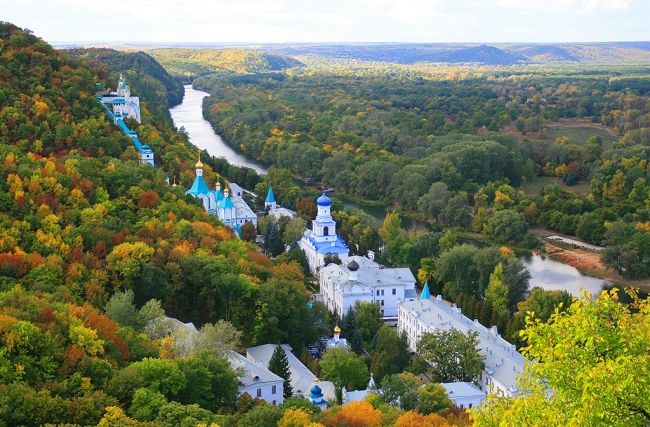
More than five centuries ago, the Orthodox monastery, called Svyatogorskaya desert of the Virgin Mary, became the cradle of Russian monasticism. Until now, preserved cave structures, cells of monks-deserters, the underground church of Antony and Theodosius, literally excavated in loess rock. Impressive underground tunnels cut in the chalk cliffs, which further steep turns lead to the observation deck at the Nikolaevsky temple. It was laid in the 17th century on the chalk cliff, embodying its continuation and harmoniously completing the architectural complex of the reserve. Further, the covered staircase-gallery of the Monks Cyril and Methodius takes you to the St. Andrew's Chapel. It was built in the 19th century from a large sandstone with massive pillars and arched apertures; from it opens an incredible beauty view of Svyatogorsk and the valley of the Seversky Donets River. In the south-east there is a wooden skete of All Saints and a number of newly built church, holy gate, refectory, cells, where more than ten people livethe age of the brethren. From all sides the monastery is surrounded by a monastery economy: an apiary, fields, a vineyard, ponds, a cowshed. From the eastern and western sides, there are two towers connecting the monastery walls, they served as watchtowers, and now perfectly framed monastic complex, which in 2004 the Holy Synod of the Ukrainian Orthodox Church awarded the status of laurels.
During the excursion of the Svyatogorsk Lavra, you will see the Intercession Church with a bell tower, for which the self-taught master Father Antonion built a clock. Unfortunately, the clock was lost, leaving only the place where they were. On the high stylobate is the main temple of the Holy Dormition Lavra in the Russian-Byzantine style, it is an incredible beauty four-columned temple, topped with domes that are covered with gold leaf. They are visible from afar, showing the way to the monastery. At the laurel is the newly built Gostiny Dvor for pilgrims. Do not forget that women should cover their heads with a handkerchief on the laurel territory.
The pearl of the laurels is the Svyatogirskaya icon of the Mother of God. Her monk of Athos gave the monastery as a sign of admiration for his holiness and greatness. Also, the reserve is supplemented by later historical monuments: the monument to the Bolshevik-revolutionary Fedor Sergeyev, the memorial to Soviet soldiers, the grave to 19-year-old Lieutenant Vladimir Kamyshev, and others.
The Svyatogorsky Monastery is a place of solitude, sanctity, peace and quiet; it will give you the opportunity to be alone with yourself, to acquire mental equilibrium and inner harmony.
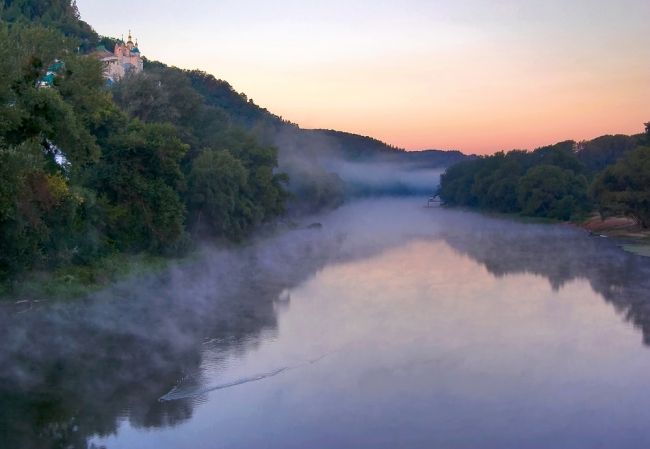
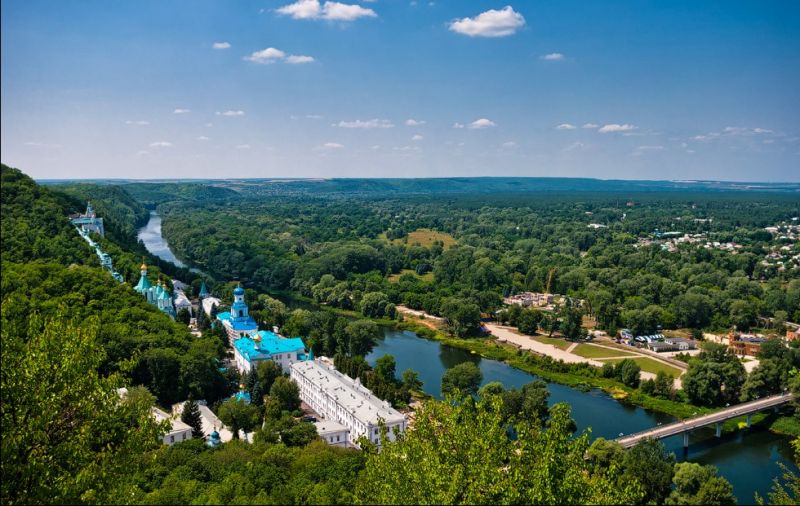
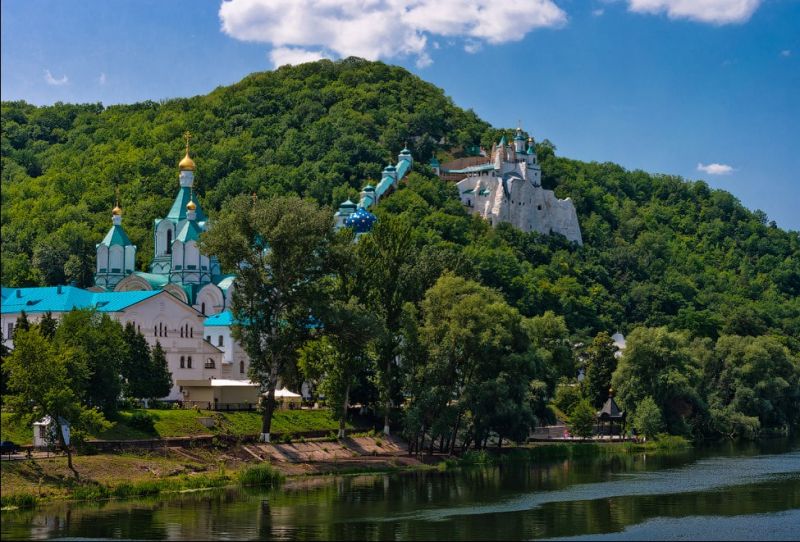
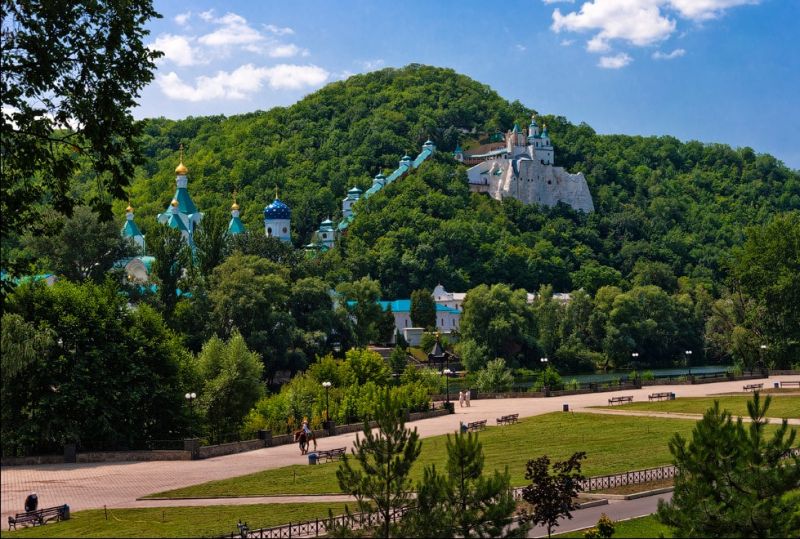
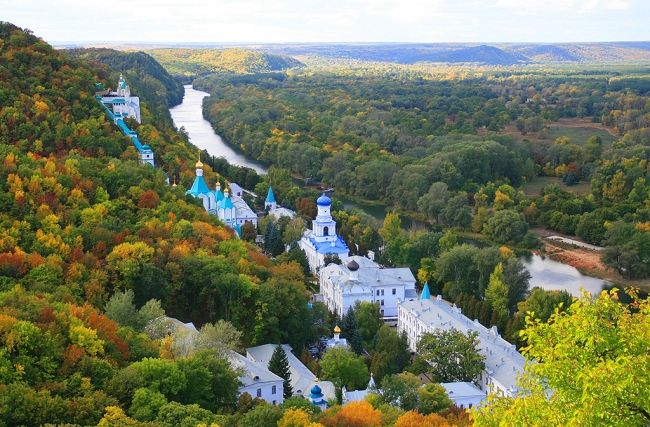
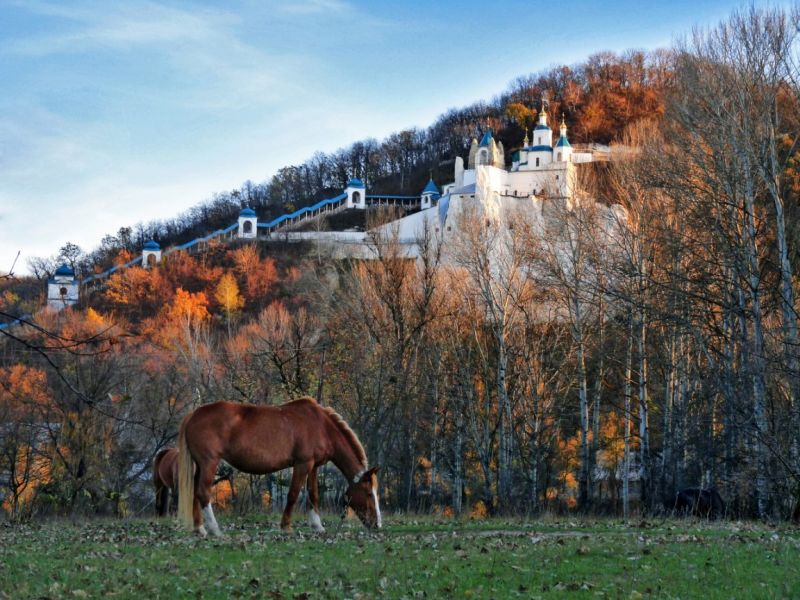
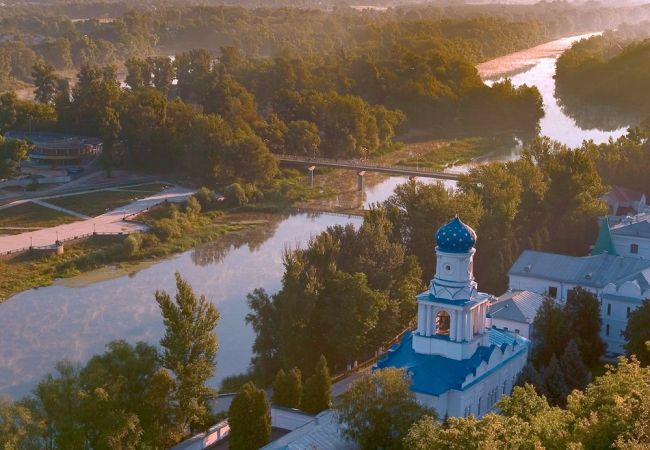
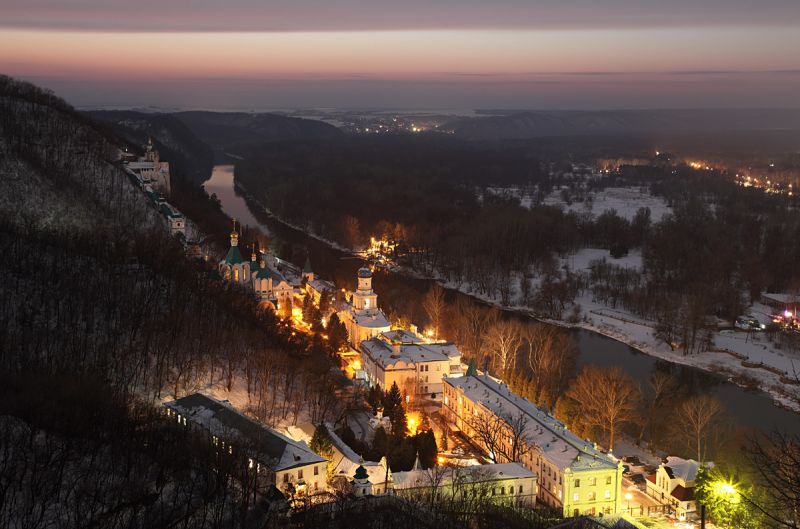
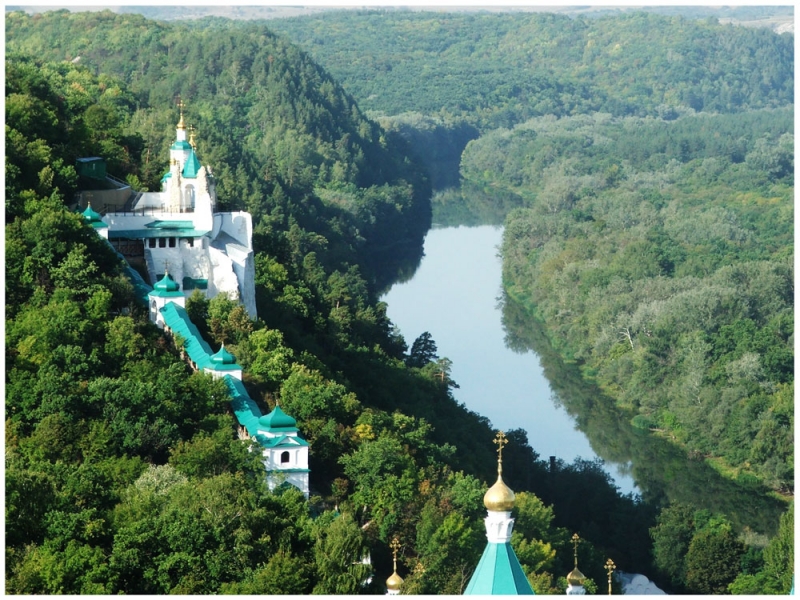
This is all that the Svatohorsk State Historical and Architectural Reserve contains: monuments of history and culture from the 16th to the 20th centuries.
Over five centuries ago, a Orthodox monastery known as the Svatohorsk Desert of the Purest Virgin Mary became the cradle of Russian monasticism. To this day, we can still see cave structures, monks' cells, and an underground church of Saint Anthony and Saint Theodore, literally carved into the limestone. Impressive are also the underground passages dug into the chalk rocks, which lead in sharp turns to a viewing platform near the Nicholas Church. This church was founded in the 17th century on a chalk cliff, extending its natural landscape and seamlessly integrating into the reserve's architectural complex. Further on, a covered walkway built by Saints Cyril and Methodius leads to the Andreievskaya Chapel. Constructed in the 19th century from uncut rough sandstone, it features massive columns and arches, offering stunning views of Svatohorsk and the Seversky Donets River valley. To the southeast, there is a wooden hermitage called All Saints, along with a newly built church, sacred gates, a refectory, and cells where over a dozen monks live. The hermitage is surrounded by monastic facilities such as beehives, fields, vineyards, ponds, and a cowshed. On the east and west sides, two towers remain, serving as watchtowers once and now serving as beautiful additions to the monastery complex. In 2004, the Sacred Synod of the Ukrainian Orthodox Church granted this monastic community the status of a Lavra.
During your tour of the Holy Mountain Monastery, you will see the Pokrovskaya Church with its bell tower, for which the self-taught master Father Antonion built an clock. Unfortunately, the clock was lost, and only its original location remains. On a high stylobate stands the main sanctuary of the Holy Assumption Monastery, a magnificent four-columned hall adorned with domes covered in gilded leaf gold. These domes can be seen from afar, guiding visitors to the monastery. Nearby, you will find the newly built Pilgrim's Hotel. Remember that within the monastery grounds, women must cover their heads with a scarf.
The jewel of the monastery is the Holy Mountain Icon of the Mother of God. It was donated to the monastery by an Athos monk as a tribute to its sacredness and greatness. The site also includes other historical landmarks such as the monument to the Bolshevik revolutionary Fyodor Sergeyev, a memorial to Soviet soldiers, and the grave of 19-year-old Lieutenant Vladimir Kamyshev, among others.
The Holy Mountain Male Monastery is a place of solitude, sanctity, silence, and peace. It offers the opportunity to reflect on oneself and achieve inner balance and harmony.
Find the Best Professionals for Your Project
Expert repair, construction, and renovation specialists ready to help you right now
Recommended articles
More articles:
 The San Andreas Fragment
 The most amazing images of the Hubble telescope
 Virgin Rebbe Virgin Gorge
 Anti-stress procedures - checked yourself
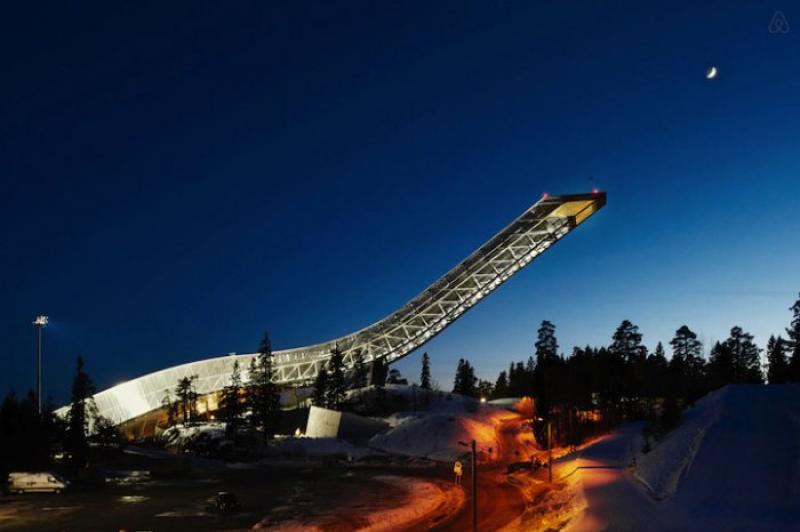 A wonderful penthouse on a ski jumping track
 The electric motorcycle Tron Light
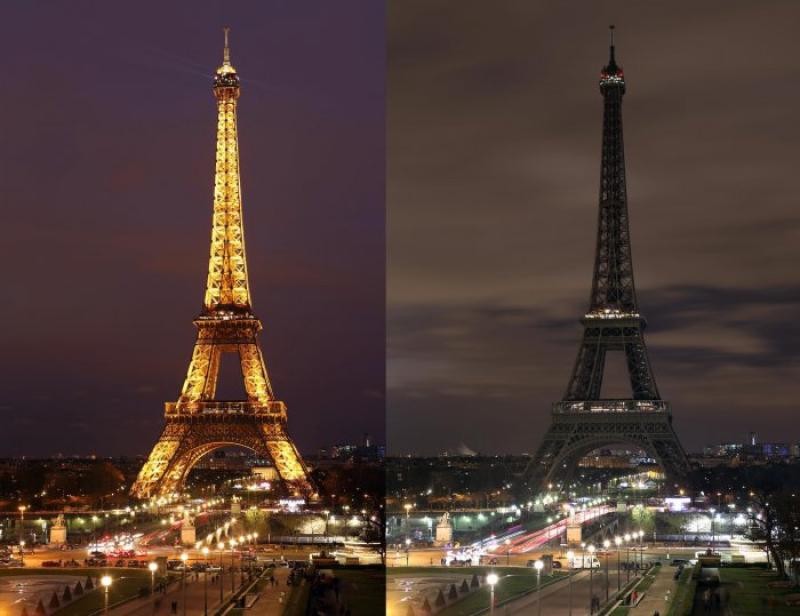 The Earth Hour 2015 effect
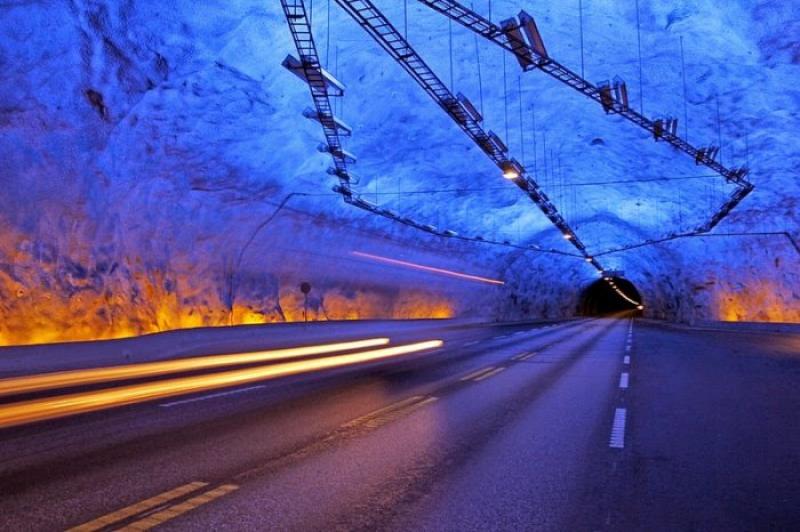 Lerdal tunnel is the longest automobile tunnel in the world