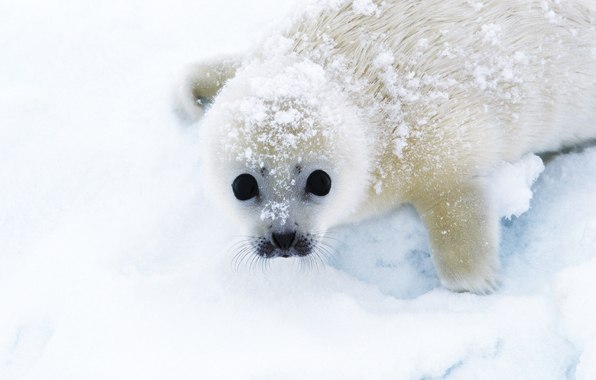
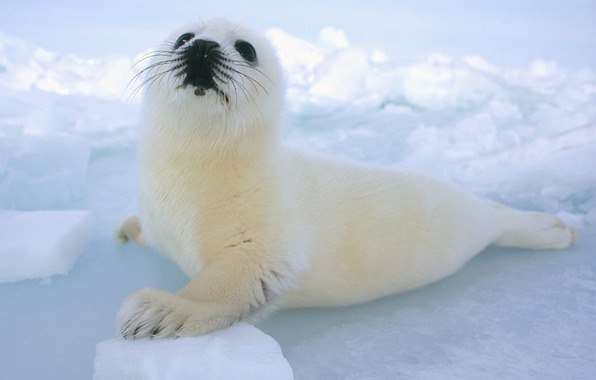
International Day for the Protection of Sealings is observed on March 15th in many countries around the world. It was established at the initiative of the International Fund for Animal Welfare (IFAW),2 photos
The demand for this fur, often driven by fashion trends rather than practical necessity, leads to the mass killing of these small animals. Just a few years ago, it was still legally sold in Europe, Russia, China, and many other countries.
Arctic seals inhabit the North Atlantic, White Sea, Barents Sea, Kara Sea, and Greenland Sea. The female seal carries her pup for eleven months, and in spring, both adult males and females move onto the ice from the sea to give birth to their offspring—the adorable and defenseless sealings. For about two weeks after birth, while the mother feeds them with milk, the sealings’ fur remains pure white. It is precisely this fur that leads to the killing of tens of thousands of sealings each year, often in extremely brutal ways: they are beaten to death with iron clubs. In terms of brutality, barbarity, and the number of killings, this hunt is unmatched.
One of the first organizations to speak out against the hunting of sealings was the International Fund for Animal Welfare (IFAW), which drew widespread public attention to the issue. More and more people joined the cause, unable to remain indifferent to such a cruel and senseless practice. Every March, thousands of demonstrations and protests took place around the world. Thanks to these efforts, governments in many countries were forced to take economic measures that made seal hunting unprofitable. Since 1986, the import and sale of sealing fur have been completely banned in the United States, Mexico, and European countries. Today, in the European Union, wearing clothing made from sealing fur in public is even considered impolite.
Despite all these efforts, it was not until 2009 that the Russian government, through the pressure of civil society and international environmental organizations, introduced a ban on seal hunting. This success was also due to the participation of famous Russians—artists, musicians, directors, academics, journalists, athletes, and more—in the protests.
However, seal hunting continues in Canada, Namibia, and Norway. But the world community continues to fight against it. In August 2010, the EU banned the trade in all products made from seals, making it illegal to sell any product derived from commercial seal hunts. IFAW hopes that this will lead to the end of seal hunting in these countries as well.
On March 15th, International Day for the Protection of Sealings, various activities, demonstrations, and protests take place around the world against the killing of these animals. In Russia, civil society and numerous environmental organizations organize events nationwide to raise awareness about the issue—childhood art exhibitions, photo shows, demonstrations, flashmobs, and more. It is important to note that in Russia, hunting four other types of seals is still allowed: the Caspian seal, the Baikal seal, the ringed seal, and the sea otter...
Find the Best Professionals for Your Project
Expert repair, construction, and renovation specialists ready to help you right now
Recommended Galleries
Recommended articles



More Galleries
 The Life of North American Indians"\n "photoographer": "Edward Curtis
 Interesting facts about trabert
 82 Years Ago, Alka Seltzer Was First Launched
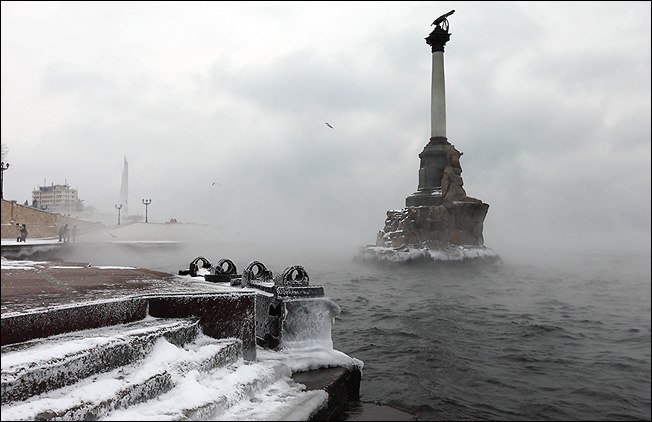 229 Years Ago: According to an Edict of Catherine II, a Port and Fortress in Crimea Were Named Sevastopol
 One = Two Battery: The Conceptual Spring-Based Battery
 How Firefighters Fought in Nizhny Novgorod: To Prevent the Whole City from Being Destroyed, the Governor Issued a Directive—Report Fires Two Hours Before They Start
 Moving Photos
 Strange Money Superstitions
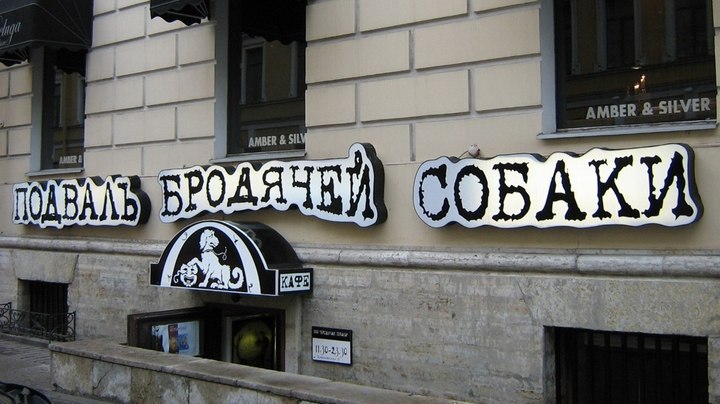 98 Years Ago, the Police of Petrograd Closed Down the Famous Art Club ‘Stray Dog’
 182 Years Ago, Victor Hugo's Novel 'Notre-Dame de Paris' Was Published
 Skeleton Digital Art Studio – A San Francisco-based digital art studio that creates both original works and collaborates with photographers on retouching projects,</td>\n "home_text": "<p>Skeleton Digital Art Studio<br>Skeleton is a digital art studio based in San Francisco that creates both original works and collaborates with photographers on retouching projects. The studio was founded by artist Michael Kerbow, who has been working in the field of digital art for over twenty years. Its client
 MAXIMUM SHARE!!! PLEASE!!!! HELP US!!! PONIKAROVSKY'S BABY, 5 months old. Help group: http://vk.com/club49471101. Click 'Like' and 'Share with friends'.<br>Diagnosis: Bilial atresia, unreducible type. CVM infection, severe course.</br