Facts about tea and coffee1 photos
For a start, interesting facts about tea:
— During the Tang Chinese dynasty, tea trade was declared a state monopoly, and large landowners were obliged to hand over tea, receiving bonds in return. They were allowed to buy other goods. These tea bonds soon turned into the first paper money (1024).
— It is to tea that we owe to the fact that Heinrich Schliemann had funds for the excavation of the legendary Troy. He earned a part of his millionth state by trading in tea. In his memoirs, Schliemann writes: “When cotton became too expensive, I refused it and started selling tea & hellip; My first batch to Mr. Henry Schroeder in London consisted of 30 boxes of tea, after I was able to sell it profitably, I ordered 1000, then 4000 and 6000 boxes, bought the entire tea warehouse of Mr. Gunzburg in St. Petersburg cheaply and earned the first 6 months 140,000 marks, while receiving another 6% of the capital & raquo ;.
— The famous "Boston Tea Party", when the boxes sent from London with tea, unfairly levied British tax, flew overboard, — this "drop of tea" on the night of December 15 to December 16, 1717, it overwhelmed the Americans' patience. The prospect of being left without your favorite tea prompted them to take decisive action — the separation from England began. Historical curiosity, but, in fact, the United States to some extent born tea.
— The English have their own traditions of tea drinking. For example, pour milk into a cup first and then tea. Or put a spoon across the cup, giving a sign that the tea has been drunk enough — please do not add more. Who was not familiar with local etiquette, could pay dearly. One day, a certain prince de Brolie was forced to drink 12 cups of tea before someone guessed to explain to him the manipulation of a spoon. It is said that in despair one foreigner thought of hiding the cup in his pocket so as not to drink more tea.
— The tea was presented to the royal court of France by Cardinal Mazarini, who took it as a cure for gout. Even by the end of the 17th century, knowledge about tea remained very scarce. It was ridiculous: tea was advised to smoke like tobacco, having slightly flavored brandy, and it was recommended to whiten the ashes with ashes. The French were drawn to fashionable exoticism, and tea here occupied a place of honor. Even if he didn’t like him, none of the high-profile dandies dared to refuse him.
— Until the middle of the XIX century, Moscow consumed up to 60% of tea imported into Russia. There was an expression "Muscovite tea", although the little Cossacks said disparagingly: "Moscow Muscovites-water holders & raquo ;. The fact is that in these regions, even in the 19th century, they knew about tea only by hearsay and identified it simply with drinking water.
— According to the results of elite tea auctions held in Hong Kong and Guangzhou in 2005, Chinese “Da Hong Pao” has become the most expensive tea (& laquo; Big Red Robe & raquo;). The price per kilogram of this tea reached $ 685,000.
And now a little about coffee:
— In New York, coffee took the title of the most popular morning drink from beer.
— The first chess competitions were held in coffee houses.
— In 1732, the first work of art dedicated to coffee was created, Johann Sebastian Bach wrote the “Coffee Cantat” & .quo.
— The laws of the Ottoman Empire allowed a woman to divorce her husband if he was not able to pay for her daily coffee needs.
— Norwegian scientists have concluded that three cups of coffee a day can neutralize the negative effect of alcohol on the human body.
— In the old documents there are mentions of wine made from fermented juice of ripe coffee berries, the name of this wine is & ndash; & laquo; Kahwa & raquo;
— In many German states, coffee was prohibited by decrees, and in one city it came to the public speaking against the local bishop for the right to drink coffee.
— Only freshly roasted coffee has that aroma that is appreciated by real gourmets and lasts for about 2 weeks.
— In the English medical journal & laquo; Lancet & raquo; June 28, 1990 published an article by American scientists on the effect of coffee on women, which proved that women who drank four or more cups of coffee a day were less likely to become pregnant than those who did not drink this drink.
— & laquo; Everything breaks out, thoughts crowd around like battalions of a great army on the battlefield & raquo ;, & ndash; Balzac described his impressions of a single cup of coffee. And he drank them a day at least 20. There were bookkeepers who were not too lazy to sum up: over the years of writing his & laquo; Human comedy & raquo; Honore de Balzac drank no less than 15,000 cups of coffee, by the end of his life he complained about his health and believed that all the ailments were & ndash; from him, darling.
— The love of coffee brought people to the point that in 1995, statistics recognized coffee as the second most consumable product in the world after oil.
— According to rumors, Beethoven always brewed coffee from the same number of coffee beans (supposedly there were 64). Knowing about the fastidious nature of genius, it is easy to believe.
— Older people who drink 220-270 mg of coffee in the morning or afternoon have better memory than people who consume caffeine-free beverages.
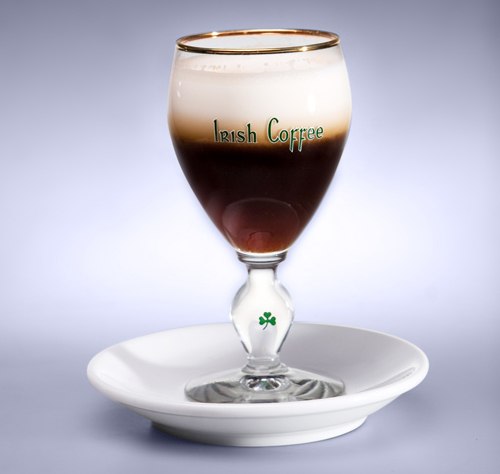
— A mixture of caffeine and alcohol & ndash; coffee & laquo; Irish & raquo; & ndash; can prevent severe brain tissue damage during strokes.
Find the Best Professionals for Your Project
Expert repair, construction, and renovation specialists ready to help you right now