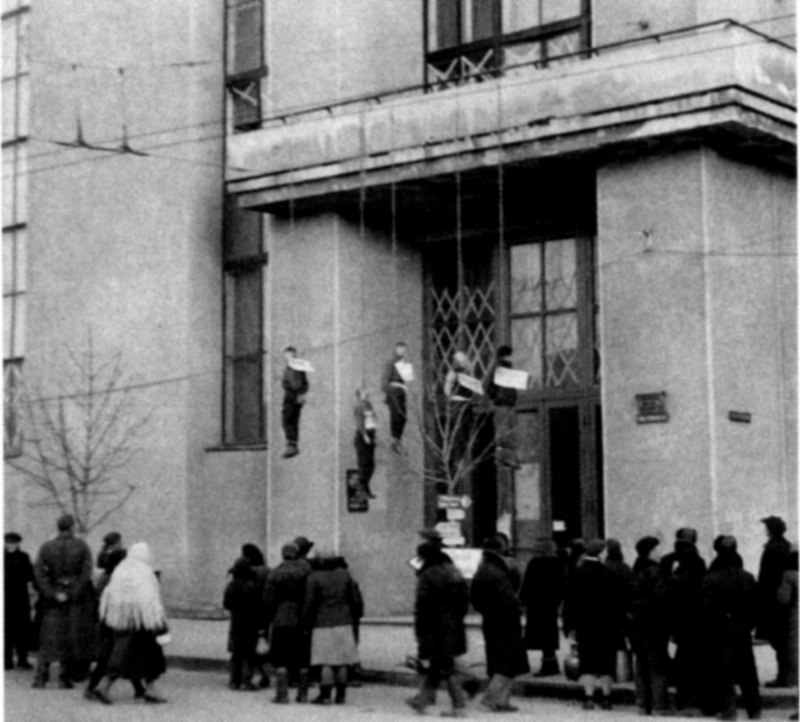
Did you know that in the four battles for Kharkiv and during its two periods of occupation by the Soviet Union and Germany, both sides lost more lives than in any other battle during the entire course of the Second World War, including the Battle of Stalingrad? On May 1, 1941, the population of the city was 901,000 people.8 photos
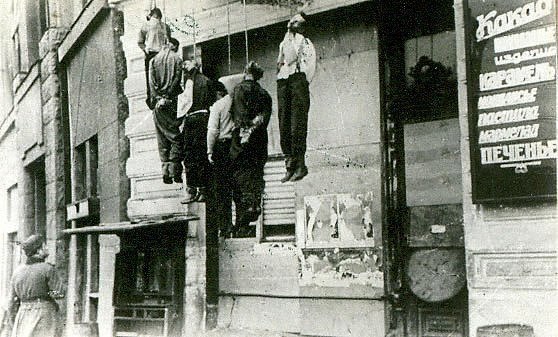
Did you know that in the four battles for Kharkov and during its two occupations, both the Soviet Union and Germany lost more troops than in any other battle throughout the entire Second World War, including the Battle of Stalingrad? On May 1, 1941, the population of the city was 901,000 people; by September 1941, before the occupation, it had increased to 1.5 million people, including those who had been evacuated. After its liberation in August 1943, the population was again reduced to 180,000–190,000 people.
Local residents claim that Kharkov was never awarded the status of a Hero City because Stalin considered it a disgrace for the Red Army to fail to liberate the city even after four attempts—in January-February 1942, May 1942, February 1943, and August 1943. Let’s take a look at these events in more detail and conduct a survey.
Battles for Kharkov (1941, 1942, 1943)
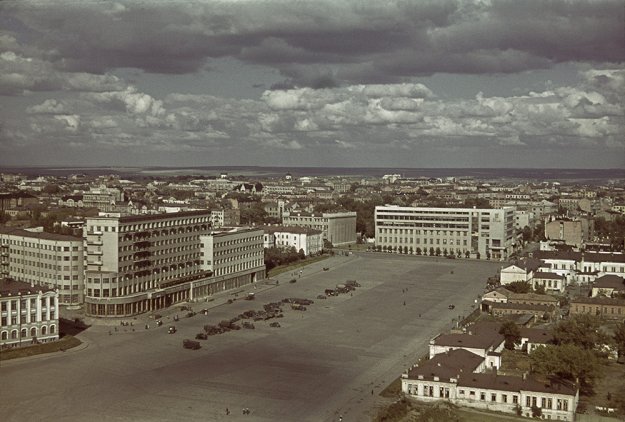
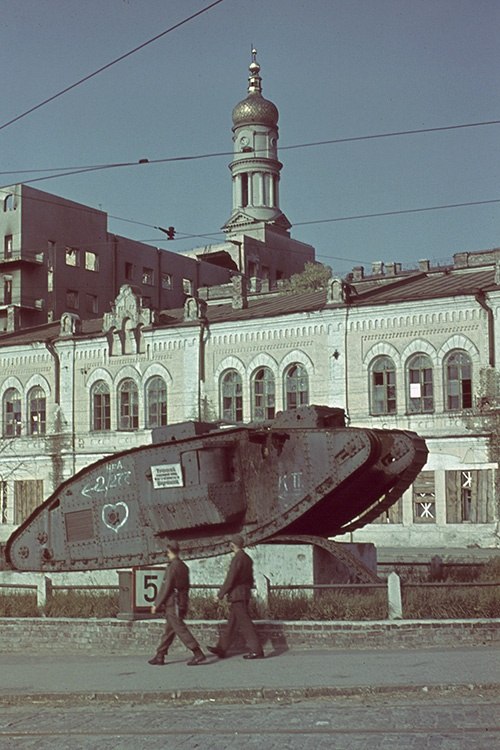
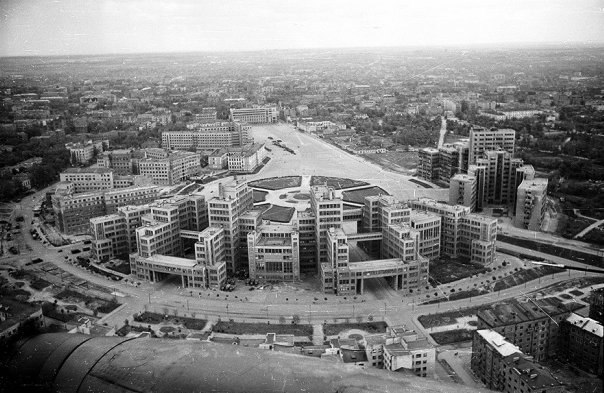
At the beginning of the German-Soviet war in 1941, Kharkov was the fourth-largest city in the Soviet Union, after Moscow, Leningrad, and Kiev. It was an important industrial center, producing tanks, locomotives, and tractors, as well as serving as a transportation and administrative hub. Until 1934, it had even been the capital of Soviet Ukraine.
During the Great Patriotic War, there were four major battles for Kharkov: in October 1941, May 1942, February-March 1943, and August 1943.
October 1941
By October 15, 1941, German forces of the 55th Army Corps had advanced approximately 50 kilometers toward Kharkov, overcoming the defenses of the Soviet 38th Army. That evening, the command of the Soviet South-West Front received orders from the Supreme High Command to begin withdrawing on October 17 to the Oskol River line, located about 150 kilometers east of Kharkov.
According to these orders, the 38th Army was supposed to hold its positions 30–40 kilometers west of Kharkov until October 23 in order to facilitate the evacuation of industrial facilities and destroy or mine any military targets in the city.
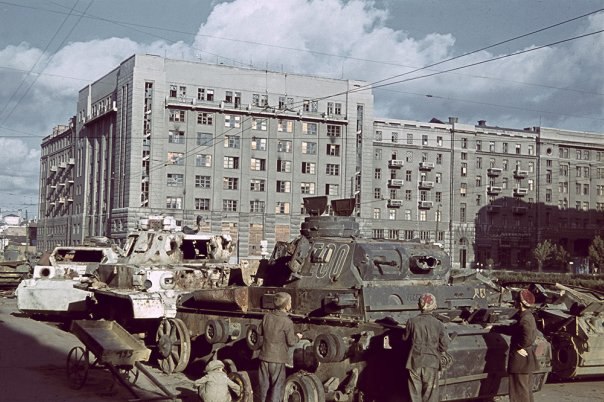
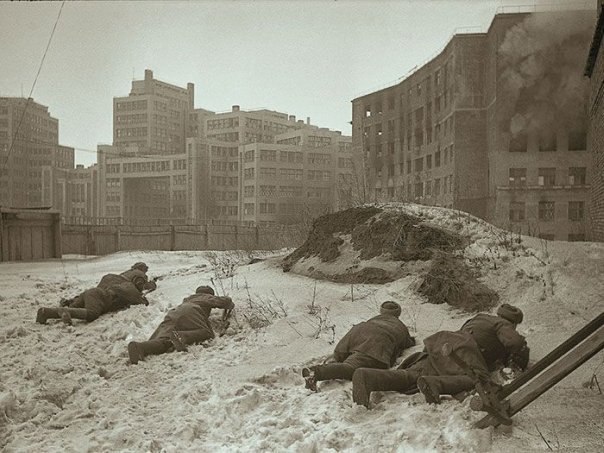
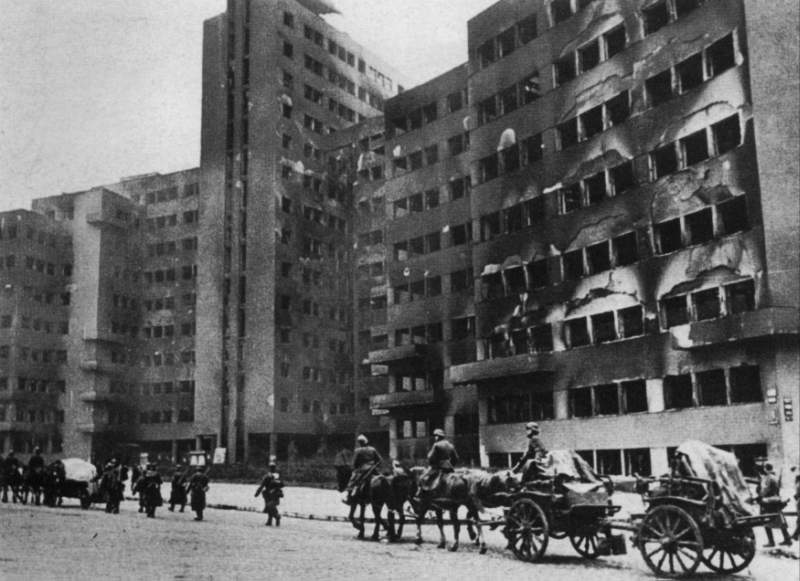
However, on October 20, German forces of the 55th Corps reached the outskirts of Kharkov. By October 23, they had begun surrounding the city. Opposing them were the Soviet 216th Rifle Division, the 57th NKVD Rifle Brigade, a militia regiment, and a tank battalion (47 tanks)—a total of about 20,000 soldiers, along with 120 artillery pieces and mortars, under the command of Major General Marshalkov. After two days of fierce street fighting, by the end of October 24, Kharkov fell to the Germans.
May 1942
On March 22, 1942, the commander of the South-West Front, Marshal Timoshenko, and his staff, including Lieutenant General Bagramyan and Commissar Krushchev, proposed to the Supreme High Command launching a major offensive operation involving the Bryansk, South-West, and Southern Fronts, reinforced by reserves from the Stavka. The goal of this attack was to destroy German forces in the southern sector of the Soviet-German front and advance Soviet troops as far as the Gomel-Kiev-Cherkassy-Pervomaisk-Nikolayev line, advancing approximately 500 kilometers across a front that was roughly 900 kilometers wide.
However, on March 29, the Stavka rejected this bold plan and instructed Marshal Timoshenko to develop a strategy aimed solely at defeating the German forces surrounding Kharkov and liberating the city, with subsequent advances toward Dnepropetrovsk.
According to the plan developed by Lieutenant General Bagramyan and approved by Marshal Timoshenko by April 10, 1942, Soviet forces of the South-West Front were to launch two coordinated attacks on the German forces surrounding Kharkov: from the northeast, with the 21st, 28th, and 38th Armies; and from the southeast, via the Barvenkov Bridgehead, with the 6th Army and the army group led by General Bobkin.
Under this plan, Soviet forces were expected to break through German defenses within the first week and completely encircle and destroy the German troops around Kharkov by the end of the second week. After that, they would continue their advance toward Dnepropetrovsk.
By the beginning of this operation, the number of Soviet troops involved amounted to approximately 400,000 people, including 27 rifle divisions, 20 tank brigades, 9 cavalry divisions, and 3 motorized rifle brigades.
The number of German troops in the area of the operation was around 250,000, comprising the 8th, 17th, 29th, and 51st Corps, totaling 13 infantry divisions and 2 tank divisions.
On May 12, 1942, Soviet forces launched their attack on Kharkov. After three days of intense fighting, they managed to advance approximately 20–25 kilometers. By the end of May 14, German forces had halted their advances and began counterattacking.
On May 17, German forces—the army group “von Kleist,” consisting of three corps (one of which was Romanian)—with a total of around 200,000 soldiers, launched an attack on the southern part of the Barvenkov Bridgehead, which was defended by the Soviet 9th and 57th Armies, along with the 6th Army Group, totaling approximately 170,000 soldiers, including 120 artillery pieces and mortars.
During the day of May 17, German forces pushed the Soviet 9th Army back approximately 20 kilometers. The Soviet 57th Army managed to hold its positions, despite facing the Romanian Corps.
On May 18, German forces drove the Soviet 9th Army another 20–25 kilometers back and took control of Barvenkovo, approaching Izyum from the southeast.
On May 19, German advances along the southern part of the Barvenkov Bridgehead posed a threat of surrounding the Soviet troops in that area—the 6th, 9th, 57th Armies, and the army group led by General Bobkin. Marshal Timoshenko ordered an end to the offensive on Kharkov and focused all efforts on repelling the German attacks. The Soviet 21st, 28th, and 38th Armies retreated to their positions before the start of the offensive on May 12.
On May 22, German forces completely cut off the Barvenkov Bridgehead. The Soviet 6th and 57th Armies, along with the army group led by General Kostenko (formerly Bobkin), were surrounded. In total, they numbered around 150,000 soldiers, including 16 rifle divisions, 12 tank brigades, 2 motorized rifle brigades, and 6 cavalry divisions. They were confronted by 10 German divisions (including 2 tank and 1 motorized division), 4 Romanian divisions, and 1 Hungarian division.
In the following days, German forces continued to tighten their encirclement, destroying or capturing Soviet units. On May 28, Commissar Gurov, the chief of staff of the 6th Army, Lieutenant General Batyunya, and remnants of the 6th Army managed to break through the encirclement and retreat eastward. However, on that same day, Deputy Commander-in-Chief of the South-West Front, Lieutenant General Kostenko, Commander of the 6th Army, Lieutenant General Gorodnyansky, Commander of the 57th Army, and Lieutenant General Bobkin were killed, along with many other Soviet officers and soldiers. A large number of Red Army troops also fell captive, and the Barvenkov Bridgehead was completely lost.
In total, as a result of these battles, the Red Army suffered 170,000 casualties in dead and missing, and another 106,000 were wounded. In addition to these losses, the 6th, 9th, and 57th Armies, as well as the army group led by General Bobkin, lost 143,000 rifles, 9,000 automatic weapons, 3,600 machine guns, 552 tanks, 1,564 artillery pieces, 3,278 mortars, and 57,600 horses.
For this failure, Lieutenant General Bagramyan, the chief of staff of the South-West Front, was held accountable. At Stalin’s orders, he was demoted to the position of chief of staff of the 28th Army.
February-March 1943
On January 21, 1943, General Vasilevsky, Chief of the General Staff, and Lieutenant General Golikov, Commander of the Voronezh Front, presented a plan for the liberation of Kharkov to Supreme Commander Stalin. On January 23, Stalin approved the plan, giving it the code name “Operation Star.”
On February 2, 1943, forces of the Voronezh Front launched their attack. From the east, the 3rd Tank Army advanced toward Kharkov, with the support of 2 tank corps, 5 rifle divisions, 2 tank brigades, and 2 cavalry divisions; from the northeast, the 69th Army and the 40th Army moved forward (the 40th Army also included 1 tank corps and 6 rifle divisions). Further north, the 38th Army advanced toward Oboyan, while the 60th Army headed toward Kursk.
The overall goal of this operation was to capture Kursk, Belgorod, and Kharkov and advance the Voronezh Front approximately 150 kilometers within 15–20 days. After that, further advances toward Poltava were planned.
German forces opposing the Voronezh Front included the 2nd Army (7 German infantry divisions against the Soviet 38th and 60th Armies) and the “Armee-Abteilung Lanz” special operations unit (4 German infantry divisions against the Soviet 3rd Tank Army, 69th Army, and 40th Army).
The Soviet forces involved in the attack on Kharkov numbered around 200,000 soldiers. On the German side, the “Armee-Abteilung Lanz” consisted of approximately 40,000 troops. This unit had been formed on February 1 from four infantry divisions—one of which had previously been part of the Italian 8th Army and had suffered heavy losses in previous battles; another division arrived from the English Channel in January.
On the northern flank, Soviet forces captured Kursk on February 8, and the 40th Army took control of Belgorod on February 9. However, the advance of the Soviet 3rd Tank Army was halted on February 5 by the SS Panzer-Grenadier Division “Reich,” which had been transferred from another front. Subsequently, the SS Panzer-Grenadier Division “Adolf Hitler” also was deployed in the Kharkov area.
On February 15, Soviet forces of the 3rd Tank Army, the 40th, and 69th Armies launched a joint assault on Kharkov from three different directions. Opposing them were two German SS divisions: “Reich” and “Adolf Hitler.” On February 16, these two divisions withdrew from Kharkov, allowing Soviet forces to successfully liberate the city.
By March 1, Soviet forces had advanced approximately 30 kilometers toward Poltava. Over the course of 27 days, they had moved forward a total of 150–250 kilometers.
On March 4, German forces launched another attack on Kharkov from the south. Against them were the SS Tank Corps (with three divisions) and the 48th Tank Corps (including 2 tank and 1 motorized division). On March 7, Soviet forces began retreating toward Kharkov.
On March 10, German forces approached the northern and southern outskirts of Kharkov, and street fighting began on March 12. By March 14, the city and the Soviet 3rd Tank Army were completely surrounded. On March 15, some Soviet units managed to break through the encirclement, but Kharkov fell to German forces.
At the same time, German forces also launched attacks on Kursk and Belgorod. Belgorod was captured by the Germans on March 18, while Kursk managed to hold its position. From March 4 to 25, Soviet forces of the Voronezh Front retreated approximately 100–150 kilometers, creating what became known as the Kursk Bulge. In July 1943, a major battle took place in this area.
As a result of the battles for Kharkov, Lieutenant General Golikov, Commander of the Voronezh Front, was removed from his position on March 22 and appointed head of the Defense Ministry’s Personnel Department.
August 1943
On August 3, 1943, Soviet forces of the Voronezh and Steppe Fronts launched their attack on Kharkov under the code name “Operation Rumyantsev.” Their forces included 8 tank corps, 3 mechanized corps, 5 independent tank brigades, and 50 rifle divisions—a total of approximately 980,000 soldiers, 2,400 tanks and self-propelled artillery units, and 12,000 artillery pieces and mortars. Opposing them were German forces consisting of 4 tank divisions and 14 infantry divisions, totaling around 300,000 soldiers, up to 600 tanks and self-propelled artillery units, and 3,000 artillery pieces.
On August 5, Soviet forces captured Belgorod. On August 11, the Soviet 53rd, 69th, 7th Guards Armies, and the 57th Army approached Kharkov from the north and east, coming within 10–15 kilometers of the city. That same day, three German SS tank divisions (“Reich,” “Totenkopf,” and “Viking”), urgently transferred from another front, launched an attack against the Soviet 1st Tank Army and the 5th Guards Tank Army south of Kharkov. These divisions were ordered to cut off Kharkov from the south by March 12. However, they managed to hold back the two Soviet tank armies for six days, and Kharkov was not liberated until September 5. This battle is considered one of the most intense tank battles of the Second World War, on par with the Battle of Prokhorovka in July 1943 or the Battle of Torgu-Frumos in May 1944.
By August 18, Soviet forces had broken through to the outskirts of Kharkov. In the late afternoon of August 22, German forces began withdrawing from the city. On August 23, Kharkov was completely occupied by Soviet troops—the 10th Rifle Divisions and the 1st Tank Brigade of the 69th, 7th Guards, and 53rd Armies.
During the Belgorod-Kharkov operation (August 3–23, 1943), Soviet forces suffered 71,600 casualties in dead and missing, and another 184,000 were wounded. They also lost 1,864 tanks and self-propelled artillery units. By the end of the operation, Soviet forces had advanced approximately 80–100 kilometers.
#Kharkov #Kharkov #History_of_the_Capital
Local residents claim that Kharkov was never awarded the status of a Hero City because Stalin considered it a disgrace for the Red Army to fail to liberate the city even after four attempts—in January-February 1942, May 1942, February 1943, and August 1943. Let’s take a look at these events in more detail and conduct a survey.
Battles for Kharkov (1941, 1942, 1943)
At the beginning of the German-Soviet war in 1941, Kharkov was the fourth-largest city in the Soviet Union, after Moscow, Leningrad, and Kiev. It was an important industrial center, producing tanks, locomotives, and tractors, as well as serving as a transportation and administrative hub. Until 1934, it had even been the capital of Soviet Ukraine.
During the Great Patriotic War, there were four major battles for Kharkov: in October 1941, May 1942, February-March 1943, and August 1943.
October 1941
By October 15, 1941, German forces of the 55th Army Corps had advanced approximately 50 kilometers toward Kharkov, overcoming the defenses of the Soviet 38th Army. That evening, the command of the Soviet South-West Front received orders from the Supreme High Command to begin withdrawing on October 17 to the Oskol River line, located about 150 kilometers east of Kharkov.
According to these orders, the 38th Army was supposed to hold its positions 30–40 kilometers west of Kharkov until October 23 in order to facilitate the evacuation of industrial facilities and destroy or mine any military targets in the city.
However, on October 20, German forces of the 55th Corps reached the outskirts of Kharkov. By October 23, they had begun surrounding the city. Opposing them were the Soviet 216th Rifle Division, the 57th NKVD Rifle Brigade, a militia regiment, and a tank battalion (47 tanks)—a total of about 20,000 soldiers, along with 120 artillery pieces and mortars, under the command of Major General Marshalkov. After two days of fierce street fighting, by the end of October 24, Kharkov fell to the Germans.
May 1942
On March 22, 1942, the commander of the South-West Front, Marshal Timoshenko, and his staff, including Lieutenant General Bagramyan and Commissar Krushchev, proposed to the Supreme High Command launching a major offensive operation involving the Bryansk, South-West, and Southern Fronts, reinforced by reserves from the Stavka. The goal of this attack was to destroy German forces in the southern sector of the Soviet-German front and advance Soviet troops as far as the Gomel-Kiev-Cherkassy-Pervomaisk-Nikolayev line, advancing approximately 500 kilometers across a front that was roughly 900 kilometers wide.
However, on March 29, the Stavka rejected this bold plan and instructed Marshal Timoshenko to develop a strategy aimed solely at defeating the German forces surrounding Kharkov and liberating the city, with subsequent advances toward Dnepropetrovsk.
According to the plan developed by Lieutenant General Bagramyan and approved by Marshal Timoshenko by April 10, 1942, Soviet forces of the South-West Front were to launch two coordinated attacks on the German forces surrounding Kharkov: from the northeast, with the 21st, 28th, and 38th Armies; and from the southeast, via the Barvenkov Bridgehead, with the 6th Army and the army group led by General Bobkin.
Under this plan, Soviet forces were expected to break through German defenses within the first week and completely encircle and destroy the German troops around Kharkov by the end of the second week. After that, they would continue their advance toward Dnepropetrovsk.
By the beginning of this operation, the number of Soviet troops involved amounted to approximately 400,000 people, including 27 rifle divisions, 20 tank brigades, 9 cavalry divisions, and 3 motorized rifle brigades.
The number of German troops in the area of the operation was around 250,000, comprising the 8th, 17th, 29th, and 51st Corps, totaling 13 infantry divisions and 2 tank divisions.
On May 12, 1942, Soviet forces launched their attack on Kharkov. After three days of intense fighting, they managed to advance approximately 20–25 kilometers. By the end of May 14, German forces had halted their advances and began counterattacking.
On May 17, German forces—the army group “von Kleist,” consisting of three corps (one of which was Romanian)—with a total of around 200,000 soldiers, launched an attack on the southern part of the Barvenkov Bridgehead, which was defended by the Soviet 9th and 57th Armies, along with the 6th Army Group, totaling approximately 170,000 soldiers, including 120 artillery pieces and mortars.
During the day of May 17, German forces pushed the Soviet 9th Army back approximately 20 kilometers. The Soviet 57th Army managed to hold its positions, despite facing the Romanian Corps.
On May 18, German forces drove the Soviet 9th Army another 20–25 kilometers back and took control of Barvenkovo, approaching Izyum from the southeast.
On May 19, German advances along the southern part of the Barvenkov Bridgehead posed a threat of surrounding the Soviet troops in that area—the 6th, 9th, 57th Armies, and the army group led by General Bobkin. Marshal Timoshenko ordered an end to the offensive on Kharkov and focused all efforts on repelling the German attacks. The Soviet 21st, 28th, and 38th Armies retreated to their positions before the start of the offensive on May 12.
On May 22, German forces completely cut off the Barvenkov Bridgehead. The Soviet 6th and 57th Armies, along with the army group led by General Kostenko (formerly Bobkin), were surrounded. In total, they numbered around 150,000 soldiers, including 16 rifle divisions, 12 tank brigades, 2 motorized rifle brigades, and 6 cavalry divisions. They were confronted by 10 German divisions (including 2 tank and 1 motorized division), 4 Romanian divisions, and 1 Hungarian division.
In the following days, German forces continued to tighten their encirclement, destroying or capturing Soviet units. On May 28, Commissar Gurov, the chief of staff of the 6th Army, Lieutenant General Batyunya, and remnants of the 6th Army managed to break through the encirclement and retreat eastward. However, on that same day, Deputy Commander-in-Chief of the South-West Front, Lieutenant General Kostenko, Commander of the 6th Army, Lieutenant General Gorodnyansky, Commander of the 57th Army, and Lieutenant General Bobkin were killed, along with many other Soviet officers and soldiers. A large number of Red Army troops also fell captive, and the Barvenkov Bridgehead was completely lost.
In total, as a result of these battles, the Red Army suffered 170,000 casualties in dead and missing, and another 106,000 were wounded. In addition to these losses, the 6th, 9th, and 57th Armies, as well as the army group led by General Bobkin, lost 143,000 rifles, 9,000 automatic weapons, 3,600 machine guns, 552 tanks, 1,564 artillery pieces, 3,278 mortars, and 57,600 horses.
For this failure, Lieutenant General Bagramyan, the chief of staff of the South-West Front, was held accountable. At Stalin’s orders, he was demoted to the position of chief of staff of the 28th Army.
February-March 1943
On January 21, 1943, General Vasilevsky, Chief of the General Staff, and Lieutenant General Golikov, Commander of the Voronezh Front, presented a plan for the liberation of Kharkov to Supreme Commander Stalin. On January 23, Stalin approved the plan, giving it the code name “Operation Star.”
On February 2, 1943, forces of the Voronezh Front launched their attack. From the east, the 3rd Tank Army advanced toward Kharkov, with the support of 2 tank corps, 5 rifle divisions, 2 tank brigades, and 2 cavalry divisions; from the northeast, the 69th Army and the 40th Army moved forward (the 40th Army also included 1 tank corps and 6 rifle divisions). Further north, the 38th Army advanced toward Oboyan, while the 60th Army headed toward Kursk.
The overall goal of this operation was to capture Kursk, Belgorod, and Kharkov and advance the Voronezh Front approximately 150 kilometers within 15–20 days. After that, further advances toward Poltava were planned.
German forces opposing the Voronezh Front included the 2nd Army (7 German infantry divisions against the Soviet 38th and 60th Armies) and the “Armee-Abteilung Lanz” special operations unit (4 German infantry divisions against the Soviet 3rd Tank Army, 69th Army, and 40th Army).
The Soviet forces involved in the attack on Kharkov numbered around 200,000 soldiers. On the German side, the “Armee-Abteilung Lanz” consisted of approximately 40,000 troops. This unit had been formed on February 1 from four infantry divisions—one of which had previously been part of the Italian 8th Army and had suffered heavy losses in previous battles; another division arrived from the English Channel in January.
On the northern flank, Soviet forces captured Kursk on February 8, and the 40th Army took control of Belgorod on February 9. However, the advance of the Soviet 3rd Tank Army was halted on February 5 by the SS Panzer-Grenadier Division “Reich,” which had been transferred from another front. Subsequently, the SS Panzer-Grenadier Division “Adolf Hitler” also was deployed in the Kharkov area.
On February 15, Soviet forces of the 3rd Tank Army, the 40th, and 69th Armies launched a joint assault on Kharkov from three different directions. Opposing them were two German SS divisions: “Reich” and “Adolf Hitler.” On February 16, these two divisions withdrew from Kharkov, allowing Soviet forces to successfully liberate the city.
By March 1, Soviet forces had advanced approximately 30 kilometers toward Poltava. Over the course of 27 days, they had moved forward a total of 150–250 kilometers.
On March 4, German forces launched another attack on Kharkov from the south. Against them were the SS Tank Corps (with three divisions) and the 48th Tank Corps (including 2 tank and 1 motorized division). On March 7, Soviet forces began retreating toward Kharkov.
On March 10, German forces approached the northern and southern outskirts of Kharkov, and street fighting began on March 12. By March 14, the city and the Soviet 3rd Tank Army were completely surrounded. On March 15, some Soviet units managed to break through the encirclement, but Kharkov fell to German forces.
At the same time, German forces also launched attacks on Kursk and Belgorod. Belgorod was captured by the Germans on March 18, while Kursk managed to hold its position. From March 4 to 25, Soviet forces of the Voronezh Front retreated approximately 100–150 kilometers, creating what became known as the Kursk Bulge. In July 1943, a major battle took place in this area.
As a result of the battles for Kharkov, Lieutenant General Golikov, Commander of the Voronezh Front, was removed from his position on March 22 and appointed head of the Defense Ministry’s Personnel Department.
August 1943
On August 3, 1943, Soviet forces of the Voronezh and Steppe Fronts launched their attack on Kharkov under the code name “Operation Rumyantsev.” Their forces included 8 tank corps, 3 mechanized corps, 5 independent tank brigades, and 50 rifle divisions—a total of approximately 980,000 soldiers, 2,400 tanks and self-propelled artillery units, and 12,000 artillery pieces and mortars. Opposing them were German forces consisting of 4 tank divisions and 14 infantry divisions, totaling around 300,000 soldiers, up to 600 tanks and self-propelled artillery units, and 3,000 artillery pieces.
On August 5, Soviet forces captured Belgorod. On August 11, the Soviet 53rd, 69th, 7th Guards Armies, and the 57th Army approached Kharkov from the north and east, coming within 10–15 kilometers of the city. That same day, three German SS tank divisions (“Reich,” “Totenkopf,” and “Viking”), urgently transferred from another front, launched an attack against the Soviet 1st Tank Army and the 5th Guards Tank Army south of Kharkov. These divisions were ordered to cut off Kharkov from the south by March 12. However, they managed to hold back the two Soviet tank armies for six days, and Kharkov was not liberated until September 5. This battle is considered one of the most intense tank battles of the Second World War, on par with the Battle of Prokhorovka in July 1943 or the Battle of Torgu-Frumos in May 1944.
By August 18, Soviet forces had broken through to the outskirts of Kharkov. In the late afternoon of August 22, German forces began withdrawing from the city. On August 23, Kharkov was completely occupied by Soviet troops—the 10th Rifle Divisions and the 1st Tank Brigade of the 69th, 7th Guards, and 53rd Armies.
During the Belgorod-Kharkov operation (August 3–23, 1943), Soviet forces suffered 71,600 casualties in dead and missing, and another 184,000 were wounded. They also lost 1,864 tanks and self-propelled artillery units. By the end of the operation, Soviet forces had advanced approximately 80–100 kilometers.
#Kharkov #Kharkov #History_of_the_Capital
Find the Best Professionals for Your Project
Expert repair, construction, and renovation specialists ready to help you right now
Recommended Galleries
Recommended articles



More Galleries
 Bryant Park Hotel in New York, USA
 London Station Building, United Kingdom
 Charming Poppy Field
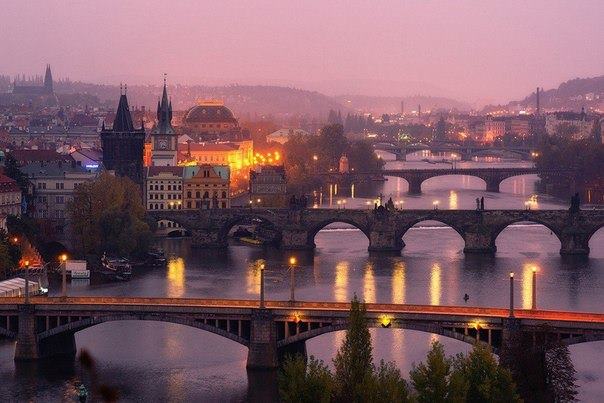 Prague is one of the most romantic cities in Europe!
 Carolina, Puerto Rico
 assistant
 #### Cottage in the Alps, Switzerland
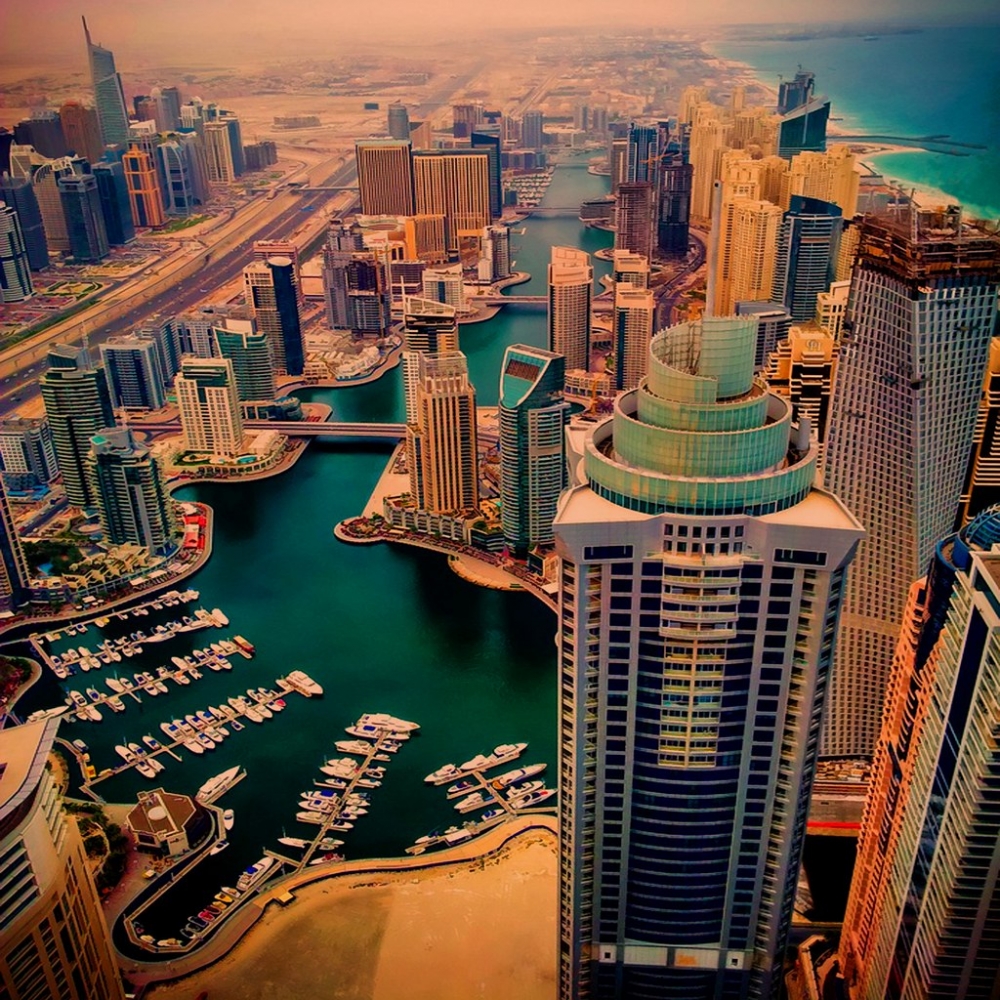 Dubai
Dubai A luxurious villa with sea views, located in the town of Villfranche-sur-Mer on the French Riviera.
 Greece
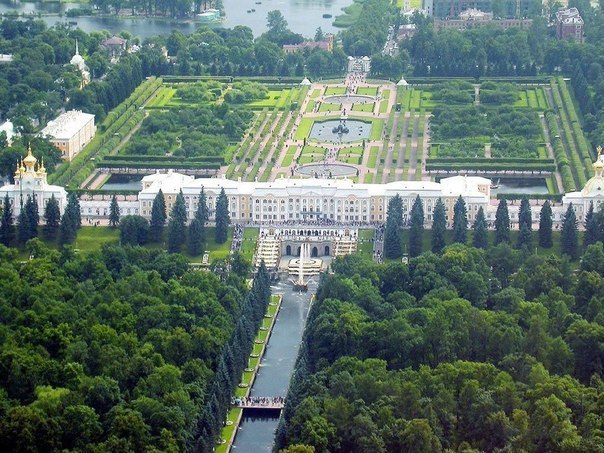 Peterhof in Saint Petersburg, Russia
 At home, on Cordova Street, in Spain.