About Salvador Dali: Happiness and romance, madness and fate, mysticism and world fame, scandals and sensations—these all accompanied the life of Salvador Dali (May 11, 1904–January 23, 1989), one of the most sensational artists in the world whose talent continues to inspire conversation to this day. Do you know these interesting facts about Salvador Dali? When he was 10 years old, he painted his first picture. He didn’t see himself as an artist; instead, he was good at writing poetry and essays4 photos
People still talk about him to this day. Do you know these interesting facts about Salvador Dalí? When he was 10 years old, he painted his first picture. He didn’t see himself as an artist, but he was good at writing poems and essays. At 15, his reckless behavior got him expelled from school, but he eventually graduated with excellent grades. As a child, he was afraid of moths, but he liked the sight of blood. Dalí preferred small-sized women’s breasts (he feared large ones) and loved women’s buttocks the most. For a while, he had male lovers too. Starting in the 1920s, the influence of his new friend, the poet Federico García Lorca, began to appear in Dalí’s paintings, replacing his first “inspiration” – his sister.
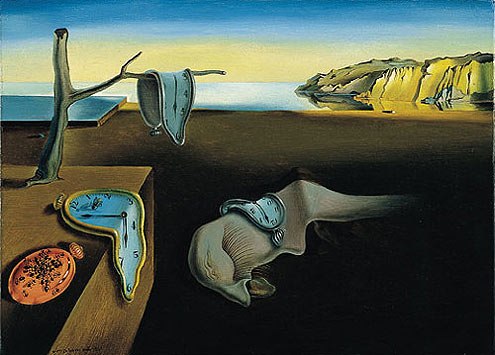
People whispered about their intimate relationship. Ironically, or perhaps lovingly, in 1929 in Paris, Dalí tried to flirt with Paul Éluard, a French poet, but when he saw his wife, Gala (Lenochka Dyakonova), he fell deeply in love. She was 35, and he was 25. Despite this, Gala left the wealthy and famous Éluard for the poor, “ill” yet loving genius Dalí. Realizing he had taken Éluard’s wife, Dalí painted his portrait as a “compensation.” Interestingly, one of his paintings, “The Persistence of Memory,” was inspired by Einstein’s theory of relativity.
When Dalí arrived in New York in 1934, he carried a 2-meter-long loaf of bread as an accessory. At a surrealist exhibition in London, he wore a diver’s suit. To gain inspiration from his dreams, Dalí often fell asleep with a heavy key in his hand. Sitting on a chair, he would fall asleep with the key between his fingers; when it dropped, he would wake up and transfer the images from his dreams onto the canvas. His scandalous fame began in New York in 1939.
He was commissioned to design the displays for the luxurious Bonita Taylor store on Fifth Avenue. Dalí chose the theme “Day and Night.” His artwork included mannequins from the early 20th century with real hair cut from dead bodies, a bathtub, a black velvet bath, and a canopy made of a bull’s head with a bloody dove in its teeth. On December 7, 1959, a unicycle designed by Dalí and engineered by Laparra was unveiled in Paris. It was a transparent sphere with a seat for one person inside.
From 1965, a painting by Dalí hung in the main dining hall of the Rikers Island prison complex in the United States as an apology for not being able to attend art lectures for the inmates, as he had promised. In 1981, the painting was moved to the lobby “for safety reasons,” but in March 2003, it was replaced with a fake while the original was stolen. Four employees were charged in this case; although three pleaded guilty and one was acquitted, the original painting was never found.
After his wife Gala died on June 10, 1982, Dalí produced nothing significant. He stayed at home, stopped interacting with people, spoke indistinctly, forgot everyday skills and habits, and lost track of time and space. The portraits of Gala that were in his home, he was unable to recognize as his beloved wife’s. “Gala was much more beautiful,” he said before he died. Dalí considered Picasso his second father and even took painting lessons from him for a while. He loved sweets very much; instead of money, he demanded a box of Chupa-Chups every day for designing the logo for the company. Since he couldn’t eat that many candies, he came up with a “joke”: he would lick the Chupa-Chups and then throw them into the sand on the playground.
Together with Christian Dior in 1950, Dalí created a “costume for 2045.” A crater on Mercury was named after Salvador Dalí. In 2003, Walt Disney released the animated film “Destino.” The development of the film began in 1945 with Dalí’s collaboration with American animator Walt Disney, but it was postponed due to financial issues. Dalí requested that his body be buried in the floor of the Dalí Museum in Figueras so that people could walk over it.
Find the Best Professionals for Your Project
Expert repair, construction, and renovation specialists ready to help you right now