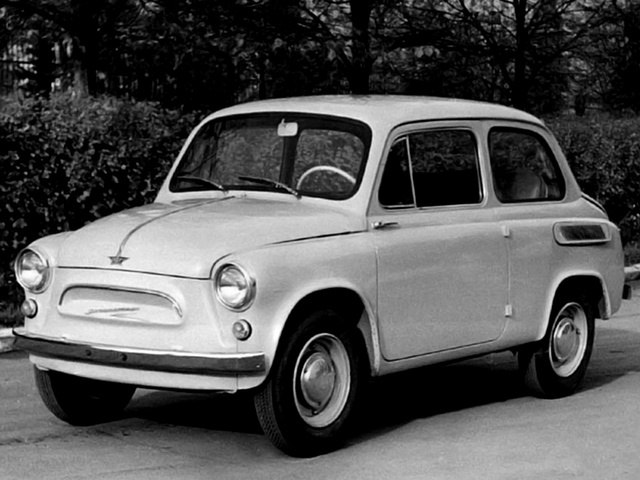
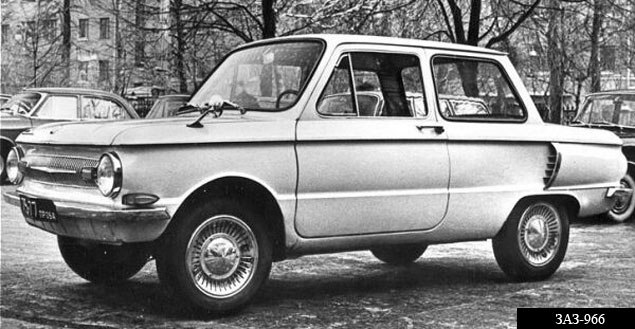
About the Zaporozhets... On November 22, 1960, the first batch of industrial-produced Zaporozhets cars—the ZAZ-965—rolled off the production line at the Komunar Plant in Zaporizhzhia, Ukraine (which was later renamed the Zaporizhzhia Automobile Plant). All variants of the...2 photos
The “Zaporozhets” boasted a high degree of uniformity in their components and systems, both when compared to the military models (LuAZ-967) and the civilian versions (LuAZ-969) of the same brand. This was largely due to the success of the engine designed for the Zaporozhets, which subsequently attracted interest from the military. In the Soviet Union, the Zaporozhets were popular primarily because of their relative affordability—they cost half as much as the Lada and one-third of the price of the Volga. ZAZ was the only automobile manufacturer in the Soviet Union to also produce models equipped with modified controls systems suitable for disabled individuals. Such versions were commonly referred to as “invalid cars” and were distributed through social welfare organizations to people with various disabilities.
Despite the frequent jokes about the rear-engine layout of the Zaporozhets, it is important to note that in the late 1950s—during the development of both generations of these vehicles—the rear-engine configuration was at its peak of popularity around the world, including in the United States and Europe. In fact, each generation of the Zaporozhets earned its own nickname among the public: the ZAZ-965, with its distinctive body shape, was called “humped-back”; the subsequent ZAZ-966 and ZAZ-968 models were nicknamed “ear-edged” due to their protruding side air intakes. When the air intakes on the ZAZ-968M were removed, the vehicle was jokingly dubbed “washer”. Interestingly, the primary prototype for the ZAZ-965 was the Fiat 600, at least with regard to the overall body design and some aspects of the suspension and transmission systems.
The engine used in the Zaporozhets was a rather rare type in global automotive industry: it was a four-cylinder V-engine with air cooling, located at the rear of the vehicle. The car featured two doors that opened backward, and both the rear and front windows were interchangeable. Export versions of these vehicles were also produced, including right-hand-drive models for countries with left-side driving traffic.
In total, more than 3 million Zaporozhets were manufactured by ZAZ between 1960 and 1994. After the dissolution of the Soviet Union and during the ensuing economic crisis, ZAZ ceased production of these vehicles in 1994. In recent years, collector cars have gained increasing popularity, and the price of vintage Zaporozhets, such as the “humped-back” model, has reached around 3,000 euros.
Find the Best Professionals for Your Project
Expert repair, construction, and renovation specialists ready to help you right now