Muscle memory. Muscle memory is a long-term structural changes (restructuring) of muscle and nerve cells that develop under the influence of physical training and provide a quick recovery of fitness after a long rest.1 photos
After injury, childbirth and many other circumstances, professional athletes sometimes have time to stop training. . At the same time, no muscle load atrophies & ndash; myocytes are reduced in volume, since less organelles and cytoplasm are required to maintain a low level of physical activity. However, if athletes decide to return to the sport and resume training, physical fitness returns relatively quickly. They need less time to increase muscle size, strength and endurance than beginners. . The mechanism of muscle memory. Reconstruction of nerve cells.
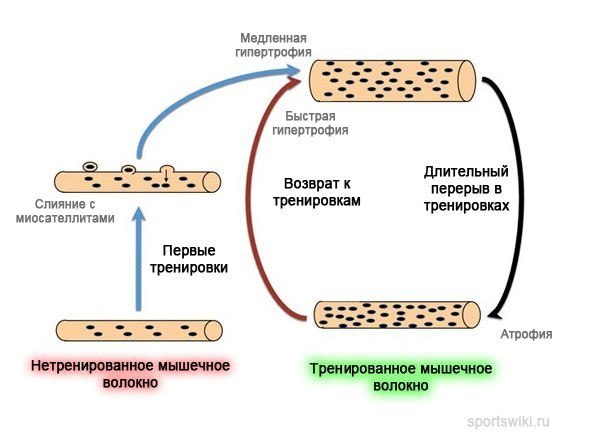
The phenomenon of muscle memory has been known for a long time, and sports doctors associate its causes with the work of the nervous system, namely, the increased excitability of motor neurons and the appearance of new synapses, which leads to an improvement in the neuromuscular junction. After the break, the training began to accelerate the growth of new vessels and improve the nutrition of motor areas, and neurotrophic factors are secreted. Muscle cell restructuring. Norwegian scientists led by Kristian Gundersen (University of Oslo) showed that muscle fibers have their own memory and its mechanism is associated with the emergence of new nuclei. Muscle fibers & ndash; the cells that form the muscle tissue are very long (up to 20 cm) and thin (up to 100 microns). Usually their length is equal to the length of the muscle. In addition, muscle fibers contain many nuclei — it is one of the few multi-core cells in vertebrates.
A detailed description of the study. In experiments on mice, in order to load the calf muscle, the extensor digitorum longus (EDL) is a long extensor of the fingers, they partially removed another muscle — the tibialis anterior muscle (Latin), or the anterior tibial muscle. Since the partially removed muscle acts in the same direction as the studied one, as a result of the operation, the EDL received an additional load. After different periods after surgery, scientists observed what was happening with the muscle. In 21 days, the muscle fibers in the EDL became noticeably thicker: the cross-sectional area increased by 35%. But these changes were not the only ones. In muscle cells, the fibers became 54% more nuclei. Moreover, as the analysis showed, an increase in the number of nuclei in time was preceded by an increase in thickness. The nuclei began to multiply on the sixth day of the increased load on the muscles, and their number stabilized on the 11th day. And the thickness of the fiber began to grow on the ninth day and stopped on the 14th.
From another group of mice, they did the same thing and watched them for two weeks. On the 14th day after the operation, the muscle fibers became 37% more nuclei, and the thickness of the fibers increased by 35%. After that, biologists imitated the cessation of muscle training & ndash; for this they simply cut the nerve going to it. Over the next 14 days, the muscle atrophied: the thickness of the fibers decreased by 40% from the highest value. And the number of additional cores remained at the same level. . Scientific experiment showed that the growth of muscle mass during training & ndash; a consequence of the increased number of nuclei in muscle cells. More nuclei means more working genes that control the synthesis of more muscle contractile proteins & ndash; actin and myosin. This change is permanent & ndash; additional nuclei have not disappeared even after three months of muscular atrophy. The latter result was unexpected, since it was assumed that the extra nuclei would soon be destroyed by apoptosis, but this did not happen.
The cores simply reduced functional activity and remained in & quot; Idle mode & quot ;. . Scientists have concluded that it is new nuclei that form the basis of muscle memory, which is implemented at the cell level. With the resumption of the load, additional nuclei begin to function actively: protein synthesis and hypertrophic processes that are regulated by nuclear DNA are enhanced. New nuclei in muscle fibers are formed due to fusion with myosatellite cells, which are divided by mitosis. With age, their ability to divide decreases. For this reason, it will be difficult for an elderly person to build muscle if he has not trained in his youth. A return to physical form is much easier.
Find the Best Professionals for Your Project
Expert repair, construction, and renovation specialists ready to help you right now
Recommended Galleries
Recommended articles




More Galleries
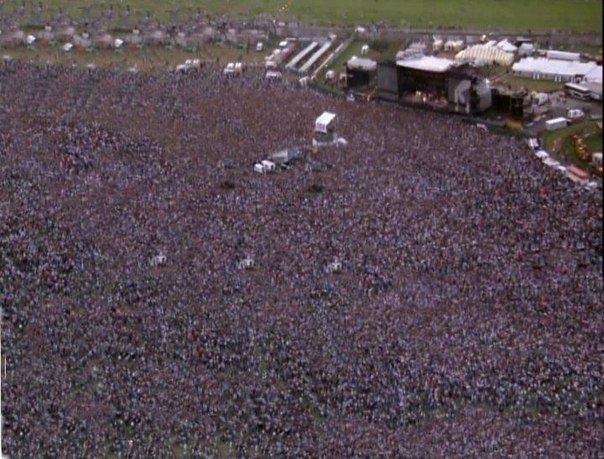 Photos from Michael Jackson's concerts.
 Animals that lost the battle against furniture.
 How are the zombies created in the TV series The Walking Dead?
 3 abandoned salt production fields.
![[club22863515|Our surfing camp in Bali offers a new approach to leisure – a combination of surfing and active outdoor activities.]](/storage/images/mixx/2014-03/c29a8fb501082cba.jpg) [club22863515|Our surfing camp in Bali offers a new approach to leisure – a combination of surfing and active outdoor activities.]
[club22863515|Our surfing camp in Bali offers a new approach to leisure – a combination of surfing and active outdoor activities.]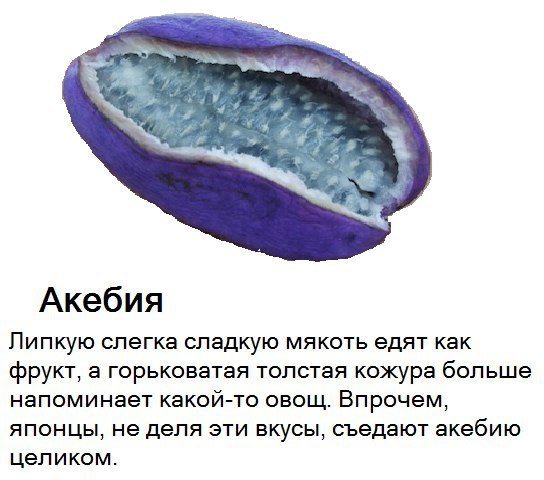 You must try this at some point in your life!
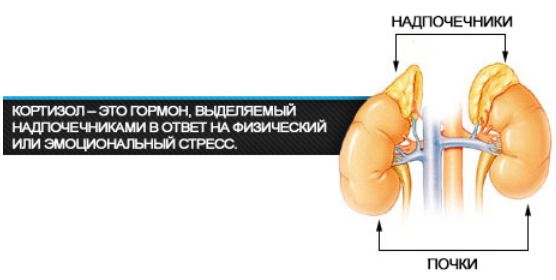 Cortisol
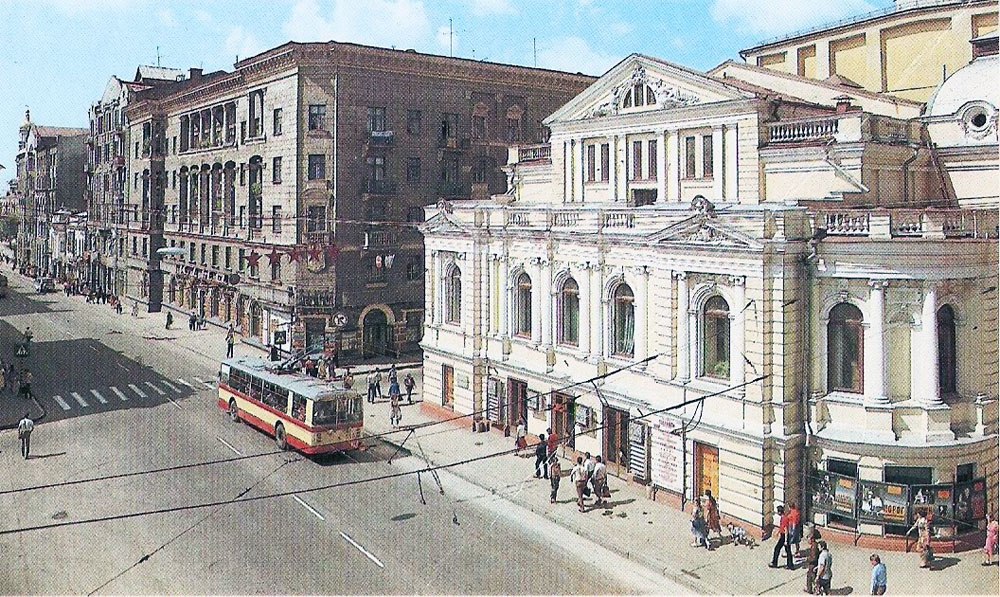 Kharkov Ukrainian Academic Drama Theater named after T.G. Shevchenko
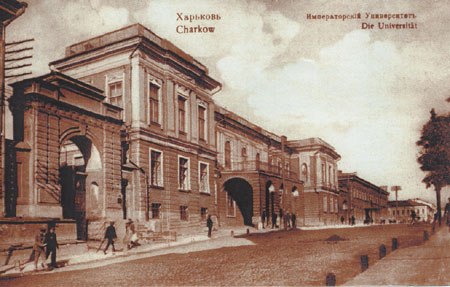 Former Governor’s Palace.
 Munich. View from St. Peter's Cathedral.
 Everyone sees something different in the clouds floating in the sky.
 Robinson Crusoe Island, Valparaíso, Chile.