Bursaatsky Slope8 photos
Bursaцкий Spus
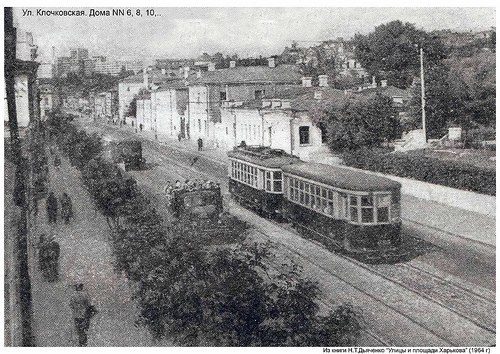
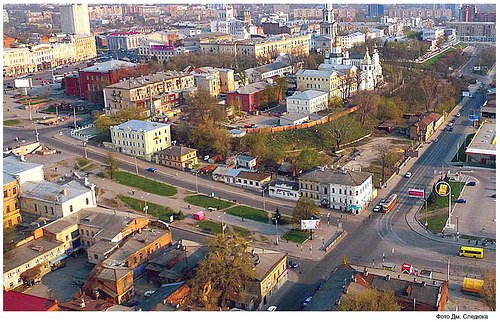
The Bursaцкий Spus, together with the short initial section of Klotchkovskaya Street, forms the northern boundary of the ring of major squares surrounding the historic core of Kharkov. The origins of this street date back to the city’s founding, and its development was closely linked to the activities of the Kharkov Collegium during that period.
On the southern side of the spus lies the Saint-Pokrov Monastery, established in 1726 and later restored. Within its complex is the oldest stone building still standing in Kharkov today—the Pokrov Church, consecrated in 1689.
In a neighboring building, acquired from Colonel Lavrentiy Shidlovsky, the main campus of the collegium was located from 1726 to 1840; it was later converted into a seminary in 1817. This building remained in use until 1890, when the seminary moved to another location and a new building was constructed for the consistory. Today, it houses an archive of technical documents.
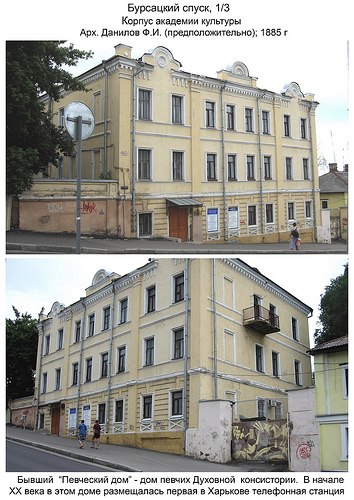
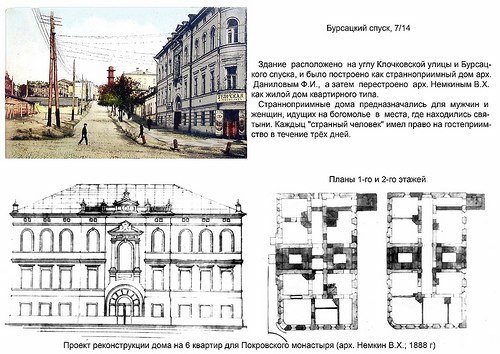
Along the southern edge of the spus, between Universitetskaya Street and Klotchkovskaya Street, several buildings built in the 19th century by the episcopal administration have survived. Among them is Building No. 3, constructed between 1883 and 1885 and originally intended for singers, as well as Building No. 7, built in 1857 as a monastery guesthouse and later converted into residential apartments in 1886 by the diocesan architect V.H. Nemkin.
On the northern side of the spus, during the late 17th and early 18th centuries, the estates of the Cossacks of the Kharkov Regiment were located here. In 1729, Agafia Grygorievna, the widow of Sotnik Danil Chernyak, donated her estate, along with two cottages on it, to the monastery. After acquiring several adjacent plots, the monastery established what was known as the “Orphanage and School”—a residence and educational institution for orphaned children, primarily from clerical backgrounds. This institution gave the spus its name. However, this designation was not immediately established; at first, the area was referred to as Seminarskaya Gora, or Bursaцкий Square/Pereulok. After 1917, it was officially renamed Bursaцкий Spus, and this name remained in use until 1941.
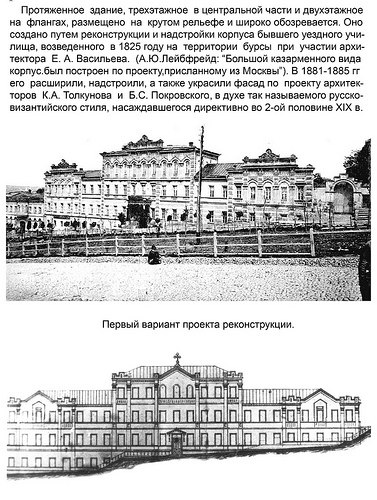
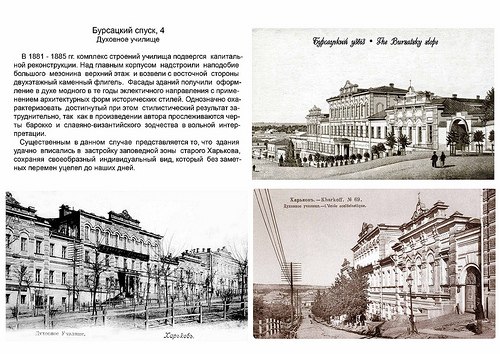
In the early 19th century, the orphanage was transformed into a seminary with two divisions: one for parish priests and another for county clergy. The former provided lower-level education, while the latter offered more advanced training. Between 1817 and 1825, a large barracks-style building was constructed along the slope of the spus according to a design sent from Moscow.
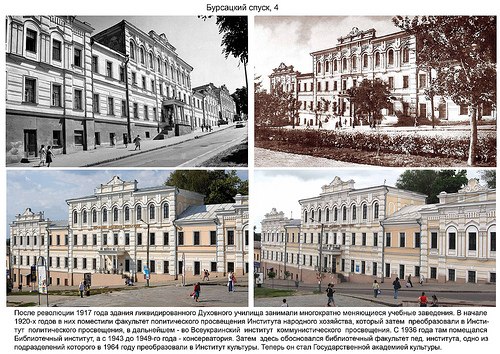
Between 1881 and 1885, the building was expanded, added a second floor, and its facade was renovated by architects K.A. Tolkunov and B.S. Pokrovsky. Today, it houses the Institute of Culture. On both sides of it, several former merchant residences from the second half of the 19th century have survived.
Until the first decades of the 19th century, the Bursaцкий Spus was poorly maintained. Heavy rainfall from the northern hills would wash down mud and debris along the street, blocking the path to the monastery that the residents of the orphanage had to walk every day for prayers.
The spus gained importance as a transportation route after the Blagoveshchensky Market was established on the western bank of the Lopan River. However, accessing it was extremely difficult: after climbing the steep slope, one had to cross the river by boat. Local residents tried to alleviate the problem by filling in the mud-filled ravines with manure, but this was ineffective.
The spus was first planned and paved in the 1860s, and a wooden bridge was built at that time; it was replaced by a concrete one in 1909–1910. This bridge was restored after 1945.
Between 1884 and 1891, extensive improvements were carried out to straighten the course of the Lopan River and drain its banks, preventing Klotchkovskaya Street from being flooded annually. In 1893, a park was established on the spus, but it did not last long due to the persistent flooding. It was not until 1956–1957 that large-diameter metal pipes were installed beneath the street to drain excess water during heavy rains. In 1984, when an underground passage was constructed leading to the “Historical Museum” subway station, the surface of the spus was thoroughly renovated.
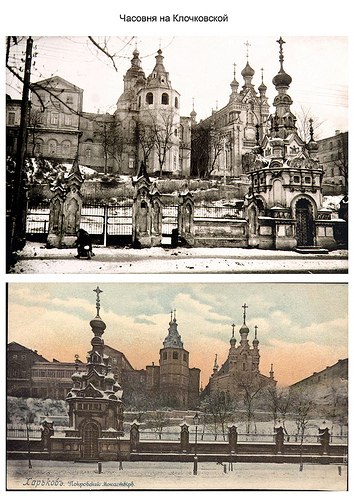
On Klotchkovskaya Street, between the Bursaцкий Spus and the former Kupechesky Spus (also known as Khalturin Spus), only a few remnants of the once-extensive but mostly low-quality buildings remain. A significant loss is the elegant monastery chapel built in 1896 by architect V.H. Nemkin; it added greatly to the beautiful panorama of the city’s center that can be seen from the west.
Thus, the ring surrounding the historic core of Kharkov has been fully formed. This sacred space, which vividly preserves memories of the city’s past and all the significant events that took place there, continues to thrive in the modern context. The central squares are filled with people from Kharkov and visitors; street commerce is thriving, and these areas have become vital transportation hubs.
**Alexander Freud**
(“Panorama” – 1995, No. 1)
vk.cc/YAELB
#1stolica_history
Find the Best Professionals for Your Project
Expert repair, construction, and renovation specialists ready to help you right now
Recommended Galleries
Recommended articles



More Galleries
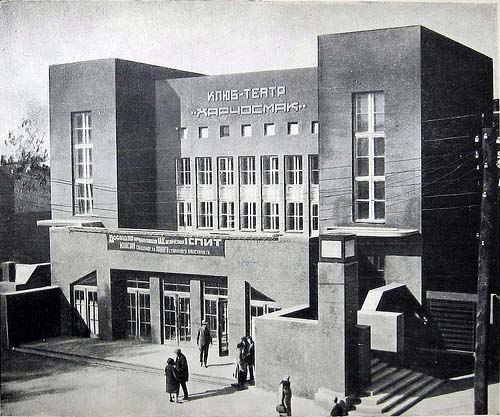 DK “Pishchevik”
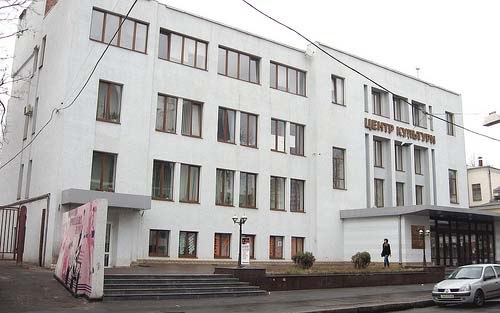 Staff Communications Club ("Communication Club")
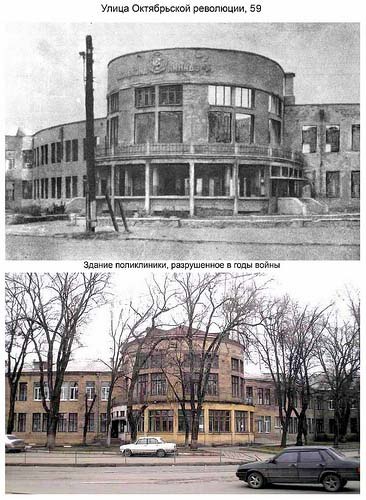 Building of the 22nd Polyclinic<br>(59 Oktyabrskaya Revolutsiya Street)
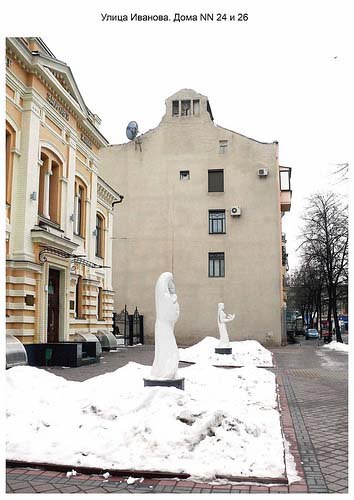 26 Ivanova Street
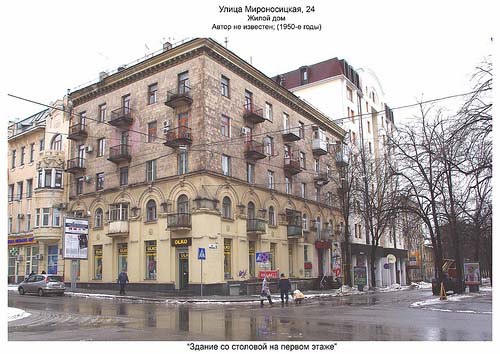 Ivanova 4
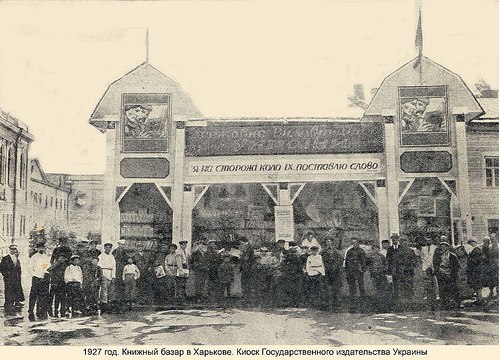 The First Book Fairs in Kharkov
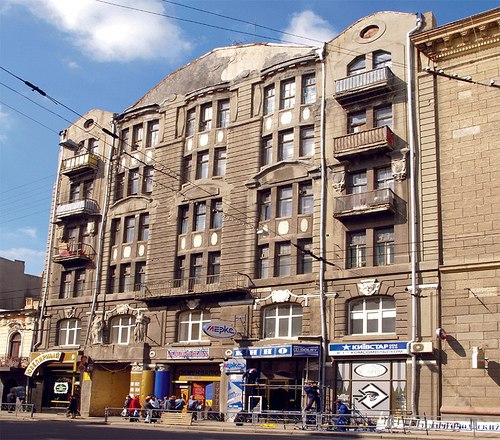 The former apartment building owned by Haritonov and the “Amper” cinema. Designed by architect A.I. Gorokhov (1913). Location: Sumskaya Street, 5.
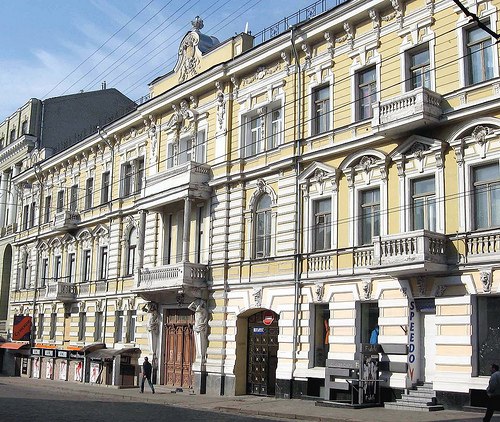 Former income-generating property of the “Life” Insurance Company.<br>(19 Sumskaya Street)
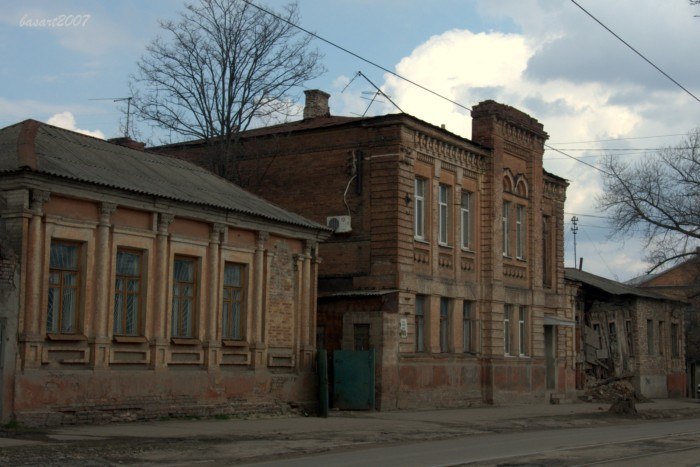 Vasily Krichevsky and Moskalievka
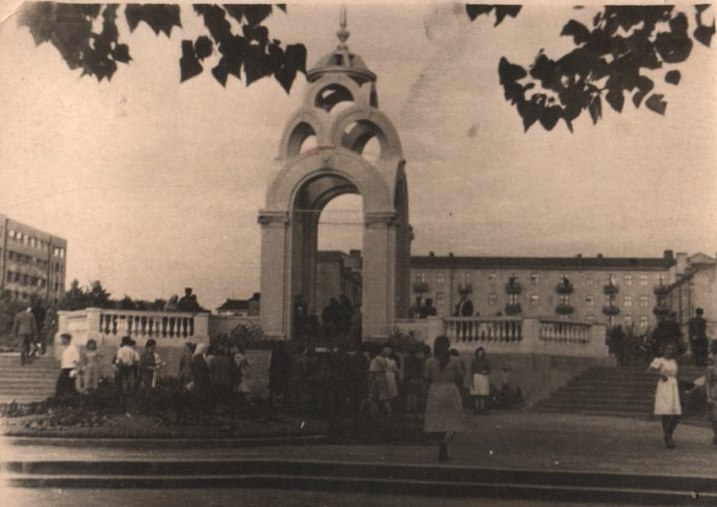 Glass Stream
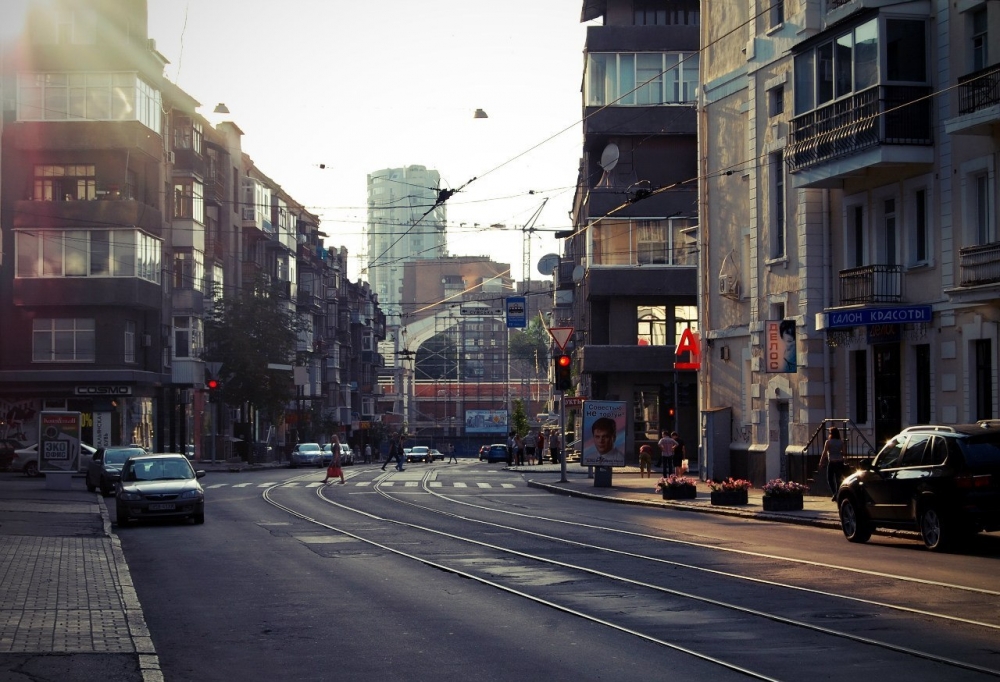 Vladimir Mayakovsky and Kharkov.
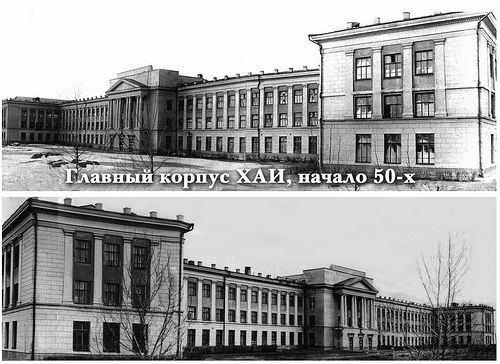 **Kiev and Aviation, as well as the History of Kharkiv Air University** <br>(Part 2) --- The city of Kiev, located in the heart of Eastern Europe, is a major transportation hub and a vital strategic location. Kiev has always been an important center of cultural, scientific, and technological development in Eastern Europe. It has played a pivotal role in the history of European aviation. Kiev itself is an impressive example of urban development. Modern infrastructure, advanced technology, and high-quality services provide excellent conditions for conducting various activities and operations. Kiev also plays a crucial role in ensuring the smooth operation of transport systems in Eastern Europe. Ukraine, as a whole, is an important country in the global context. Ukraine has a long history and rich cultural heritage, as well as a vibrant and dynamic economy. An active role in international affairs and a constant effort to improve its economic situation have enabled Ukraine to gain a significant position in the world community. The Air University of Kharkiv is one of the most prestigious institutions of higher education in Ukraine. It was founded in 1930 and has a long and distinguished history. Since its establishment, the University has played a vital role in the development of aviation technology in Ukraine and the region as a whole. Kharkiv itself is a beautiful and historic city with a rich cultural heritage. Kharkiv is located in the southern part of Ukraine, in the Kharkiv Oblast. Kharkiv Oblast is one of the most economically developed regions in the country. The Oblast is known for its high-quality education system and excellent facilities for scientific research. The Air University of Kharkiv is located in the city of Kharkiv. It occupies a prominent position in the urban landscape of the city. The university campus includes several buildings, including academic teaching facilities, research laboratories, and modern libraries. The Air University of Kh Kharkiv has always been committed to providing high-quality education and training. It is dedicated to ensuring that its students receive the best possible education and opportunities for career development. The university offers a wide range of courses and programs, allowing students to choose according to their interests and aspirations. The Air University of Kharkiv is an active participant in international academic activities and cooperation. It participates actively in various international organizations and forums. It also engages in various exchange programs and exchanges students with other universities around the world. --- ### Note: The above translation provides a complete and accurate rendition of the original text into English. All important details and information have been preserved, and no part of the source text has been omitted or left untranslated.