Push-ups: Who needs them anyway? Discover this new exercise for yourself.2 photos
It will bring you invaluable benefits. Imagine this scenario: you walk into an English bar to have a pint of beer. Well, bars in England are rather peculiar places – people do all sorts of things there, but drinking is hardly one of them. People watch football on TV, endlessly discuss various matters, big and small, and from time to time, they test each other’s strength. Right in front of you might be a burly guy with a shaved head and a jaw that seems designed for crushing walnuts. But you’re no slouch either – you have 50-cm biceps and shoulders wide as a tree trunk. So, in keeping with the local spirit, you propose a competition to see who can do the most push-ups. The guy gets it immediately and starts: 10, 50… 150… 1000… Oh my! Who have you met? It’s Paddy Doyle, a former street thug who today is a highly respected world champion in bench presses! He holds almost all the world records in this sport. Once, he managed to do 4100 push-ups while having a 23-kilogram box tied to his back. A few years ago, he did 7860 consecutive push-ups in a pub! His one-hour record is 1700 push-ups, and his daily record is an astonishing 37,000! That’s right – in just one day, this 40-year-old champion managed to do thirty-seven thousand push-ups! Whenever, wherever. Push-ups are, in essence, the “reverse bench press” – another multi-joint exercise that engages numerous muscles, but mainly the chest and triceps. As Bob Lefavie, a certified sports physiologist, amateur bodybuilding champion, and professor of sports medicine, puts it: “In fact, almost every muscle in the body is involved in push-ups. Some muscles work dynamically, while others remain statically tense to maintain your body’s upright position. But what does that matter? This exercise has a tremendous metabolic effect and benefits the entire body, just like squats do.” Lefavie also adds that the large chest muscles are unique among all muscle groups – their fibers spread out in a fan-like pattern starting from the clavicle. Therefore, any exercise that focuses on only a part of these fibers will result in less effective training. Exercises with dumbbells and barbells usually limit your range of motion, but push-ups offer more flexibility. Just adjust your arm position slightly – wider or narrower, further forward or back – and you can target any area of your chest that needs extra attention. Some might argue that using just your body weight for push-ups isn’t very effective… But what else do you need? Add push-ups to the end of your training routine and do as many as you can until you’re exhausted. By the way, this is also Kevin LeBron’s signature ending move – doing push-ups until he collapses. He himself always does them in a “female” position, on his knees… Because he simply doesn’t have the strength for anything else! Push-ups come in various forms. The idea that they should only be done when you don’t have access to dumbbells or barbells is completely wrong. Push-ups are a fundamental exercise that has no artificial elements at all. In fact, no one uses weights of 50 kilograms per arm when doing push-ups, and we rarely need additional support devices either. Standing on your hands is, after all, the most natural position for a man. Sometimes, you just feel like lying down on the ground and doing thirty push-ups for fun… But in bodybuilding, push-ups have a specific purpose – they are mainly used to shape your muscles. So, take off your shirt and let someone watch you while you exercise. Find a version of push-ups that targets your weaker areas specifically. Don’t do them just to set meaningless records. Always remember that push-ups are the “reverse bench press.” Doing them with your head up stimulates the upper part of your chest, while doing them with your head down focuses on the lower part. When you place your hands wider than your shoulders, you target the outer areas of your chest. However, the most effective results are achieved when your arms and feet are placed on a high surface – this allows you to stretch your chest muscles to the maximum extent, giving them a more defined shape. Doing push-ups with one hand is an even more advanced technique. After a month of practicing this, your chest will look as if it has been sculpted by a machine. Some people suggest integrating push-ups into your home training routine; they claim it greatly enhances the effectiveness of your basic workout. Give it a try! If you only train your chest once a week, add one home exercise session at first and observe how your body reacts. If you don’t feel any excess strain, add a second session, and then a third. Keep doing this for 3–4 weeks, and then go back to doing just one additional home session per week.
**Push-up Difficulty Rating:**
* MMMMM – Very difficult
MMM – Medium
MM – Easy
M – Extremely easy
* This rating indicates the difficulty of the exercise. Difficulty doesn’t necessarily mean it’s less effective; some complex exercises may not be very beneficial at all. This rating helps determine when to use them in different stages of your training routine. More advanced exercises are usually suitable for those with more experience.*
**Other Types of Push-ups:**
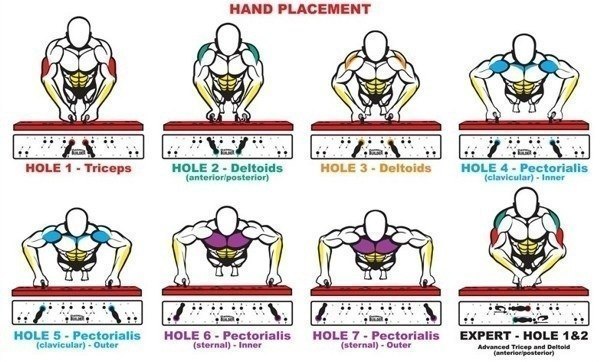
- **Push-ups with narrow grip:** This exercise focuses on the inner areas of the chest muscles.
*Execution:* Place your hands so that your thumbs and index fingers touch each other. Slowly lower yourself, then push up forcefully. Keep your triceps tense during the movement.
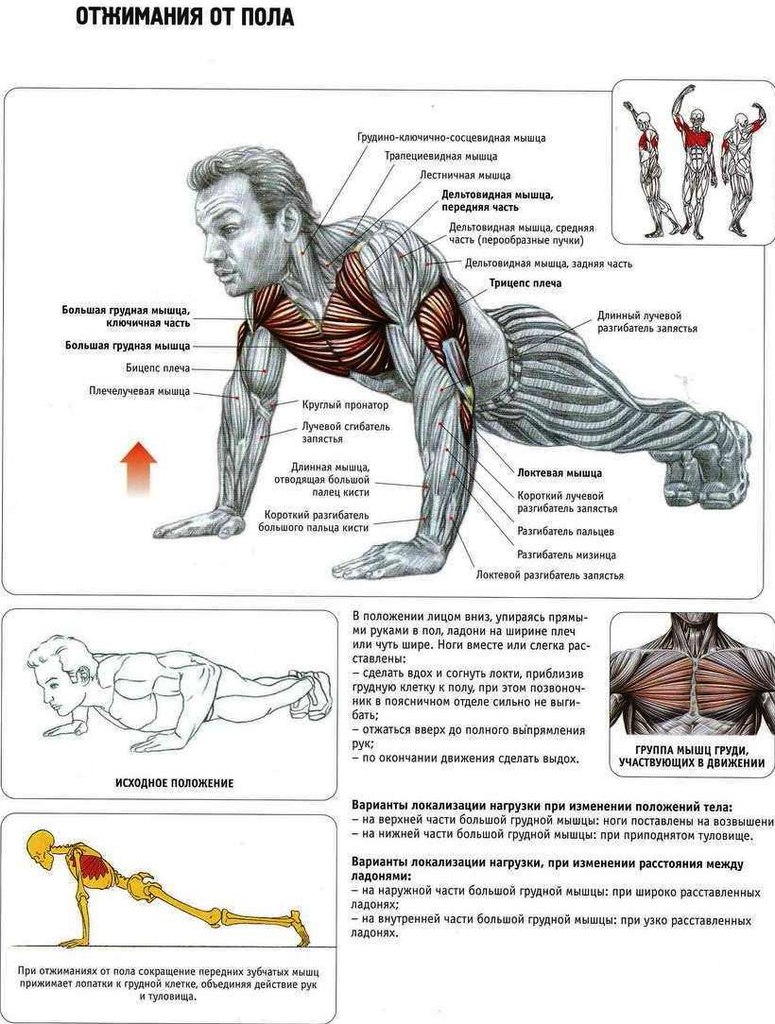
- **Standard push-ups:** They target the middle part of the chest. The upper and lower parts of the chest muscles, as well as the deltoids and triceps, are also involved.
*Execution:* Keep your head in line with your spine, place your hands slightly wider than your shoulders, and perform the exercise as usual.
- **Push-ups with head up:** By leaning forward, you focus more on the lower part of your chest. This exercise feels less strenuous because your legs bear most of your weight.
*Execution:* Place your hands slightly wider than your shoulders, lean forward, and push up. Keep your elbows slightly bent and your core muscles tight.
- **Push-ups with knees on the ground:** A good option when you’re running out of strength. Place something soft under your knees to protect them.
*Execution:* Assume the standard push-up position, place your knees on the soft surface, and perform the exercise as usual.
- **Jumping push-ups:** This plyometric exercise improves explosive power and coordination.
*Execution:* Place your palms on two supports 15–20 cm high. Push up, then jump back down to the ground. Make sure your arms are at a width similar to that of regular push-ups. Bend your elbows as you land.
- **One-arm push-ups:** This challenging exercise strengthens your shoulder muscles.
*Execution:* Assume the standard push-up position, move one leg aside, transfer your weight to the other arm, and start pushing up. Gradually increase the depth of the movement as you gain confidence.
- **Plyometric push-ups:** These exercises focus on developing explosive power.
*Execution:* Lower yourself quickly, then push up forcefully to jump back up. Clap your hands at the top of the movement for extra intensity.
Find the Best Professionals for Your Project
Expert repair, construction, and renovation specialists ready to help you right now
Recommended Galleries
Victoria Yartym. Country: Ukraine <br>City: Kiev <br>Date of birth: June 6th.
Results of the 2013 Fitness House Grand Prix.
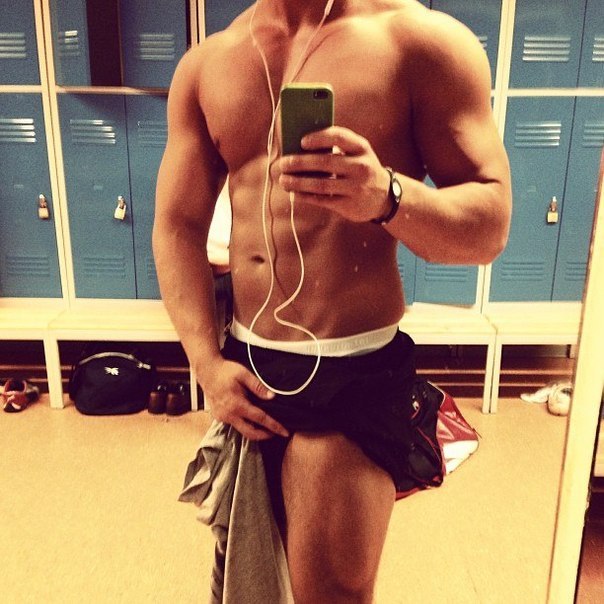
Scientists at NASA have developed a magnetic bracelet designed for use during sports activities. This bracelet enhances blood circulation, improves coordination and movement control, enhances attention, and overall improves various aspects of human performance.
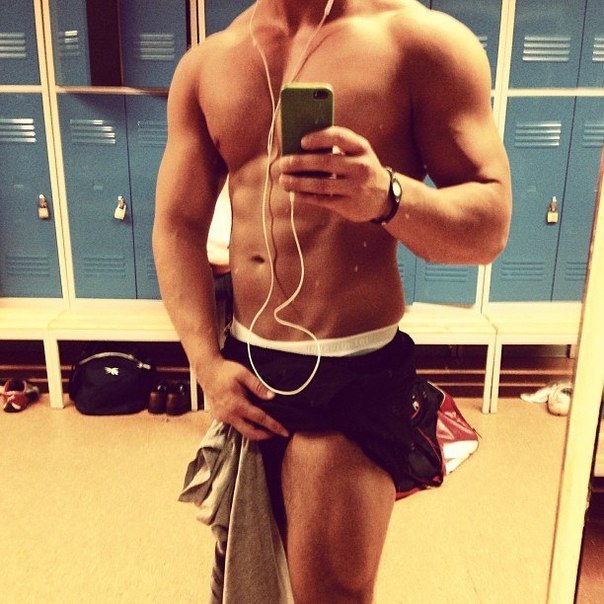
Scientists at NASA have developed a magnetic bracelet designed for use during sports activities. This bracelet is capable of enhancing blood circulation, improving coordination and movement control, enhancing attention, and overall improving various aspects of a person’s physical and mental performance.
Recommended articles




More Galleries
- Victoria Yartym. Country: Ukraine <br>City: Kiev <br>Date of birth: June 6th.
- Results of the 2013 Fitness House Grand Prix.
- Scientists at NASA have developed a magnetic bracelet designed for use during sports activities. This bracelet enhances blood circulation, improves coordination and movement control, enhances attention, and overall improves various aspects of human performance.
- Scientists at NASA have developed a magnetic bracelet designed for use during sports activities. This bracelet is capable of enhancing blood circulation, improving coordination and movement control, enhancing attention, and overall improving various aspects of a person’s physical and mental performance.
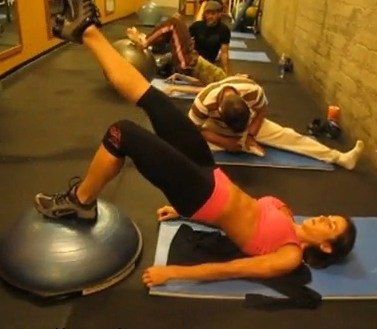 Leg exercises performed while sitting.
 We present to your attention the SFAP t-shirt “No Results Without a Foundation.”
![[club1543502|Moscow Avenue, Buildings No. 18 and 20].](/storage/images/mixx/2013-11/f47a1458a1106c85.jpg) [club1543502|Moscow Avenue, Buildings No. 18 and 20].
[club1543502|Moscow Avenue, Buildings No. 18 and 20].![[club1543502|The Golden Fish House or the Second Kharkov House with Chimeras] (located to the right of the theater named after him).](/storage/images/mixx/2013-11/a489e24ae00529f1.jpg) [club1543502|The Golden Fish House or the Second Kharkov House with Chimeras] (located to the right of the theater named after him).
[club1543502|The Golden Fish House or the Second Kharkov House with Chimeras] (located to the right of the theater named after him).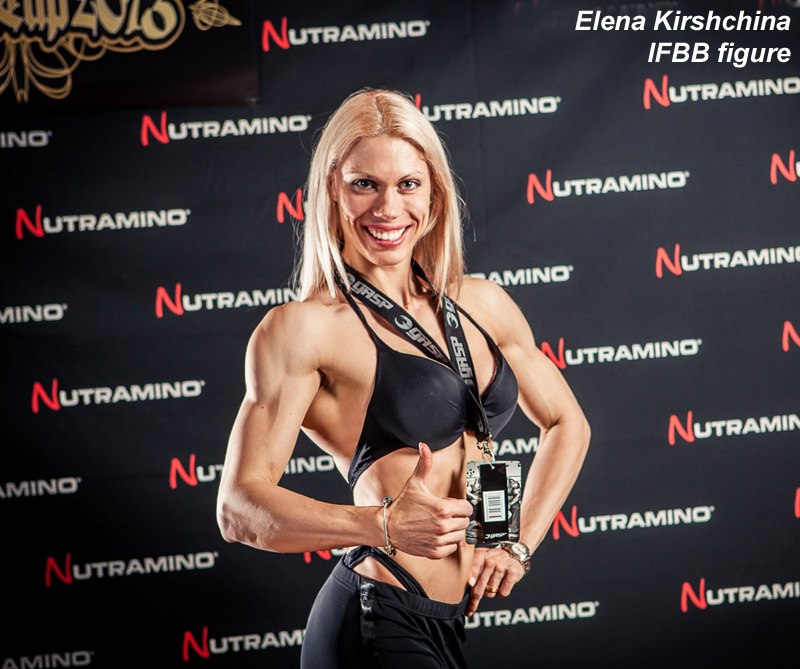 Elena Kirshchina<br>Russian Champion<br>2nd place at the Arnold Classic in Madrid.
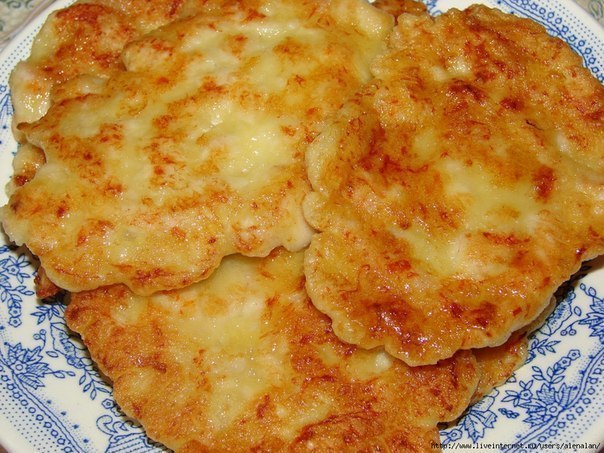 Delicious chicken fritters. Really delicious chicken fritters.
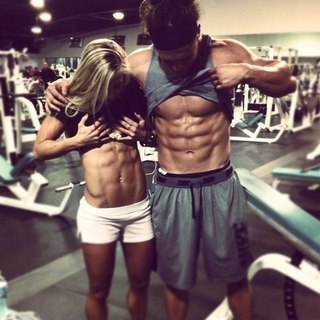 The best motivation for a man to reach any peak is always a worthy woman by his side.
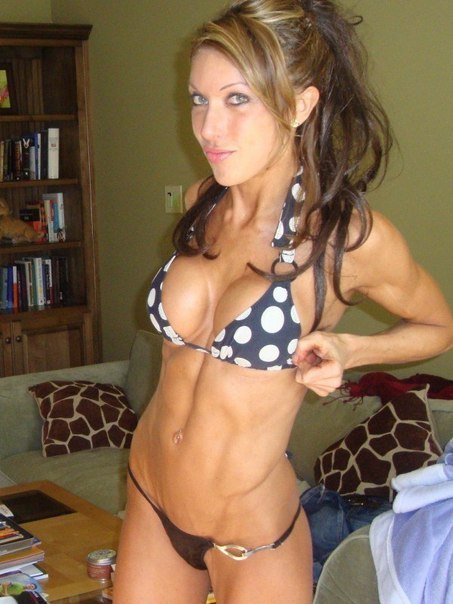 Laura Harris (ChickenTuna): Off-season?