[club1543502|A semi-abandoned, yet brightly colored example of the constructive modernism associated with the “Chicago School”.]7 photos
The origin of the street mentioned in this article can be traced back to the second half of the 17th century. In those distant times, it was merely a narrow alley. However, the city itself was not particularly large at that time; in fact, its size was more akin to that of a modest district center like one we might find today. This alley crossed the streets of the Zalopansky suburban settlement (part of the Lenin District near the Blagoveshchenskaya Cathedral) and led to the Christmas Church (which no longer exists), located on what is now called Krasnooktyabrskaya Street. For this reason, locals came to call it the Christmas Alley. During the 17th and first half of the 18th centuries, the Christmas Alley ran east of the current street route and did not take its present position until 1787. In the late 1830s and early 1840s, when Christmas Street was renamed Kontorskaya Street, the alley also acquired the status of a full-fledged street. Starting in the 1880s, substantial stone buildings began to be constructed along it, and it gradually became a major freight route leading to the Blagoveshchensky Market. As a result, in 1911 its surface was paved with dressed granite. In the early 20th century, retail shops and stalls replaced the previously large industrial buildings that had first appeared here. These new structures, which were distinctly different in style from the earlier ones, gave the area a completely new look, shaped by the economic and architectural trends of the early 20th century. The street thus came to function as a commercial extension of the city’s banking district located on Nikolaevskaya Square. During World War II, most of the buildings here were destroyed. What is being discussed is Engels Street, which was renamed after one of the founders of scientific communism following the 1917 revolution. One building that deserves special attention is the former factory site at Engels Street 13 – it represents one of the most prominent examples of the “Chicago School” of Constructivist Modernism. Built in 1910 by architect A. Rzhepishevsky, this structure features a monolithic reinforced concrete frame and almost entirely glass-covered facades. Today, it is half-abandoned. Source: vk.cc/23iQWZ #Kharkov #Harakov #1stolica_history
![[club1543502|A semi-abandoned, yet brightly colored example of the constructive modernism associated with the “Chicago School”.] - 1](/storage/images/mixx/2013-12/dfb2e172eddfc5c1.jpg)
![[club1543502|A semi-abandoned, yet brightly colored example of the constructive modernism associated with the “Chicago School”.] - 2](/storage/images/mixx/2013-12/48989eb81106c646.jpg)
![[club1543502|A semi-abandoned, yet brightly colored example of the constructive modernism associated with the “Chicago School”.] - 3](/storage/images/mixx/2013-12/a1dd29ed91d15cd3.jpg)
![[club1543502|A semi-abandoned, yet brightly colored example of the constructive modernism associated with the “Chicago School”.] - 4](/storage/images/mixx/2013-12/b420282c9c9efb20.jpg)
![[club1543502|A semi-abandoned, yet brightly colored example of the constructive modernism associated with the “Chicago School”.] - 5](/storage/images/mixx/2013-12/77f4a9ef3e381162.jpg)
![[club1543502|A semi-abandoned, yet brightly colored example of the constructive modernism associated with the “Chicago School”.] - 6](/storage/images/mixx/2013-12/659c7d84d0d7c6b3.jpg)
![[club1543502|A semi-abandoned, yet brightly colored example of the constructive modernism associated with the “Chicago School”.] - 7](/storage/images/mixx/2013-12/329e3342ff4bb186.jpg)
Find the Best Professionals for Your Project
Expert repair, construction, and renovation specialists ready to help you right now
Recommended Galleries
Recommended articles



More Galleries
 Comedy channel Sky: “Laughter strengthens the muscles.”
 Power Balance bracelets – the best gift for yourself and your loved ones!
 ULTIMATE NEWNESS! The latest trend in watches!
 Banana Oatmeal Protein Pancakes
 Attention! As long as you are viewing this post, the New Year’s promotion is still in effect: when you order one Vintage Watch at the price of 1190 rubles, you will receive a Watch with a bead bracelet absolutely FOR FREE!
 Offer! Limited Time Offer!
 Do you know what Opalis is? The Opalis cosmetics line includes six products that are used in elite beauty salons and SPA centers in Japan, France, Italy, and the United States.
 Men's clothing, shoes, and accessories at low prices!
 ACTION! Limited Edition!
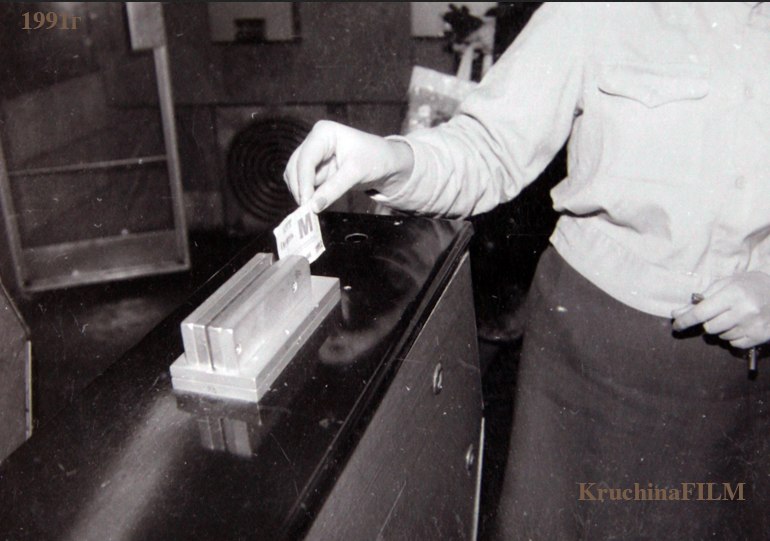 The duty officer at the station provides passengers with guidance on how to use the new types of tickets for travel.<br>Academy of Barabashov Metro Station, Kharkiv, 1991.
![[club1543502|Sumskaya Street, 4]. On the site where, in the 19th century, a path used to lead through to the parallel street of Sumskaya, formerly known as Malo-Nemetskaya, the property belonged to someone in the 1860s to the early 1970s.](/storage/images/mixx/2013-12/e04c2b2227fd0eac.jpg) [club1543502|Sumskaya Street, 4]. On the site where, in the 19th century, a path used to lead through to the parallel street of Sumskaya, formerly known as Malo-Nemetskaya, the property belonged to someone in the 1860s to the early 1970s.
[club1543502|Sumskaya Street, 4]. On the site where, in the 19th century, a path used to lead through to the parallel street of Sumskaya, formerly known as Malo-Nemetskaya, the property belonged to someone in the 1860s to the early 1970s.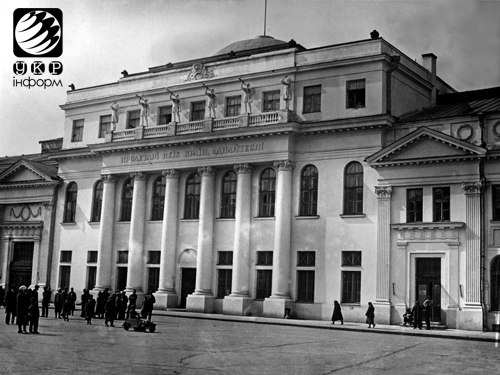 [club1543502|In the Soviet Union, the first Christmas celebrations were held in Kharkov.