La fiebre constructiva de hace 100 años5 fotos
#### Construction Boom 100 Years Ago
In the spring of 1913, the number of beggars in the streets of Kharkov noticeably decreased. This change was noted by the local newspapers. But where had all the local beggars gone? Instead of staying in their usual places, they began to gather around construction sites. 100 years ago, Kharkov was experiencing a genuine construction boom.
The construction boom in Kharkov began several years before World War I. Year after year, the number of buildings under construction increased: in 1908, the city council issued 417 construction permits; in 1909, this number rose to 498; in 1910, it was 609; in 1911, 738; and in 1912, the number reached 822.
Each subsequent month set a new record. With each new building season, more and more people decided to build their homes. Here are some additional figures: in the first three months of 1912, the city authorities approved the construction of 159 buildings; in the same period of 1913, this number increased to 208.
Kharkov’s skyscrapers
As buildings became larger and taller, newspapers began to frequently mention the appearance of skyscrapers in the city. Although the tallest of them did not exceed six floors, it is important to remember that for the first time in 250 years, Kharkov – which had previously consisted mainly of one- or two-story buildings – began to develop into a modern city. Therefore, it is easy to understand why our predecessors were so amazed by these five- and six-story giants.
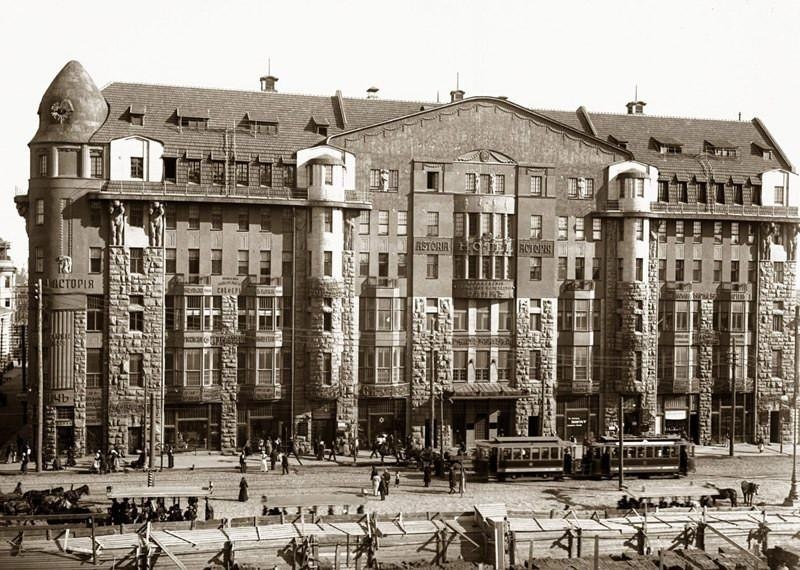
Among the most impressive buildings were the new Bank of Merchants, which included the “Astoria” hotel, located on the Trade Square (now Rosa Luxembourg Square); this building was often referred to as the “Melody House” because of a famous department store located there. Another notable building was the Medical Society’s headquarters, located at 14 Pushkin Street (today the I.I. Mechnikov Institute of Microbiology and Immunology).
The Bank of Merchants opened its doors on Christmas Eve 1912, and in March 1913, the “Astoria” hotel was opened there as well. The hotel was designed in a truly European style, with all the latest comforts and facilities: water supply, bathtubs, sewer system, telephones, and two elevators.
### Apartment Buildings
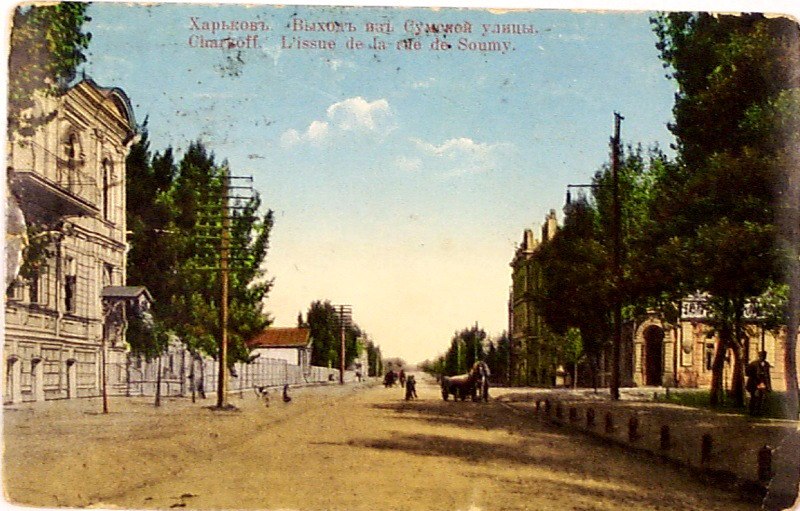
Of course, the majority of buildings constructed in Kharkov were residential. Construction activities were intense throughout the city, both in the suburbs – such as Moskaliovka, Ivanovka, the Chebotarskaya area, and the Yaroslavskaya streets – and in the center of town, from Sumskaya Street and Pushkin Street starting from the current Freedom Square and extending towards the city park, now named Gorky Park.
Even the newly established streets east of Pushkin Street, in the direction of the Zhuravlёvskiy slope, were developed. This part of the city would later become known as the “quiet center.”
The 1920s were a period of great prosperity for Kharkov’s construction industry. Many architects whose names have become synonymous with the city’s architectural heritage today worked on projects in Kharkov at that time – among them Beketov, Velichko, Korneenko, Zagoskin, Ginzburg, Caune, Estrovic, Pokrovsky, Dikansky, Gorohov, Rzepishhevsky, and others.
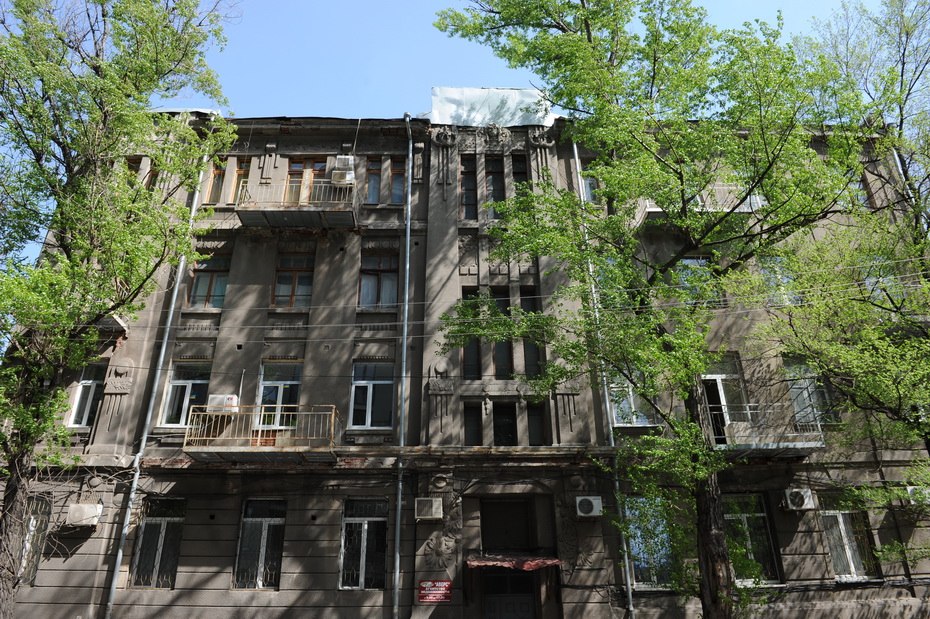
The name of Alexander Ivanovich Rzepishhevsky is particularly associated with the development of so-called apartment buildings in Kharkov. Before this type of housing development emerged, residential buildings usually belonged to a specific owner who would sell or rent out the apartments within his property.
Apartments were expensive at that time, and not everyone could afford to rent even a modest one, let alone enjoy all the conveniences they offered. In Kharkov, renting a room with basic facilities cost between 300 and 350 rubles per year, depending on its location. In terms of housing costs, Kharkov ranked third, after Saint Petersburg and Moscow.
In the early 20th century, the idea emerged of building houses using joint funds – that is, with the money contributed by the residents themselves – so that people could move into apartments without having to worry about future increases in rent.
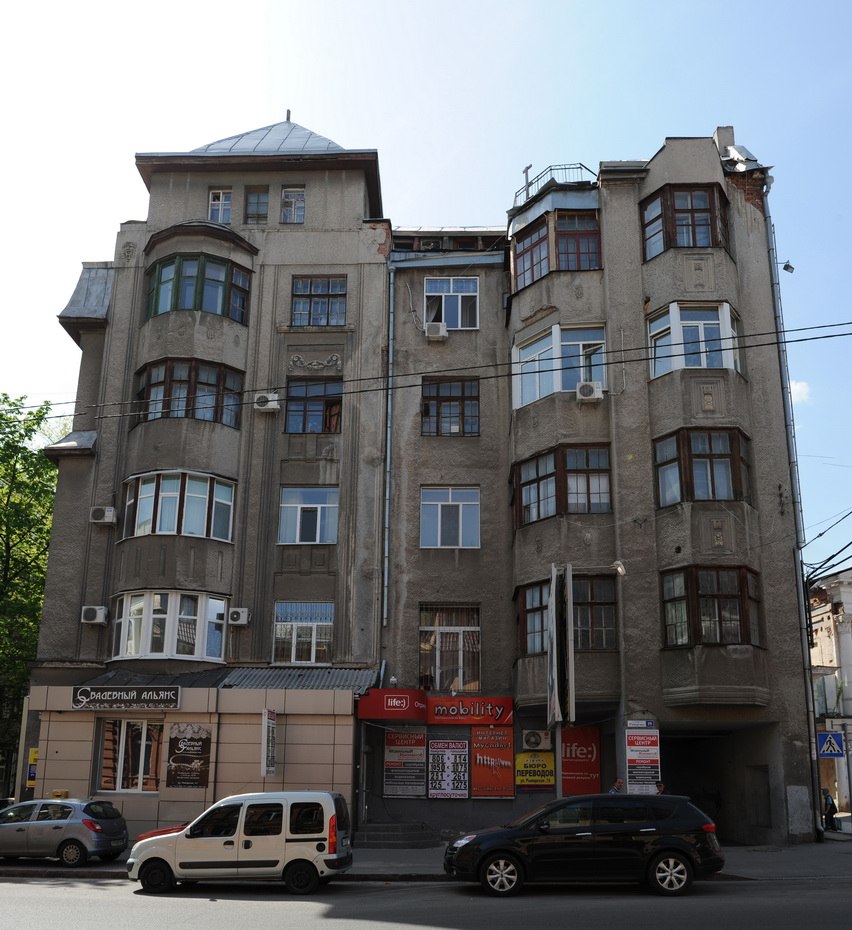
Rzepishhevsky was not the originator of this idea. In Kharkov, the first apartment building was constructed at the end of the summer of 1910. The initiative came from a man named Lubarsky, who convinced eight partners to support this project. This four-story building still stands today; it begins at number 4 on Chernyshevskaya Street. Unfortunately, the sign that read “First Apartment Building” once hung on this building 100 years ago has been lost over time.
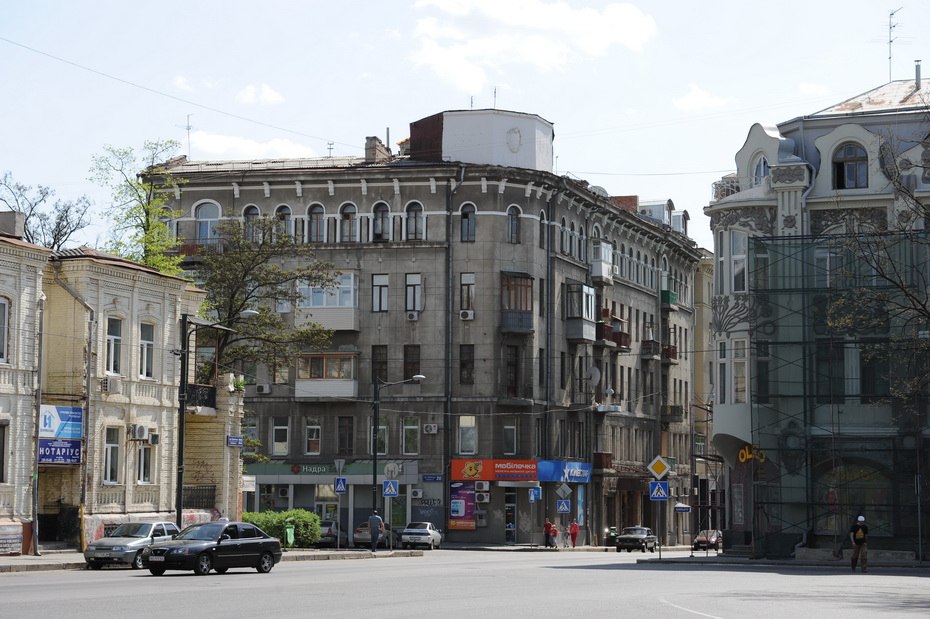
A year later, there were already several organizations in Kharkov dedicated to building houses. One of them constructed a five-story building at the corner of Pushkin Street and Skrypnitskaya Street (now Vorobiyova Street). The organization was led by P.V. Markin, V.N. Abramov, and the military engineer V.M. Vitaliev. The building contained 20 apartments, and according to the founders’ calculations, the apartment owners saved between 40.6% and 55.2% on expenses compared to if they had continued to rent the apartments. These buildings still exist today, although they have undergone significant renovations during the Soviet era.
In early 1913, another organization dedicated to joint housing construction – the “Kharkov Society for Permanent Apartments” – was established under the leadership of architect Rzepishhevsky. He had come to Kharkov from Petersburg to work on the construction of the Bank of Merchants building and stayed there afterward.
The first apartment building constructed by Rzepishhevski was located at 19 Rymskaya Street. This building was significantly larger than previous ones; it contained 50 apartments, each with 2 to 8 rooms. According to initial estimates, the construction cost 656,949 rubles. Members of the society were required to pay 40% of the total cost upfront, while the remaining 60% was to be paid in installments. The owners were expected to earn a profit of around 15% on this investment. This was a considerable return, considering that at that time, an apartment with 6 rooms, equipped with hot and cold water, central heating, and all the necessary amenities, cost around 1600 rubles per year in this area.
Source: vk.cc/1urHsi
Philip Dikansky
#1solica_history
Encuentre los mejores profesionales para su proyecto
Especialistas en reparación, construcción y renovación listos para ayudarle
Galerías recomendadas
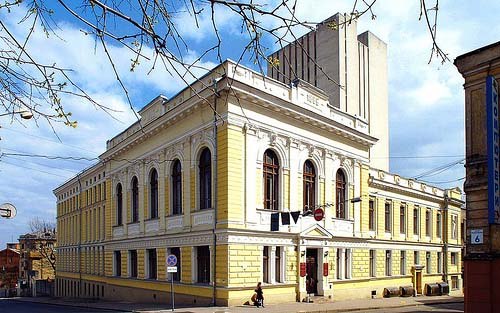
Biblioteca Pública<br>(Biblioteca Estatal de Jarkiv V. G. Korolenko)
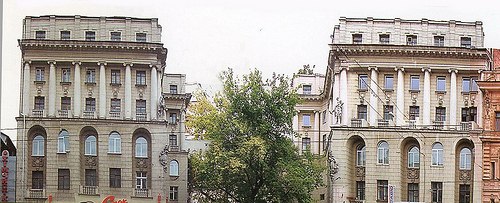
Exterior building of a former income-generating property owned by the “Salamandra” insurance company. <br>(Calle Sumska, 17)
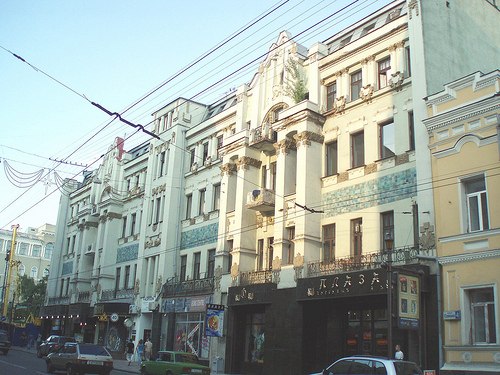
Sumskaya, 6.
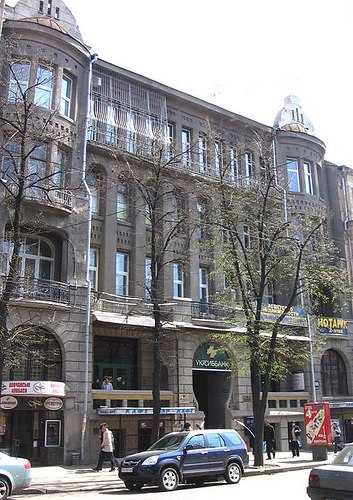
```--- El antiguo edificio de apartamentos residenciales Lando-Bezverkhov.<br>(Arqu. Ginzburg A.M. (1906).)
Artículos recomendados



Más galerías
- Biblioteca Pública<br>(Biblioteca Estatal de Jarkiv V. G. Korolenko)
- Exterior building of a former income-generating property owned by the “Salamandra” insurance company. <br>(Calle Sumska, 17)
- Sumskaya, 6.
- ```--- El antiguo edificio de apartamentos residenciales Lando-Bezverkhov.<br>(Arqu. Ginzburg A.M. (1906).)
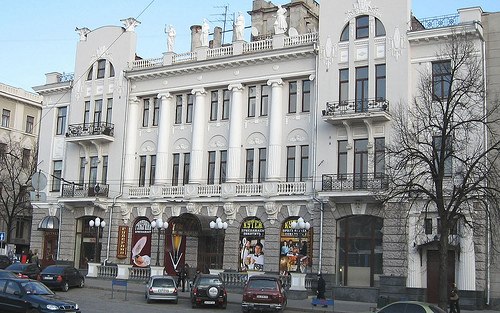 Antiguo Edificio Residencial Aladín (Calle Sumskaya, 44).
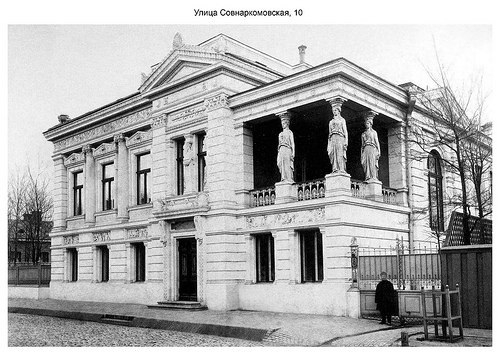 Casa de los Científicos (Sovnarkomovskaya, 10).
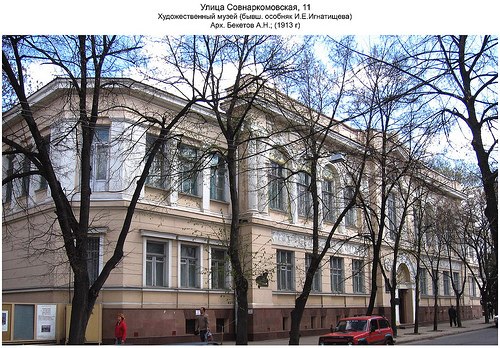 Sovnarkomovskaya, 11.
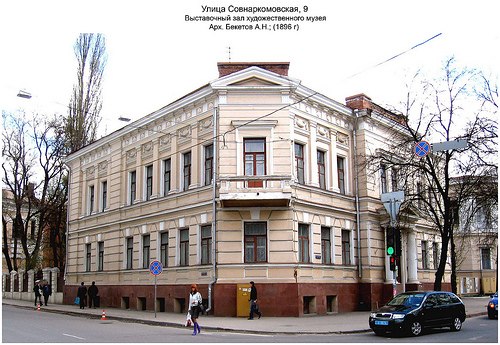 calle Sóvnarkomóvskaya y Chernyshevsky, número 18.
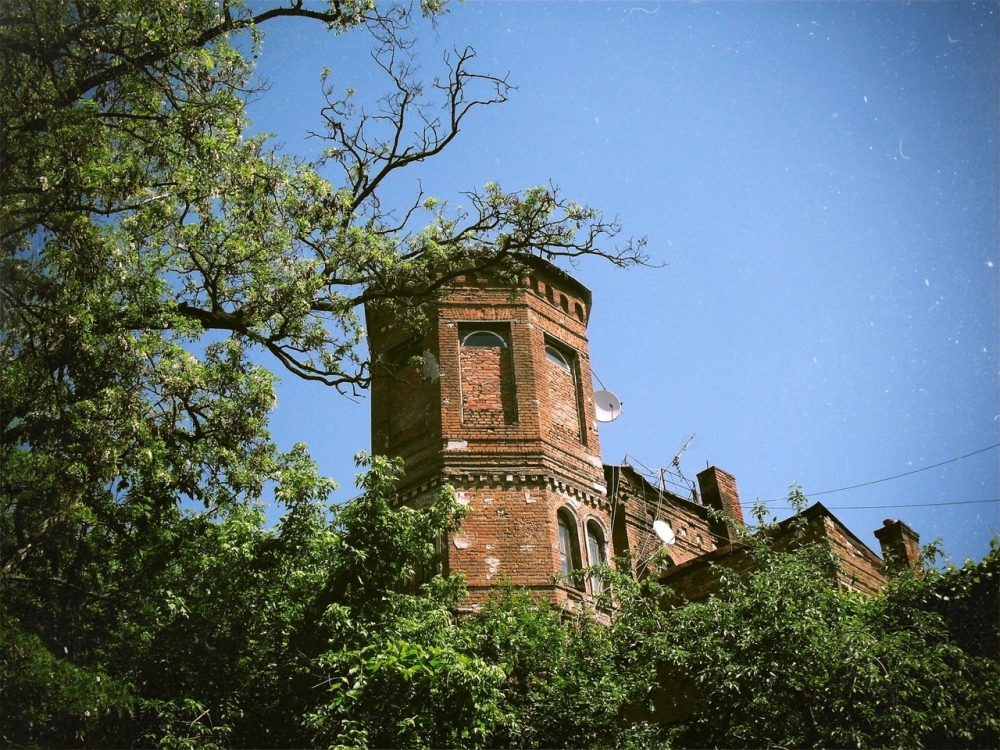 Los patios de Járkov albergan numerosas casas y lugares de interés. Uno de ellos se encuentra en el callejón Sammerovskiy. Este cruce se encuentra entre el callejón Kравцов y, aproximadamente en el medio, entre las calles Klochkovskaya y Rymarskaya. Fue fundado…
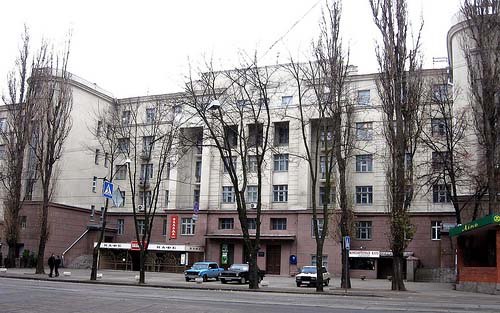 El pueblo universitario “Gigante”
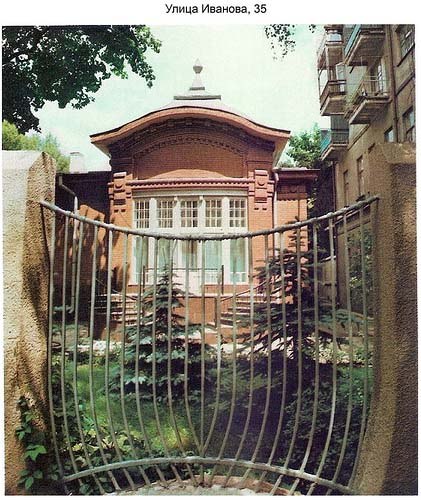 Calle Ivánova 35
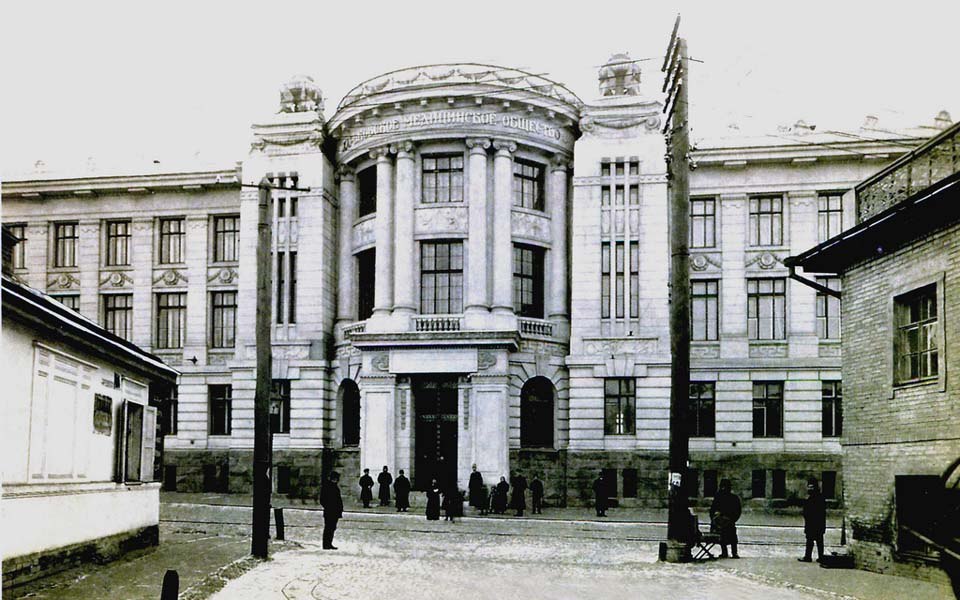 Púshkinskaya 16