Болеслав Георgiiewicz Michalowski8 Fotos
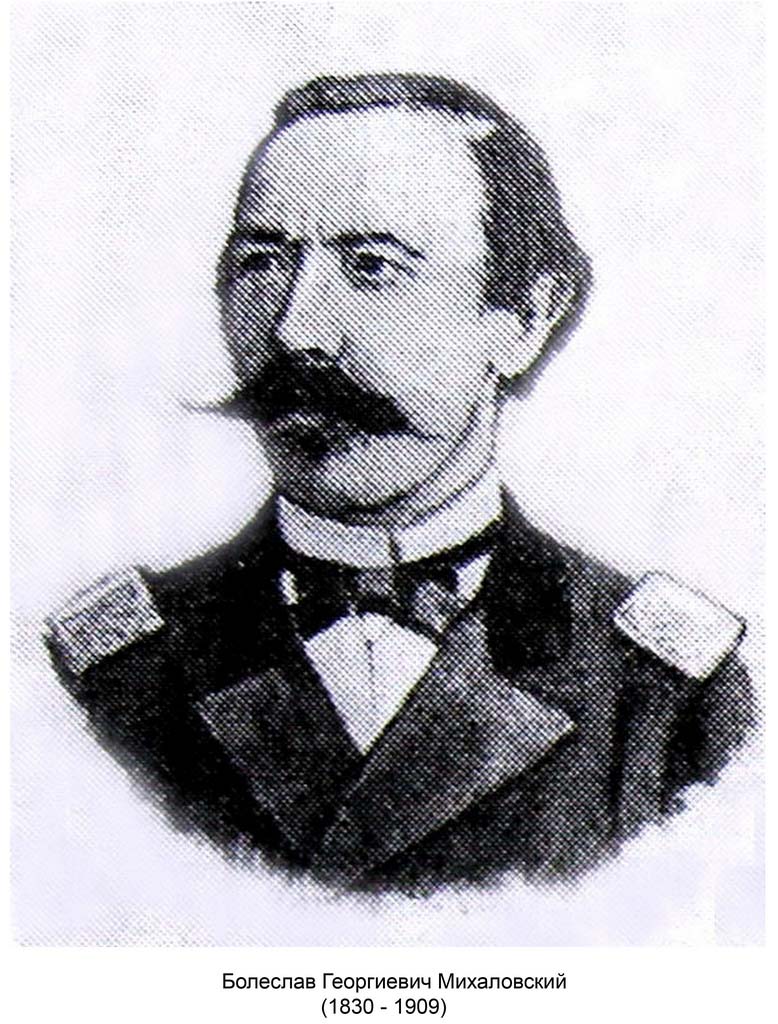
Boleslav Georgievich Michalovsky was born in 1830 in Vilnius, where he attended a gymnasium before graduating with honors from the construction school in St. Petersburg in 1849. His name is inscribed on the marble plaque of the school (now part of the Leningrad Institute of Civil Engineering and Architecture).
\n\nAfter receiving an assignment to work at the Tver Governorate Construction and Road Commission, he successfully oversaw the construction of bridges, roads, and various buildings in Tver and other cities for 12 years. In 1862, he was transferred to Poltava, where he held positions as governorial architect and then governorial engineer for 10 years, continuing to design and build structures. For his original bridge design, he was awarded the title of Engineer-Architect; his competition-winning design for a five-spired church in Romny also received recognition.
\n\nIn 1872, Michalovsky was appointed city engineer in Vladimir, but soon after he was transferred to work at the Management Board of the Kharkov Nikolaev Railway. For this experienced forty-four-year-old Engineer-Architect, a new and final stage of his life and career began in Kharkov.
\n\nIn 1874, the Kharkov City Duma invited him to take on the position of city engineer, which he held for 35 years. His work was exceptionally diverse: under his supervision, seven wooden bridges and one iron bridge were built over the Kharkov and Lopan rivers; water supply systems were constructed, horse-drawn railways were laid, streets and sidewalks were paved. However, his main focus was on designing public, residential, and industrial buildings for both institutional and private clients.
\n\nAdhering to the architectural style known as Eclecticism, which proponents viewed as “a style of intelligent choice suited to the nature of the task at hand,” Michalovsky preferred the compositional techniques and architectural forms of the French Renaissance of the 16th century when tackling contemporary design challenges. He also incorporated motifs from other historical styles. The facades of his buildings often featured multiple layers of ornamental elements, rich reliefs, and various decorative details such as rustication, cornices, pediments, and domes.
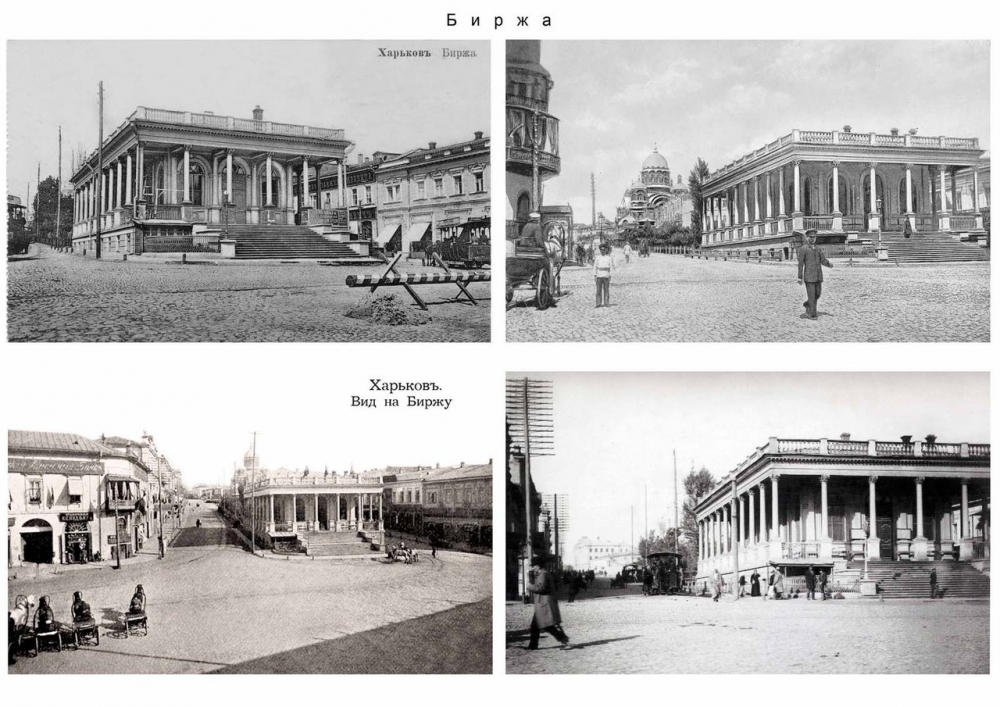
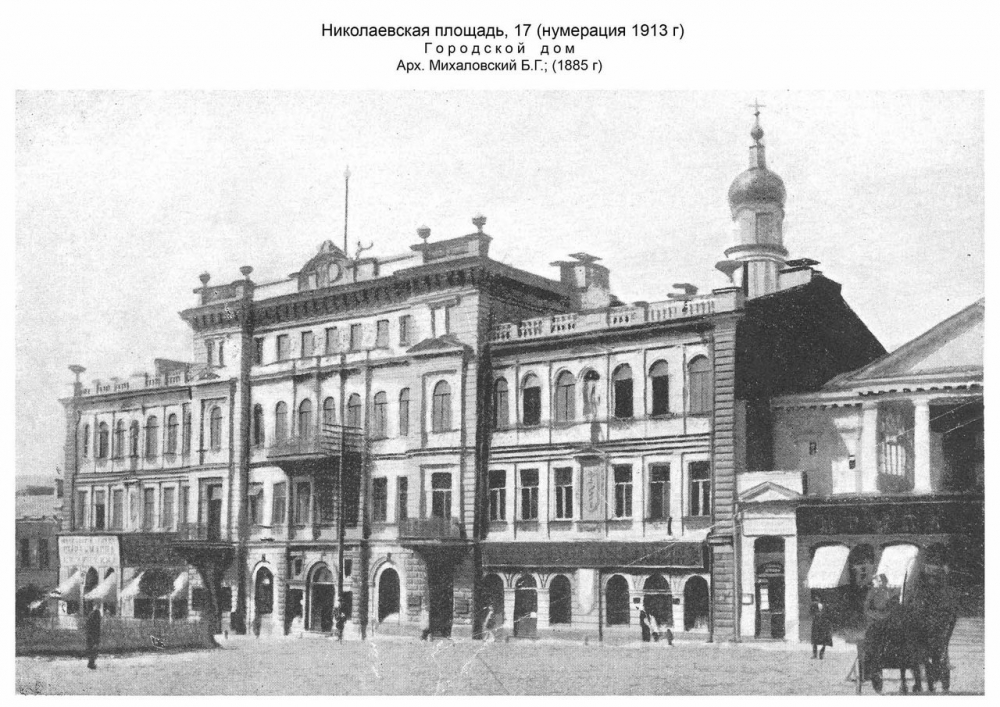
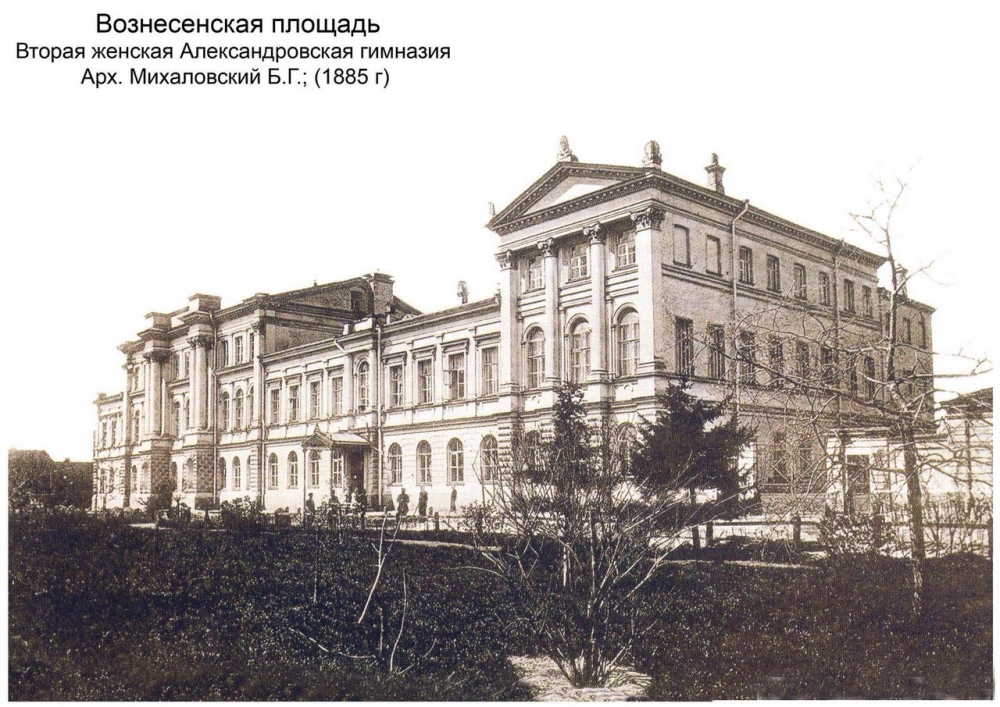
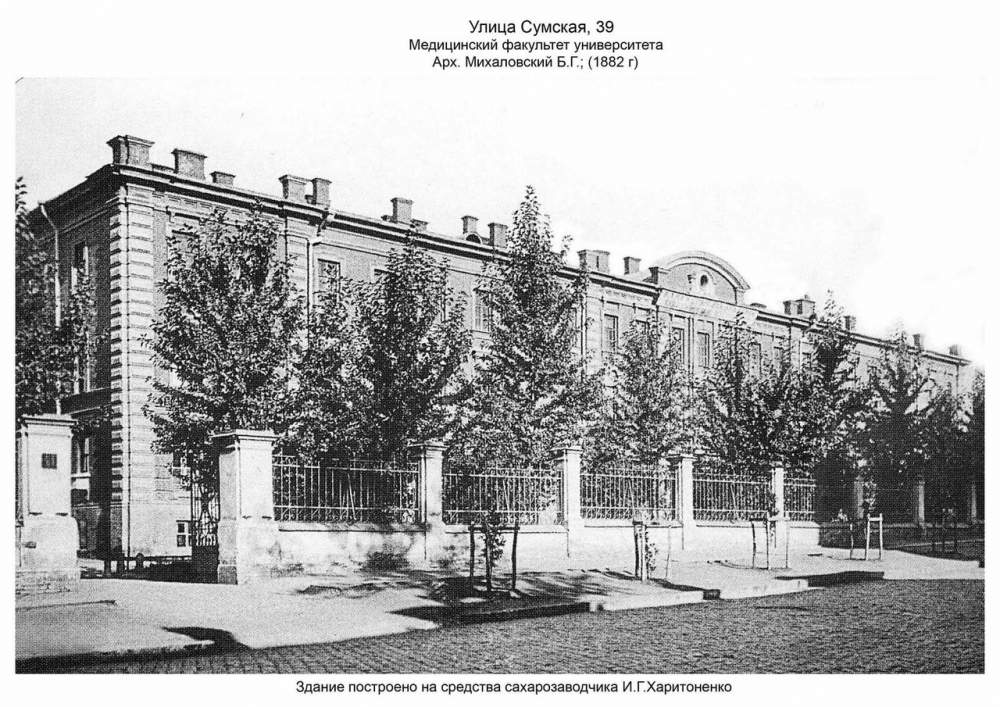
\n\nMany of Michalovsky’s works include the City Hall building (1883–1885), which was integrated into the modern City Council building during a major renovation; and the Stock Exchange building, designed to resemble an ancient temple, which was demolished in 1928 during the construction of the tram line on Soviet Ukraine Square. The Second Women’s Gymnasium building on Feierbach Square was also destroyed during the war and replaced by the HIIT campus. On Sumskaya Street, a large student residence built with the support of patron I.G. Haritonenko housed the Medical Institute; this building too was destroyed in the war.
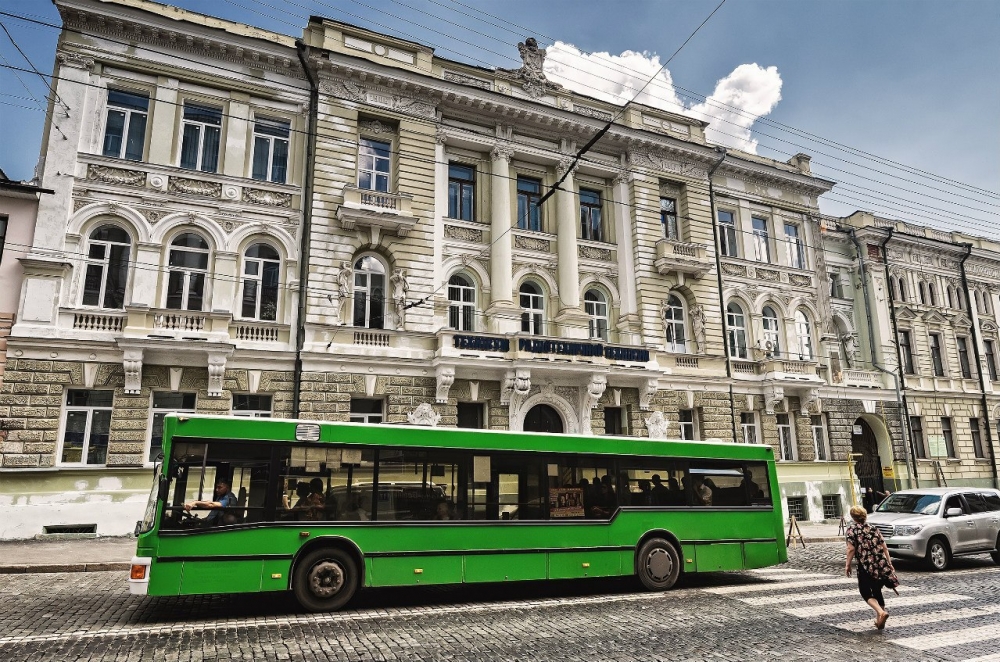
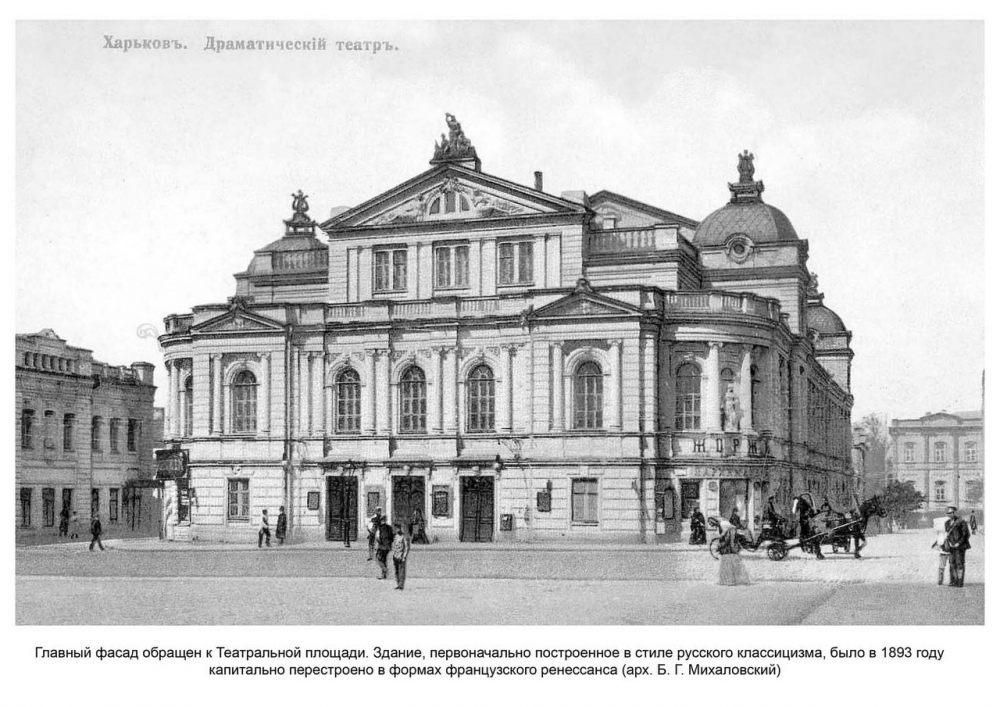
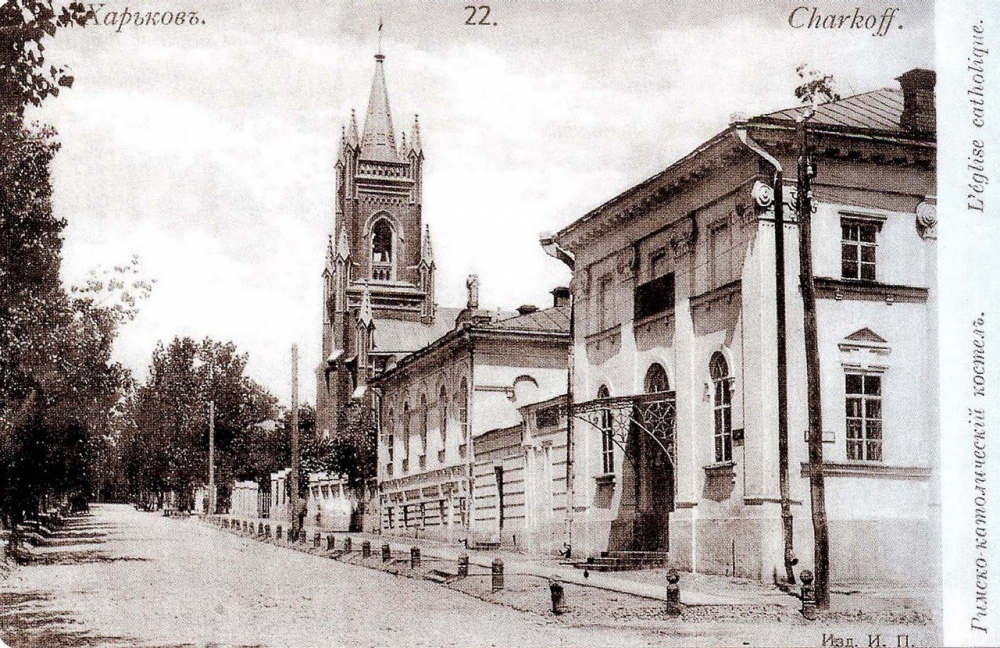
\n\nTheater buildings that Michalovsky played a key role in designing include the opera house’s grand concert hall, added to the Commercial Club building on Rymarskaya Street in 1884–1885; and the Dramatic Theater, which was renovated in 1900 together with architect M.I. Lovcov. They are also notable for their use of Gothic style elements in their design.\n\nIn 1887–1892, Michalovsky built a church in the Gothic style on Gogol Street. Between 1899 and 1902, he designed the southern wing of the South Russia Mining Industrialists’ Council building, which was later expanded to the north by architects S.I. and I.I. Zagoskyne (now the Radio Technology School on Sumskaya Street).
\n\nIn 1900, together with architect M.I. Lovcov, he renovated and expanded the so-called Brotherhood House at the corner of Soviet Ukraine Square and Moskovsky Prospect.
\n\nFrom 1874 to 1893, Michalovsky taught Construction Arts and Geodesy at the Kharkov Real School. He also published a brochure and several articles in newspapers on urban planning issues. In 1904, he was elected chairman of the architecture department of the Kharkov branch of the Russian Technical Society.
\n\nThroughout his life, Michalovsky was known for his integrity, diligence, hard work, and simplicity, which earned him the respect of his colleagues.
\n\nHe had a brother, Vladislav Georgievich (1831–1881), who was also an architect, and a son, Joseph Boleslavovich (1864–1939), who was a civil engineer and professor at the Leningrad Institute of Civil Engineering and Architecture. He authored the influential scientific work “Theory of Classical Architectural Forms,” whose four editions published between 1916 and 1939 remained fundamental references in this field.
\n\nThe final request in Michalovsky’s letter proved prophetic: although the Kharkov City Duma approved his request and granted him a pension of 2,000 rubles per year, he did not burden the city finances. He passed away suddenly on March 22, 1909, and a detailed obituary was published in the Kharkov City Duma’s newspaper. A portrait of him was displayed in the City Council hall, and a scholarship named after him was established at the Kharkov Trade School.\\n\nHis gradual disappearance from public memory was interrupted by a small exhibition organized in the Kharkov Architects’ House in 1981, and this article—the first publication in eighty years dedicated to remembering this great architect of old Kharkov—marked the beginning of a new effort to preserve his legacy.
Finden Sie die besten Fachleute für Ihr Projekt
Reparatur-, Bau- und Renovierungsspezialisten stehen Ihnen jetzt zur Verfügung
Empfohlene Galerien
Empfohlene Artikel



Mehr Galerien
 Blaue Lagune, Island
 China, Hongkong
 Debüt I (Opening I)
 Cocktail Doralito
 Vanille-Milchshake mit dunkler Schokolade
 Alice aus Dallas (Alice aus Dallas)
 Rezept zur Zubereitung des alkoholfreien Cocktails Bora Bora
 Equator (Deutsch: Äquator)
 Papaya Smash
 Hervorragender Manhattan
 Gurken-Tee
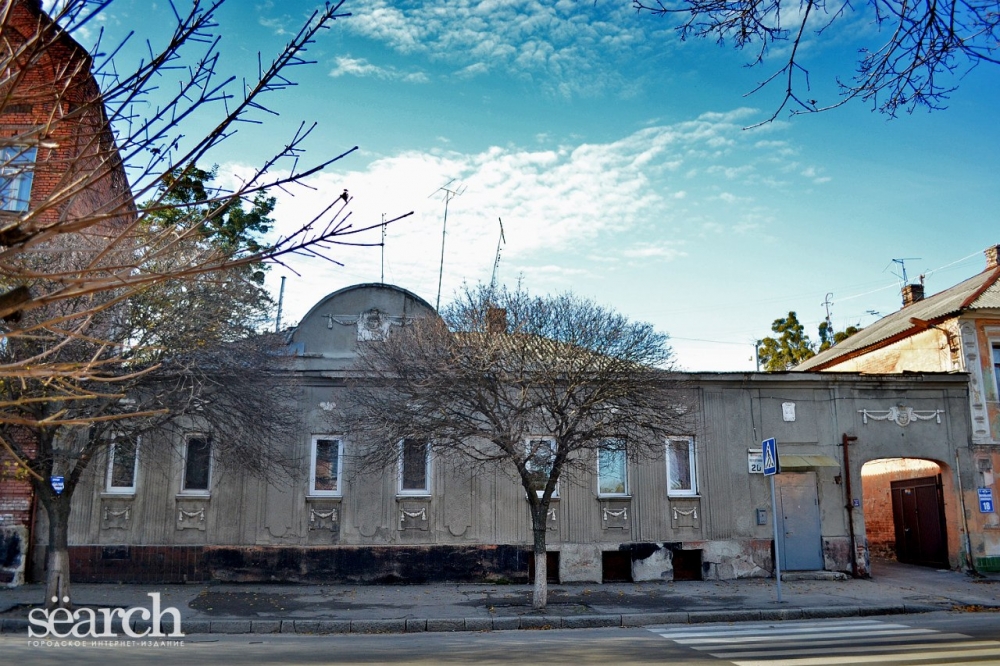 Haus Nr. 20 in der Moskalewskaja-Straße,<br>heute Oktjabrskaja-Revolutionssstraße