Quasars10 Fotos
Quasars are among the most distant celestial objects that can be observed from Earth. Due to their incredible luminosity, they can be seen even at distances of 10 billion light-years away. What is most astonishing about these objects is that, despite their small size, they release an enormous amount of energy in all areas of the electromagnetic spectrum, especially in the infrared range.
The term “quasar” originates from the phrase “QUAsi stellAR”, which means “pseudostellar”.
When observed through a telescope, these luminous points may appear to be stars. However, they are not stars at all; rather, they represent pure radio sources of light.
In terms of their properties, these pseudostellar radio sources resemble active galactic nuclei. Many astrophysicists believe that the luminosity of these objects is generated through non-nuclear processes.
The energy emitted by quasars arises from the catastrophic compression occurring within the core of a galaxy.
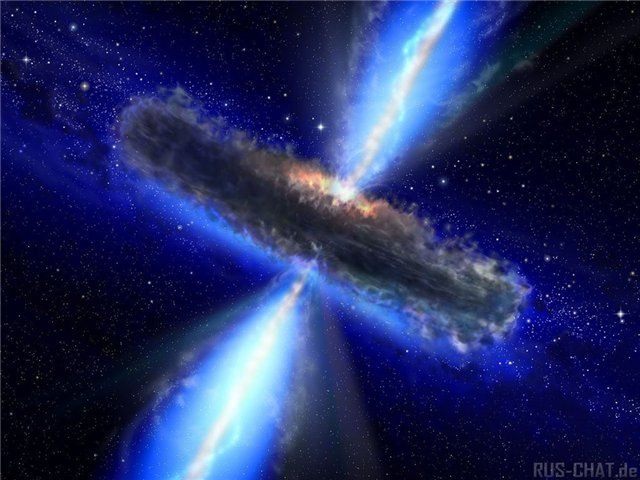
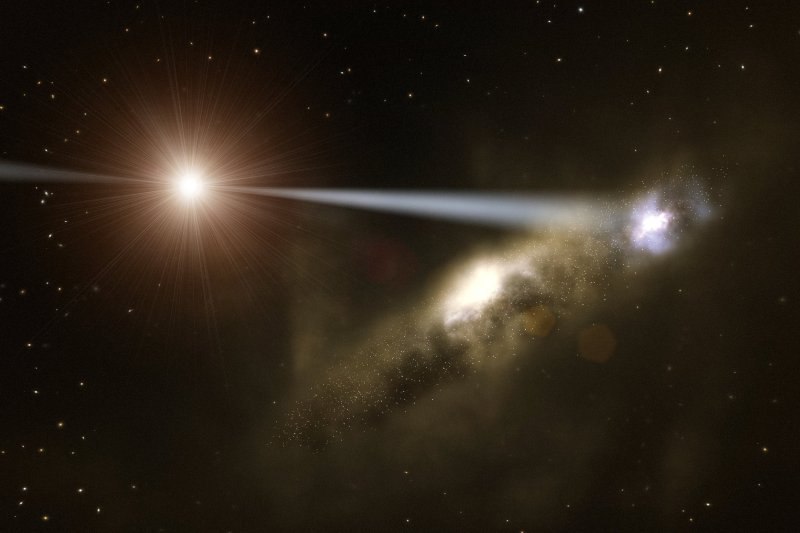
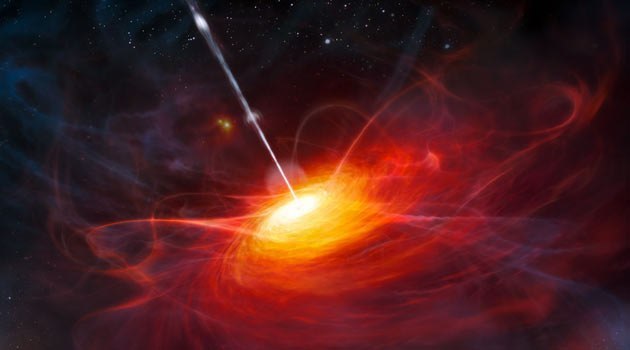
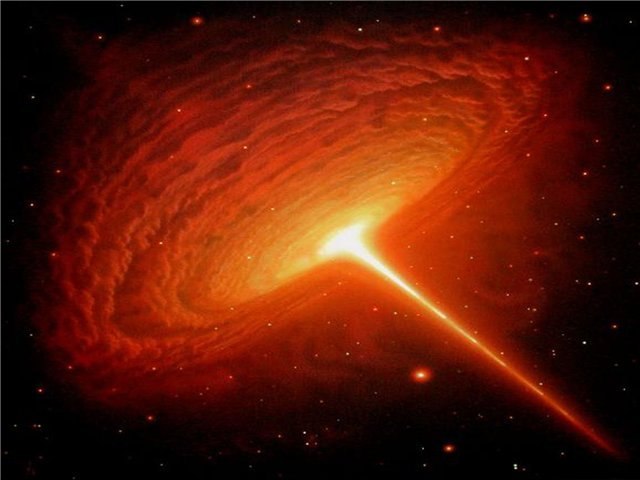
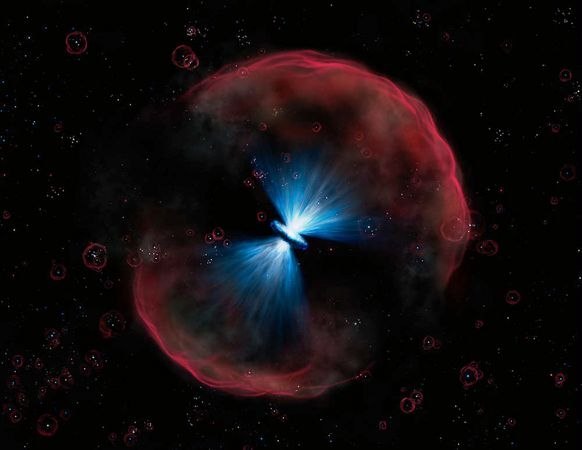
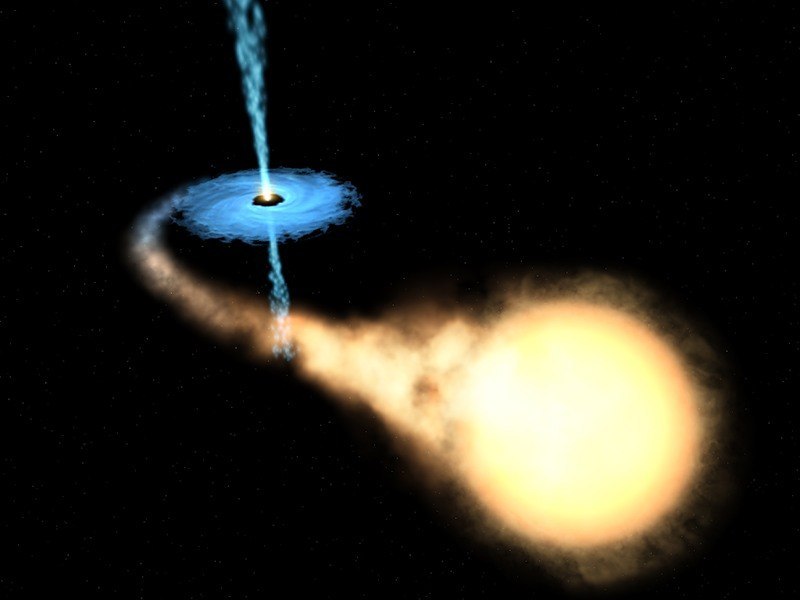
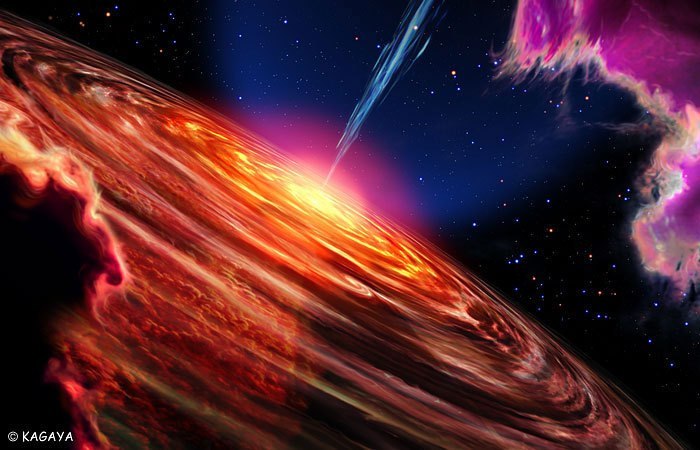
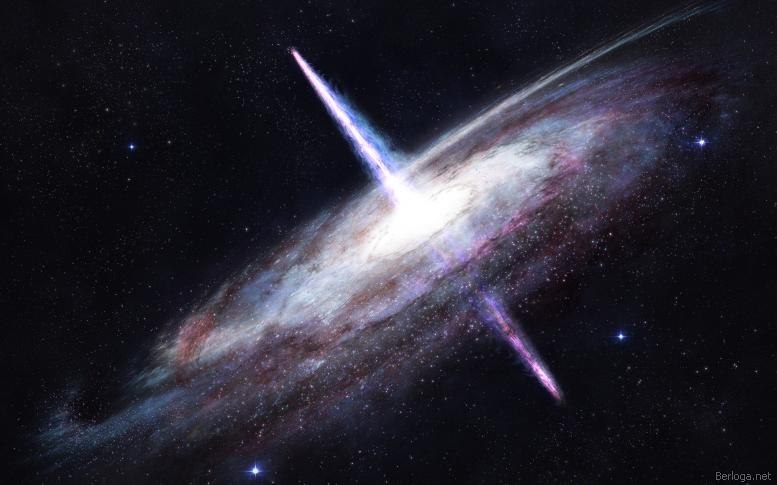
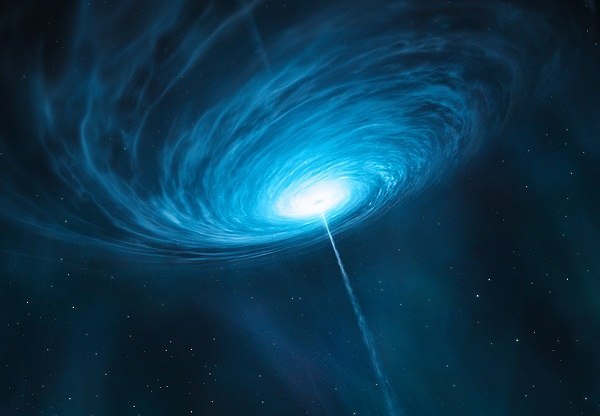
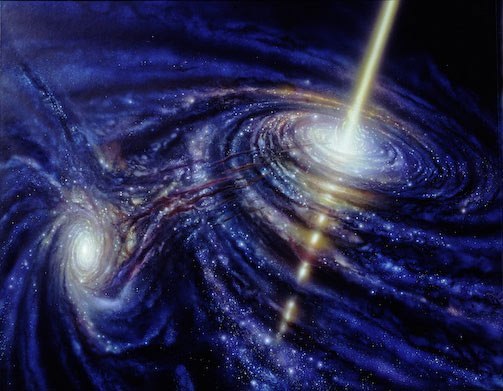
Nevertheless, there are numerous hypotheses and theories regarding the nature of these objects.The most widely accepted theory today holds that a quasar is an extremely massive black hole that sucks in the surrounding space. As particles approach this black hole, they are accelerated and collide with each other, resulting in intense radio emissions. If the black hole also possesses a magnetic field, it will further channel these particles into beams, so-called “jets”, which emanate from the poles of the black hole. In other words, the light that astronomers observe is all that remains of a galaxy that has been destroyed and absorbed by this black hole.
According to other theories, quasars are actually young galaxies whose formation process we are currently observing.Some scientists speculate that a quasar could be a young galaxy being consumed by a black hole.
In any case, astrophysicists closely link the existence of quasars with the fate of entire galaxies.
<Therefore, encountering a quasar certainly does not bode well… Fortunately, the nearest one to us, ZS 273, is located at a distance of 2 billion light-years away.
As mentioned earlier, quasars are among the most distant and ancient celestial objects observable from Earth. Thanks to them, we are able to observe the Universe as it existed 2 to 10 billion years ago. The discovery of quasars in 1963 had a profound impact on cosmology and the development of theories concerning the origin of the Universe.
The nature of quasars remains one of the greatest mysteries of the universe.
Finden Sie die besten Fachleute für Ihr Projekt
Reparatur-, Bau- und Renovierungsspezialisten stehen Ihnen jetzt zur Verfügung
Empfohlene Galerien

Sovya Linford und Kristi im neuen Haus

Die „Anatomie der Technik“ des dänischen Illustrators Mads Peitersen

Das Logo der BMW GmbH geht auf ihre „Muttergesellschaft“ Rapp Motorenwerke zurück. Die Segmente des Kreises wurden in Weiß und Blau gehalten, da diese Farben in Bayern, wo die Produktion stattfindet, symbolische Bedeutung haben.

Morgendliche Clubs
Empfohlene Artikel




Mehr Galerien
- Sovya Linford und Kristi im neuen Haus
- Die „Anatomie der Technik“ des dänischen Illustrators Mads Peitersen
- Das Logo der BMW GmbH geht auf ihre „Muttergesellschaft“ Rapp Motorenwerke zurück. Die Segmente des Kreises wurden in Weiß und Blau gehalten, da diese Farben in Bayern, wo die Produktion stattfindet, symbolische Bedeutung haben.
- Morgendliche Clubs
 Die kleinen Menschen, die in dieser faszinnenverdeckenden Welt der Nahrung leben.
 Freizeittauchen (Leisure dive) – Eine neue Unterhaltungsmform, die von der langweiligen Jugend in Großbritannien erfunden wurde.
 German:
 „Elixir der Jugend“
 Graffiti in the Alien Zone
 Christopher S
 Мелитон Кантария
 Peter Karl Fabergé wurde am 30. Mai 1846 in Sankt Petersburg geboren. Sein Vater war ein bescheidener Juwelier, der sein eigenes Geschäft betrieb. Schon in jungem Alter zeigte das Kind künstlerische Begabungen sowie ein außergewöhnliches Interesse an der Kunst der Juwelerei.