Scythian mound Oguz
Articles
Let’s get to know Ukraine!

Scythian mound Oguz

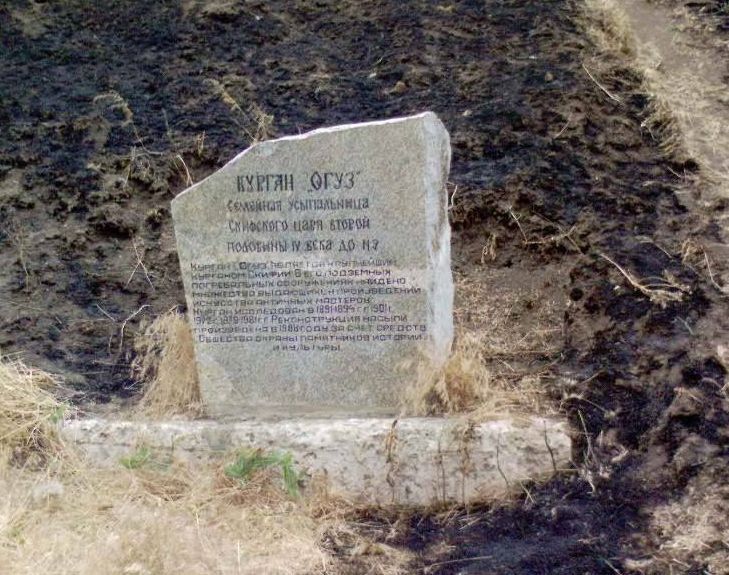
On the ground there are many places that store secrets of ancient times. One of them is the Scythian mound "Oguz", the largest in the Kherson region and in the Black Sea steppe. It dates from the 4th century BC. According to research, this mound is probably the burial vault of the heir to the Scythian king, Atheus.

Archaeological excavations of the mound began as early as the end of the 19th century. At that time the height of the mound was 20 m, and in the circumference it was more than 380 m. In the center of it found a giant pit more than 6 m deep and at the bottom of its crypt tomb. After studying the method of its construction, the scientists came to the conclusion that Greek masters were working here, who were invited to build the royal burial vault. Together with a high representative of the nobility, the guard and servants were buried. In the barrow were found weapons, ornaments, the grave of horses in precious harness. In the northern niche, a woman's burial was discovered, in the western niche a teenager and an adult.

Unfortunately, not all the treasures that he kept, became the property of science and history. After all, after hearing about the jewelry found, black archeologists have already reached the beginning of the 20th century. There is a legend that at each stage of the excavation someone was injured. And there was a rumor: if blood was spilled, surely gold would be found.

Currently, after the excavation, the mound is renewed.

On the straight line with the Oguz mound (which is more than 100 km) there are four more great mounds of the Scythian steppes- Kozel, Solokha, Chertomlyk and located slightly apart Alexandropol.
Scythian mound

According to research, this kurgan is likely the funeral tomb of the Scythian king Ateas' heir. Archaeological excavations of the kurgan began in the late 19th century. At that time, the kurgan stood 20 meters tall and covered an area of over 380 square meters. In its center, a giant pit more than 6 meters deep was discovered, and at its bottom lay a tomb-chamber. By studying how it was constructed, scholars concluded that Greek masters were involved, having been hired to build this royal burial site. Alongside the high-ranking nobleman, a guard and servants were also buried here. Weapons, ornaments, and the grave of horses dressed in precious harnesses were found within the kurgan. In the northern niche, the remains of a woman were discovered; in the western niche, those of a teenager and an adult.

Unfortunately, not all of the treasures contained within it have been preserved for science and history. When news of these discoveries spread, unscrupulous archaeologists flocked to the site as early as the beginning of the 20th century. There is a legend that whenever someone was injured during the excavations, gold would surely be found soon after. Today, after the excavations were completed, the kurgan’s mound has been restored to its original state.

Located directly opposite the Oghuz kurgan (over 100 kilometers away) are four other of the greatest kurgans of the Scythian steppe: Kozel, Solokha, Chernomlyk, and the slightly further-off Alexanderopol.

Scythian Kurgan 'Oghuz'

Recommended articles

Find the Best Professionals for Your Project

Expert repair, construction, and renovation specialists ready to help you right now