At the beginning of the 17th century the city flourished thanks to European merchants and Polish tycoon Adam Kalinouski. At the time of Bohdan Khmelnytsky, the city is at the center of the fighting, which led to considerable destruction. But with the advent of the Potocki family, the city receives a second birth, in 1775 Stanislav Pototsky creates a family residence in Tulchin. Intensive development of the city with the participation of famous architects makes the city known throughout Europe, it is called only "Podilsky Versailles".
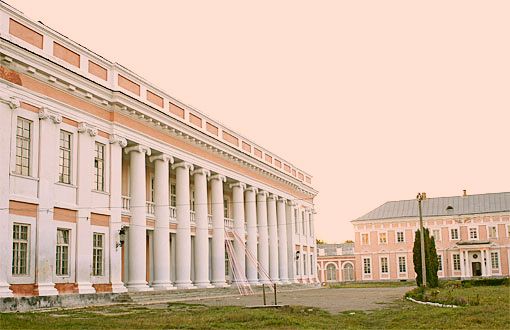
The most significant constructionis the Potocki Palace, built in 1782 in the center of Tulchin according to the project of the French builder Lacroix. The palace consists of the main building and two side wings connected by galleries. In the side buildings there were a theater and an arena, but, unfortunately, at the beginning of the 20th century everything was destroyed and rebuilt. Since 1975, the restoration of the palace has begun, which continues to this day. The landscaped park in English style, called "Good", was completely destroyed.
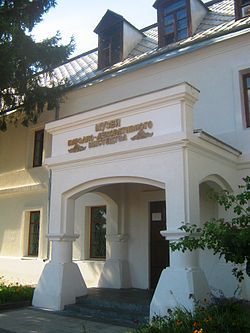
There is another Potocki palace - Small, which is located on Lenin Street. In it from 1796 to 1797 the headquarters of Suvorov was located. It was here that the famous treatise "The Science of Victory" was written. In the center of the city a monument to a well-known commander is erected.
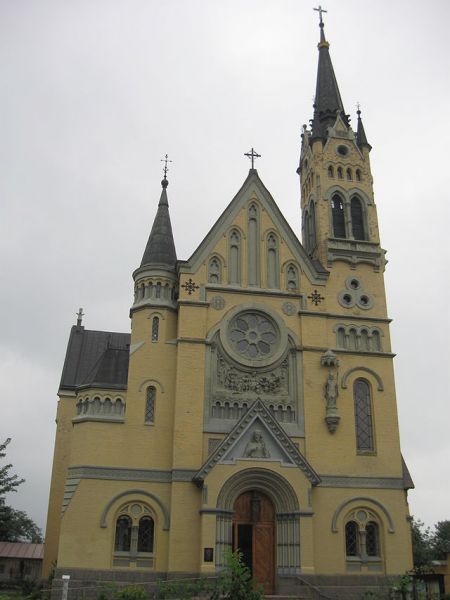
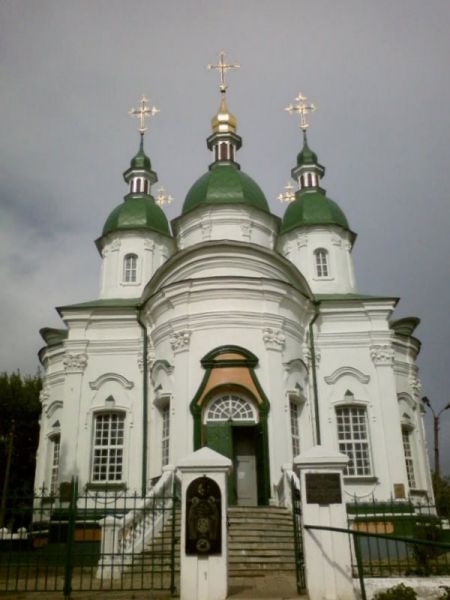
Opposite the main palace is the former CatholicDominican Church, built on the means of Potocki. Its construction lasted from 1786 to 1817. According to the idea of English architects, the church was supposed to resemble St. Peter's Cathedral in Rome. Since 1832, the church has moved to the Orthodox Church, now it houses the Church of the Nativity of Christ.
The city of Tulchin is rich not only with architectural monuments, but also with famous peoplewho lived and visited the city. This is the head of the Southern Society of the Decembrists P. Pestel, the Russian poet A. Pushkin, the Ukrainian writer I. Kotlyarevsky, the Ukrainian composer N. Leontovich and many others.
In historical objects of Tulchin all the difficult, at times dramatic life of the city is traced, with its ups and downs. People make history, and it depends on us how the descendants will evaluate us.