Baykovo cemetery
Articles
Let’s get to know Ukraine!

Baykovo cemetery

Baykovo cemetery, located in Kiev, deservedly called a museum in the open air. Here outstanding Ukrainians are buried: Pavlo Tichina, Bogdan Stupka, Maria Zankovetskaya, Leonid Bykov, Mikhail Voronin, Nikolai Mozgovoy, Ivan Nechuy-Levitsky Ostap Chernya, Lesya Ukrainka, Nikolai Amosov, Valery Lobanovsky and many others.

Baykovo cemetery, located in Kiev, deservedly called a museum in the open air. Here outstanding Ukrainians are buried: Pavlo Ticina, Bogdan Stupka, Maria Zankovetskaya, Leonid Bykov, Mikhail Voronin, Nikolai Mozgovoy, Ivan Nechuy-Levitsky Ostap Cherry, Lesya Ukrainka, Nikolai Amosov, Valery Lobanovsky and many others.

One of the oldest and, if appropriate, this word, the prestigious cemeteries of the Ukrainian capital was opened in 1831 with the aim of burying exclusively Catholics and Lutherans, but from the end of 1834 it began to bury Orthodox people. The name of the cemetery originatesfrom the name of the hero of the Patriotic War of 1812, General Baykov, who owned the farm, which soon became known as the "Baikov farm"; Later the surname of the general appeared in the name of the nearby mountain and cemetery located on it.

From the very beginning of its existence, Baykovo cemetery was divided into separate parts: Orthodox, Catholic and Lutheran. But if the last two were constantly courted and they looked like neat park areas, then the Orthodox wing was pretty much started up. The reason for this was the poverty of the Orthodox believers of Kiev.

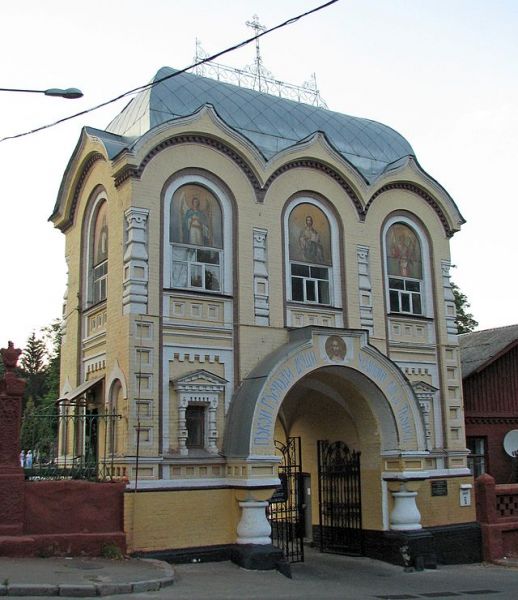
To date, the Baykovoye cemetery area has exceeded 70 hectares. Baikova Street cuts the burial grounds into two parts, unequal in size. Small (it's a southern part) is an old cemetery; large (it's the northern part) - this is a new Baikovo cemetery, enclosed by a stone fence. By the middle of the 19th century a wooden Dmitriev church was built on the Old Cemetery, but later it was dismantled and its existence resembles only a commemorative sign on the altar site. The new church (Voznesenskaya) was built from stone in the New Cemetery in 1889. The sale of land for burial places brought a lot of profit to the cemetery itself, as well as to the church.

In 1975, in the neighborhood of the cemetery was built the only crematorium in Kiev- quite unpleasant in its purpose and fragrant building smell, but at the same time one of the unusual and beautiful architectural buildings of the capital.

The modern Baikovo cemetery is an open-air museum, a memorial complex worth visiting, if only because many prominent artists, doctors, composers, writers and scientists have found peace here.
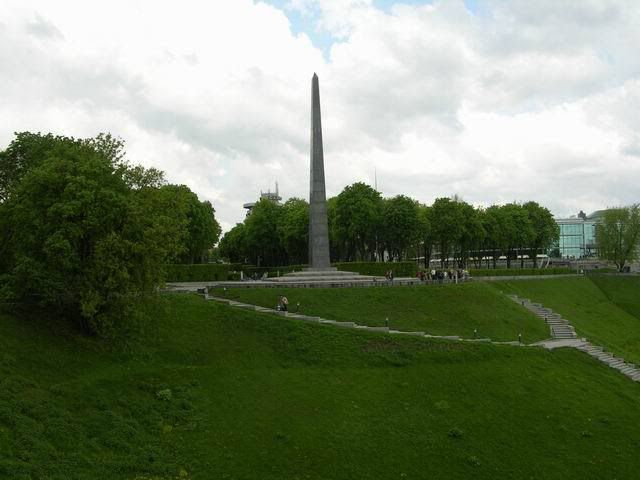
Байково кладбище

Baikovo Cemetery, located in Kiev, is rightfully called an open-air museum. It is the final resting place of many distinguished Ukrainians, including Pavlo Tichyna, Bohdan Stupka, Maria Zankovetska, Leonid Bykov, Mikhail Voronin, Nikolai Mozgovoy, Ivan Nechuy-Levitsky, Ostap Vishnia, Lesa Ukrainka, Nikolai Amosov, Valery Lobanovsky, and many others.

One of the oldest and most prestigious cemeteries in the Ukrainian capital was established in 1831 initially for the burial of Catholics and Lutherans alone. However, starting in late 1834, Orthodox Christians were also allowed to be buried there. The name of the cemetery derives from the surname of General Baikov, a hero of the 1812 War of Independence. He owned a small estate nearby, which later became known as “Baikova’s Estate”; subsequently, his surname was also used in the names of the nearby mountain and the cemetery itself.

From its inception, Baikovo Cemetery was divided into three separate areas: Orthodox, Catholic, and Lutheran. While the latter two were regularly maintained and looked like well-kept parks, the Orthodox section fell into disrepair due to the financial difficulties of the local Orthodox community.

Today, Baikovo Cemetery covers an area of over 70 hectares. Baikova Street divides the cemetery grounds into two parts of unequal size. The smaller southern section is the original old cemetery, while the larger northern part is the new Baikovo Cemetery, surrounded by a stone wall. In the mid-19th century, a wooden Church of St. Dmitry was built in the old cemetery area; however, it was later demolished, and only a memorial marker now remains at its site. The new Church of the Ascension was constructed of stone in 1889 on the new cemetery. The sale of burial plots provided significant revenue for both the cemetery and the local church.

In 1975, the only crematorium in Kiev was built next to the cemetery – a building whose purpose and the unpleasant smells it emitted made it rather unsightly, but which at the same time was one of the most unusual and strikingly beautiful architectural works in the capital.

The modern Bajkovo Cemetery is now an open-air museum and a memorial complex that is worth visiting, not least because many famous artists, doctors, composers, writers, and scientists are buried here.

Bajkovo Cemetery

Recommended articles

Find the Best Professionals for Your Project

Expert repair, construction, and renovation specialists ready to help you right now