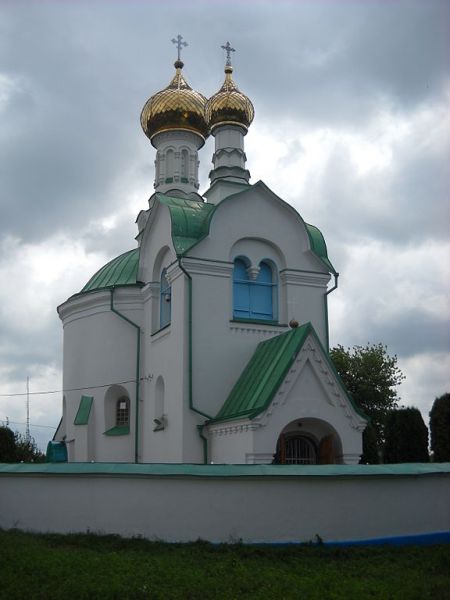
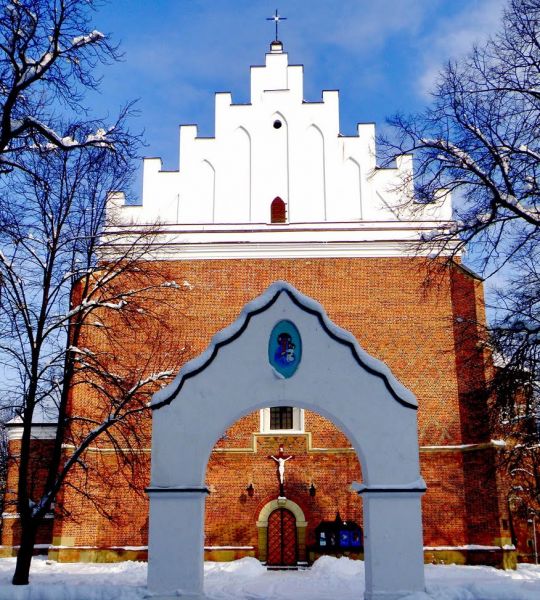
This small church is a unique example of the Orthodox architecture of the13th century.
The age of the church is still a subject of debate among researchers. According to one data, it was erected in 1419, on the other - at the turn of 12-13 centuries. But in the documents for the first time it is mentioned only in 1523.
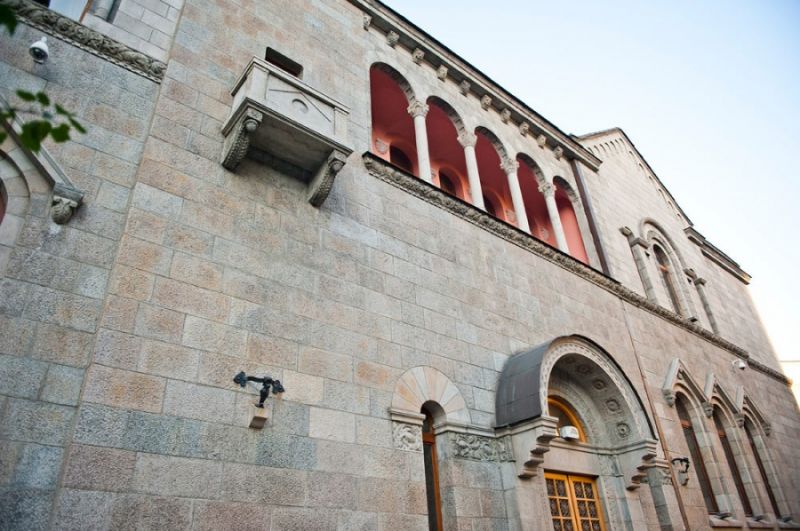
Just a few steps from the rotunda, archaeologists found pink cementand fragments of stone with ornament. Scientists believe that the church was built on the site of an older building and it was its parts that were used in the construction.
There is another version. If you believe the tradition of local residents, the church was built in just one day byPrince Vladimir's squad. In 992, returning from the campaign, he stopped at this place and in gratitude to God for the successful outcome of the battle erected a temple. Material for construction was collected by his entire squad - each warrior was brought along a brick. Named was a church in honor of the Christian name of the prince - St. Basil.
From the end of the 17th century until the middle of the 19th century the church was in desolation. The revival of the church is associated with the reconstruction of 1900-1901. Thanks to the Russian architect K. Kozlov, the rotunda acquired features of the Russian-Byzantine style. The porch was completed, a second tier with bells appeared above the narthex, and above it a small Russian bath was built. Also on the rotunda was built an onion dome on a drum decorated with kokoshnikami. Window openings decorated the image of the moon and the sun, on the north wall appeared a stone portal. All this changed the original appearance of the temple beyond recognition.
The most unusual in the guise of the church - its foundation- remained untouched. It is made in the form of a flower with eight petals. Large rounded projections alternate with small ones and create the illusion of wavy walls.
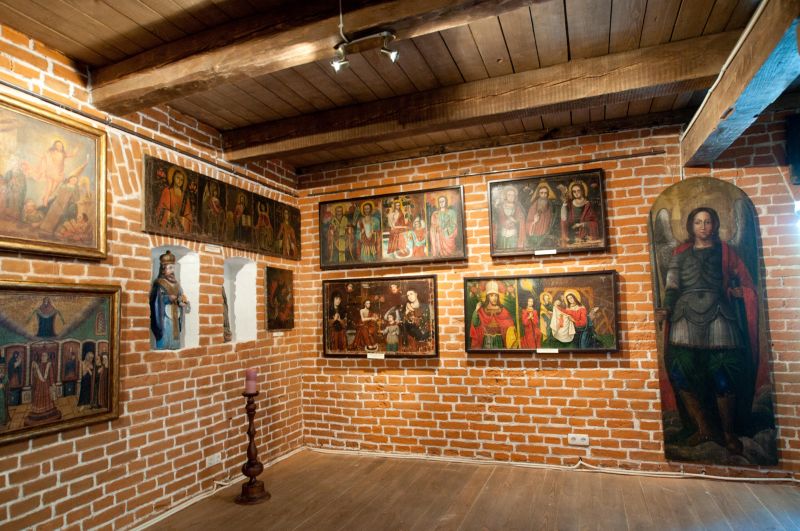
From the ancient property of the church to the present day only the image of the Holy Mother of Godcame, which was brought from Greece, but by whom and when it is unknown.