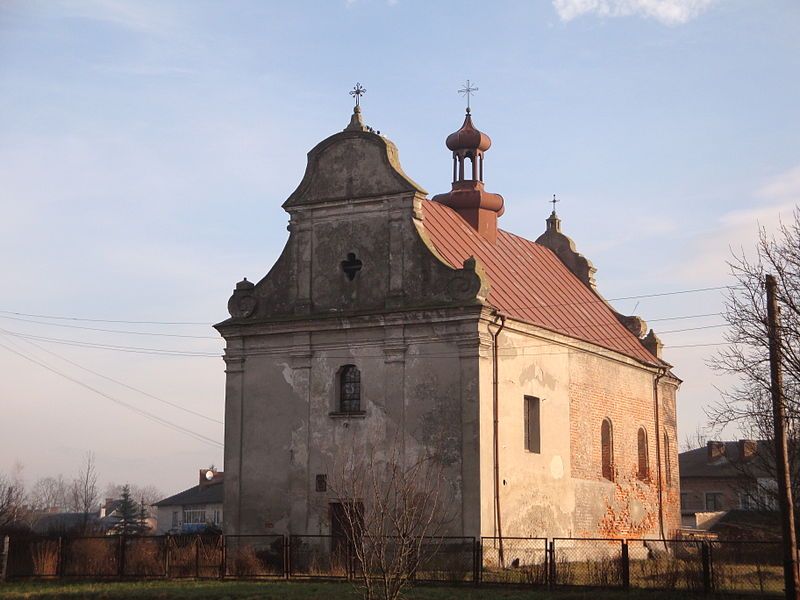
Trinity Church, Lyuboml
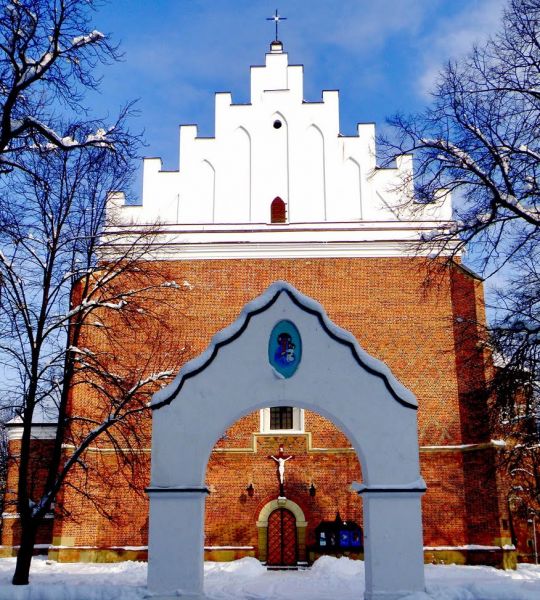
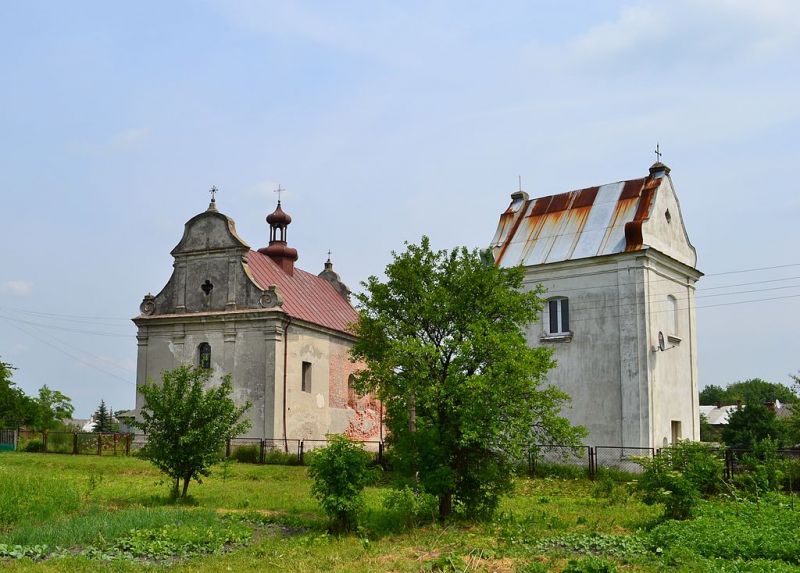
This ancient Roman Catholic church in Volhyniawas built in 1412. The history of his appearance is associated with the name of the Polish king Vladislav II Yagailo, who liked to hunt in the local regions and often visited Lyuboml.
According to legend, returning from a successful battle, the king with his knights was surrounded by Tatars. He began to pray to the Mother of God and ask her for help. The enemy was defeated. As a token of gratitude, Vladislav ordered the construction of a temple on the site of the battle. So on a hill in the northern part of Lubomlya appeared a wooden church of the Holy Trinity.
Three years later he was replaced by a stone church in the Gothic style. The church was part of the fortifications of the city, had simple forms without decorative ornaments.
Because of the numerous fires that often happened in the city with wooden structures, the church was repeatedly rebuilt. In 1731 the church hospital was burnt to ashes. In the 18th century the building acquired baroque features, and next to it was built a belfry with three bells. It is this image that has survived to this day.
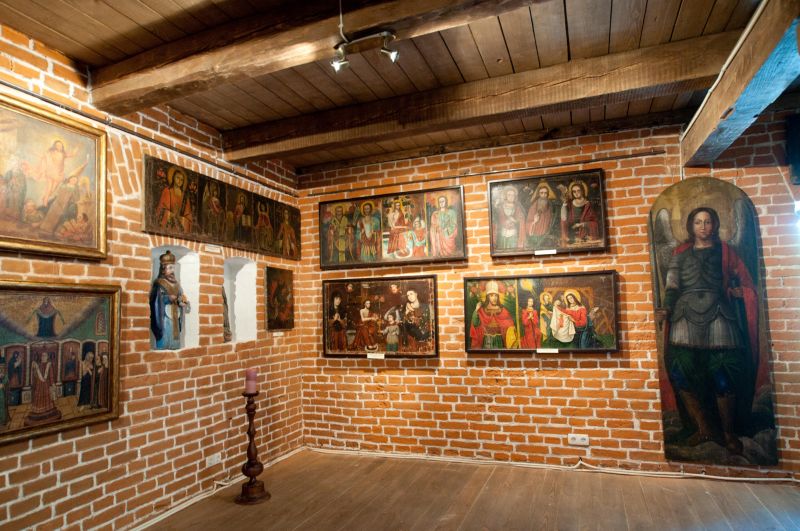
The church survived a lot. In 1944, during the war, the last Polish ksionzu (priest) took to Poland a miraculous image of Our Lady of Lubomlskaya, valuable documents and books. After the war there was a warehouse of salt, then a shop and a sawmill. The remaining books and documents were burnt. An attempt to restore the church in 1967 failed - the masters sacked the temple and left. After them, local residents in search of treasures ravaged the cemeteries of the dungeon, smashed the organ, altar, chapel and bell. Local historian D. Ostapyuk managed to stop barbarism and save some of the things. Today, the surviving values can be seen in the Luboml Museum of Local Lore.
In 1992 the church was returned to Roman Catholics, consecrated and restored. The two-tier belfry of 1764 was converted into a room for ksiondz. The passage leading from it to the temple was closed, windows were inserted into the bell rings. But the salt, which has been stored here for a long time, has so strongly ingrained in the walls that the central part of the building still can not be plastered. A copy of the miraculous icon of Our Lady of Lubomlskaya was placed on the new altar.
On Sundays and great holidays,there are services that are necessarily accompanied by the sounds of the electronic organ.
Find the Best Professionals for Your Project
Expert repair, construction, and renovation specialists ready to help you right now