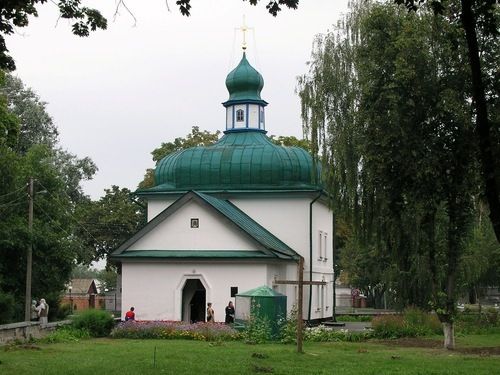
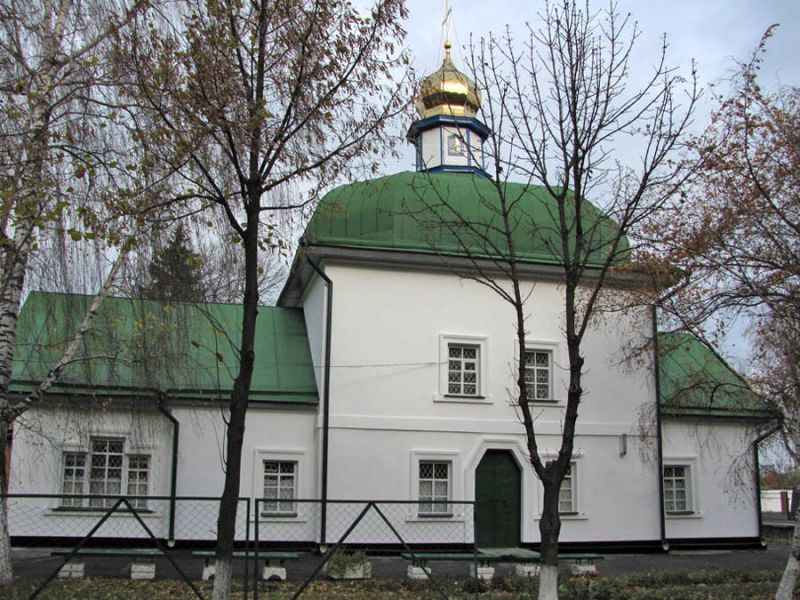
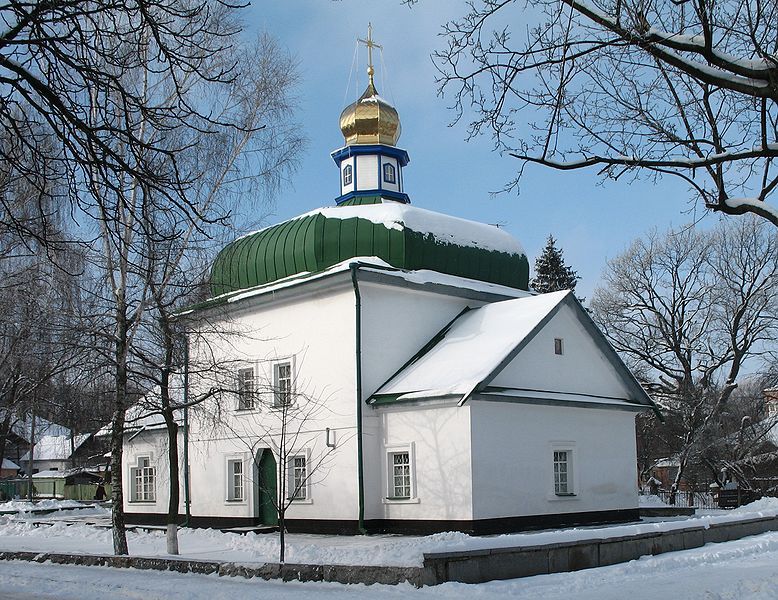
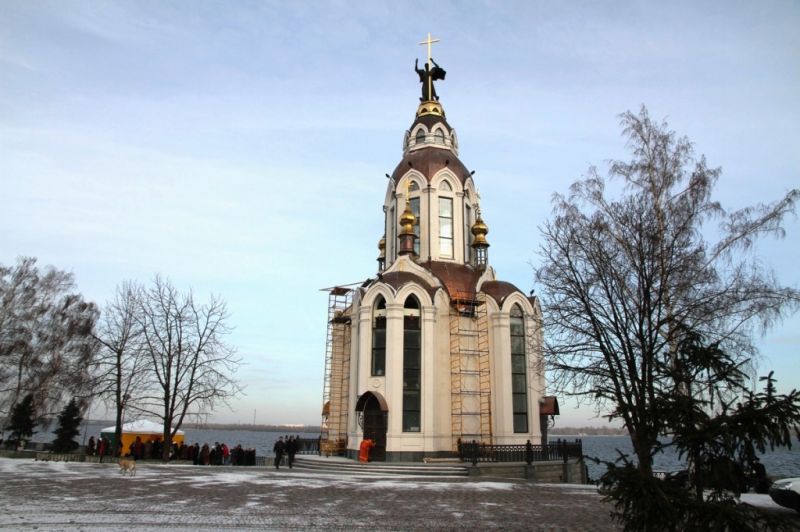
The Spasskaya Church in Poltava is a unique historical and architectural monument made in the Old Russian style. This is one of the oldest temples of Poltava.
Originally the temple was a side chapel of the Transfiguration Church. The first mention of it is recorded in documents that date back to the end of the XVII century.
In 1704, near the Kurilovsky Gate of the Poltava Fortress, the Transfiguration Church burned down. In 1705-1706 the rector I.Svetaylo, with the help of I.Iskra, built on his place a wooden church, made of solid oak beams, the Spassky Church.
For several years the church had to witness the heroic defense of the fortress of Poltava. June 21, 1709, her defenders at the walls of the Church of the Savior took the oath to stand to death and not surrender the city to the enemy. And my vows were adhered to - it is known, than the Poltava battle ended for the Swedes. Subsequently, according to legend, Peter listened to the Thanksgiving Moleben for the victory in the Church of the Savior. And he rested after the battle, he is nearby - this is reminiscent of a monument, a few meters from the church.
Years went by, the wooden church began to deteriorate, it was even partially disassembled through the whith, only the side chapel survived. But, fortunately, thanks to historical merit, the monument was saved. In 1837 Tsarevich Alexander Nikolayevich (future Emperor Alexander II) in order to preserve the church becomes the initiator of the opening of the All-Russian charitable subscription, by raising funds for carrying out repair and restoration works. In addition, the task was to invent such a way of preserving the monument in order to convey it forever.
On the money that he donated for the preservation of the monument, and those that were collected by subscription, in 1845, under the project of Kharkov architect A. Ton, a stone case in the form of a single-domed church was erected over a wooden church.
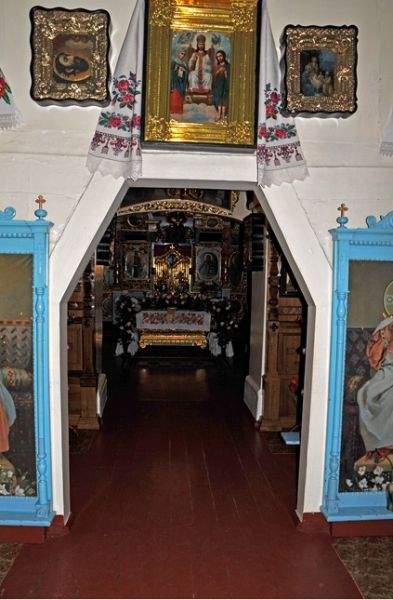
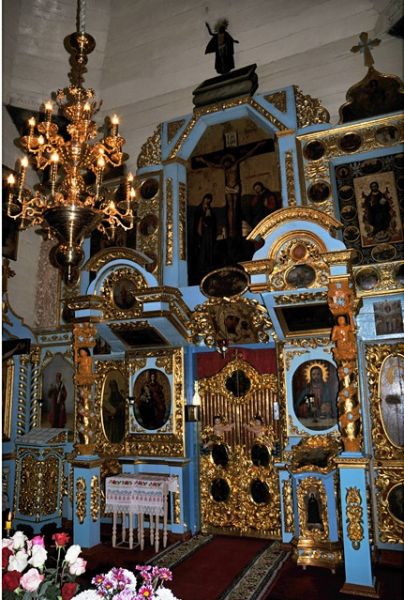
The height of the church is 13.5 m, length - 21 m. Between the outer stone church and the inner wooden one there is a partition, which, depending on the part of the temple, can reach a width of 50 cm to a meter. In the middle of the XIX century, restored the iconostasis, made in the early XVIII century.
In 1847, a stone two-tiered bell tower was erected in front of the western entrance. In 1890, the territory was surrounded by a fence with stone pillars and wrought iron bars. In the Church of the Savior kept the old books, in particular, the Gospel of 1644 and 1698 of the press; "Anthology ..." of the Lviv edition of 1651, etc. Among the icons there were seven, painted in 1676 by the icon painter Gerasim Nemy.
In the 30-ies of XX century. The Church of the Savior is closed, the bell tower was dismantled, and the fence around the church was also dismantled. Resumed its activities in 1945 rots. And in 2009 they restored the bell tower of the Church of the Savior in the same form and in the same year they consecrated it.
The idea of "church in a case" not only allowed to preserve the historical monument, but also gave us a unique "building in the building."