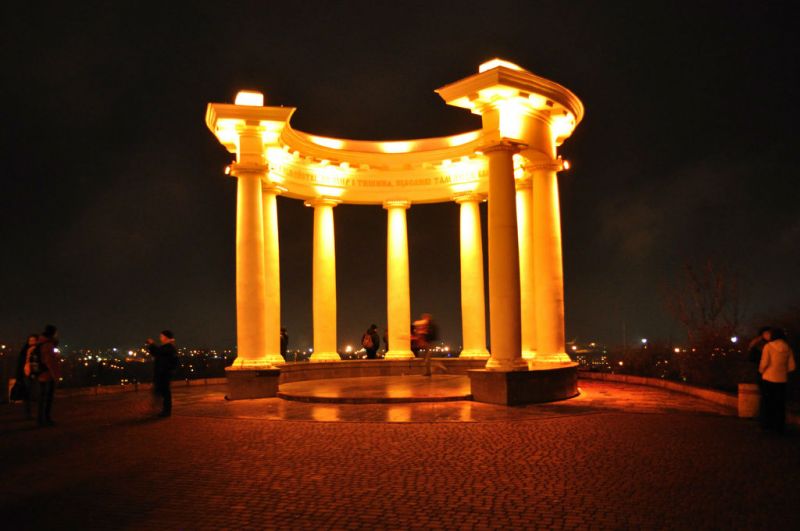
White arbor was opened during the celebration of the 200th anniversary of the Battle of Poltava in 1909.
Articles
Let’s get to know Ukraine!

White arbor was opened during the celebration of the 200th anniversary of the Battle of Poltava in 1909.

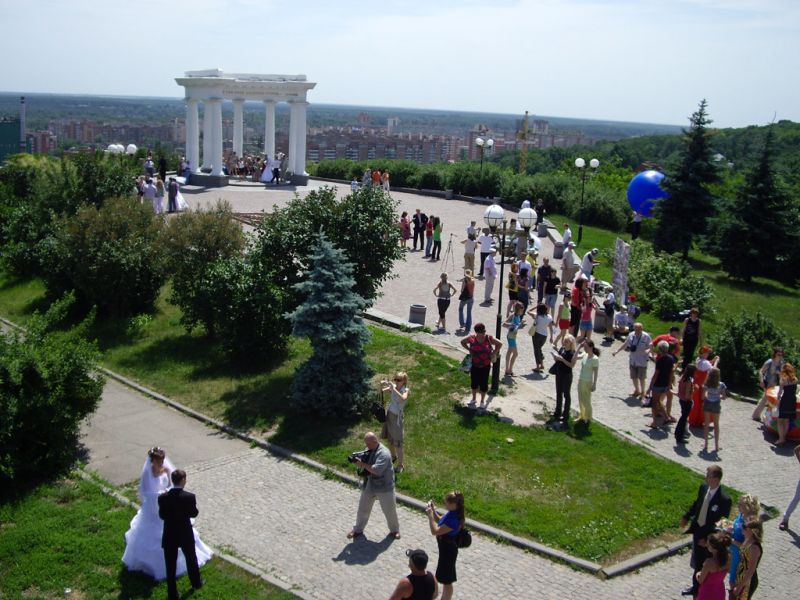
A white gazebo was opened during the celebration of the 200th anniversary of the Battle of Poltava in 1909. It was built on the place where during the Battle of Poltava Podolsky was a guard bastion of the fortress. The fortress had no stone walls and was protected only by steep slopes of the hill on which it was located, earthen ramparts and palisade. During the Northern War, here, next to the bastion was a watchtower, where soldiers of the garrison and residents of the fortress repulsed the attacks of the Swedes.

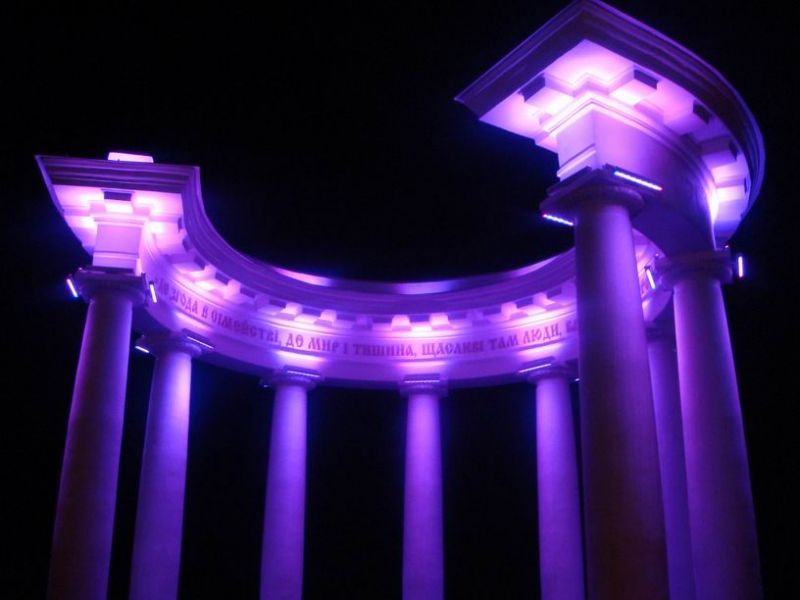
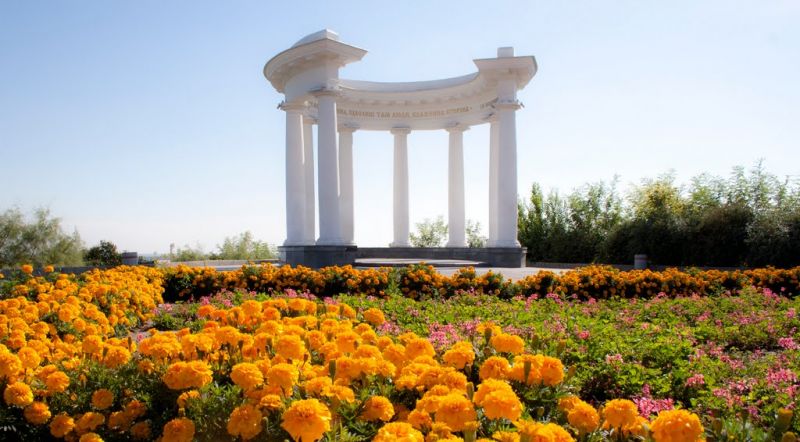
This is a kind of monument - eight columns set in a semicircle, at the top support an openwork wreath, reminiscent of a horseshoe. On the wreath, the inscription is a quote from Natalka Poltavka Kotlyarevsky: - "Where is the agreement in the family where peace and quiet, Happy people there, blessed party." The inscription is inspired by another name of the arbor - "Rotunda of Friendship of Peoples".

The structure reminds townspeople that it was here on the second day after the Battle of Poltava that the town's artisans met Peter I. The non-random and the form of the Gazebo was a horseshoe-shaped one. According to legend, a local blacksmith in this square skillfully shod of a royal horse, lost a horseshoe during the Battle of Poltava. It is this legend that determined the appearance of the structure - the horseshoe curved at its edges to the Assumption Cathedral, placed on the columns of the Doric order.

During the German occupation of Poltava in 1941-1943. the gazebo was destroyed, since an observation artillery point was set up in its place.

In 1954, it was decided to restore the arbor in the same place, and the project of the chief architect of the post-war Poltava LS helped to translate this into reality. Weingort. The horseshoe-shaped colonnade of the Doric order on a stylobate of eight columns of nine meters high reproduced accurately the White gazebo. The new structure received a new name - "Rotunda of Friendship of Peoples" - for the celebration of the 300th anniversary of the reunification of Ukraine with Russia.

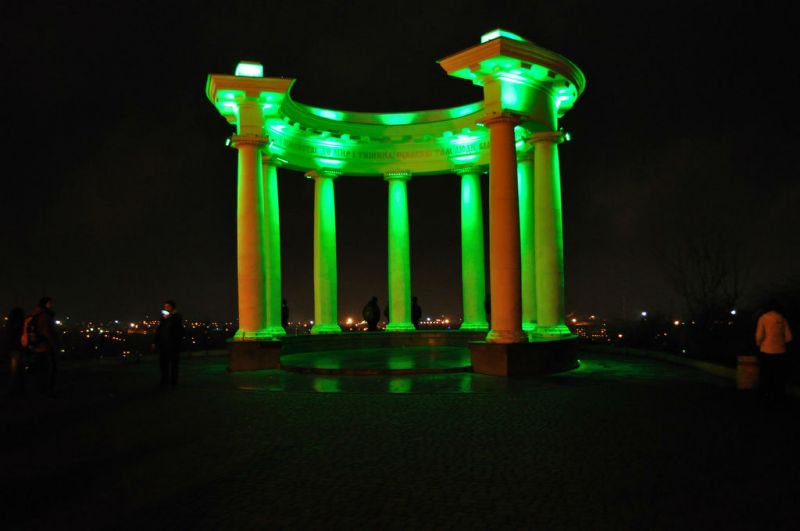
In 2008, by the City Day, the rotunda was equipped with LED linear lamps with an alternation of 256,000 shades. In the evening, when the night lights turn on, a light-sound Fifteen-minute performance begins under the rotunda hourly. This system was developed in the French city of Lyon.

To date, the Rotunda of Friendship of Peoples is an excellent place for recreation, and newlyweds have traditionally been using it as a place for photo sessions.
Белая беседка

Белая беседка

Белая беседка

Белая беседка

Белая беседка

The White Pavilion was opened in 1909 to commemorate the 200th anniversary of the Battle of Poltava. It was constructed on the site where the Podolsk Watchtower of the fortress stood during that battle. The fortress itself had no stone walls and was only protected by the steep slopes of the hill on which it was located, as well as earthen ramparts and a fence. During the Northern War, a watchtower was also built nearby, where the garrison soldiers and fortress residents defended against Swedish attacks.

This structure serves as a unique monument: eight columns arranged in a semicircle support an ornate crown shaped like a horseshoe. On the crown is an inscription, a quote from Natalia Poltavka Kotliarevskaia: “Where there is harmony within a family, where there is peace and quiet, people there are happy; it is a blessed place.” This inscription gives the pavilion its alternative name: “Rotunda of Friendship among Nations.”

The design of this structure reminds citizens that it was here, on the second day after the Battle of Poltava, that the city’s craftsmen met with Peter I. The horseshoe-shaped design is not accidental. According to legend, a local blacksmith had carefully shod the tsar’s horse on this very square but lost one of the horseshoes during the battle. It is this legend that explains the structure’s unique shape: the horseshoe-shaped element is oriented toward the Uspensky Cathedral and is supported by columns in the Doric order.

During the German occupation of Poltava from 1941 to 1943, the pavilion was destroyed; its site was used to establish an artillery observation post.

In 1954, it was decided to restore the pavilion in its original location, and this initiative was realized thanks to the design by L.S. Vayngort, the chief architect of post-war Poltava. The semicircular colonnade in the Doric order, consisting of eight nine-meter-tall columns on a stylobate, accurately reproduced the original White Pavilion. The new structure was given a new name: “Rotunda of Friendship among Nations,” to commemorate the 300th anniversary of Ukraine’s reunification with Russia.

In 2008, on City Day, the rotunda was equipped with LED linear lights that could display 256,000 different colors. In the evening, when the nighttime lighting system was activated, a fifteen-minute light and sound show began beneath the rotunda every hour. This system was developed in the French city of Lyon.

Today, the Rotunda of Friendship among Nations is an excellent place for relaxation, and newlyweds often use it as a location for their wedding photos.

White Pavilion

White Pavilion

White Pavilion

White Pavilion

White Pavilion

Recommended articles

Find the Best Professionals for Your Project

Expert repair, construction, and renovation specialists ready to help you right now