Livadia Palace
Articles
Let’s get to know Ukraine!

Livadia Palace

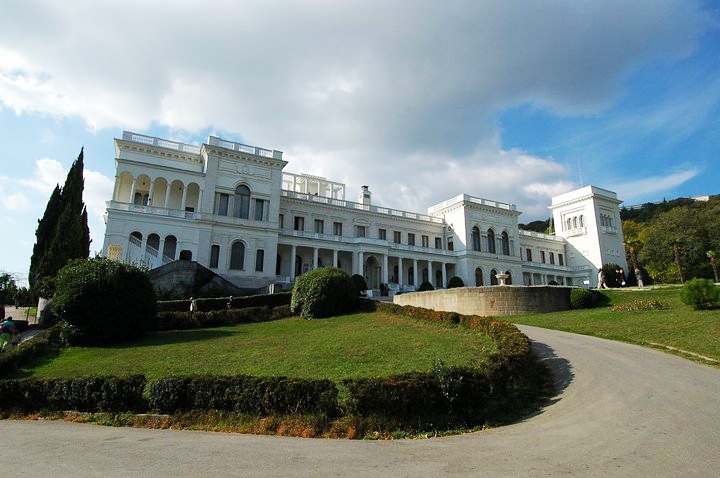
On the southern coast of Crimea in a small town of Livadia is a beautiful snow-white Livadia Palace. The name Livadia comes from the Greek language and means "meadow, glade". In ancient times there were many large glades here.

At the site of Livadia was once a Greek settlement. In the 19th century, the territory of Livadia was purchased by one of the richest magnates of the time, Lev Potocki. On his orders, a large park was broken, an orchard planted, rare plants brought from exotic countries. Later, the Russian Emperor Alexander II bought Livadia for his beloved wife and built a beautiful palace there. Then the palace is inherited by Nicholas II. Thanks to the great talent and knowledge of the different architectural styles of architect Nikolai Krasnov, the palace becomes a real masterpiece of art.

Already from the first minutes this white stone palace will conquer you with its unusual exquisite architecture, the unity of the snow-white construction against the background of the green ancient park. Magnolias, sequoias, blue spruce give this area exotic, and glades, flooded with sunshine, some sort of fabulous. Densely planted trees part, revealing colorful views of the Black Sea coast. You will be filled with feelings of lightness and carefree.

The grand entrance of the majestic palace is decorated with columns of blue and white marble. Russian and Italian masters decorated white columns with fine artistic carvings. Attract attention located near the entrance of huge vases of Ural gems. So you want to look inside and see all the beauty of the interior decoration of this magnificent structure!

Livadia Palace has 58 rooms. Be sure to visit the famous ceremonial White Hall. It was here that the leaders of the three allied states-the United States, the USSR and Great Britain-met at which the conference participants resolved the question of the end of World War II, discussed the principles of policy regarding the post-war system and signed the "Declaration on Liberated Europe." This room completely reflects the atmosphere of the February days of 1945. In the middle is a long table, behind which sat Joseph Stalin, Franklin Roosevelt and Winston Churchill and discussed important issues. On the same floor are the main dining room, lobby, waiting room, the emperor's office and a billiard room. On the second floor you will see the royal family's chambers executed in the Art Nouveau style. To date, they have great artistic value. The walls of the rooms are decorated with paintings by artists Alexander Bernoua and Fedor Volkov. Since that time, the furniture that was made for each room of the palace from the material used to decorate the room has been preserved.

Attracted to attention are two courtyards - the Italian and an Arabic-style courtyard. In the center of the Italian court you will see a small fountain, from which the paths diverge. Interesting sculpture of a mythical creature with a serpent's tail, trunk of a goat and the mouth of a lion. In the Middle Ages, it was believed that the image of such monsters brought happiness to the house, expelled evil spirits and various diseases. It is worth noting that there are many such objects in the palace. Approximately 750 icons decorate the interior.

Near the palace you will see a masterpiece of architecture - Krestovozdvizhenskaya church. It is built in Byzantine style and is carved in wood. Above the entrance is an image of the archangel Gabriel.

Today the Livadia Palace is a famous sanatorium, a rich museum of art and architecture, where you will feel the breath of the past. And strolling along the imperial paths of the old park, you will get unforgettable impressions!

You may also be interested in: the Bakhchsarai Khan Palace.
Ливадийский дворец

Where Livadia is located today, there once was a Greek settlement. In the 19th century, the territory of Livadia was acquired by one of the wealthiest magnates of the time, Lev Pototsky. At his command, a large park was created, a fruit garden was planted, and rare plants were brought in from exotic countries. Later, the Russian Emperor Alexander II purchased Livadia for his beloved wife and had a magnificent palace built there. The palace then passed into the ownership of Nicholas II. Thanks to the great talent and knowledge of various architectural styles of the architect Nikolai Krasnov, the palace became a true masterpiece of art.

From the very first moment, this white-marble palace will captivate you with its unique and exquisite architecture—the striking contrast between the snow-white structure and the green, ancient park. Magnolias, sequoias, and blue pines add an exotic touch to the landscape, while the sunlit meadows exude a sense of fairy-tale charm. The densely planted trees part to reveal stunning views of the Black Sea coast, filling you with a sense of lightness and carefree joy.

The grand entrance to the palace is adorned with columns made of blue-and-white marble. Russian and Italian craftsmen intricately carved these white columns. Nearby, enormous vases filled with Uralian wildflowers draw your attention. You can’t help but want to step inside and see all the beauty of this magnificent interior!

The Livadiya Palace boasts 58 rooms in total. Be sure to visit the famous White Hall, where the leaders of three allied nations—the United States, the Soviet Union, and the United Kingdom—met in February 1945. There, they resolved issues related to the end of World War II, discussed principles for post-war governance, and signed the “Declaration on Liberated Europe.” This hall perfectly recreates the atmosphere of those pivotal days. In the center stands a long table where Joseph Stalin, Franklin Roosevelt, and Winston Churchill sat to discuss important matters. On the same floor, you can find the formal dining room, the lobby, the waiting room, the emperor’s office, and a billiard room. On the second floor, you will see the rooms of the royal family, designed in the Art Nouveau style and of great artistic value today. The walls are adorned with paintings by artists Alexander Bernoua and Fyodor Volkov, and the furniture in each room was custom-made using materials specific to that space.

Two internal courtyards are particularly noteworthy: the Italian Courtyard and the Arabic Courtyard, which features an Eastern-style design. In the center of the Italian Courtyard, there is a small fountain from which paths radiate in all directions. There also stands an interesting sculpture depicting a mythical creature with a serpent’s tail, a goat’s body, and a lion’s head. In the Middle Ages, it was believed that such representations brought good luck, drove away evil spirits, and cured various illnesses. It worth mentioning that there are numerous such artifacts throughout the palace—approximately 750 icons adorn its interior spaces.

Near the palace, you will find another architectural masterpiece: the Church of the Holy Cross. Built in the Byzantine style, it is decorated with intricate wood carvings, and above the entrance is an image of Archangel Gabriel.

Today, the Livadiya Palace serves as a renowned sanatorium and a rich museum of art and architecture. A visit here allows you to experience the spirit of the past, while strolling along the royal paths of the ancient park, you will gain unforgettable memories!

You may also be interested in: The Bachchisaray Khan Palace.

Livadiya Palace

Recommended articles

Find the Best Professionals for Your Project

Expert repair, construction, and renovation specialists ready to help you right now