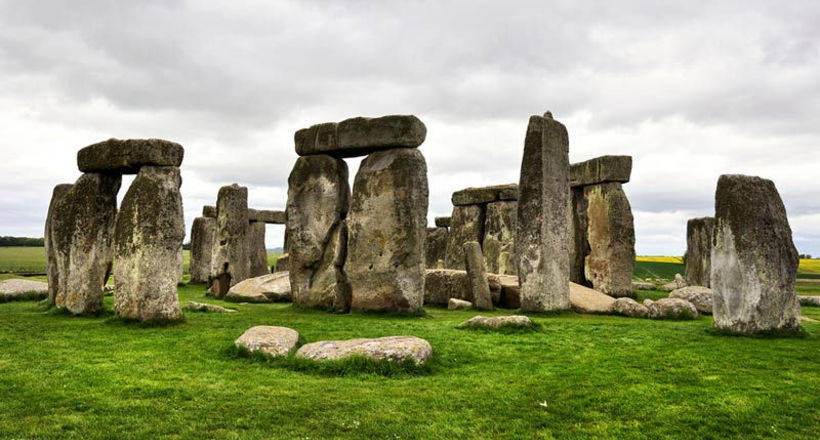
Stonehenge — one of the most mysterious monuments of ancient history. Built around 5000 years ago on a sacred site that has been settled and changed for 10,000 years, it still attracts tourists and scholars from all over the world. How and why was it built? What is this building part of? Let's try to answer this question.
How and why Stonehenge was built
Ice or water
Stonehenge — It is a massive stone monument located on a shallow plain north of the modern city of Salisbury in England. Studies show that the construction was built around 5000? M? 4000 years ago as part of a large sacred landscape that included a massive stone monument 15 times larger than Stonehenge.

Monument consists of stones of two kinds. The largest, known as the "sarsen", reach a height of 9 meters and weigh about 25 tons. Historians believe that they were brought from the quarries of Marlborough Downs, which are 32 km to the north. Smaller stones are called "blue stones" & raquo; because of the bluish tint during the rain. They weigh & laquo; total & raquo; up to 4 tons. They were imported, most likely, from several different places in western Wales at a distance of up to 225 km from the construction site.
It is still unknown how ancient people managed to move them so far. Recent experiments show that a stone weighing one ton can drag a dozen people with wooden decks, but it is unclear whether this method was used by ancient builders. Another version of — rafting on the water. Finally, there is a suggestion that during the last ice age, the glaciers moved these blue stones closer to the site of Stonehenge's construction, so they simply did not need to be driven so far.
Observatory, cemetery or altar
No one knows exactly why people built Stonehenge. However, the design clearly took into account the location relative to sunset and sunrise on the summer solstice and was only part of a huge structure that included stone and wooden structures, as well as burials.
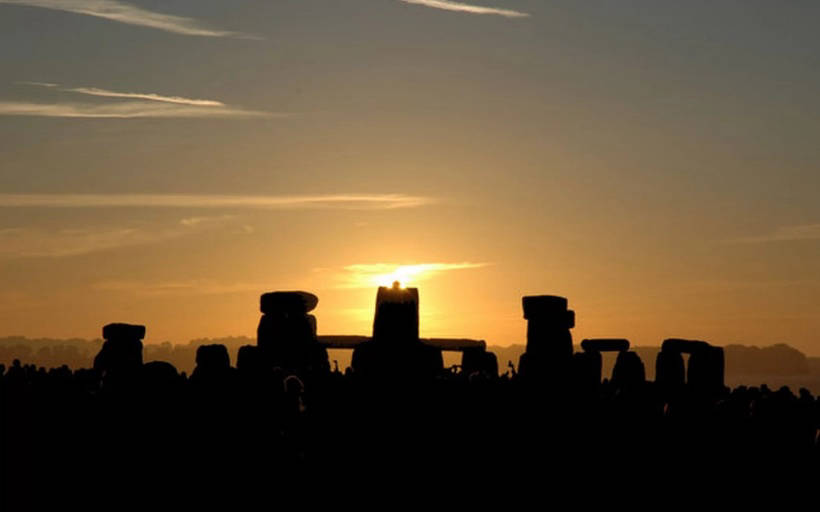
In addition, the Salisbury plain itself was considered sacred by the ancient inhabitants long before the construction of Stonehenge. More than 10,000 years ago three large wooden pillars were installed on this site, which were totemic poles.
For the local residents of that period, hunting played an important role. The researchers found about 350 animal bones and 12 500 flint tools or fragments of them all a mile from Stonehenge. All findings date from 7,500 to 4,700 years BC. Apparently, these places were rich hunting grounds, which could also affect the fact that the plain was considered sacred.
Also around Stonehenge found dozens of burial mounds, which indicate that in ancient The times there were buried hundreds, if not thousands of people, no less than 17 kapisch, and recently — the whole "House of the Dead", which dates from 3700-3500 years BC
Work unites
Some of those who built Stonehenge, perhaps , lived next to a monument in houses, discovered by archaeologists. Judging by the findings of scientists, these people were eating meat and dairy products and, most likely, were not slaves. That is, the construction was conducted by free people at will.
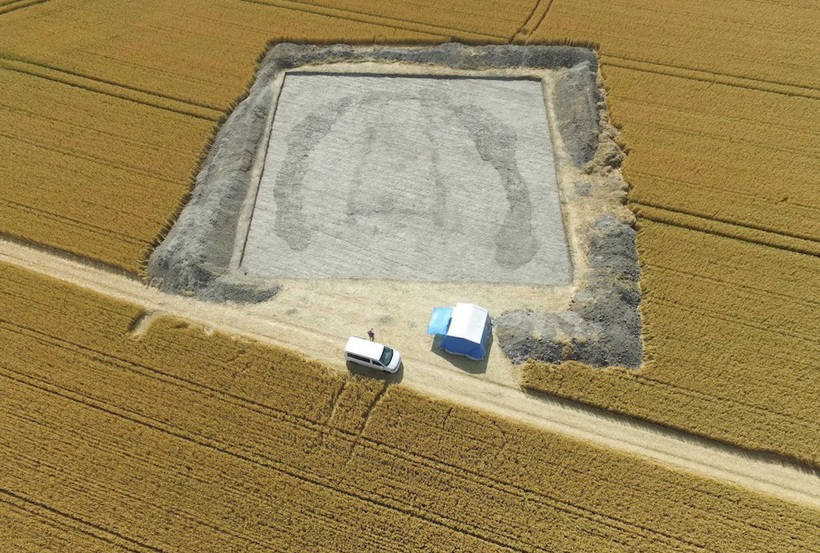
One of the theories about Stonehenge suggests that this construction became a symbol of the "unification of Britain" when people all over the island worked together. This can explain how they managed to move the blue stones to the very west of Wales and how the workers and resources for the construction were mobilized: this work would unite the different tribes, giving them a sense of community and involvement in the great cause.