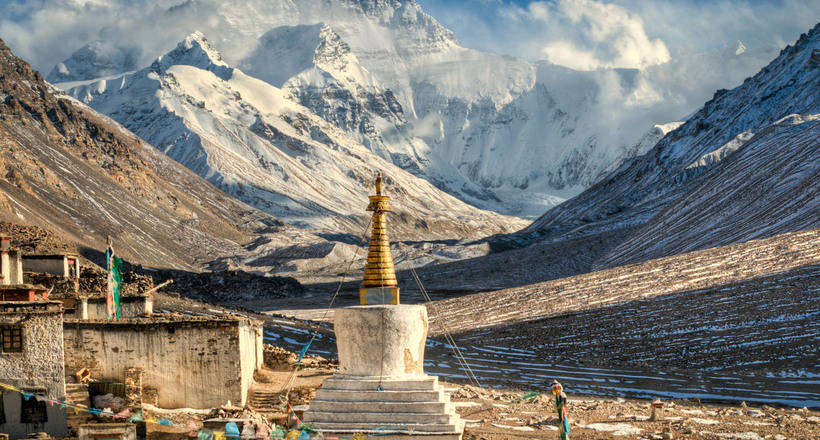
Tibet is an amazing country that is in the Himalayas at an altitude of 5000 m and above sea level.
How the Tibetans adapted to the lack of oxygen in the highlands.
High-altitude air, in contrast to Plain, which we breathe with you, has a number of features. People living at atmospheric pressure of 760 mm. gt; The saturation of hemoglobin with oxygen is 96%. But as soon as an ordinary person enters high-altitude areas, this indicator begins to fall precipitously. And at an altitude of, for example, 6.5 km, where the atmospheric pressure is only 330 mm. gt; The oxygen saturation is only 65%. And at an altitude of 8-odd kilometers, this figure drops to 50%. Naturally, in this case, negative processes begin to develop in the body of an unprepared person, leading to hypoxia, increased blood viscosity, the growth of probable cardiovascular pathologies and even to high-altitude pulmonary edema.

But the eu on our planet, peoples that can survive even in such unsuitable conditions. This is primarily the Tibetans and the Sherpas close to them, as well as the Indians living in the Andes at an altitude of more than 4000 m. All these people are distinguished by excellent health and a high life expectancy. But, scientists have recently found, they have come to such excellent results in different ways. For example, the inhabitants of the Andes have more lungs, and they breathe less often than we do. At the same time, in their blood, a greater content of red blood cells is found, which are responsible for the transfer of oxygen, carbon monoxide and nutrients in the body. This explains the fact that among them the chronic mountain sickness is highly prevalent, which, however, does not greatly complicate their life. But the most interesting thing is that when you move to the plain an unpleasant affliction passes. That is, the mechanism of adaptation to the highlands of these peoples is purely physiological in nature and operates on the principle of training.
But the Tibetans went the other way. As a group of Chinese and Australian scientists found out, in the DNA of representatives of this people there are special genes EGLN1 and EPAS1, responsible for more efficient use of available oxygen, without increasing the number of red blood cells. Later, 7 additional genes with even more complex names were deciphered. These genes are unique to the Tibetans, that is, not more than one of the people of our planet do not meet in such a combination and in the right amount. One of them, in particular, helps to slow the metabolism, which allows Tibetans to maintain a normal weight with a meager diet. A unique set of genes is also responsible for the content of nitric oxide in the tissues, which contributes to vasodilation. Scientists also note that the Tibetans have a much higher respiratory rate than the inhabitants of the plains.
Equally interesting is the fact that the gene EPAS1 is identical to the gene found in the DNA probe remains of the Denisovists. These ancient people lived in the Altai and, perhaps, are those from whom the Tibetans inherited this gene. Thus, it turns out that the excellent health and endurance of Tibetans are not due to the fact of being in high-altitude conditions since infancy, and inherited genetically and inherent in all Tibetans since birth.
As archaeological evidence indicates, the first settlements of people in the region of Tibet appeared more than 5000 years ago. It turns out that this people managed not only to acquire unique mechanisms of adaptation to rarefied air for such a short period of evolutionary standards, but also to fix them at the genetic level.