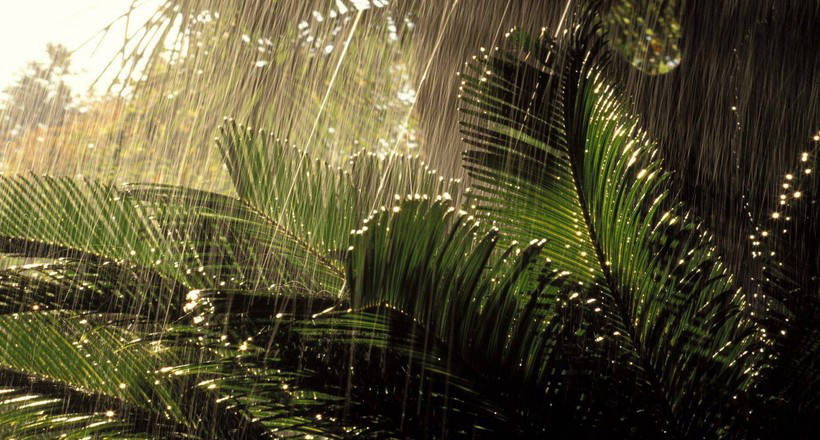
This small town of about 10,000 people is in the northeast of India in Meghalaya. Cherrapundji is known all over the world as the wettest place on our planet. On average, 11 700 mm of precipitation falls here annually - this is more than anywhere else on Earth. For comparison, in rainy St. Petersburg this figure is only 660 mm per year, in Vladivostok - 840 mm, and in Petropavlovsk-Kamchatsky - 1150 mm. Cherrapundzhi belongs not only to the long-term average annual record, but also the absolute record for the amount of precipitation that fell during the year. In 1981, this figure was 26,400 mm.
Cherrapundji is a city where it rains most of the time
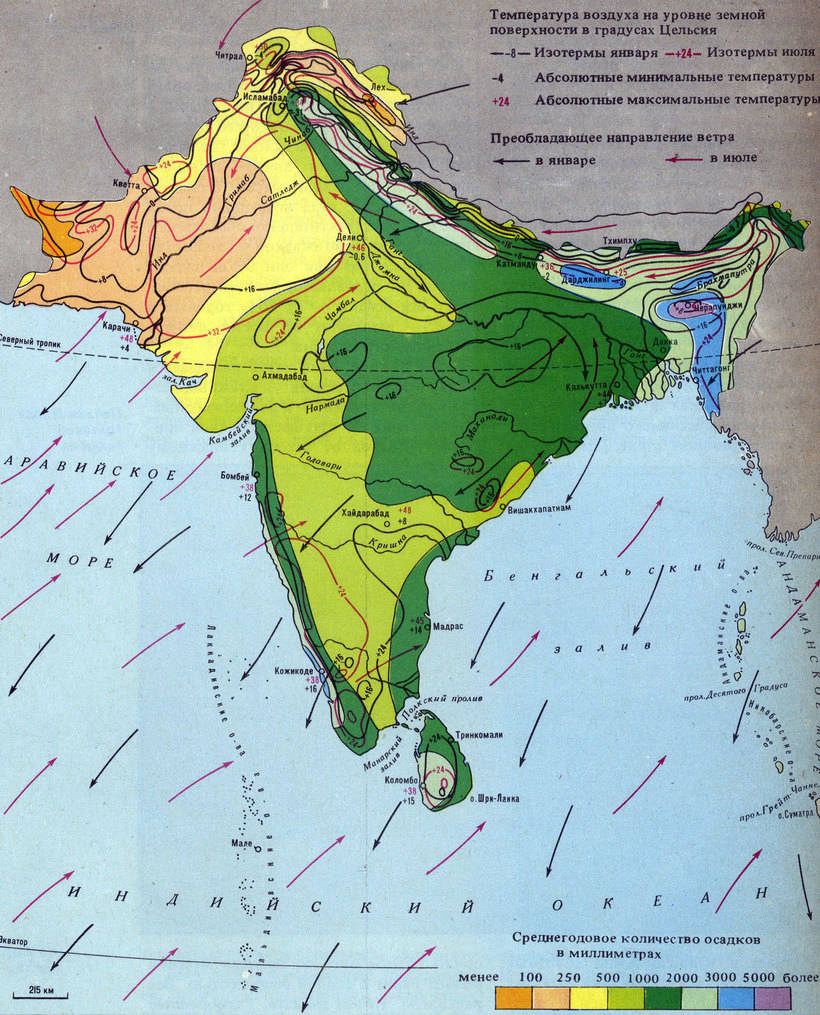
But how did it happen that it was over Cherrapunji that the heavenly disintegrated and so many rains fall on the heads of its inhabitants? It's all about the monsoon climate and the location of the city at the foot of the world's highest mountains - the Himalayas. In this part of the world, the tropical monsoon type of climate prevails. Monsoons are steady seasonal winds that change their direction twice a year. In winter, they blow from the land to the ocean, and on this territory comes the dry season. In summer, the monsoon is blowing from the Indian Ocean, then with the arrival of moist air masses, the rainy season begins. The warm air masses that form above the Bay of Bengal are moving toward the continent in the summer. The air saturated with moisture meets on its way the steep mountain slopes of the Himalayas with a height of 7000-8000 meters. Climbing up the slope, the air cools, condensation of water vapor and precipitation in the form of rain occurs. The uniqueness of this process in Cherrapunji can be explained precisely by the presence of such a high-altitude obstacle on the path of moist air. On the territory of Russia there is a place with a similar principle of precipitation formation. These are the western slopes of the Greater Caucasus, which hold up the western air masses. Here, on the windward side of the mountains, there is the greatest amount of precipitation in our country - 3700 mm per year.

Incredible, but in the rainiest place on Earth there are droughts. The period with the minimum amount of precipitation in Cherrapundzhi falls in the winter months and lasts from November to February, when the rain falls only 10 to 70 mm per month. Along the roadways in this city, ditches are dug, draining excess moisture down the slope. Most of the people of Khasi live here. They differ somewhat from Indians in appearance and in lifestyle. The inhabitants of Cherrapunji profess Catholicism, and women wear short haircuts. Because of the constant rain, the soil in these parts is extremely poor in humus: the entire fertile layer is carried away by moisture flows. But, despite some inconveniences, the inhabitants of Cherrapunji are proud that they live in such a unique place.