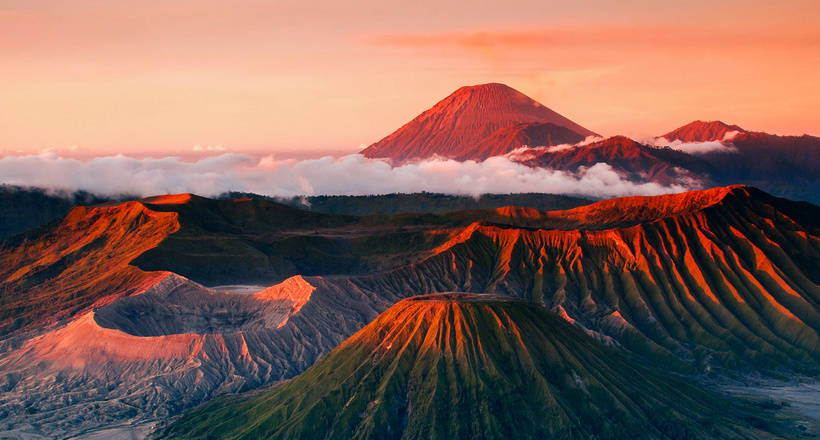
Against the backdrop of the general warming of our planet's climate, scientists are increasingly asking themselves what role volcanoes can play in this process. After all, the eruptions of large volcanoes, known for the reconstruction of the climatic events of the past, had catastrophic consequences for our planet, associated with periods of cooling.
Can volcanoes save the Earth

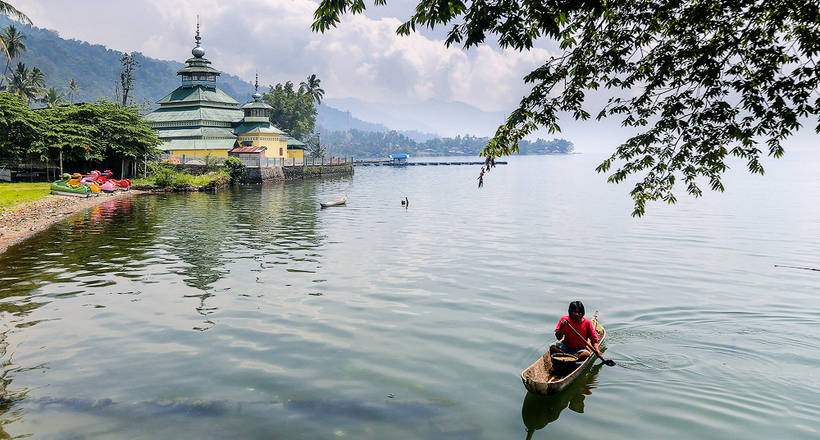
About 70 thousand years ago, the most devastating eruption of the known to date. The culprit was the volcano Toba on the island of Sumatra. As a result of his activities, there was such a huge release of sulfur, dust and ash into the atmosphere, that the sun's rays almost ceased to penetrate the surface of the Earth and the millennial winter came. Photosynthesis was almost impossible, and many representatives of the flora and fauna did not survive this catastrophe. After Toba, there were enough other examples that did not have the best effect on the climate of the planet and its inhabitants. Of the last famous cataclysms, one can name the eruption of the Krakatau volcano, which occurred in the 6th century AD, about which many evidences have been preserved. It was also located in Indonesia, and the amount of thrown ash and gases was enough to envelop the entire planet with a dense layer of ash. And the Tambora volcano in 1815, according to scientists, contributed to a decrease in the average annual air temperature by 0.5 degrees. Recently, a lot of interesting data was obtained on the basis of the study of cores mined in Antarctica and Greenland. Polar regions of the Earth store many valuable information under many kilometers of ice. For example, based on the findings, scientists concluded that volcanoes were the driving force in climate change in parts of the world and had an impact on the global climate. Most of the coldest periods in an amazing way coincide in time with the largest eruptions. According to climatologists, the cooling was caused by the increased content of sulfates in the atmosphere. If there are too many sulfates in the atmosphere, they interfere with the penetration of the sun's rays, playing the role of a screen, thus causing a noticeable decrease in temperature.

Significant cooling occurred in 526, 626 and 939 years of our eras, which researchers also associate with eruptions of volcanoes. As a result of these cataclysms, not only the air temperatures were reduced, but also the overall transparency of the atmosphere, which adversely affected the growth of plants. In the end, the crop failures bring a lot of grief to the inhabitants of the planet. But, it would seem, against the background of global warming, such consequences of the eruption of the largest volcanoes could bring some benefit: reduce by some time the arrival of solar radiation and slow the melting of ice. But here everything is not so clear. It is quite difficult to find the golden mean, under which temperature will be lowered and negative impact on the flora and fauna of the planet will not start. Therefore, it is premature to say that some awakened volcano will be able to save humanity from the consequences of global warming. Rather, on the contrary, each of more than 500 active volcanoes of our planet is fraught with a potential threat to all its inhabitants.