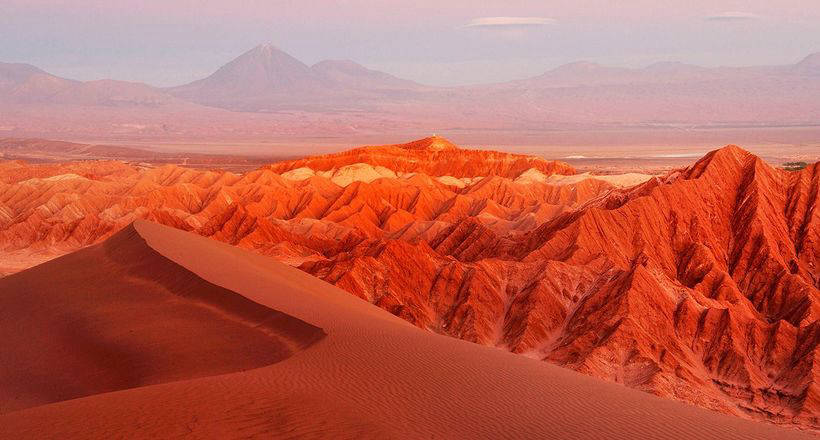
There are many arid desert territories on the globe. From the geographic point of view, not only the regions of the planet with a low amount of precipitation are considered deserts, such are found, for example, in the circumpolar regions of the planet, in the tundra zone. It is necessary that one more important condition is met: evaporation from the surface should exceed the amount of moisture coming with atmospheric precipitation. So it turns out that in many deserts in the short wet season, even precipitation is possible. But not in Atacama - the driest desert in the world.
Where is the driest desert in the world
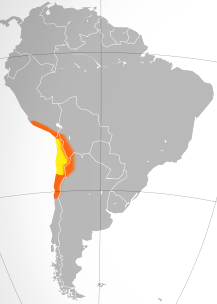
The Atacama Desert stretches along the Pacific coast of South America. It is located in Peru and Chile, in the foothills of the western Andes Mountains. In some areas of this desert, rainfall is very scarce—no more than 40 millimeters per year—but in most of its territory, such natural phenomena as rain have not been observed for centuries. Some weather stations in the Atacama have never recorded any rainfall during their entire period of operation. The only source of moisture for the inhabitants of these areas is fog. Despite this, plants, certain animals, and even people who have learned to survive in these waterless landscapes do live here. Cities and settlements are located mainly in oases or near underground water sources.
However, the Atacama Desert cannot be considered a hot desert; its climate is actually quite mild. Summer temperatures rarely exceed 20–25ºC, while in winter, the air temperature ranges from +10–15ºC and can drop to 0ºC at night.
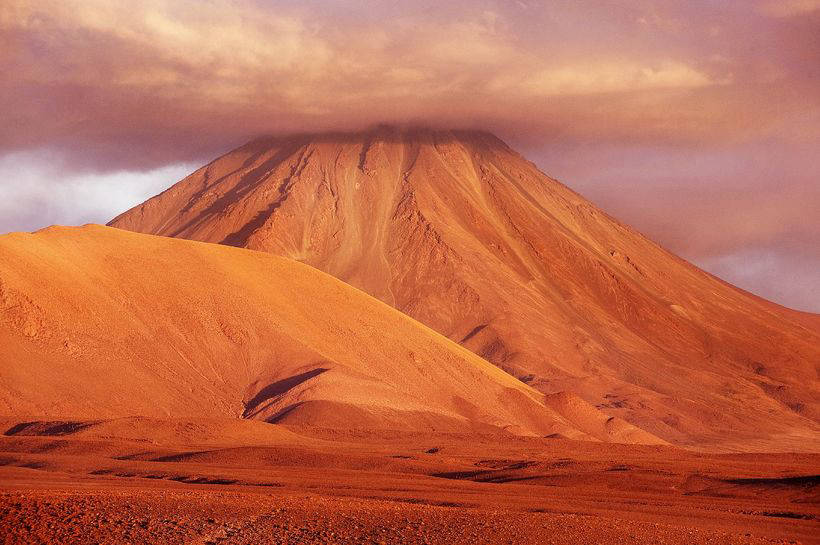
But why is this lifeless region located precisely here, and not somewhere in the Sahara, for example? The answer lies in the regional characteristics of the climate and terrain. The Andes mountain range, with its peaks exceeding 5,000 meters and extending from north to south along the entire coast, prevents moist air from eastern parts of the continent from reaching this area. These humid air masses are trapped on the eastern slopes of the Andes and only occasionally make it into the far-eastern regions of the desert, bringing very limited precipitation. On the western side of the desert lies the Pacific Ocean, with its cold Peruvian Current. This current carries cold waters from the southern part of the ocean, bringing them close to the shores of South America. The water temperature is around 15–20 degrees Celsius, which is colder than the surrounding air. This creates a temperature inversion—an atmospheric condition in which the air near the surface is colder than the air at higher altitudes. As a result, moist air cannot rise from the surface of the current, and no humid air masses are formed. The air over this region and the adjacent land is therefore extremely dry; in central Atacama, humidity levels can drop to 0%.
Recommended articles
Find the Best Professionals for Your Project
Expert repair, construction, and renovation specialists ready to help you right now
More articles:
 London became the most attractive city in the world
 Travelers from all over the world have chosen the best city in the world for trips
 The air on cruise liners turned out to be more toxic than in the dirtiest cities in the world.
 Dalton Highway: America's most northerly and delightful road
 13 delightful peaks of the planet, which do not let the climbers sleep peacefully
 Can volcanoes save the Earth
 Must see - the most beautiful monasteries of Southern Armenia
 10 winners of the Nikon macrophotography contest show an invisible world