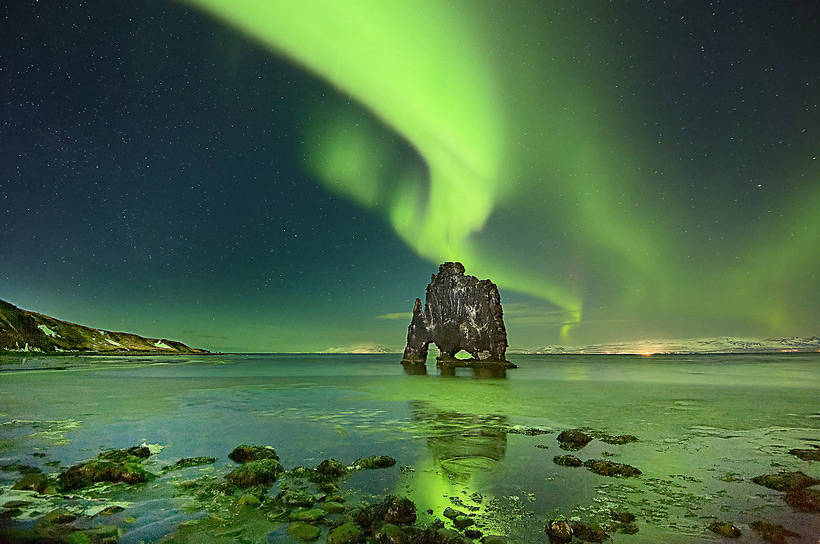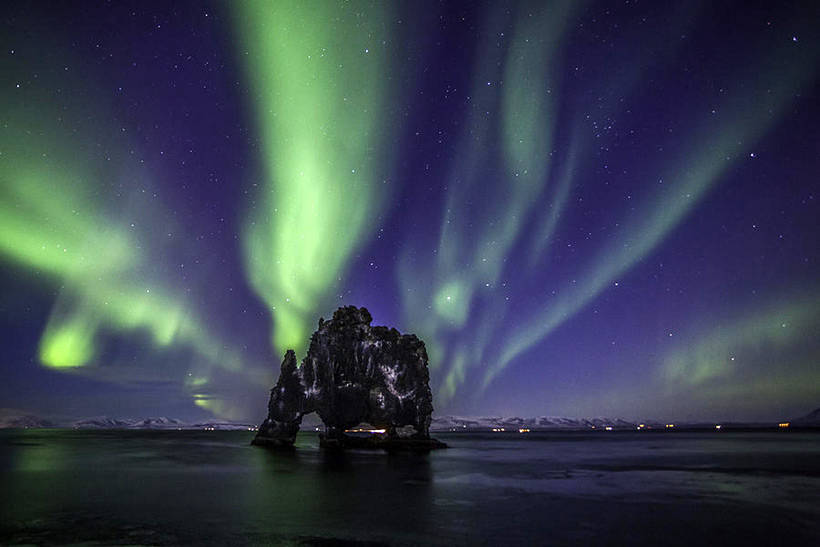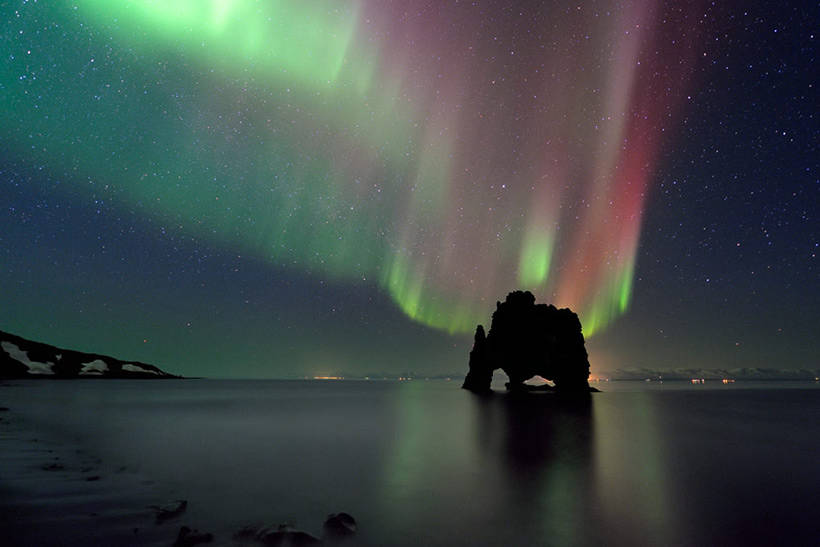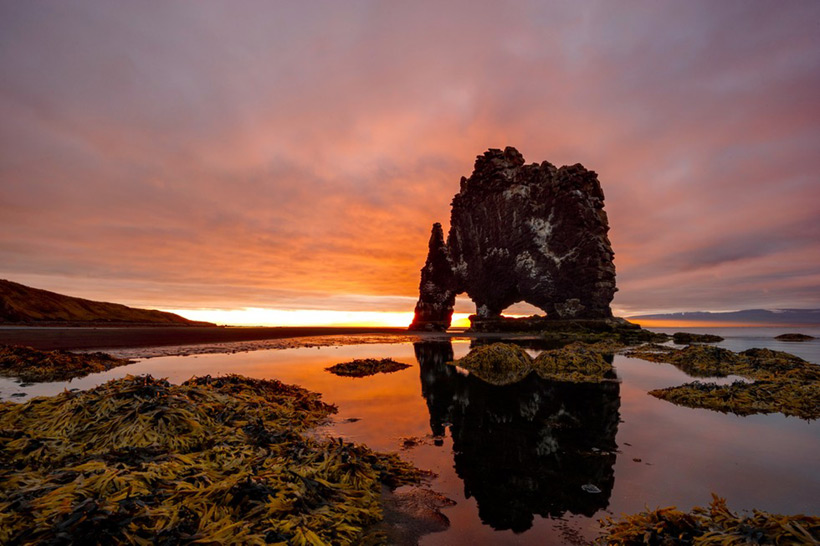
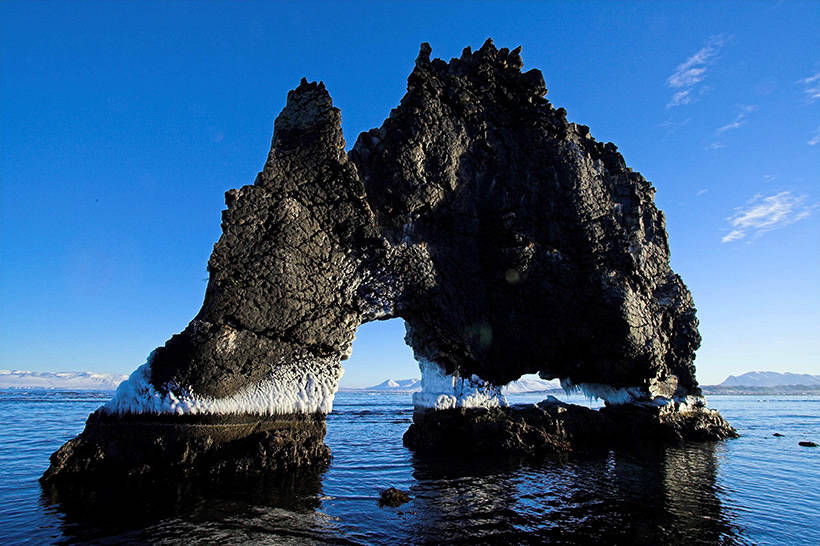
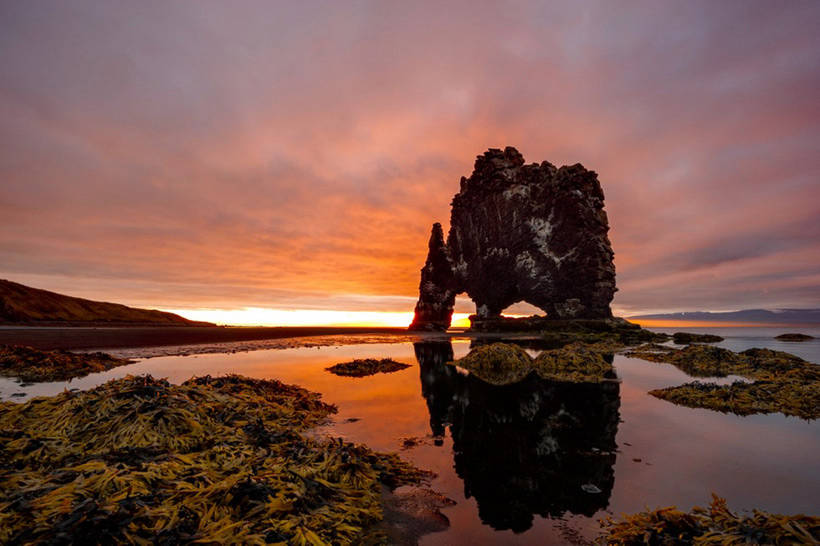
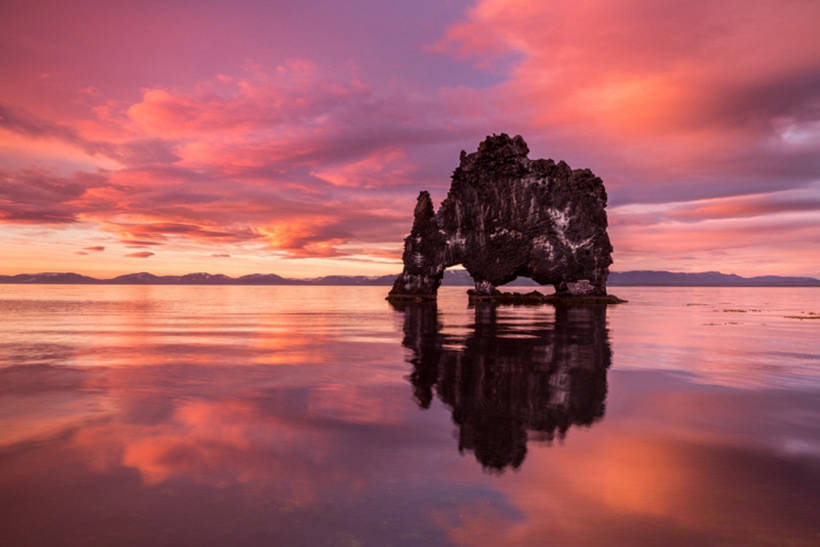
Rock Hvitserkur (Rock Hvitserkur) is called in different ways - an elephant, a mammoth, a dinosaur, and even a rhinoceros. There is this unusual cliff near the northern coast of Iceland in the Gulf of Hunaflow. This frozen stone block looks like a huge monster, greedily absorbing the waters of the Greenland Sea.
The Khvitserkur Rock

According to scientists, this formation of a height of 15 meters is the remains of an ancient volcano. Time, wind and water transformed it into this amazing form. The word "hvitserkur" is translated from Icelandic as a "white shirt" ("hvít" - white).
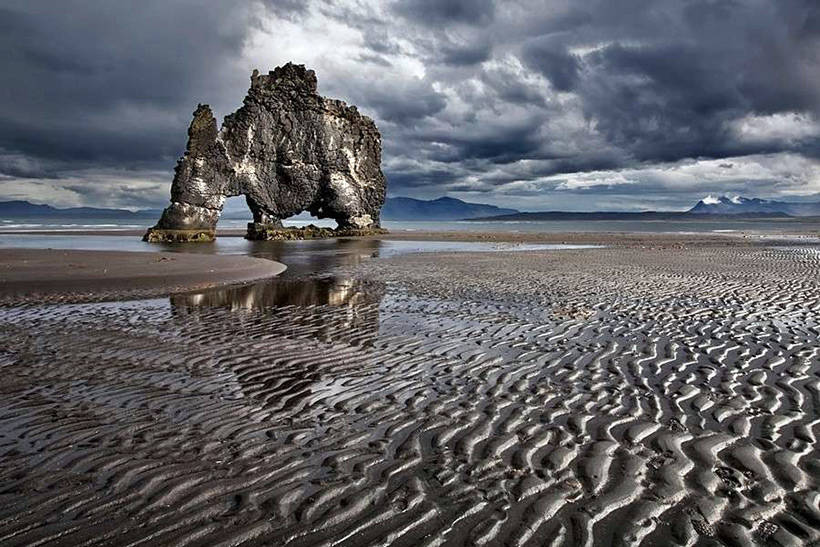
On the stones you can actually see a few large white patches. However, this is not related to any abnormal or geological features. Everything is much more prosaic: white spots are the products of the life of birds.
One of the legends says that Khvitserkur was a troll who lived happily with his family in Mount Baejer in Strandir (Westfjords), and he had a son named Bardur. Once he awoke from a sound sleep, hearing a strong and terrible sound. Khvitserkur did not understand what was happening, but he knew that these people who settled nearby, violated his peace. He hoped that the terrible sounds would abate and his family would regain peace, but this did not happen. The sounds of a large church bell that called parishioners into the church irritated him more and more. There was no rest from people even in winter. And then the troll decided to get to the settlement and break the bell.
One night, after planning everything, he and his son set out on their journey. It was hard to walk on deep water, the target was close, but the trolls did not have enough time - it was dawn. The sun rose, and with its first rays the trolls began to turn into stones. Khvitserkur, feeling close death, threw a hammer in the direction of the church in Thingeyrar, but he never reached the bell. A stone placer, similar to a hammer, can be found in the eastern part of the Thingeyrarsand coast.
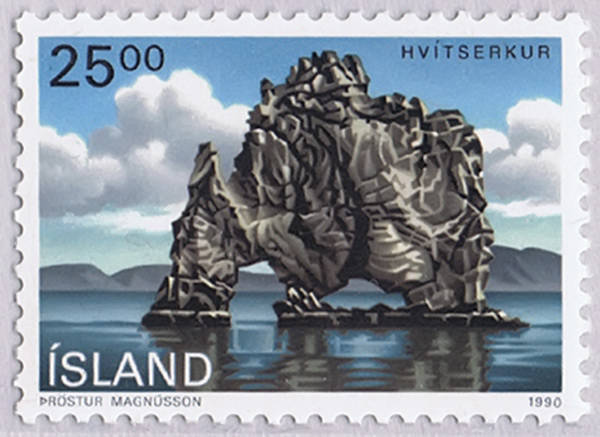
In 1990, this special event was dedicated to a special series of postage stamps issued by the authorities of Iceland.
You can see this unusual rock from the shore or from a small viewing platform, to which the road 711 leads. To reach it, you need to go around the Watnness peninsula. Visible from the coast side is illuminated by the rays of the sun only after noon.
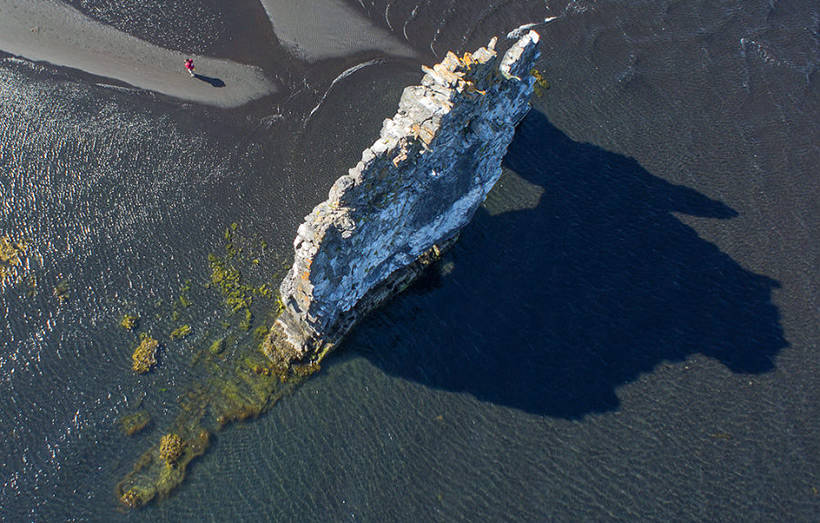
The opportunity to go straight to the foot of the cliff along the sandy coast appears at low tide when the water recedes. During the tide, the rock is completely surrounded by water.
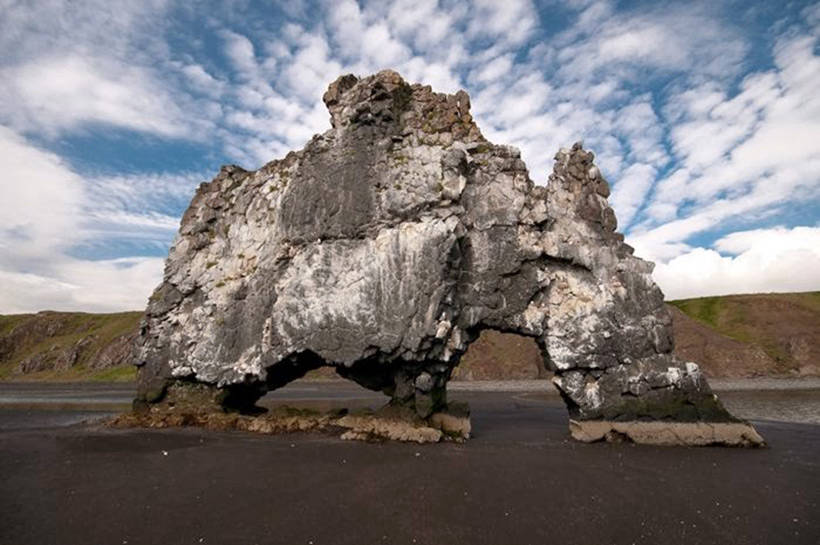
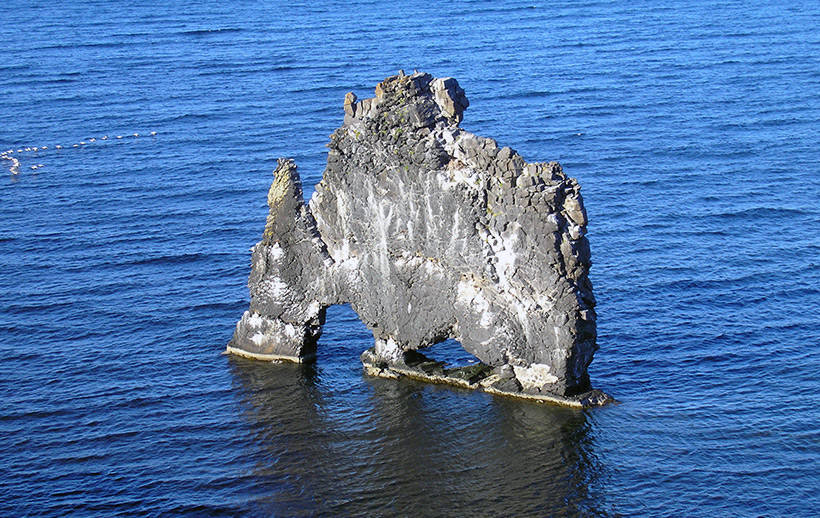
Unfortunately, low tides and tides wash away the foot of the cliff, and locals regularly fortify the base with concrete to preserve this unique creation of nature.
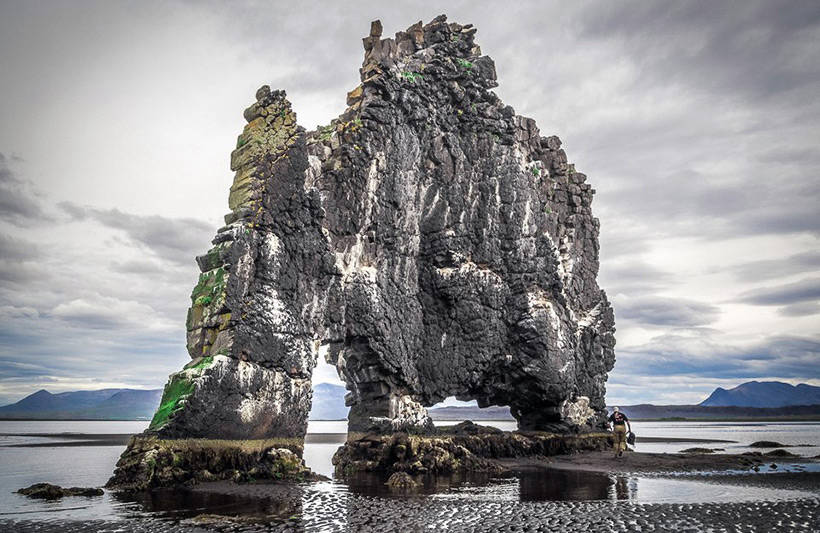
Since the rock is located in Iceland, you can observe a stone troll against the background of the northern lights.