Deshte-Lut Desert - the hottest place of the planet
For a long time, the most hot place on the planet was the city of El-Azizia, which is in Libya. September 13, 1922, there was recorded the temperature of the air in the shade, reaching 58.2 ° C. However, the World Meteorological Organization did not recognize this record, referring to the unreliability of sources and means of fixation. The organization handed the Death Valley record to California, where 56.7 ° C was recorded on July 13, 1913.
But with the advent of the 2000s, the record crossed the 60 ° C threshold. For example, in 2008, 66.8 ° C was recorded in the Fiery Mountains on the northern edge of the Takla-Makan Desert in China, and the absolute record belongs to Iran, where Deshte-Lut Desert in 2005 was 70.7 ° C.
>It was possible to record a record in Deshte-Lut Desert by means of a MODIS remote probe located on the Terra satellite (EOS AM-1). The research satellite, operated by the NASA agency, was launched on December 18, 1999. The main task of Terra is to monitor the environment and climate change, and MODIS is a medium-resolution scanning medium spectroradiometer designed to monitor the global dynamics of the planet, including changes in cloud cover, radiation balance and processes occurring in the oceans, on land, and in the lower atmosphere.
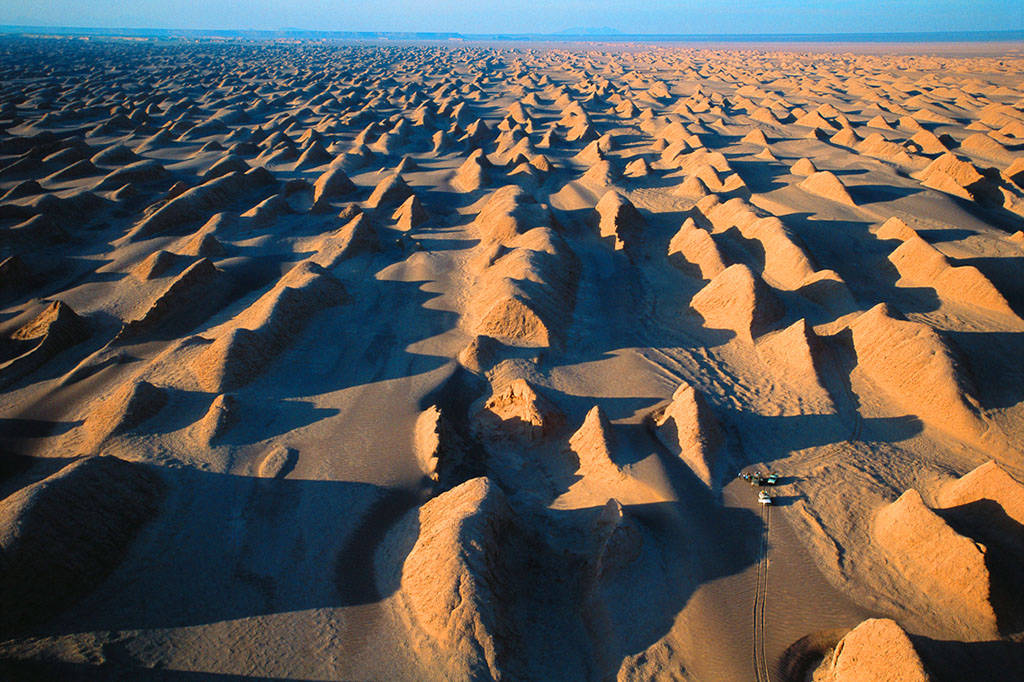
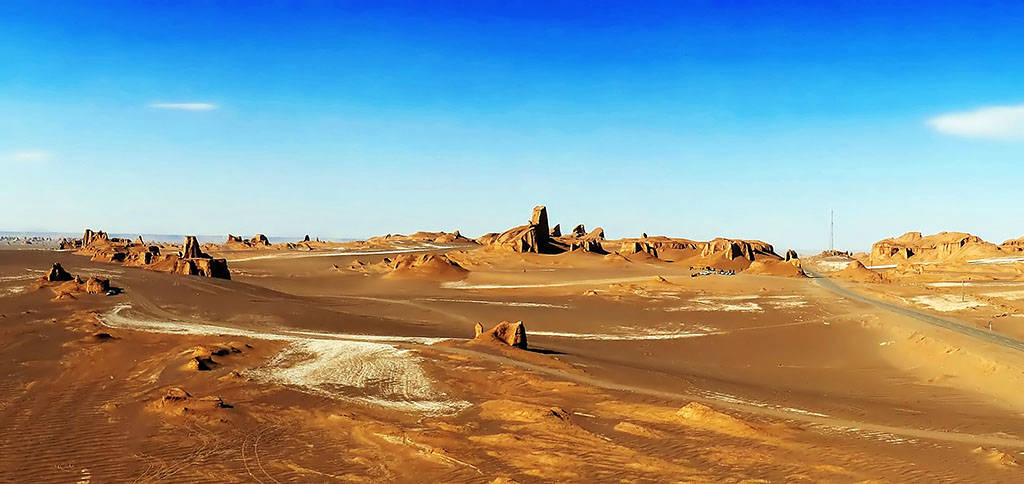
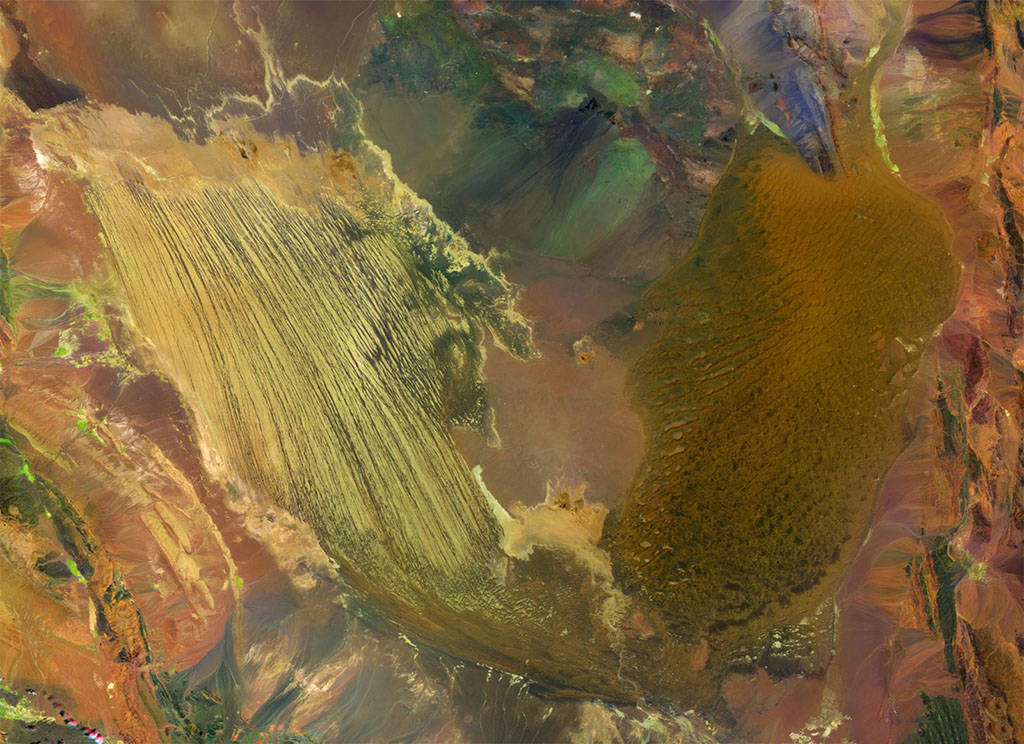
The territory of Iran is located in the zone of the desert belt stretching from the islands of Cape Verde, in West Africa, to Northern China and Mongolia. Next to this belt are tropical and subtropical zones, absorbing most of the precipitation. For this reason, Deshte-Lut is predominantly abiotic. A considerable area of Iran is occupied by the Iranian highlands, surrounded by mountains and divided by dry basins, one of which is our sandy-solonchak desert.
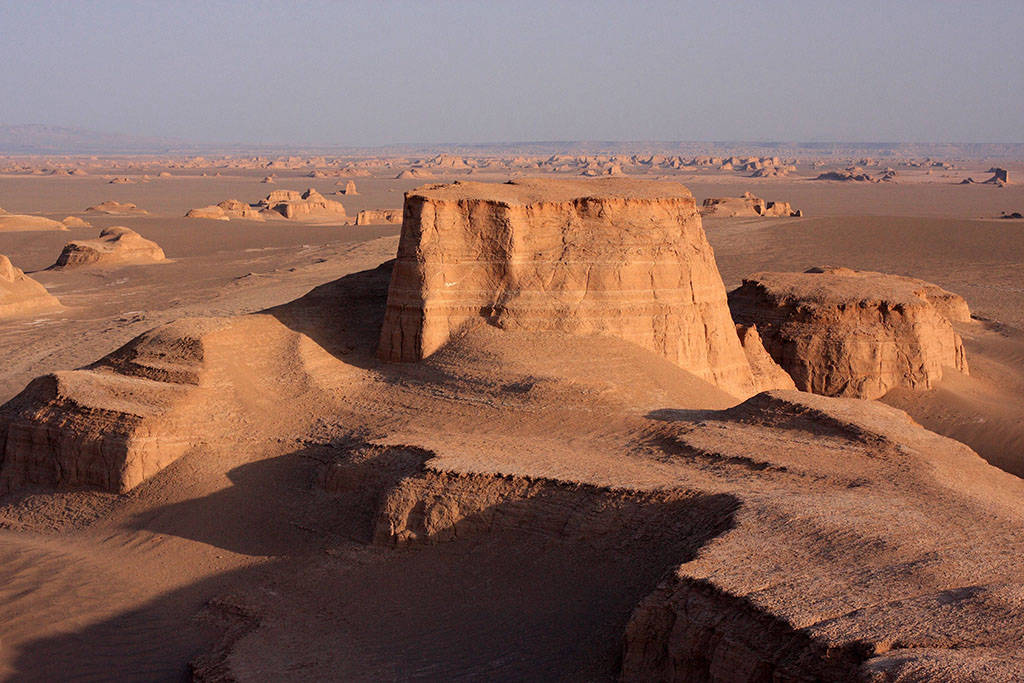
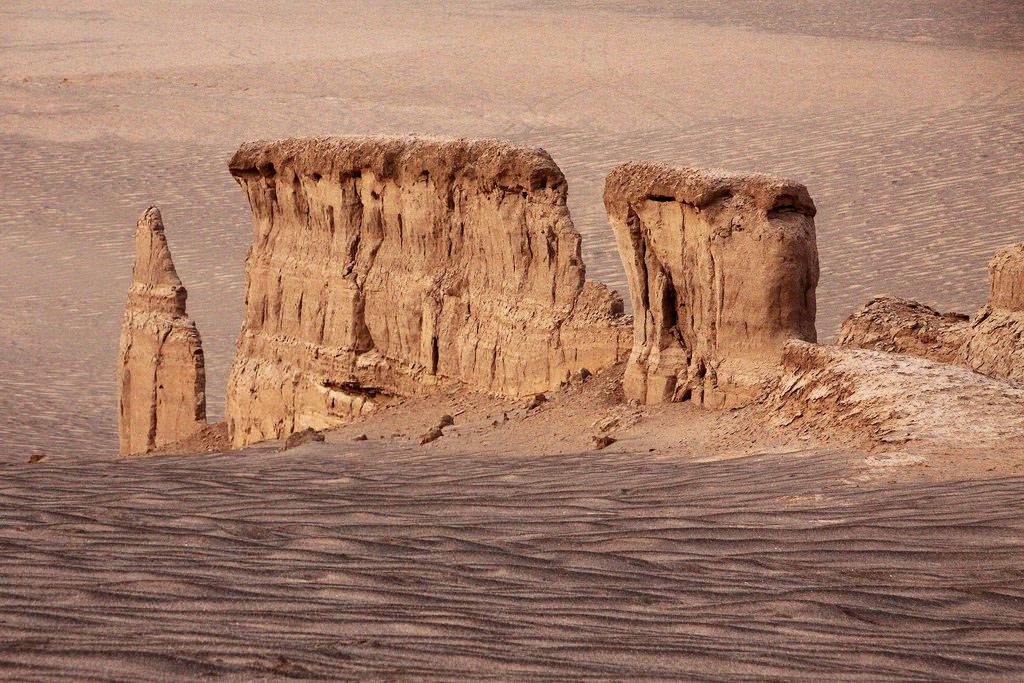
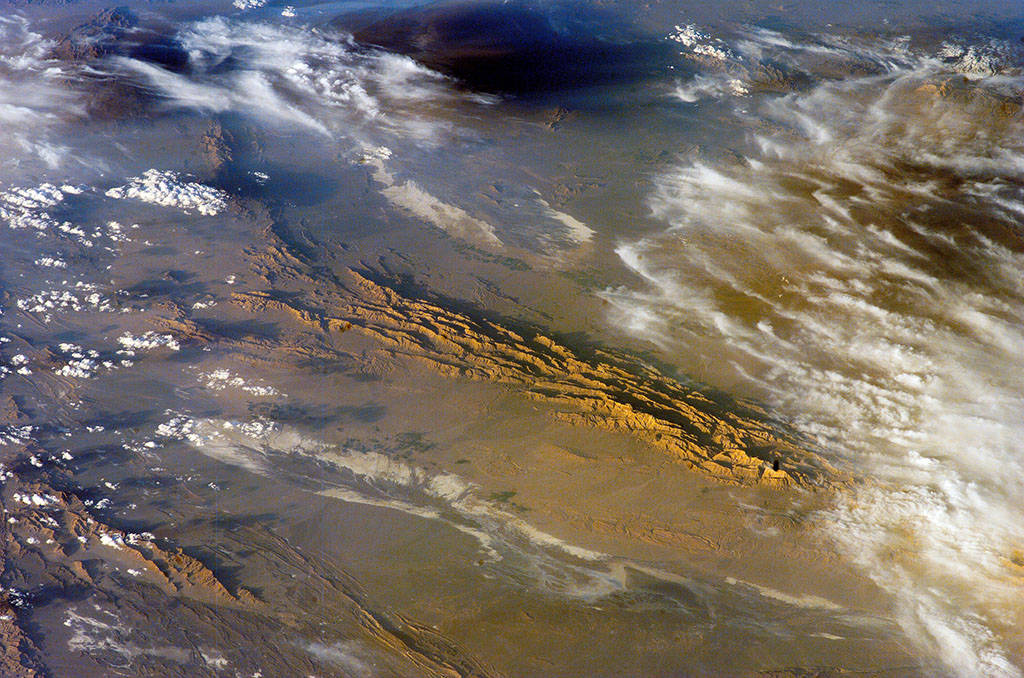
The eastern part of Deshte-Lut is a low plateau covered with solonchaks and takyrs formed from the drying out of saline soils. The central part of the desert from June to October is subject to very strong winds, which in turn cause large-scale wind erosion and form sediments. So here yarkangs are formed - eolian relief forms, which are picturesque massive undulating crests of up to 150 km in length and up to 75 meters in height.
In the desert of Deshte-Lut you can also meet unusual natural formations in the form of quaint pillars and mushrooms. These forms were formed with the help of the same wind, which grinds the rock with sand. In addition, the territory is riddled with ravines, gorges, dips and funnels. This desert is one of the few places on the planet where geological processes and their results can be found in a fairly short time.
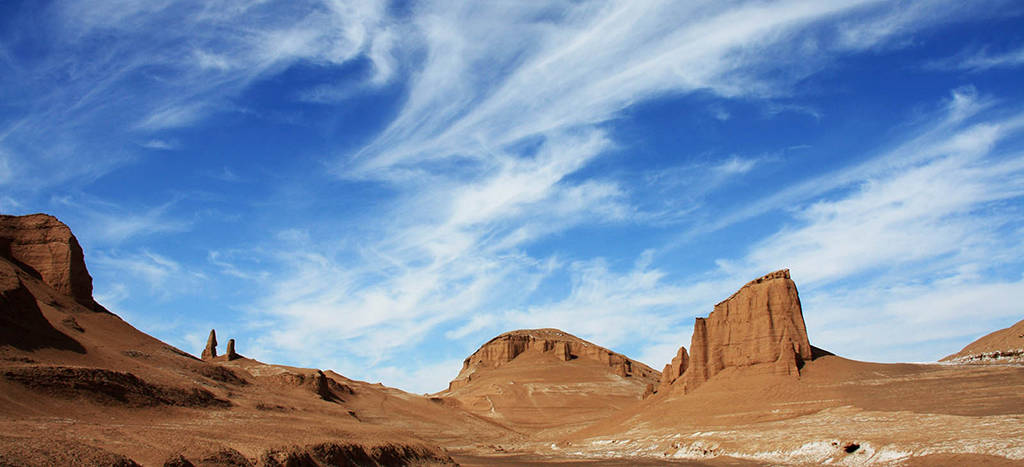

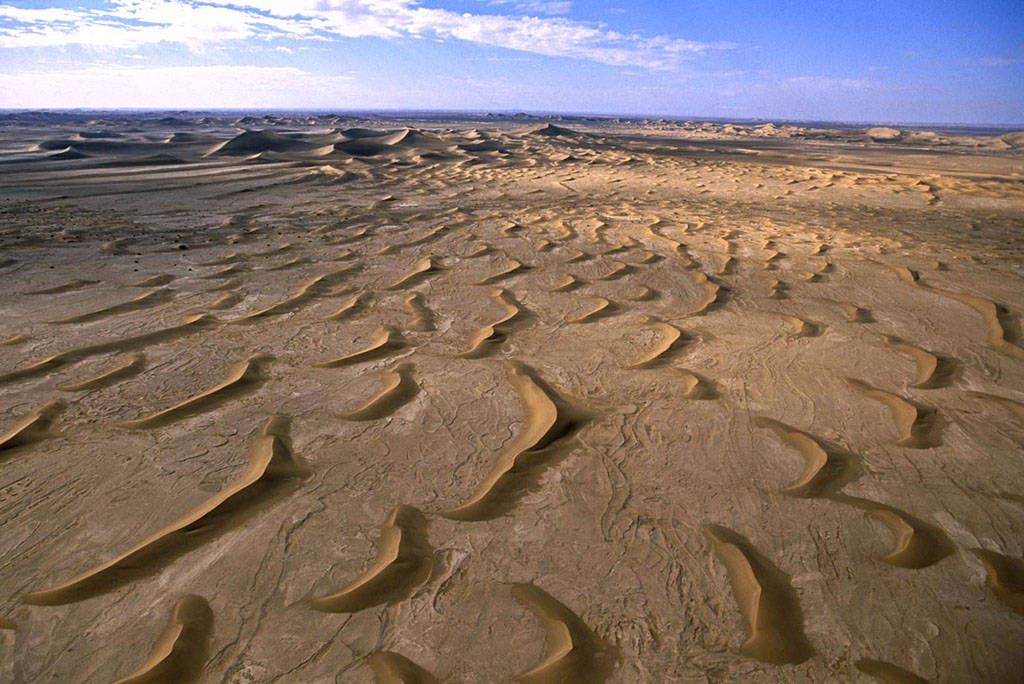
The hottest place in the desert of Deshte Lhut is the Gand Berjan plateau, which has a dark surface and an area of 480 km². The dark surface and dryness contribute to a greater accumulation of solar energy, which led to record temperatures. Gurd Berian is translated from Persian as "toasted wheat". According to the local legend, in this place, due to unforeseen circumstances, a cargo was left with wheat, which was burned under the scorching sun for several days.
Find the Best Professionals for Your Project
Expert repair, construction, and renovation specialists ready to help you right now
Recommended articles
More articles:
 Stunning McLaren 570GT by Novitec
 Cherrapundji is a city where it rains most of the time
 A girl travels the world in wonderful dresses and takes photos in the most beautiful places.
 TripAdvisor named the best museums in the world.
 Winners of the competition for the best photo of the underwater world announced
 18 interesting facts about planes that few people know
 Ecological consequences of Fukushima - everything is just beginning
 22 the most amazing churches in Europe that you need to see at least once in your life