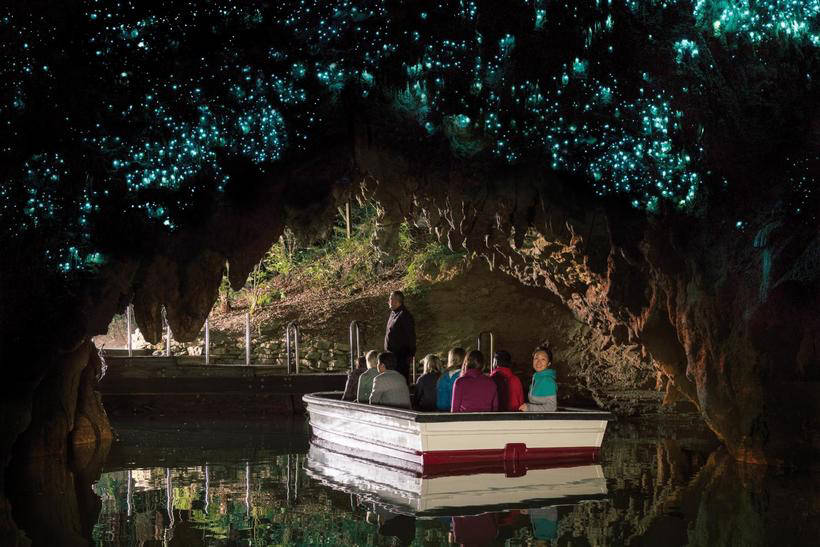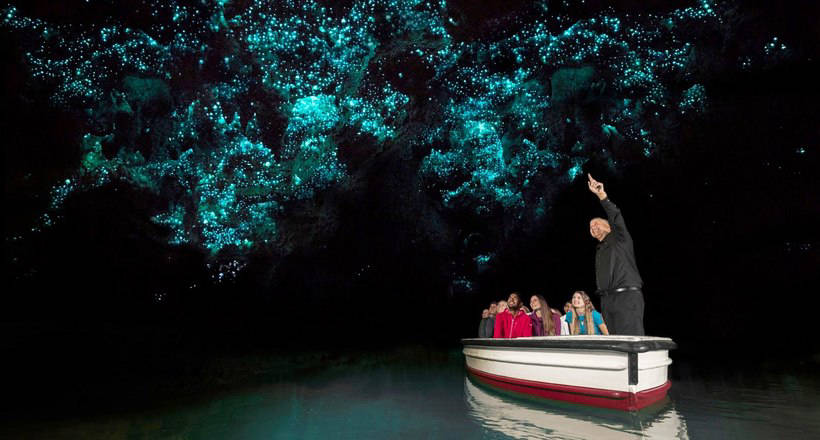
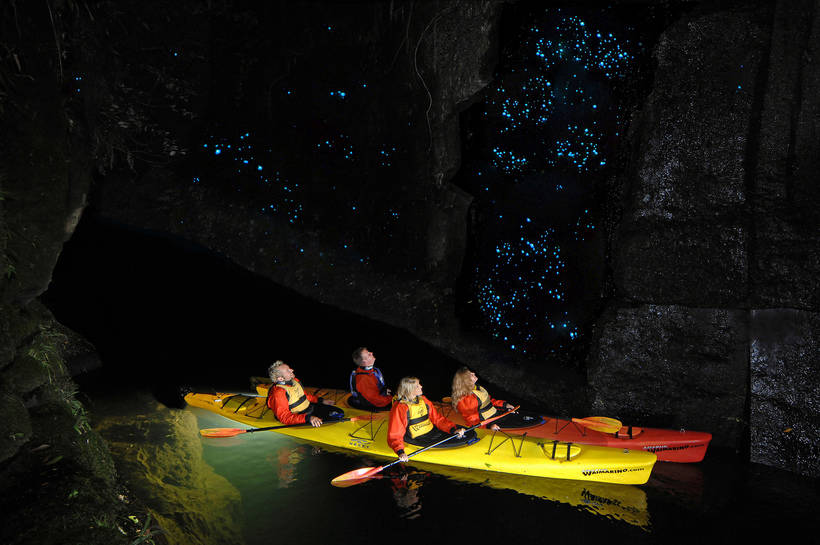
Caves are usually associated with us with dark and uncomfortable underground spaces, devoid of light and life. It's cold and scary, I want to go back to the warm sun and the blue sky. But the Firefly Cave, which is on the North Island in New Zealand, is an unusual exception to this rule.
Where is the most magical cave on Earth
The ceiling and walls of this underground world are incredibly beautiful and resemble the streets of cities decorated with festive illumination. Once in this cave, you do not want to leave there, like thousands of tourists who visit this wonderful place every year.
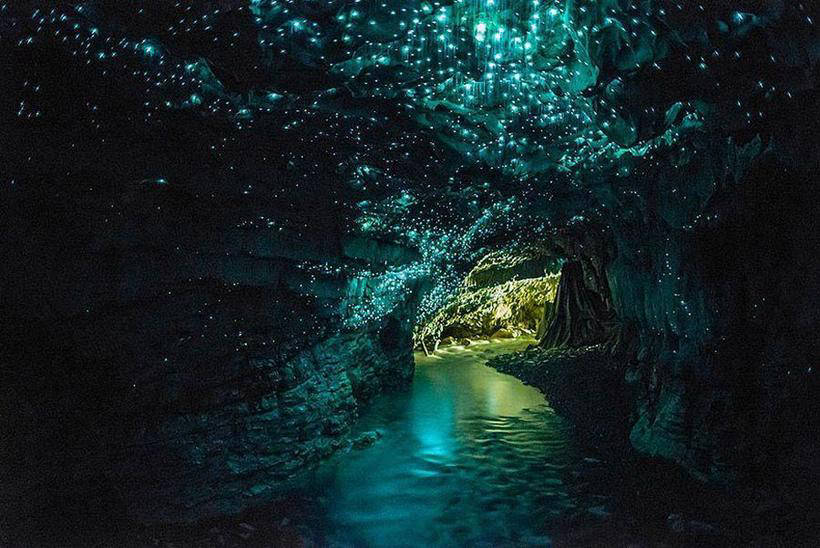
And provide this unforgettable light show small insects from the genus of fungal mosquitoes called Arachnocampa luminosa, or rather their larvae. Thousands of the smallest creatures dwell on the walls and ceiling of this cave. The larvae form sticky threads that hang from the ceiling and serve them for food. They feed on insects that have flown into the cave, and to lure the victim, these larvae glow in the dark.
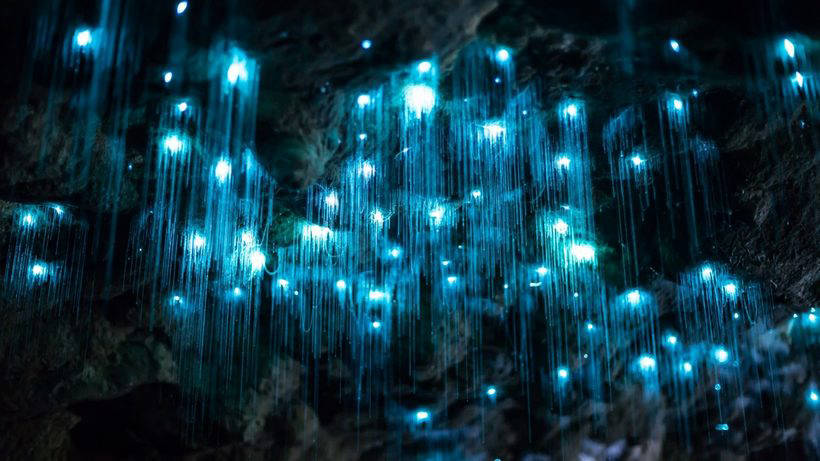
The brightness of the glow, as scientists have found out, directly depends on the degree of hunger: the more hungry the larva, the more intense the light it radiates. At the moment of touching them, the glow stops, and the fireflies become invisible. A loud sound can scare the insects so much that the flickering will disappear and complete darkness will come.
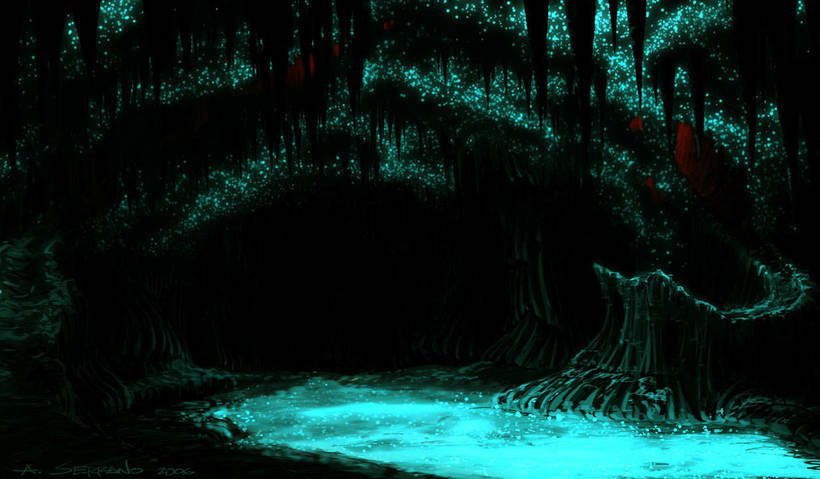
But a number of researchers believe that hunger has nothing to do with, and larvae shine for another reason. It was found that they are fed not only by flying insects, but also spores of fungi that do not need to be lured.
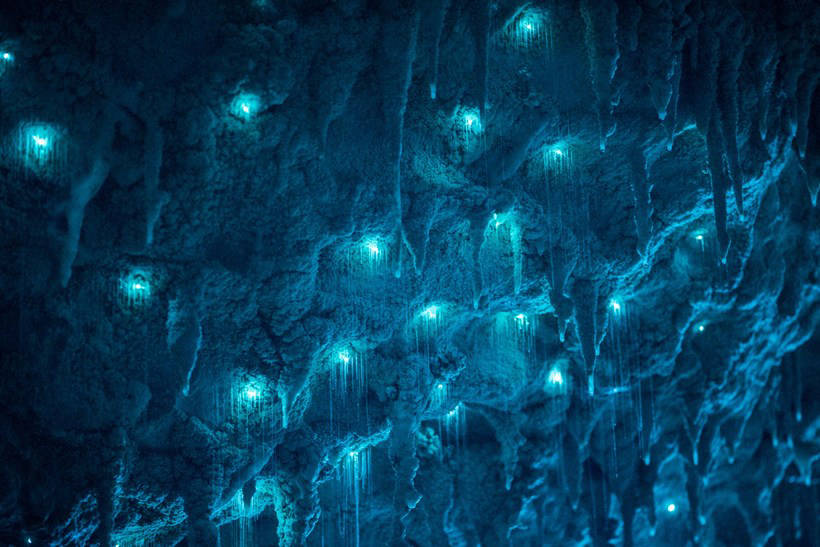
The cave of fireflies, where an unusual phenomenon is observed, is included in the complex of limestone caves called Waitomo and it is really unique. Stalactites and stalagmites, underground rivers and mysterious tunnels can be seen in other caves of the world, but you will not find any wonderful lights anywhere else. After all, fungal mosquitoes, larvae of which glow with a blue light, live only in New Zealand.
It is also interesting that part of the income from visiting this popular tourist site belongs to the indigenous Maori people. The thing is that in 1887 the leader of this tribe, named Tane Tiorana, took part in an expedition that discovered this amazing place in its beauty. And the government of New Zealand after a short battles decided to transfer part of the income of the tourism business to the descendants of Tana Tiorana.