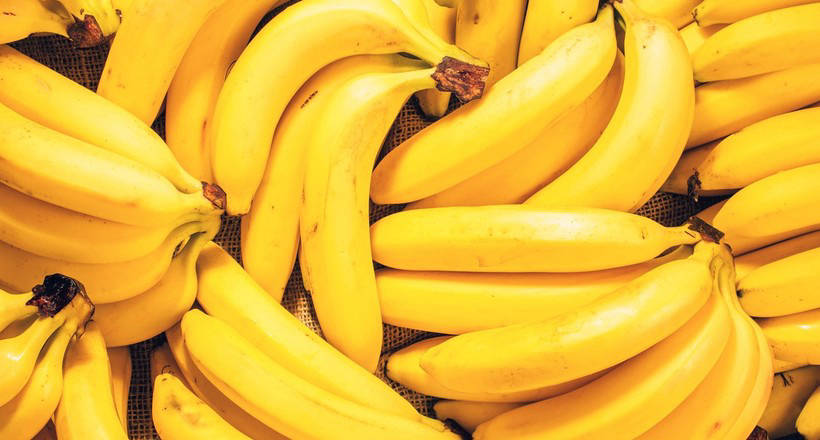
Bananas are a favorite fruit in many countries of the world. But, according to experts, soon mankind will have to change its gastronomic habits due to an unconquerable fungal infection that affects banana plantations in different parts of the world.
Why bananas will soon disappear from store shelves
About half of all banana trees grown in the world belong to the Cavendish variety, which is the most delicious, most productive and convenient for transportation. The same variety is mainly exported and sold in the shops of our country. But in recent years he is attacked by a fungus called Panamanian disease. This disease has already destroyed young crops of banana trees in several countries of Southeast Asia: Malaysia, Indonesia, Taiwan. The harmful fungus infects the vascular system of the tree, making it impossible to transport water and nutrients from the soil to the aerial part of the plant. The leaves begin to turn yellow and fade, the banana tree weakens and dies.
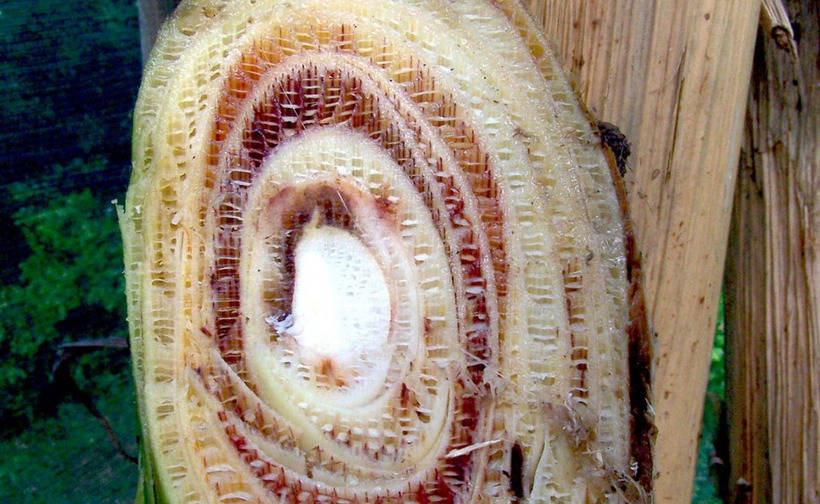
"Panamanian disease", or rather its clone TR4, was discovered in Indonesia, later in China and Taiwan. Well, in recent years, there has been a victorious march through the "banana" countries around the world. Banana plantations in Pakistan, the Middle East, Mozambique and Queensland (Australia) have already fallen victim to this fungal clone. According to experts, the mass distribution of it in Latin America, where the main producers of bananas are located, is only a matter of time. According to some reports, the fungus has already crossed the Atlantic to the west and was recorded on the American continent.
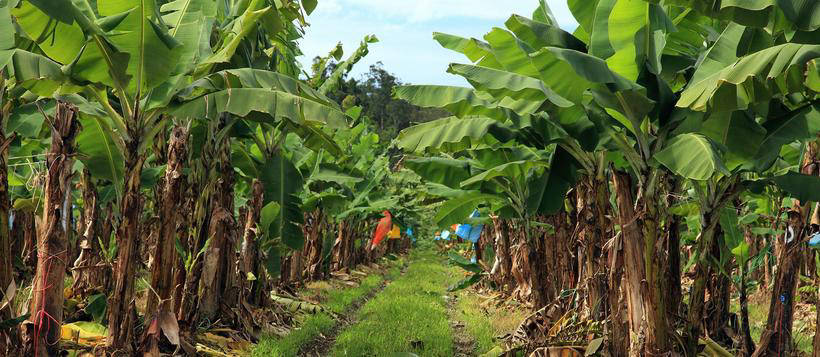
Of course, all means and scientific forces were thrown into the struggle with the invisible enemy. But this fungal disease, unfortunately, does not lend itself to treatment. It should be noted that they suffer from the variety of Cavendish, so beloved by all. It is interesting that this variety replaced the popular Gros Michelle variety, whose plantation also hit this fungus in the middle of the last century. But, as it turned out, and Cavendish was not able to resist TR4: the fungus mutated and adapted to a new variety. The situation is further complicated by the fact that the causative agents of the Panamanian disease persist in the soil for a long time after cutting down infected banana trees, according to some sources, up to 30 years. Therefore, such plantations are not suitable for reuse.
Bananas are not only an important export item of many tropical countries, but also the main source of nutrition for the population of these countries. For example, the annual consumption of bananas per capita in Russia is 7.3 kg, while in Ecuador this figure is 10 times higher. And in Burundi, each inhabitant has 190 kilograms of bananas eaten per year. Therefore, as experts reassure, the popular Cavendish variety will necessarily be replaced by another, albeit not so tasty and less transportable. But for now the new variety will spread around the world in the right amount, the inhabitants of the importing countries will have to do without their favorite delicacy for a while.