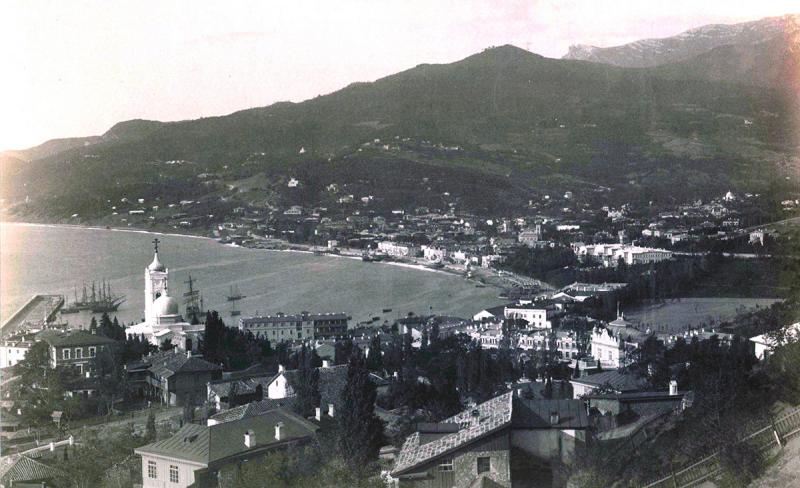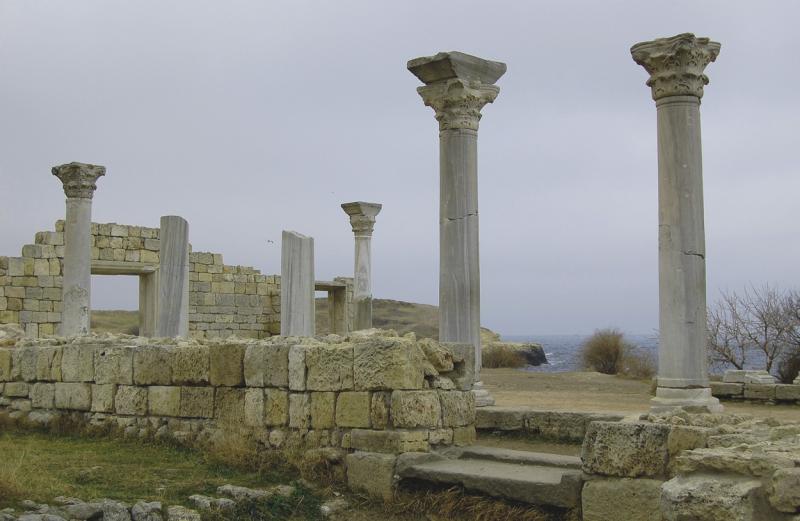
Many centuries ago people appreciated the Sevastopol Bay as a convenient place for living: the remains of the oldest settlements, discovered by archaeologists, date back to the first millennium BC. Here lived tribes of Taurians, Scythians, Sarmatians. In the V century. BC. On the banks of the bay, which is now called the Quarantine, the ancient Greeks who came from Herakleia Pontic settled. They founded the city-state here - the Tauric Chersonese, which lasted two millennia (from the 5th century BC to the 15th century AD) and played an important role in the historical destinies of the Northern Black Sea region.
The history of Sevastopol
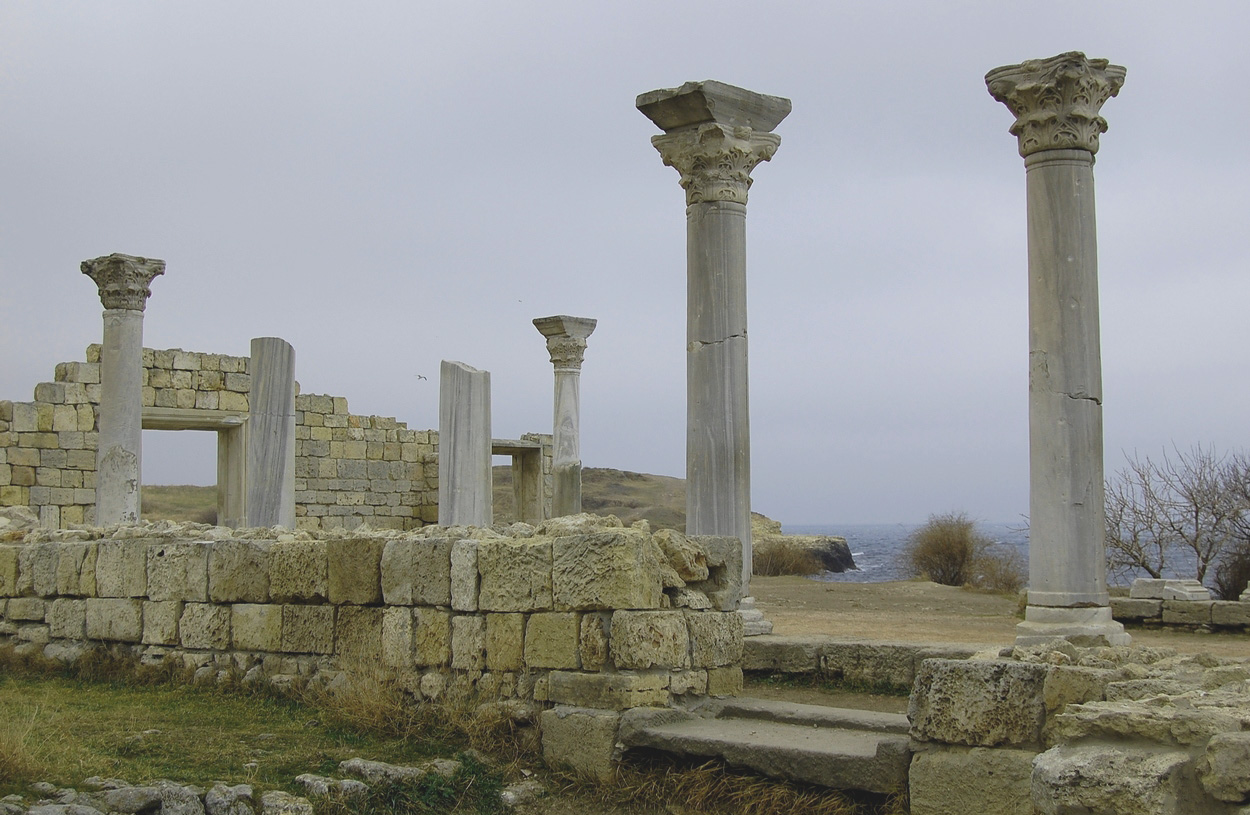
In the 9th-10th centuries, the Slavs fought against the mighty Byzantium at that time for the Northern Black Sea coast, for the Crimea. In the second half of the XI century. Crimea was cut off from the rest of the territory by numerous nomadic hordes of Polovtsians, in the 13th century. the hordes of Batu invaded the Crimea. After the collapse of the Golden Horde in 1443, the Crimean Khanate arose, which from 1475 became a vassal of Turkey, which used it as a weapon for attacking Russian, Ukrainian and Polish lands.
During the Russo-Turkish War of 1768 - 1774 years. Russian troops captured the Crimea. According to the Kyuchuk-Kainarji peace treaty, which ended the war, the Crimean Khanate was declared independent of Turkey and passed under the patronage of Russia. Alexander Vasilyevich Suvorov was sent to command the Russian troops in the Crimea, who highly appreciated the excellent qualities of the bays of Sevastopol and five years before the foundation of the city he erected the first fortifications, did everything to oust Turkish flotilla from the Ahtiyar harbor - about 170 ships.
In the autumn of 1782, the first Russian ships - the frigates "Brave" and "Careful" - came to wintering in the Akhtiyar harbor. Even before the Crimea was included in the Russian Empire, the Russian government appointed "Vice-Admiral FA Klokachev" for the command of the fleet on the Black and Azov Seas. He was ordered to transfer part of the ships of the Azov and Dnieper flotillas to the Ahtiyar harbor. In the first Sevastopol squadron there were only 17 ships. So in Russia a new fleet was born, which was called the Black Sea Fleet.
The construction of the port and the military settlement under it began. The chief of the construction was a flag officer Lieutenant D. Senyavin. On June 3, the first four stone buildings were laid: a house for the admiral, a wharf, a smithy and a chapel. On July 2, the commander of the Sevastopol squadron F. F. Mekenzi reported to St. Petersburg on the establishment of a small Admiralty in the Akhtary harbor. It represented a forge, a mast barn, a forest and cable storehouses, a site for killing ships on the shore of one of the bays.
In addition to the sailors, the town was also built by local civilians - residents of Balaklava, many with their horses and wagons, on which building materials were brought. Then "working people" began to come from other places in the Crimea and even from the central provinces of Russia.
By the spring of 1784, the first streets appeared in the nascent city, the quay was finished with stone, houses grew, pavements lined with fruit trees were laid.
By the decree of Catherine II of February 10, 1784, the city received the name of Sevastopol. The same Decree to Prince GA. Potemkin was ordered to build a large fortress with the Admiralty for ships of the first rank in Ahtiyar harbor, as well as a port and a military settlement. At this time in the bay there were already 26 ships with 4 thousand sailors and officers.
On February 21, 1784, the Russian government announced the free and unhindered trade of foreign and local merchants in Sevastopol, delivering goods both by sea and by land. In the spring of the same year, the first merchant ships of Kerch and Taganrog merchants appeared in the city. A commemorative medal was commemorated in honor of the foundation of Sevastopol in St. Petersburg.
The approval of Russia in the Northern Black Sea region, the annexation of the Crimea to Russia, the construction of the Sevastopol naval base and fortress, the significant strengthening of the Black Sea Fleet caused a sharp protest from Turkey. It was supported by England and France. Around the "Crimean question" began a diplomatic struggle that lasted for several years. At the head of the anti-Russian company was England. In a complex international situation, Catherine II undertook a "trip to Tavrida." It was a political demonstration against anti-Russian propaganda in Western European countries and was intended to show Russia's preparedness for war on the Black Sea. The suite of Catherine II was especially struck by everything seen in Sevastopol on May 22-23, 1787. A young but powerful fleet of 27 warships and 8 transports greeted the guests with cannon firing. A solemn inspection of the squadron was organized and an "attack" was demonstrated by the fleet of the shore - the North side. The French envoy Segur, who accompanied Catherine II wrote: "I'm afraid that in 30 hours the flags of her (Catherine II) ships can flutter in the sight of Constantinople, and the banners of her army will be planted on its walls."
In 1792 there were 15 thousand inhabitants in Sevastopol. In the port stood 58 ships with 1,322 guns and personnel of more than 9 thousand people. In completion, there were 18 more ships. Sea trade grew, only in four months (February-May) 20 foreign ships arrived in Sevastopol and Balaklava.
In 1797, Paul I renamed Sevastopol to Ahtiyar. However, after his death, the city was returned to its former name.
In 1804, the Russian government officially declared Sevastopol the main military port of the Black Sea Fleet (instead of Kherson), and in 1809 - a military fortress. The chief commander of the fleet and ports of the Black Sea since 1805 at the same time was also the governor of Sevastopol.
Sailors of the Black Sea Fleet have written more than one bright page in the history of the Russian fleet. Already in the first years of its existence, the Sevastopol squadron under the command of FF Ushakov made a march to the Mediterranean Sea in 1799, during which 16 cities and fortresses were taken, including. and considered an impregnable fortress of Corfu.
October 13, 1827 in the battle of Navarino heroism was shown by the battleship Azov, which destroyed six Turkish ships. It was commanded by Captain 1 rank MP Lazarev, Lieutenant PS Nakhimov, midshipman VA Kornilov, midshipman VIIstomin, future heroes of the first defense of Sevastopol, 1854 - 1855, received baptism of fire here.
During the Russo-Turkish War of 1828-1829. The immortal feat was performed by the crew of the Brig "Mercury" commanded by Lieutenant-Captain A. I. Kazarsky. Entering into an unequal battle with two enemy ships, which had a tenfold superiority in armament, he won a brilliant victory. In commemoration of this event in 1839 in Sevastopol was erected the first monument.
The military situation, development and strengthening of the fleet, commercial navigation and trade constantly demanded the further development of the Sevastopol port. To protect the entrance to the port at night, in 1818 at Cape Khersones built a stone lighthouse about 40 m high. In 1820 two stone stone beacons were built in Inkerman - the highest in the country - one of them shines from a height of 122 m .
Industry further developed. The main enterprise of the city was the Admiralty, where warships were repaired, twisted and equipped, and in 1808 construction of small combat and auxiliary vessels began. In the 1810s. was built the first corvette - "Crimea", equipped with 18 guns.
In 1812 - 1813, in Inkerman built a new government plant - a salt plant, which started the production of gunpowder. But because of the lack of local raw materials, the plant did not last long. The state brick and lime factories, stone quarries, bakeries with dryers for biscuit production were opened, private merchants opened small semi-handicraft plants. In the year 1815, there were 3 tanning, 3 candle, 1 vodka, 1 brewery. There were fish, yalichny (transportation through bays), tailor, shoemaker and other crafts. There were 202 trade establishments in the city, in addition to the city there was a bazaar on the North side. Annually two fairs were held.
At the beginning of the second quarter of the XIX century. Sevastopol was the largest city in the Crimea. In it there were about 30 thousand inhabitants. The bulk of the population were military. Cruel drill, stick discipline, overwork, poor nutrition, beatings, imprisonment in the punishment cell, shackling - all this was common for sailors and soldiers. The situation of the working people was not the best either. All this caused discontent. June 3, 1830 broke out the first mass speech of the working people and sailors of Sevastopol against the arbitrariness of the authorities - one of the largest urban uprisings of the time. For four days Sevastopol was in fact in the hands of the insurgents. The tsarist government suppressed this folk performance with great cruelty.
In 1832, the chief of staff of the fleet, and in 1834 Admiral MP Lazarev was appointed chief commander of the fleet and ports of the Black Sea. He made a great contribution to the development of the Black Sea Fleet, as well as to the construction and improvement of Sevastopol. Under his leadership, built five stone forts - batteries that protected the city from the sea. The enormous merit of MP Lazarev was almost complete renewal of the naval fleet. It was replenished with 160 new combat, auxiliary and transport ships, incl. 32 by steamships. On October 4, 1840, a new admiralty was laid on the territory between the South and the Korabelnaya bays (now Sevastopol Marine Plant OJSC).
October 4, 1853, Turkey declared war on Russia. In turn, on November 1, 1853, Russia declared war on Turkey.
At the beginning of hostilities, Russian troops repulsed the Turkish army's offensive in the Danube theater of operations, crossed the Danube and besieged the fortress of Silistria. At the same time, they defeated the Turkish army in Transcaucasia. The outstanding victory of the Black Sea Fleet in the first period of the war was the defeat of the Turkish squadron on November 18, 1853 in the Sinop battle.
England and France, closely following the military events and not wanting to allow the strengthening and domination of Russia on the Black Sea, on February 28, 1854 concluded a military alliance with Turkey against Russia. On March 1, Russia was presented with an ultimatum on the withdrawal of Russian troops from the Danube principalities. Having been refused, England and France declared war on Russia on March 15.
On September 12, 1854, a combined Anglo-French army of 62,000 men with 134 guns landed in the Crimea, near Yevpatoria - Sak, and took direction to Sevastopol.
The first clash with the defenders of Sevastopol occurred on the outskirts of the city on September 8 on the river Alme. The Russian army, numbering 30,000 men with 96 guns, courageously repulsed the enemy's offensive, but, having suffered defeat, was forced to retreat. The enemy moved to Sevastopol, walked him from the east and occupied convenient bays (the British - Balaklava, the French - Kamyshov). The 60,000th Allied army began the siege of the city, which lasted 349 days - from September 13, 1854 to August 27, 1855.
Sevastopol as the main base of the Black Sea Fleet was well fortified from the sea, and from the land almost had no fortifications. Their construction began only in September 1854. The organizers of the defense of Sevastopol were the admirals of VA. Kornilov, P.S. Nakhimov, V.I. Istomin
From the sea, the city was blocked by Anglo-French steam ships. To block their entrance to the bay, the military council of the Black Sea Fleet decided on September 11, 1854, to sink 7 large old sailing ships between the Konstantinovsky and Alexandrov batteries, and on February 13, 1855, five more ships between the Mikhailovsky and Nikolaev batteries. In the first days of defense, the city's garrison barely had 17,000 men. In early October, part of the troops entered the city under the command of Prince AS Menshikov, the number of defenders of the city was 35 thousand people. In a short time, an echelon system of fortifications with a length of 8 km was built, covering the southern part of Sevastopol, which housed 8 bastions, redoubts, lunettes, lodges. They were built by thousands of sailors, soldiers and residents of the city, incl. women and children. Often the population gave to the strengthening of the city and its property: horses, oxen, carts, building materials. Works were conducted day and night. By October 16, 20 batteries were built, doubledThe artillery armament of the land defense was acquired and brought to 341 guns. The engineering defense was led by Col. EI Totleben. On the land borders, naval artillery was installed mainly, it was serviced by artillery sailors. During the whole time of the siege of Sevastopol, from the ships of the Black Sea Fleet, up to 2,000 naval guns with ammunition and personnel up to 10,000 men were transferred to the defense of the city.
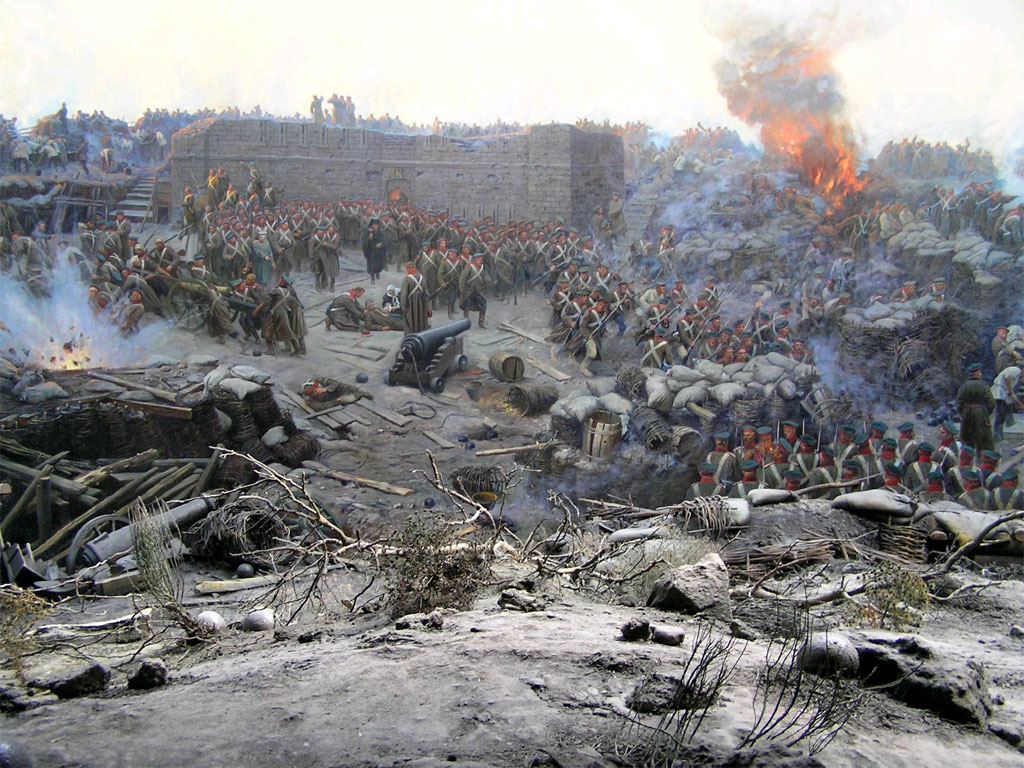
The enemy did not dare immediately storm the city and proceeded to siege, during which six times he subjected the city to multi-day bombing. June 6, 1855, the enemy made an attempt to take by storm the strengthening of the ship's side and incl. Malakhov mound. The assault was repulsed. The events of this day are depicted on the picturesque canvas of the panorama "Defense of Sevastopol in 1854-1855."
In an effort to destroy the fortifications of Sevastopol, the enemy used an underground mine war. They were dug under the earth 1280 m of galleries and produced 120 explosions. But the defenders of Sevastopol in a timely manner launched a countermine struggle and during the 7 months of the underground mine warfare they laid 6,889 m of galleries and sleeves (5 times the size of the enemy) and produced 94 large explosions. The Ministry of War was headed by engineer engineer AV Melnikov.
Particularly famous for the city's defenders night outings. They were distinguished by a sailor of the 30th Fleet crew P.Koshka, Private A.Prokhorov, boatswain Budenko and many others. At night the defenders of the city also restored the destroyed fortifications, built new ones, often near enemy positions. There are curious cases when Russian soldiers took prisoners of their own officers who were on reconnaissance at night. The officers, being mostly noblemen, spoke among themselves in French, which deceived the soldiers.
An outstanding physician, scientist, the founder of military field surgery, NI Ivanov, was a participant in the defense of Sevastopol. Pies. He arrived in the besieged city with a detachment of sisters of mercy, here for the first time in the world practice began to widely use a plaster bandage in the wounding of limbs and anesthesia with ether pairs during operations. Talent N.I. Pirogov, conscientious work of physicians ensured the return to the system of many soldiers. Only in the first six months of the defense of 15,123 wounded returned to the bastions and part of the 10561 warrior.
The great Russian writer Leo Tolstoy, who participated in the defense of Sevastopol in the rank of second lieutenant of artillery, captured the remarkable feats of her heroes in the famous "Sevastopol tales." At the height of the battles he wrote: "For a long time, this epic of Sevastopol, in which the Russian people were the hero, will leave great traces in Russia."
Throughout the entire 349-day siege, a particularly intense struggle was for the key position of the city's defense - Malakhov Kurgan. It was taken on August 27 by the French army, which predetermined the abandonment on August 28, 1855 by the Russian troops of the South side of Sevastopol. Having blown up all the fortifications, batteries and gunpowder, the defenders of Sevastopol were organized through the Sevastopol Bay to the North side on the pontoon bridge. Then the bridge was pulled up to the North side, and the enemies, exhausted by a long siege and bloody battles, were divided by the Sevastopol bay. Military operations have virtually ceased.
On March 18, 1856, the Peace Treaty was signed in Paris, according to which Russia was forbidden to have a navy on the Black Sea, build fortresses and naval bases. This entailed a 20-year period of the decline of Sevastopol.
In 1870, Russia unilaterally refused to comply with the humiliating articles of the Treaty of Paris and began to restore the Black Sea Fleet. In 1890, Sevastopol was officially listed as a sea fortress of the third class. In the mid-eighties of the XIX century, with the completion of the Lozovaya-Sevastopol railway, the revival of the commercial port began.
The tsarist government paid much attention to the revival of the Black Sea Fleet. The program was adopted, designed for 20 years, according to which it was planned to build for it eight squadron battleships, two cruisers and 19 destroyers. In 1890, the whole administration of the Black Sea Fleet was transferred from Nikolaev to Sevastopol. For a short time from November 1890 to February 1892, the number of ships increased from 33 to 56. On the eve of the First World War, the Black Sea Fleet already had up to 400 combat, auxiliary and transport vessels.
Simultaneously with the military revived and commercial port. After the opening of the railway traffic in Sevastopol, huge warehouses for grain, salt and other cargo were built. There were periods when up to 4,000 loaders worked in the port. If in 1875, 575,000 poods of various cargoes were sent from Sevastopol abroad, in 1888 - 32 million poods.
One of the largest enterprises of the city, as well as the whole of the Crimea, was the Admiralty. In 1898, there were about a thousand people working here, while the rest of the city's enterprises - only 265.
Six years after the Crimean War, the city's population was 5 thousand people, after 19 years - 11 thousand, after 30 years - 25 thousand and only in 1895 reached the pre-war level.
Since 1870 in Sevastopol began to elect the city duma, which included representatives of the nobility and commercial and industrial circles. In 1873, a Sevastopol governorate was directly subordinated to the Taurian governor. The mayor was simultaneously the commander of the port and the commandant of the city.
The economic recovery in the country, caused by the abolition of serfdom and the development of capitalism, had a noticeable impact on Sevastopol. The pace of the revival of the fleet and, with it, of the city also accelerated.
In November 1905, an armed insurrection broke out in Sevastopol, in which crews of 14 warships, port workers, garrison soldiers took part. On November 14, 1905, a red flag flew up on the Ochakov cruiser and Lieutenant P.P. Schmidt joined the command of the uniting of the ships of the revolutionary fleet. He became a deputy from the workers in the first Soviet of Workers', Soldiers' and Sailors' Deputies, created in November.
The famous Russian writer AI Kuprin, who was in Sevastopol these days, witnessed the massacre of the Ochakov revolutionary cruiser. In the St. Petersburg newspaper Nasha Zhizn he published an essay on "Events in Sevastopol," in which he wrote: "The cruiser was silently burning, throwing bloody stains on the black water." There were no more screams, although we still saw people on the nose and on the tower. There was a lot of recognition in the crowd about the fact that at the beginning of the fire the boats were offered to Ochakov, and that the sailors refused, and that by boat with the wounded, who had fallen from Ochakov, were shot with grape shot. In the city of Ochakov, a trial of the first group (14 people) was opened,
However, in the city on the eve of the First World War there was an increase in industry, which was associated with the preparation of the tsarist government for war. In 1913 in the Sevastopol township there were 43 small factories and a factory on which 4640 workers worked, including 29 enterprises in Sevastopol where 4456 people worked. The population of the city in 1913. was 61349 people, and in all the township there were 72710.
About the February revolution of 1917 and the overthrow of the tsar, the city's population and the military learned on March 4. On the same day, the Military Executive Committee was formed. At the same time, committees led by the Mensheviks and Socialist-Revolutionaries arose at enterprises, in units and on ships. Soon the Military Executive Committee became known as the Joint Central Military Executive Committee (CCEIC), it included representatives of officers and conductors in order to master the movement. Almost simultaneously in the city was formed the Soviet of Workers 'and Soldiers' Deputies, which enjoyed authority from sailors. Understanding this, the leaders of the OCVIC began negotiations with the Council on the merger, which occurred on March 2, 1917. Thus, a single Sevastopol Council of Deputies of the army, navy and workers was formed, and elected the Central Executive Committee (CEC).
The Bolshevik Military Revolutionary Committee on December 16 (29), 1917 proclaimed Soviet power in Sevastopol. However, in the city all civil power was in the hands of the fleet commander Admiral Alexander Vasilyevich Kolchak. As before, the city duma and the government continued to exist. Thus, the dual power that prevailed in Petrograd, manifested itself in Sevastopol. The victory of the October Revolution in Petrograd Sevastopol learned October 26. The power in the city took over the Council of Military and Workers' Deputies. It was dominated by the Mensheviks and Socialist-Revolutionaries, who sabotaged the decrees of the Council of People's Commissars of the Republic. Fleet management in the days of the October Revolution was carried out by the Central Committee of the Black Sea Fleet (Centroflot), who declared himself the highest authority in the fleet.
Soviet power in Sevastopol, as in all Crimea, did not last long. Breaking the terms of the Treaty of Brest, Germany began military operations. Her troops on April 18, 1918. mastered Perekop and began to move into the interior of the peninsula. On May 1, the Germans seized the entire peninsula, including Sevastopol. November 9, 1918 in Germany, a bourgeois-democratic revolution took place, and on November 13 the Soviet government declared the Brest Treaty null and void and led the struggle for the liberation of the territories taken by Germany. On November 15, the evacuation of German sailors and soldiers from Sevastopol began. Soon they left the city and the whole Crimea. Instead of the German invaders, the Anglo-French interventionists came to the city on November 23, followed by the White Guard troops. Until April 29, 1919, the Anglo-French interventionists hosted the city.
June 23, 1919. with the support of the interventionists, the city was occupied by the troops of General Anton Ivanovich Denikin.
By the end of November 1920, the initiative on the Southern Front had completely passed into the hands of the Red Army. Troops of the Southern Front under the command of M.V. Frunze November 15 entered Sevastopol and the city was again established Soviet power.
In Sevastopol, all the fullness of power passed into the hands of the Revolutionary Committee headed by S.Krylov. The Revolutionary Committee did a great job of nationalizing enterprises, setting up a council for economic affairs, organizing branch trade unions in the city, providing food for the population, and organizing public education.
In late June 1921, elections were held to the Sevastopol City Council. Soon the City Executive Committee took power from the Revolutionary Committee, which was dissolved.
Since the formation of the USSR, Sevastopol began to develop rapidly, feeling the support of fraternal peoples. Already in 1923, according to the general plan for the electrification of Russia, the Northern Dock power station was put into operation in the city, which made it possible to abolish a number of small, costly power stations, and, most importantly, to provide electricity and electricity to the industry and municipalities. By the time the power plant was put into operation in the city, there were already 328 different industrial enterprises and 423 trade enterprises. According to the census on March 15, 1923, there were 63461 people in the city.
Intensively restored the destroyed city economy. In 1921, industrial and communal trusts were created. The workers' outskirts of the city were improved and electrified - Ship, Northern side. Electricity was supplied to the city and Balaklava power stations. The Sevastopol commercial port in 1925 became the largest point of domestic and foreign trade in the south of the USSR.
In 1924 - 1925 years. not only residents of Sevastopol and Balaklava, but also peasants of neighboring villages, a tram line of Sevastopol-Balaklava with a length of 18 km was built. The marine plant began to build for the national economy of the country vessels-timber trucks, motor ships, steam schooners for the merchant fleet. In 1928, the first ocean-going steamship "Mikhail Frunze" was delivered to Sevgorflot.
In 1928 a refrigerator was commissioned in the city, one of the most powerful in the country. Its capacity is 1,5 thousand tons of various cargoes. The refrigerator could maintain the temperature in various chambers from minus 16 to 0 degrees and ensure a daily production of transparent ice to 20 tons.
In 1930, the grand opening of the first high-voltage power transmission line in Sevastopol - Simferopol was held in Crimea. In 1934 a new automatic telephone exchange was put into operation in the city for 10 thousand numbers, which made it possible to solve the problem of telephone installation of all enterprises and institutions. In 1935 a regular air mail service between Moscow and Sevastopol was opened. In 1937 the Sevastopol state district power station was commissioned, it produced electricity five times more than all the power plants of the Crimea before the revolution, and supplied many cities of the region. At the end of the 30s, a new bakery, a champagne factory, a macaroni factory, a garment factory were built.
Success in the development of the national economy created the conditions for the development and technical reconstruction of the Black Sea Fleet. By 1941, the Black Sea Fleet had: 1 battleship, 6 cruisers, 3 leaders, 13 destroyers, 47 submarines, 84 torpedo boats, , several battalions of hunter-boats and a number of auxiliary vessels. The air forces of the Black Sea Fleet consisted of 2 brigades, numbering 636 combat aircraft.In 1940 in Sevastopol there were 2 naval, aviation, antiaircraft artillery schools, a branch of the Moscow Institute of Communal Construction, technical schools - construction (day and evening), track and construction, dental school, 2 vocational schools for 1300 people , FZO school for 400 students, FZU of the Marine Plant. 12,700 children were enrolled in 9 primary and 19 secondary and junior high schools. Initial education covered 100% of children. There were 36 libraries and 2 drama theaters in the city. Military History Museum. Picture gallery. Museum of the Revolution. House of Culture. The Teacher's House, the Palace of Pioneers, several working clubs, the Dynamo stadium (the current Seagull), the water station, 2 yacht clubs, dozens of sports grounds.
Much attention was paid to the further development and improvement of the city, to cultural construction.
By the beginning of 1941 the city's population had grown to 112 thousand people. Sevastopol has turned into a powerful naval base on the Black Sea.
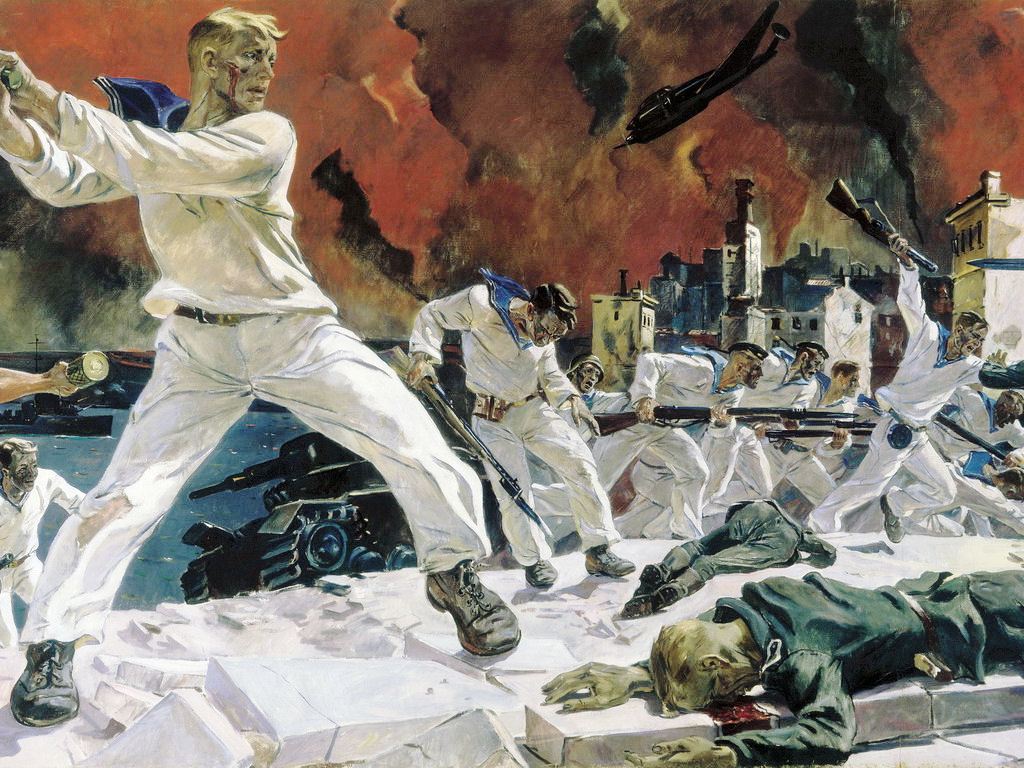
The Great Patriotic War of 1941-1945 was a severe and grave test for Sevastopol and sailors of the Black Sea Fleet. Sevastopol among the first cities of the USSR on June 22, 1941 at 3 o'clock 15 minutes was attacked by fascist aircraft.
The sailors of the Black Sea Fleet, residents of the city organized themselves in defense of Sevastopol.
According to the decision of the city organizations, the headquarters of the Black Sea Fleet, the soldiers of the garrison and the Sevastopolites in the shortest time, by November 1, 1941, built three lines of defense around Sevastopol: the rear line, the main and the front lines with bunkers, bunkers and other defensive structures.>On October 29, 1941, a state of siege was introduced in Sevastopol. On October 30, the first strike against the motorized column of the 11th German Army of General Manstein was inflicted by the 54th Coastal Battery of the Black Sea Fleet. The artillerymen for three days fought continually fierce battles with the Nazis. Almost simultaneously with the artillerymen, parts of the marine infantry formed from cadets of naval school and sailors of warships and coastal units of the fleet joined the battle, with the support of coastal and antiaircraft artillery batteries.
October 30, 1941 began the second heroic defense of Sevastopol, which lasted 250 days - until July 4, 1942. From the first battles to the last days of defense, defenders of the city showed self-sacrifice, unparalleled steadfastness and heroism.After failing to seize Sevastopol, the German fascist command carried out three offensives on the city: the first began on November 11, 1941, the second on December 17, 1941, the third on June 7, 1942.
The immortal feat was carried out by the garrison of SZOT No. 11. The Krasnoflotz Komsomolets Ivan Golubets saved his warships and their crews in Streletskaya Bay at the cost of their own lives. He was posthumously awarded the title of Hero of the Soviet Union. For exploits in those days, the title of Hero of the Soviet Union was awarded to the machine-gunner Nina Onilova and the sniper Lyudmila Pavlichenko.
During the days of defense, the city's inhabitants showed military and labor heroism. Workers of the Marine Plant under the firing of the enemy repaired the ships, created combat equipment day and night, equipped two armored trains, built and equipped a floating battery N 3, called "Do not touch me," which reliably covered the city from attacks by fascist aircraft from the sea. The Germans called it the "Square of Death". In the mine workings (galleries) on the shore of the Sevastopol Bay, underground special combines were created; N 1 - for the production of weapons and ammunition, N 2 - for the manufacture of linen, footwear and uniforms. Immediately, underground, worked out clinics, a canteen, a club, a school, a day nursery and a garden, and later - a hospital, a bakery.
In those days, the heroism of city defenders was massive. Lance-corporal Ivan Bogatyr mowed not one hundred fascists with his machine gun. Sniper instructor Noah Adamia destroyed up to 200 Nazis. The scout Maria Baida carried hundreds of wounded fighters and commanders from the battlefield, led the wounded warriors from their entourage to their own. I. Bogatyr, N. Adamia, M. Baide was awarded the title of Hero of the Soviet Union.
The defenders of the city were constantly supported by fleet ships. Breaking into the besieged Sevastopol, they brought replenishments, ammunition, food, took the wounded, the elderly, women and children to the Greater Land, and fired artillery fire at the positions of the enemy. And when the surface ships could no longer break through to Sevastopol, their task was performed bravely by submarine crews.
June 21, 1942 the Nazis broke through to the Northern Bay. One by one the batteries stopped. In those critical days, heroic exploits were performed by thousands of defenders of Sevastopol. On June 25, the fascist pilots bombed the panorama building "The Defense of Sevastopol in 1854-1855." From direct hits of 5 bombs and 7 large caliber projectiles, a wall was broken, a dome was destroyed and a fire broke out. Picturesque canvas rescued cadets school middle commanders of coastal defense, fighters of the 11th separate battalion of air surveillance, warning and communication. The fragments of the picturesque canvas, taken from the fire, were taken to the leader of the destroyers "Tashkent" - the last large surface ship that broke into Sevastopol, under the command of Captain 3rd Rank VNEroshenko.
On June 29 and 30, enemy aircraft carried out over 3,000 sorties, dropped about 15,000 bombs on the city, artillery brought down about 8,000 shells, up to 14,000 mines. The fascist command threw all the forces and means into battle. The reserves of city defenders melted, shells, cartridges, and grenades ended. On June 30, fighting began on the ship's side. Persistently repulsed attacks by the enemy defenders on the Malakhov Hill, the Laboratory Highway, the Historical Boulevard, near the farms of Kommuna, Berman. At night, when the ammunition ran out, the remnants of Soviet troops began to retreat to the bays of Streletskaya, Kamyshovaya, Kazachya and Cape Khersones. Here the fighting continued until July 4, and in some places - until July 12.
On July 4, 1942, Pravda and Sovinformburo reported that Soviet troops had left Sevastopol. The Sovinformbureau report said: "The military and political importance of the Sevastopol defense in the Patriotic War of the Soviet people is enormous, and by defeating a large number of German-Romanian troops, the defenders of the city have confused and upset the plans of the German command." The iron fortitude of Sevastopol was one of the most important reasons that thwarted the notorious "spring offensive "The Germans, the Nazis lost in time, at a pace, suffered huge losses by people." For 8 months of defense the enemy lost up to 300 thousand soldiers near the walls of Sevastopol killed and wounded. The newspaper Pravda wrote: "The feat of the Sevastopolites, their selfless courage, selflessness, fury in the struggle against the enemy will live forever, they will be crowned with immortal glory."
To commemorate the heroic deed of the defenders of the city, on Dec. 22, 1942, a decree of the Presidium of the Supreme Soviet of the USSR established a medal "For the Defense of Sevastopol," which awarded more than 50,000 defenders.
Entered July 3, 1942 in the destroyed city fascists rioted in it for 22 months. They destroyed 3 thousand women, old people and children in the Inkerman galleries, more than 400 workers in the Troitsky Tunnel. On July 12, the invaders drove 1500 residents to the Dynamo stadium, and after robbery and bullying they were shot at the 5th kilometer of the Balaklava highway. During the occupation of the city, the fascists shot, burned, drowned in the sea, forcibly drove to Germany tens of thousands of Sevastopol.
Despite the most severe occupation regime, the Sevastopolites did not stop fighting the fascists. In Sevastopol, underground patriotic organizations began to be created and operate.
Liberation of Crimea and Sevastopol in the spring of 1944. The Supreme Command was entrusted to the troops of the 4th Ukrainian Front (2nd Guards Army and 51st Army) under the command of General of the Army FI Tolbukhin and the troops of the Separate Primorye Army under command of General of the Army AI Eremenko with the support of the forces and assets of the Black Sea Fleet, led by Admiral FS Oktyabrsky and the Azov Military Flotilla under the command of Rear Admiral SG Gorshkov, long-range aviation under the command of Air Marshal A.N. Golovanov. Their actions were coordinated by representatives of the Supreme Command of the Supreme Command of the Marshal of the Soviet Union AM Vasilevsky and KE Voroshilov.
May 5, 1944 at 12 o'clock, after a powerful two-hour artillery and aviation training, the 2nd Guards Army, under the command of Lieutenant-General GF Zakharov, launched an offensive from the Mekenzievy Mountains, to liberate the Northern side and force the North Bay.On May 7 at 10:30, after an hour and a half of artillery and aviation training, the forces of Primorsk and the 51st armies launched an offensive. In the main direction of Sapun-gora - Karan (now the village of Flotskoye) operated parts of the Maritime Army under the command of Lieutenant-General KS. The miller. East of Inkerman and Fedyukhin heights on Sapun Mountain, which is the key to enemy defense, the 51st Army came under the command of Hero of the Soviet Union Lieutenant-General Ya.G. Kreiser,
On May 9, in the evening, Sevastopol was completely liberated, on May 10 at one o'clock in the morning Moscow 24 salutes of 342 guns saluted the liberators of the city. On that day, the Pravda newspaper wrote: "Hello, dear Sevastopol, the beloved city of the Soviet people, the hero city, the hero-city! Gladly the whole country welcomes you!". On May 12, in the area of Cape Khersones, the remains of fascist troops in the Crimea were routed.
The restoration of the city became a truly heroic epic and entered its history as the third feat of Sevastopol. Revival began immediately
After release. The city was completely destroyed. The material damage caused by the fascists amounted to 2.5 billion rubles. City communications, transport, communications, more than 90% of the residential area were destroyed. Of the 6,402 residential buildings, 5379 were completely destroyed, 7 dilapidated buildings remained in the center of the city. Destroyed all institutions and enterprises, schools and architectural monuments, cultural centers. In the city there are about 3 thousand inhabitants.
In the heroic days of the revival of Sevastopol, as in the days of defense and liberation, the power of friendship between nations was clearly manifested. Already on June 25, 1944, the first train from Moscow arrived in Sevastopol with the necessary materials, tools, food. Since that day, echelons with building materials, fuel, clothing, and foodstuffs have been coming from workers in many republics, regions and cities of the country. The workers of Moscow, Ivanovo, Sverdlovsk, Bryansk, Khabarovsk and other cities of the RSFSR rendered particularly great assistance. Bashkiria helped to restore kindergartens. Dagestanis collected and handed over to Sevastopol 4.5 million rubles, 12 cars of food and building materials. In August 1948, Sevastopol was visited by IV Stalin, AN Kosygin, AV Voznesensky and other leaders of the Communist Party and the Soviet government. They got acquainted with the state of recovery, listened to requests and proposals to speed up the revival of the city. October 25, 1948 at the Council of Ministers of the USSR was organized specials management for the restoration of Sevastopol. The builders were tasked to restore the city in 3-4 years,
During this period, new factories, factories and mills came into operation. The territory of the city has increased by one and a half times. Its residential area in 1954 was 654 thousand m2, 70 thousand m2 more than before the war. In the city there were 8 hospitals, 10 polyclinics, incl. 2 children, 2 genus