Previously, Sevastopol was a closed naval port. But in recent years active tourism development has begun in the region. This is facilitated by a unique history and a lot of architectural and cultural monuments, interesting objects. The most interesting among them are the Inkerman cave monastery, Panorama and Diorama, the Balaklava submarine repair plant.
Sights of Sevastopol
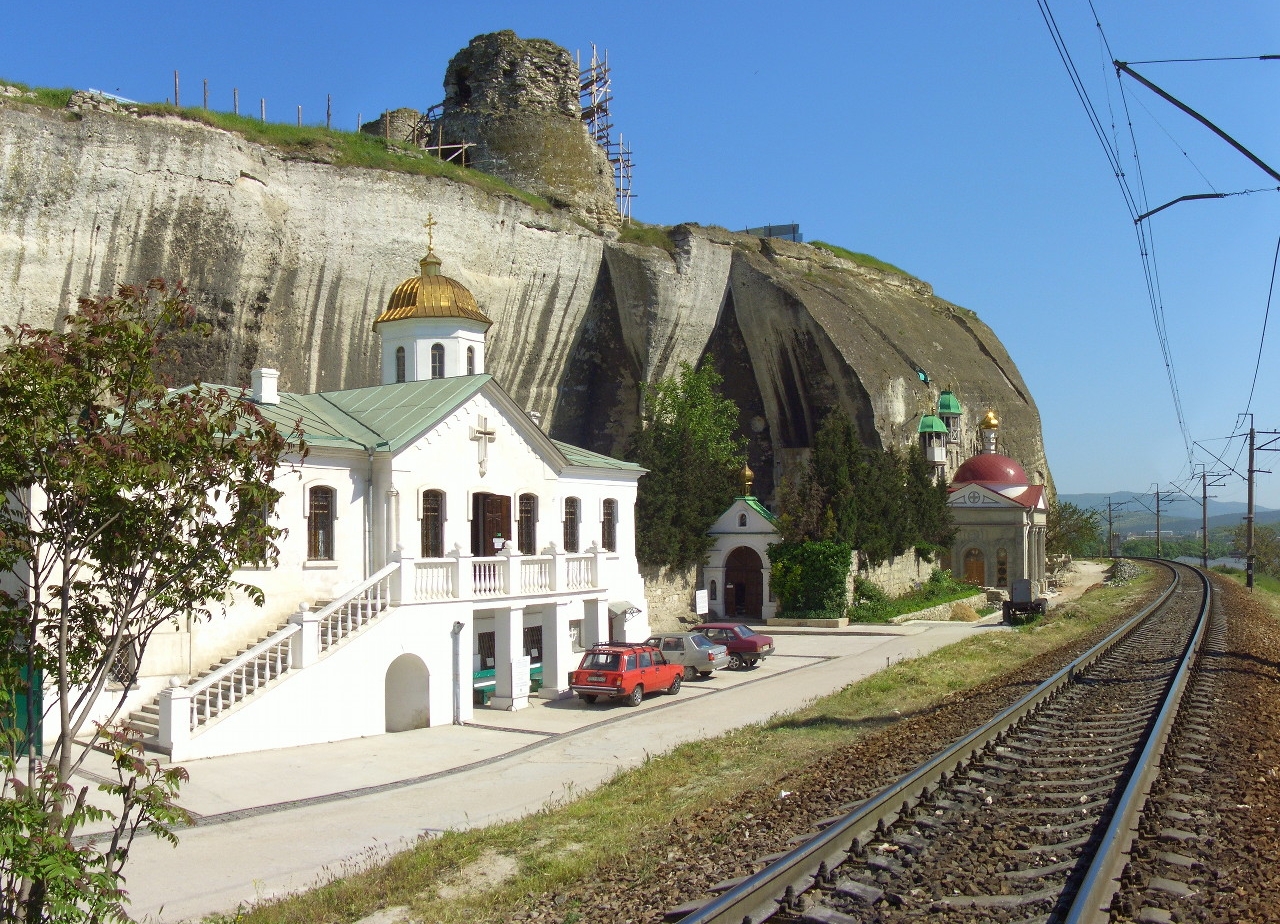
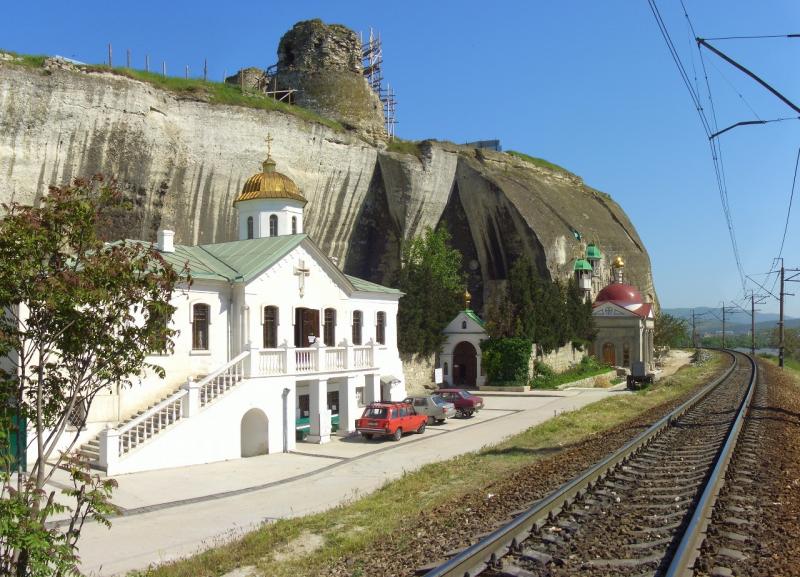
Inkerman St. Clement Cave Monastery- one of the cave monasteries in the Crimea, located in the Monastery and Zagaytan cliffs on the right bank of the Chernaya River at its confluence into the Northern Bay, Inkerman - suburbs Sevastopol.
A small Christian monastery, one of the most ancient Christian monasteries in Ukraine, emerged in the 8th-9th centuries near the Byzantine fortress, rebuilt by the Genoese in the 6th century and named Kalamit, which served to protect the approaches to Chersonesus.
His appearance, like other cave monasteries, was caused by the iconoclastic struggle in Byzantium, when many icon-worshipers were forced to flee to remote provinces of the empire, including the Crimea. In the numerous caves carved out beneath the fortress in the rock, along its entire height, the first Christians found shelter here.
The appearance of the monastery is associated with the name of the Roman bishop, the pope of Rome, a pupil of the apostle Peter, exiled in 1992 by the emperor Trajan for preaching Christianity to the quarry near Chersonesos and killed here in 101. According to ecclesiastical tradition, the works of St. Clement and his students in the Crimea were arranged about 75 Orthodox churches.The relics of St. Clement, first stored in an underwater cave near Chersonesos, and then transferred to a small island in the middle of the bay - now the island of Cossack, on which the church was built.
The monastery, founded by monks, icon-worshipers, who fled from persecution in Byzantium, immediately began to bear the name of St. Clement. It consisted of several churches and a complex of residential and economic caves, which were connected to each other and to the rock-cut courses located on the rock fortress.
The monastery has a long and difficult history, it was repeatedly abandoned - first by the Turks, who seized the Crimean peninsula, and then by the Communists.
Since 1991, the gradual revival of the monastery has begun - churches and cell buildings have been restored; Trinity.
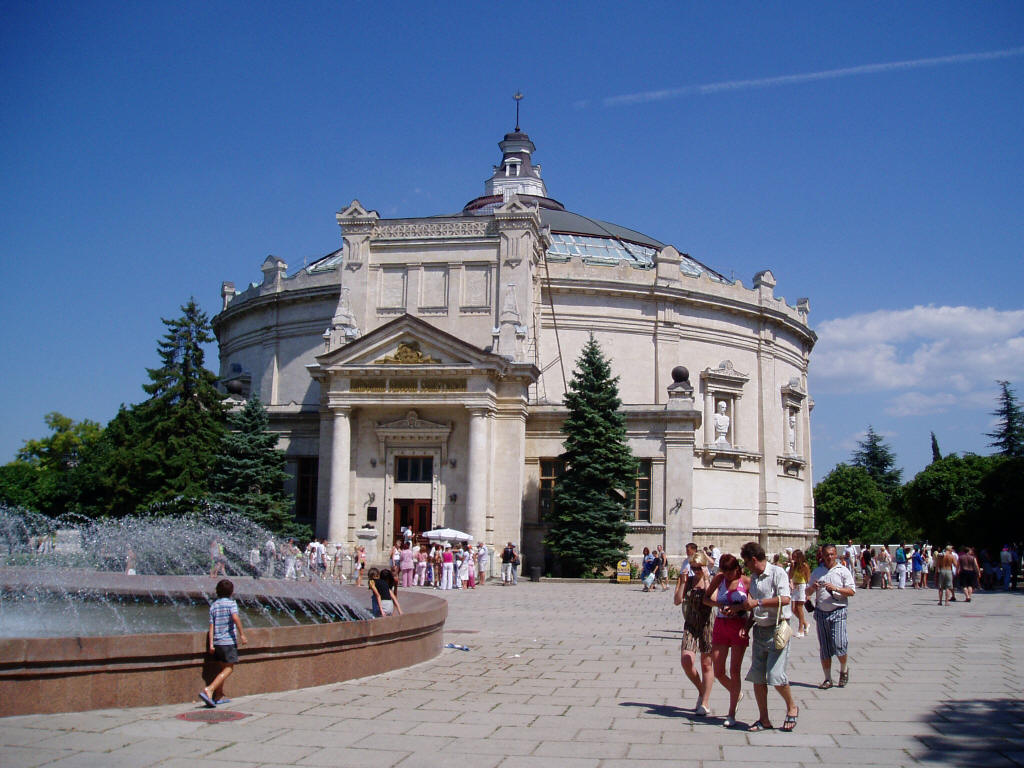
Panorama The defense of Sevastopol in 1854-1855.- a unique work of battle painting, a world-famous monument to the people's feat. Describes one of the episodes of the 349-day heroic defense of Sevastopol - the defenders of the city storming on June 6, 1855.
The author of the panorama is the founder of Russian panoramic art Franz Alekseevich Rubo (1856-1928). The artist in October 1901 came to Sevastopol, traveled all the bastions, visited the museum of defense of Sevastopol and created a sketch of the panorama showing the assault of the Malakhov burial mound on June 6, 1855.
The canvas for the panorama was woven in Brussels, FA Rubo worked with the help of his colleagues in the outskirts of Munich, where he lived, for three years in a special pavilion.
In September 1902, the construction of the panorama began in the historic boulevard, which ended in 1904, and in August of the same year, 13 sculptural portraits of the heroes of defense were installed in the niches.
The original round building of the panorama with the dome crowned with a rotunda, the diameter of the building is 38 m, the height is 36 m built in the style of modernized neoclassicism. The entrance is a classic two-column portal lined with an Inkerman stone, decorated with elements of military decor at the top - the soldier's George cross is crocheted with a St. George ribbon, and in the center is the number 349, which indicates the number of days of defense of the city.
Inside the building there is a picturesque canvas, 115 meters long, 14 meters high, and 1610 square meters. m, and a subject area of 900 square meters. m, located on a special platform. The spectator, climbing a steep staircase to a special viewing platform, as it turns out on the top of the Malakhov Mound, when defenders of the city stormed the French and British troops on June 6, 1855.
Panorama The defense of Sevastopol in 1854-1855. was opened on May 14, 1905 in commemoration of the 50th anniversary of the end of the Sevastopol Defense.
During the Great Patriotic War on June 25, 1942, German bombs destroyed the panorama building, and a unique picture caught fire. Soviet soldiers, risking their lives, took part of the picturesque canvas from the blazing building. During the fire from 1610 m 493 m died, and the remaining ones were badly damaged. 86 pieces of the rescued picturesque canvas were loaded onto the destroyer Tashkent and taken out of the besieged Sevastopol.
After the war, the panorama was recreated by Soviet artists who re-wrote the picture and recreated the subject plan. The rescued fragmented fragments with burnt ends and numerous damages could not be restored, but they served as the original for writing a copy.
On October 16, 1954, the panorama was reopened.
Near the Panorama building under the open sky, you can view the collection of anchors.
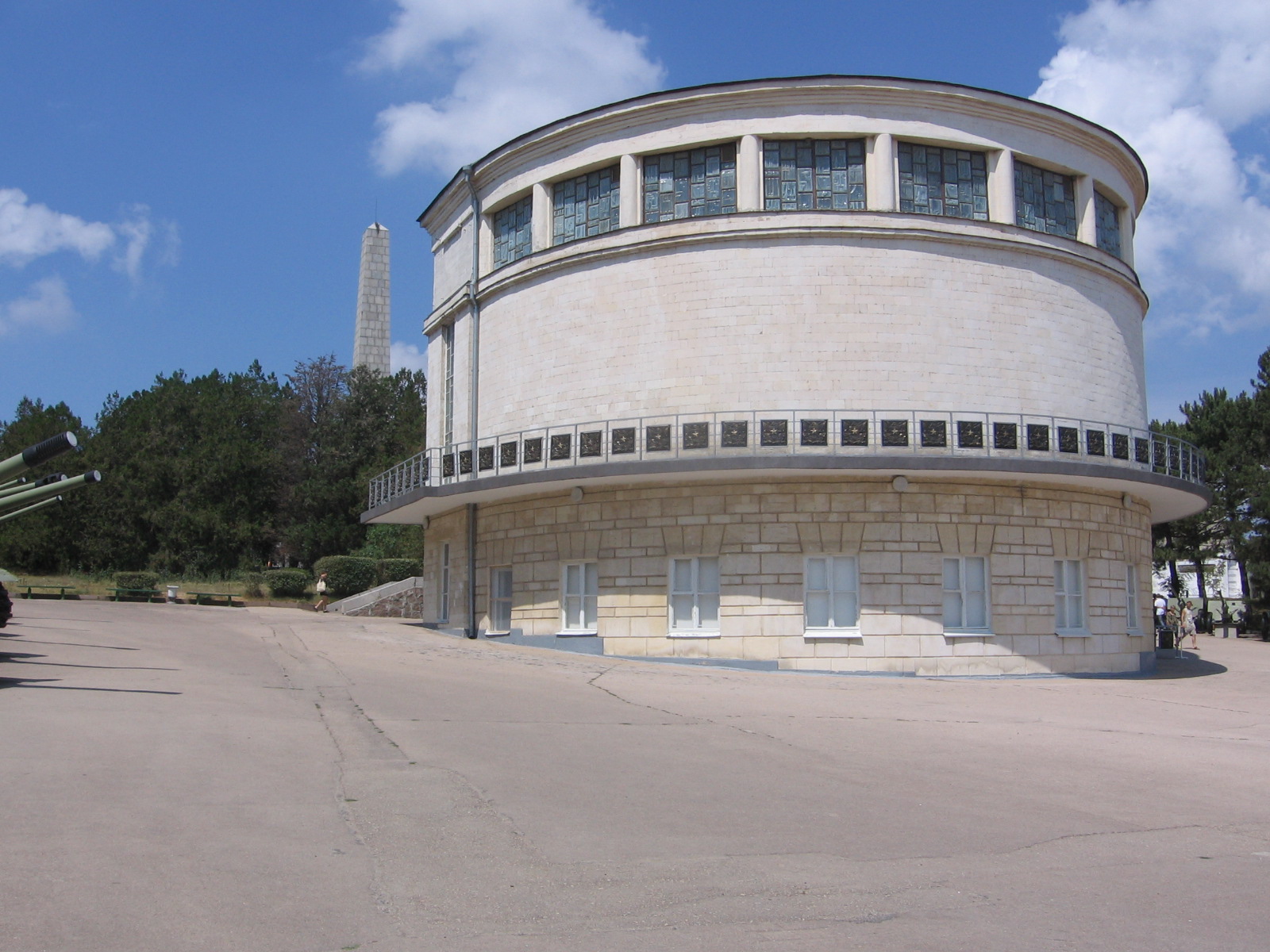
Diorama Sturm Sapun Mountains May 7, 1944- one of the largest works of battle painting of recent times, the authors of which are artists of the studio. M. V. Grekova - P.T. Maltsev, GI Marchenko and NS Prisekin. It is located 12 km from the city center.
The grand opening of the diorama took place on November 4, 1959.
The picturesque canvas of the diorama has a length of 25.5 m, a height of 5.5 m and occupies a part of the circle with an area of 140 sq. m. km. On it, the artists showed the scope and intensity of the battle, the courage and mass heroism of infantrymen, artillerymen, doctors, pilots.
Between the picturesque canvas and observation deck is a subject plan, which is a relief layout of the area with built-in remnants of engineering structures, genuine weapons, uniforms, equipment collected at the site of battles.
On the viewing platform of the diorama with the help of a variety of visual means, special lighting, sounding of the terrible music of the battle (screams of the attackers, roar of guns, howling of the aircraft) and the fascinating story of the guide creates a sense of the reality of the events and personal involvement in them. p>
It's as though the time machine works and time counts down the hours, years, decades ago in the past where the noise of the battle is heard, and all the power and fury of the attack under the volleys of guns and the cries of the fighting soldiers are crushing on all sides.
>In the lower hall of Diorama there is an exposition of the Defense of Sevastopol in 1941-1942. and the liberation of the Crimea and Sevastopol in April-May 1944, and the upper hall, where the picturesque canvas of Storm Sapun Mountain is located on May 7, 1944, is also a small exhibition devoted to the history of the creation of Diorama.
The exhibition of military equipment during the Great Patriotic War was created in 1960 and consists of two parts - Soviet and German.
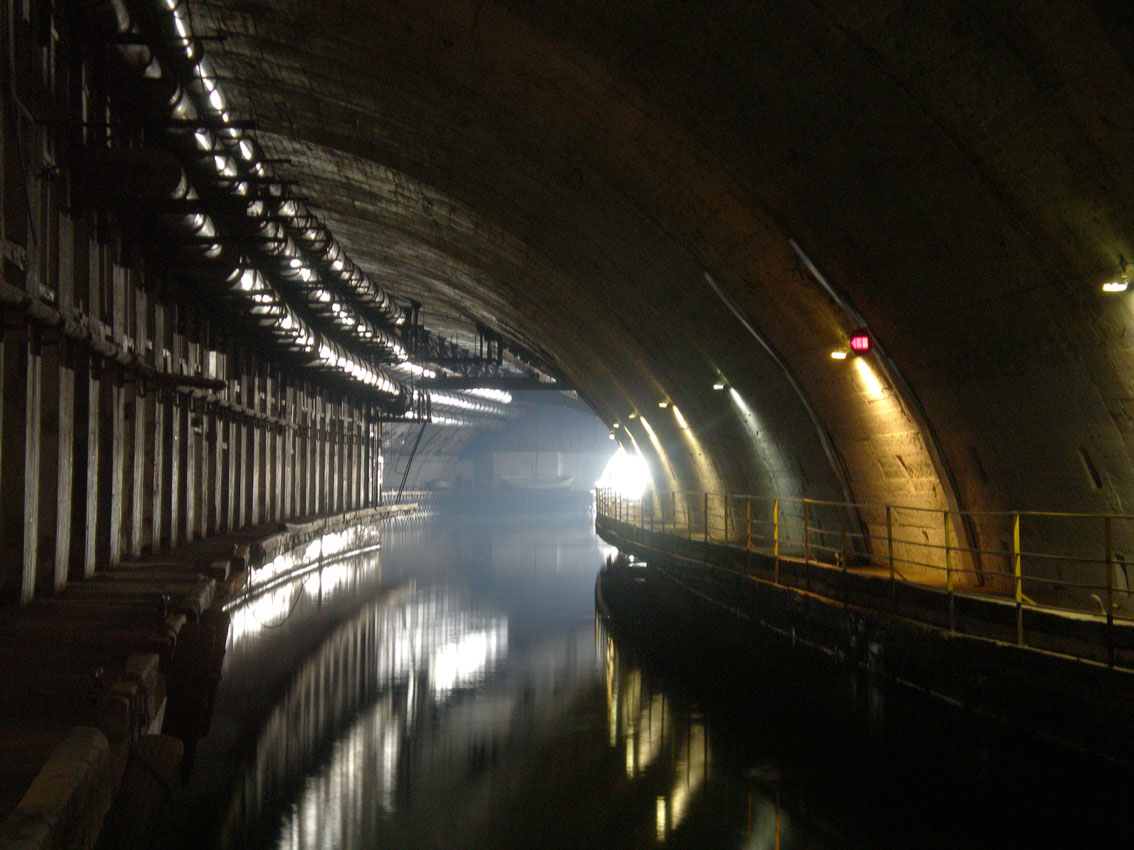
Balaklava submarine repair plantis a unique object of naval fortification of the 20th century, a historical monument of engineering and technical skill.
After the atomic bombing of the Japanese cities of Hiroshima and Nagasaki in August 1945, the Soviet government, assessing the consequences of nuclear explosions, adopted a comprehensive plan to protect the main industrial and defense facilities of the country from nuclear weapons.
In 1957 - 1961 in Balaklava, an underground super-secret Object 825 GTS was built to protect people and equipment in the event of a nuclear explosion, i.e. plant for the repair and equipment of submarines, located inside the rock on the west side of the bay.
It was assumed that the boats, entering imperceptibly under the water into the bay, had to pass through the tunnel to the complex itself, where, if necessary, having received repairs and replenishing the ammunition, just as unnoticed already another move again to the open sea for performance of combat missions. Both exits from the channel were camouflaged by special grids and rock.
The peculiarity of Balaklava is a unique long and deep bay, on one side of which on the mountain are visible the ruins of the medieval Genoese fortress Cembalo, and on the other - Mount Tavros. In Mount Tavros, which in Turkish means empty, an entire underground city was built, the premises of which were carved into the rock and covered with reinforced concrete with a thickness of 1 to 5 meters.
The construction of this secret facility was conducted by the builders of the Black Sea Fleet, as well as by the signing of the non-disclosure of military secrets by peaceful metro-builders from Kiev, Moscow, St. Petersburg, and Tbilisi. The residents of Balaklava and Sevastopol, who were registered here for work, were also required to keep military secrets.Man-made underground roads, lock rooms, storehouses, workshops, arsenals, offices, moorages, a deep-water canal and a dry dock that could have a submarine come into existence in the rocky rock mass.This strategic facility is the only one in the world in scale and would not suffer even in the case of a direct atomic strike with a power of up to 100 Kt - five times more than was dropped on Hiroshima and Nagasaki. It could accommodate up to three thousand people and had a developed life support system - by closing thick hermetic doors, the plant was able to survive for 30 days.
Autonomous air supply, fuel and water mains, powerful diesel generators, underground railways made it possible to completely isolate the plant from the external environment.
Command posts, warehouses for storing fuel and lubricants and products, bakery, hospital, housing for personnel, kitchens, dining rooms, bathrooms, showers, rest rooms were well equipped here.
Arsenal consisted of local and technical zones. In the technical zone there were mechanisms for ensuring the operation of the local zone and the autonomous activity of the entire arsenal.
In the local zone were located - the assembly room and the storage of the warheads of the warheads, which was the most secret zone.
In the center of the zone there was a turntable for changing the movement of the transport trolleys where containers with warheads (torpedoes) were manually transported along the corridors laid down along the corridors.
The weight of the trolley is 996 kg, and the lifting capacity is 7 tonnes.
The plant could simultaneously accommodate up to seven submarines of projects 613,615 and 633, and, if necessary, repair them. The width of the channel varies from 6 to 22 m, the length - reaches 505 m (with the total length of the tunnel up to 600 m). The length of the dock is 110 m, the depth is from 6 to 8.5 meters, the arch of the canal is 18 m. The total area of all premises and workings of the plant is 9.6 thousand square meters. m, the area of the underground water surface is 4,8 thousand square meters. m.
After the plant was completed in 1961, Nikita Khrushchev examined him and, waving his hand, said: "We must give all this to winemakers!" But the efforts of the then leadership of the Navy did not get a grand underground complex to winemakers - in the same 1961 it entered into operation under the code name Object 825 GTS, and from 1969 - the Special department of the Metallist plant.
All the secret activities of the object number 825 lasted almost 30 years and ended with the collapse of the Soviet Union in 1991. However, even earlier, with the transfer of the USSR Navy to boats of other classes that were large and no longer fit in the underground channel, the value of the plant began to fade.
In 1993 the plant ceased to exist, dismantling began, and in 1994 the underground complex was decommissioned. After the last submarine of the Black Sea Fleet left Balaklava in March 1995, the plant completely passed under the jurisdiction of Ukraine.
Over time, protection from the object was removed, and all that was left to be looted was not helped even by closed anti-nuclear doors.
Shortly before the transfer of the facility to the protection of the Ministry of Internal Affairs, on June 1, 2003, the former secret facility, in which practically nothing remained except walls and famous gates, was granted the status of the Museum Complex, as a branch of the Central Museum of the Armed Forces of Ukraine, name Balaklava Naval Museum Complex.
There were enthusiasts, museum staff who rallied around the idea of creating a military museum in Balaklava, a world-class attraction, and for several years have been collecting artifacts, restoring lighting, making mock-ups, conducting excursions ...
To date, a military underground complex for submarines is the largest military object of the planet from declassified ones. Part of the plant is now a museum and all tourists can freely inspect the former top-secret Soviet facility.